Gabrielle Cerberville will discuss Gathered: On Foraging, Feasting, and the Seasonal Life on October 24 at New Dominion Bookshop. She will also lead a foraging foray and book-signing at Stone Soup Books in Waynesboro on October 25. Supplied photos.
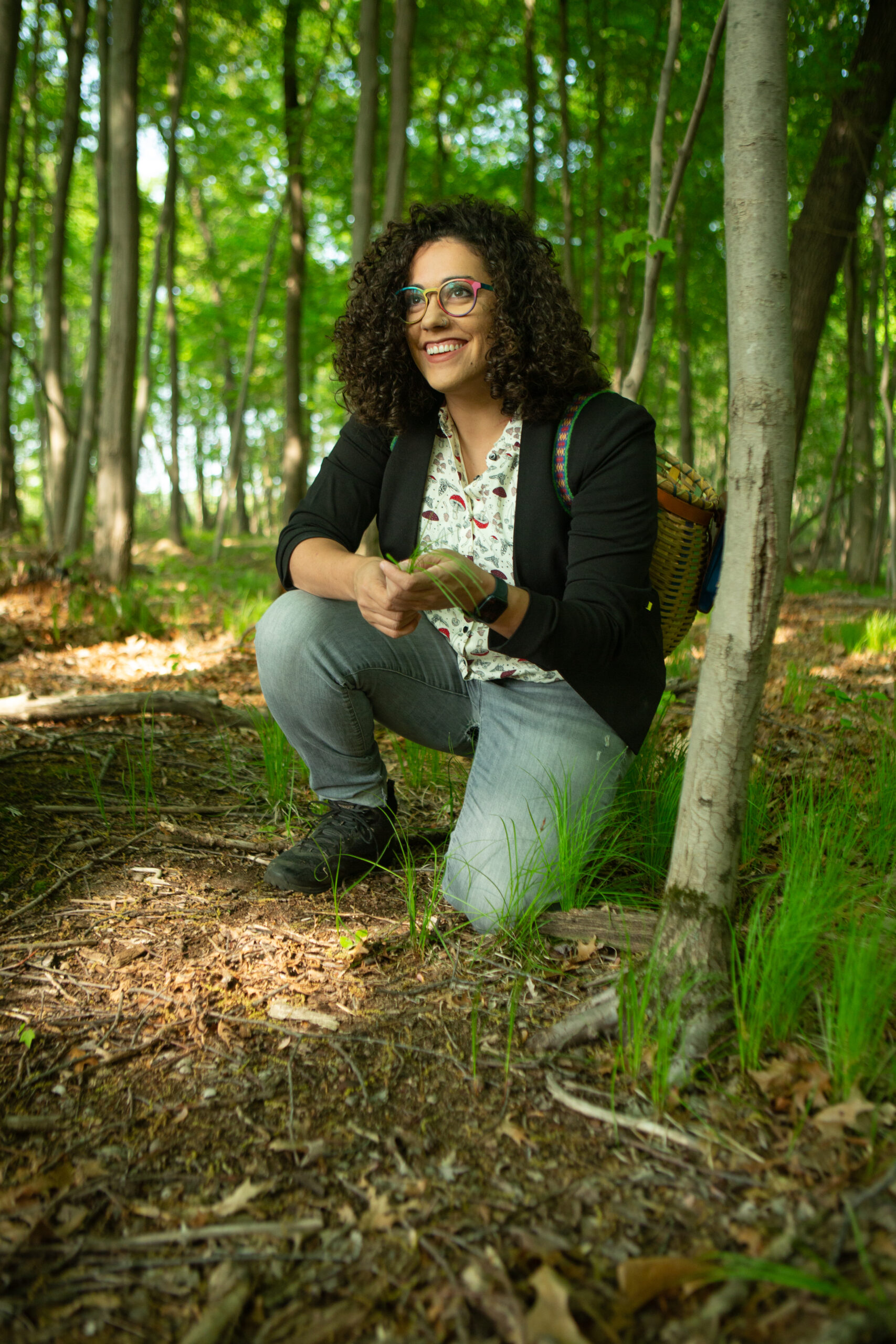
If you’ve ever foraged for mushrooms or berries locally, it’s possible you’ve encountered Gabrielle Cerberville. Also known as Chaotic Forager or the internet’s Mushroom Auntie, Cerberville is a foraging influencer on social media as well as a composer, community mycologist, and climate advocate. She recently published Gathered: On Foraging, Feasting, and the Seasonal Life, a book that shares Cerberville’s own relationship with foraging—from humble brags to instructive mishaps—as well as a philosophical framework for foraging, advice for those developing their practice, and recipes. With cheerful self-deprecation and a storytelling style echoing her peripatetic explorations, Gathered is a tribute to curiosity, humility, and our capacity to notice. Cerberville recently discussed her work with C-VILLE.
C-VILLE: How did Chaotic Forager come into being as an identity and social media presence for you?
Gabrielle Cerberville: Social media started as a pandemic hobby for me. I had just moved from Indianapolis to Michigan to start my master’s degree … left all my foraging spots behind, which led to long days spent hunting for new ones. It seemed like it might be fun to start making little educational videos about my journey, and after a few months, I suddenly found myself with a viral hit in the form of a giant puffball mushroom. From there, it just sort of took off. I realized that people were hungry for good information about foraging, and I had the skills to give them that information.
Your foraging is interwoven with your work as an artist and chef. How do you navigate the connections between these realms as well as your academic work?
For me, they’re not really separate realms at all, they’re more just different expressions of the same ever-evolving practice. In my academic work, I’m interested in how sound connects us to environments and communities. In the kitchen or in the forest, I’m interested in how taste, focus, intention, and creativity achieves the same thing. What ties it all together is the desire to understand how we can be in deeper, more intentional, more reciprocal conversation with the living world around us.
How is foraging a social and political act?
Foraging is intensely socio-political, and there isn’t really a way around that. It challenges systems that tell us anything worth having will cost us money, that expertise belongs only to those who have these specific kinds of access, and that community care is a theoretical possibility rather than a present reality.
Foraging also comes with its own history—every culture has foraging practices in their histories, and when people can feed themselves, they are far more resilient, and therefore, much more difficult to control. That’s why many areas in the American South started creating anti-trespass and private property laws post-Emancipation, as many formerly-enslaved people would forage for their food on the plantations where they had been captives, and why Indigenous people throughout America have historically been prevented from gathering traditional foods.
In a culture shaped by individualism and extraction, simply stepping outside and saying “What abundance is already here?” is a radical act.
Foraging can be joyful, but it’s also deeply political: It’s about access, equity, reshaping our values, and imagining different futures.
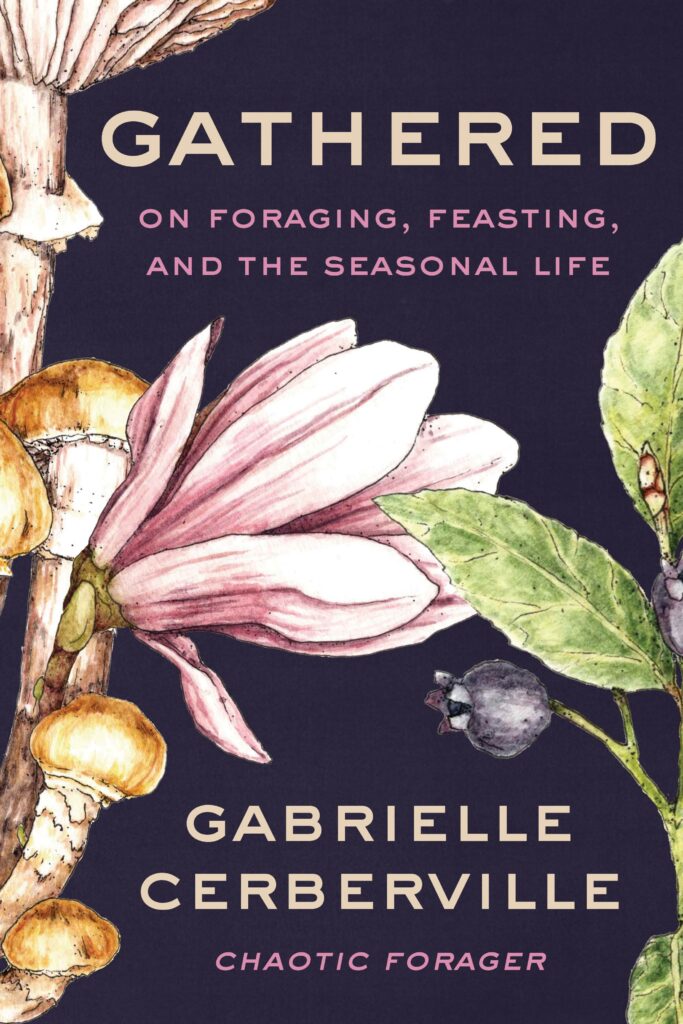
Gathered is full of field-to-table recipes, helping readers consider gastronomic options for specific foraged foods. What did the process of recipe development look like?
It was a mix of discipline and curiosity, for sure. I’ve been making social media content with my own recipes designed around wild foods for a while, and this felt like an opportunity to try some new things out. I also bounced ideas off others, in particular, my good friend JB Douglas, a fellow forager and trained chef.
You might notice that there is a strong emphasis on long-term preservation in the book, whether lacto-fermenting, drying, freezing, making salts and sugars, or other methods. I also selected everything for accessibility: Could someone new to foraging, with a regular kitchen setup, make this?
The book also features Gathering Exercises that draw inspiration from John Cage, mindfulness, and other grounding techniques. What led you to include these and how did you craft them?
The Gathering Exercises grew out of my background in interdisciplinary sound art and experimental music. Some exercises are about slowing down, some about sharpening the senses, some about reflecting on our relationships with plants, fungi, and people. They’re designed to be playful but also profound; to remind us that gathering isn’t actually about extracting, it’s about co-creation and coexistence.
What are you most excited about foraging locally in Central Virginia this fall?
I’m really focused on lion’s mane, hen of the woods, blewits, and hedgehog mushrooms. For non-mushrooms, I’m squirreling away acorns, black walnuts, hickory nuts, American persimmons, spicebush, and sochan. I’m looking forward to being well fed this winter, with lots of extras to share with friends and family.