Alice Gerrard will discuss Custom Made Woman: A Life in Traditional Music, at New Dominion Bookshop on Friday, March 20.
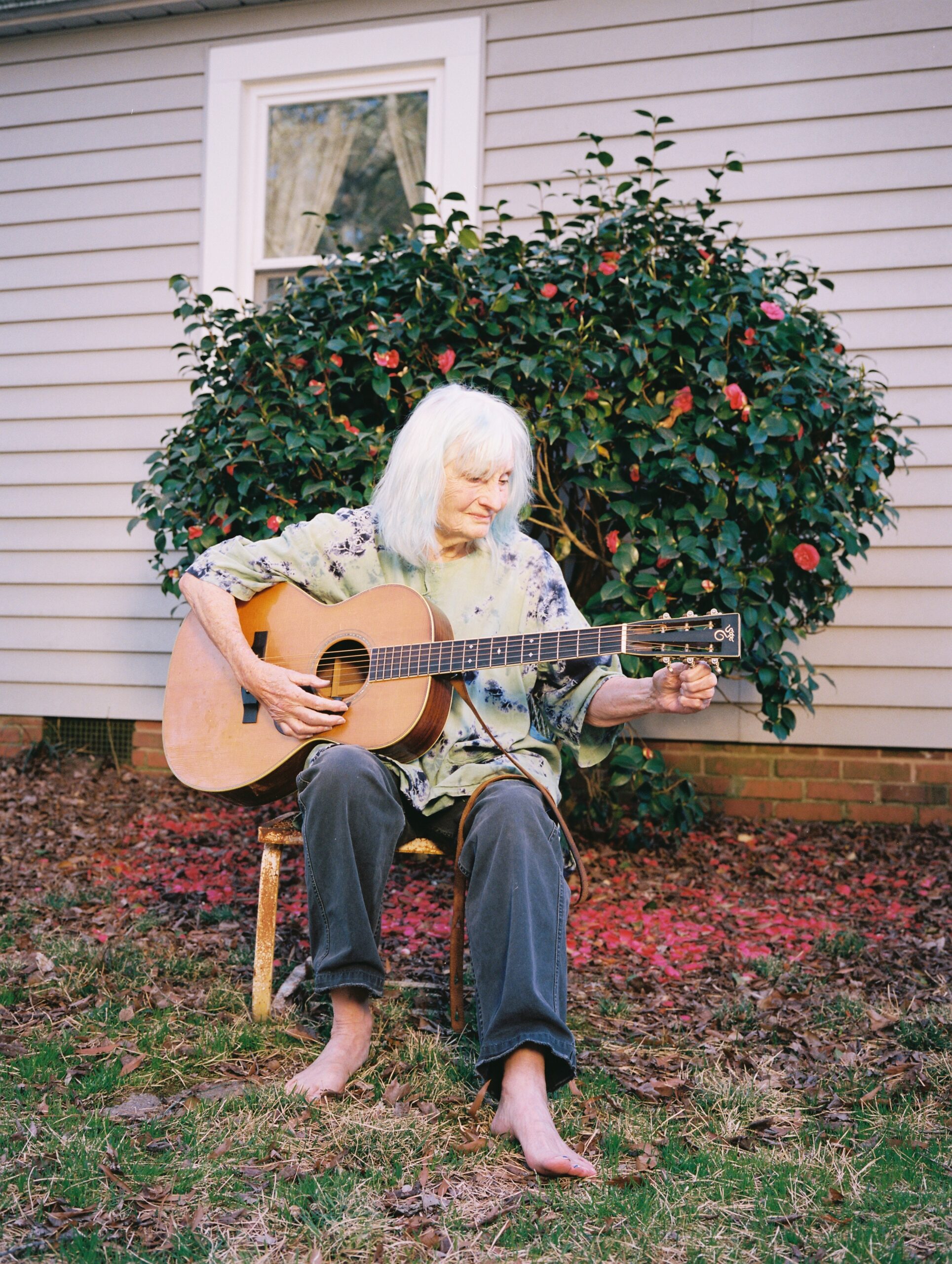
Multi-instrumentalist and singer Alice Gerrard says she’s lucky that her life turned out the way it did: making friends with and playing alongside some of folk music’s most historically resonant figures.
On Friday, March 20, Gerrard and Virginia state folklorist Katy Clune are set to discuss her book, Custom Made Woman: A Life in Traditional Music. The chat, part of this year’s Virginia Festival of the Book, serves to investigate the wealth of stories—and photos—from the 91-year-old musician’s decades of performing.
Gerrard was swept up in a resurgence of interest in folk and traditional music during the mid-20th century. She was attracted to the history of it, to the stories that it told and to the people who told them. At the time, the folk music scene also had a sense of openness to it, despite Gerrard saying there weren’t that many women playing professionally then. But the people she encountered were happy to teach her about the music’s lineage.
“That was kind of appealing to me—this music that you could just sort of learn by listening to it, learn by doing it, getting help from somebody showing you a chord on the guitar,” says Gerrard from her home in Maryland. “It typically is not written down. If you do try to write it down, you’re not going to get it right because there are too many subtleties in the music that our notation system doesn’t allow for.”
In conversation, the newly minted author is all nonchalance, saying she was convinced by a friend in North Carolina, where she previously lived, to put the book together—the title drawn from a tune on her second album with Hazel Dickens.
The onetime Virginia resident initially gained prominence in traditional music circles as one half of Hazel & Alice, alongside Dickens, who died about 15 years back. The two met playing “country music parks” on the weekends and developed a rapport evident across four albums, released between 1965 and 1976.
More recently, in a career that’s spanned more than 60 years, Gerrard has been honored by the International Bluegrass Music Association and nominated for a Grammy Award.
As the title of her book denotes, Gerrard was among a handful of female performers during the folk boom—and witnessed a fair amount of history. She tosses off recollections of Matokie Slaughter and Elizabeth Cotten, among scores of others she played with. Gerrard says she was shushed by folk music archivist Harry Smith at a show in New York, and in 1966, played the Newport Folk Festival with Dickens. The year before, when Bob Dylan went electric, Gerrard was there, too, wondering why people were booing.
Having the vantage point to lay it all out in a book has reinforced the musician’s sense of good fortune.
“I just feel like I was really lucky that I met all these people and this turned out to be my life,” Gerrard says. “It wasn’t that I didn’t want it to be my life. I wasn’t thinking in those terms. … Just music—in one form or another, whether I play it or whether I write about it or whether I take photographs—has just been my life.”