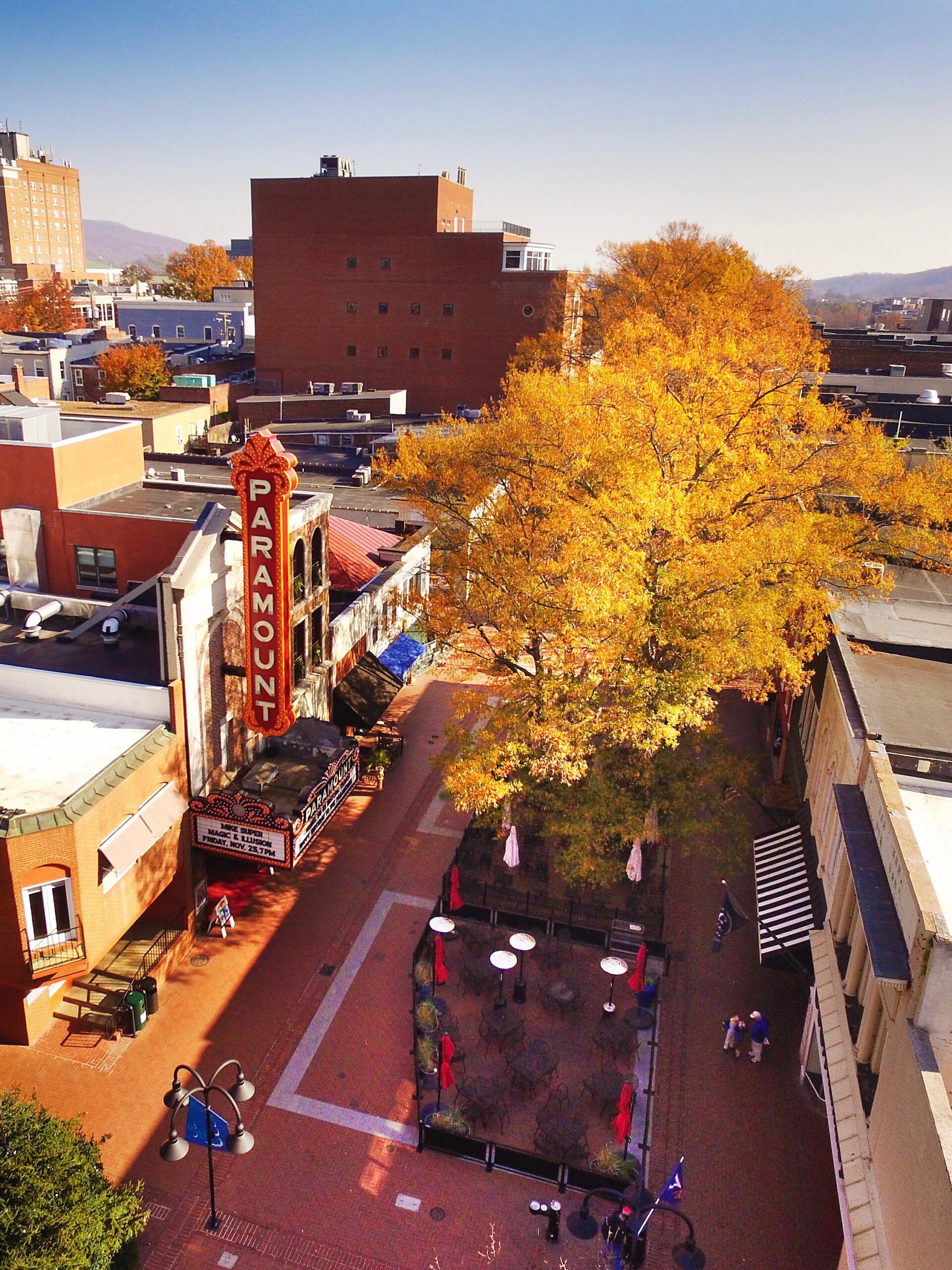
For the past 50 years, Charlottesville’s Downtown Mall has been a site in and of transition. The blocking off and bricking up of East Main Street, completed on July 3, 1976, converted the city’s main drag into a pedestrian promenade and central business district that aimed to keep consumers and community members in place. But the origins of the Downtown Mall’s design engaged the concept of movement from the outset.
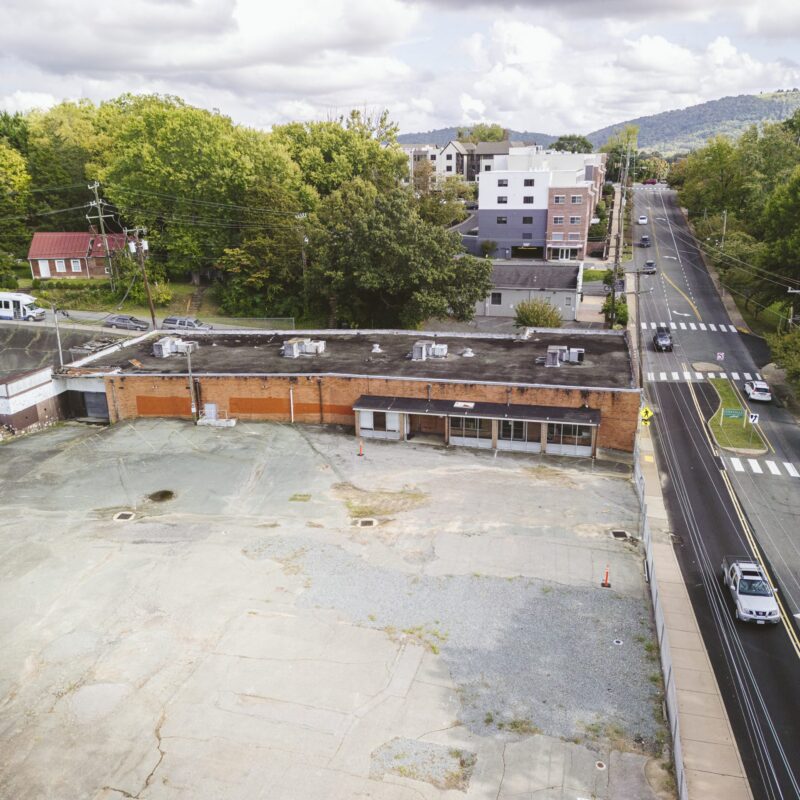
In the 1950s and ’60s, the City of Charlottesville spent more than a decade engaging in “urban renewal” projects to address increasing automobile traffic and declining economic activity downtown. Recommendations from the planning firm Harold Bartholomew & Associates resulted in the destruction of Black neighborhoods at Vinegar Hill and Garrett Street, displacing residents and uprooting communities as the city took space for new roadways—and commercial builds that never materialized. By the late 1960s, growing resistance to HBA’s master plan for downtown had reached a tipping point, and the city planning department pivoted. Maintaining an interest in a pedestrian-friendly downtown, officials contacted Lawrence Halprin & Associates in 1972, setting in motion a process that would result in the realization of Charlottesville’s Downtown Mall.
Overture
Planning, development, and embodied being
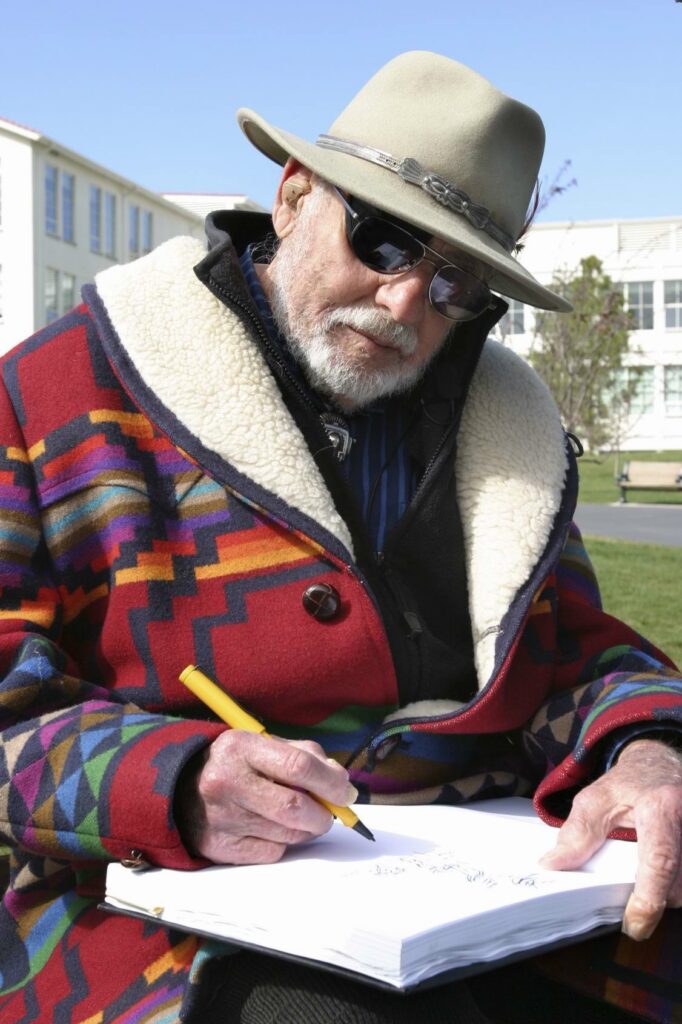
Lawrence Halprin is recognized as one of the most influential landscape architects of the 20th century. His studies at Harvard University’s Graduate School of Design were deeply influenced by the Bauhaus and the philosophical belief that form should follow function while pursuing unity between every artistic and design discipline.
Alison B. Hirsch—a socially and politically engaged scholar working across landscape architecture, cultural landscape studies, and landscape history—has published numerous works related to Halprin and his shaping of urban spaces. In “Scoring the Participatory City: Lawrence (& Anna) Halprin’s Take Part Process,” published in the Journal of Architectural Education, she argues Halprin’s success “depended on collaboration, and particularly the artistic symbiosis that existed between him and his wife, the avant-garde dancer and choreographer Anna Halprin.”
The 1950s and ’60s saw a progressive shift toward active participation on the part of artistic audiences, influenced by forms of social protest including marches, sit-ins, and riots. Anna Halprin and her San Francisco Dancers’ Workshop directly advanced this change, giving audiences a stake in how performances were formed through a democratized mode of collaborative creation.
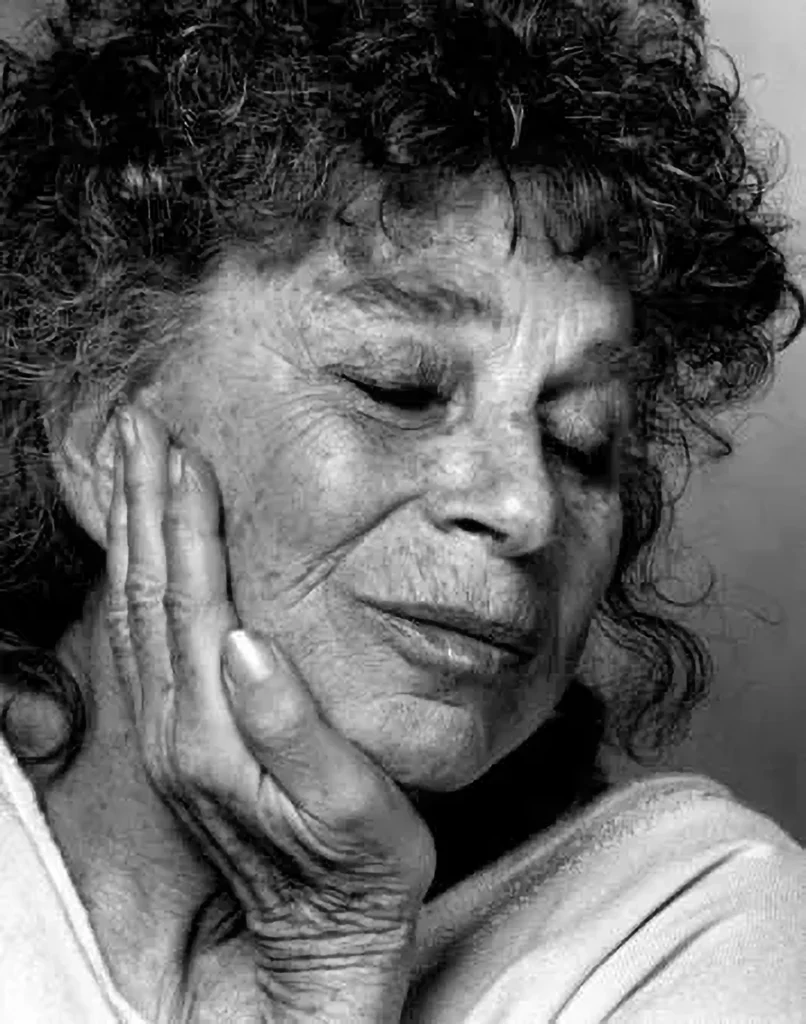
Anna Halprin organized interactive dance and movement events where environmental conditions and general actions were choreographed, or “scored,” but the final performances were left open-ended and completed through audience participation. Lawrence Halprin applied this notion to his work by designing open spaces as scores—choreographed by purposefully placing architectural elements—with the intention to elicit embodied awareness, giving individuals flexibility in choosing direction and pace as they navigated their way through the city. Furthermore, he used the loose type of guidelines related to time and situation, something Anna Halprin had developed in performances, to organize public-participation workshops called Taking Part. These Taking Part workshops were meant to channel what the Halprins called “collective creativity.’’ As Hirsch explains, “The collaborative process was supposed to maximize the participants’ diversity as a creative force.” LHA employed the technique in its planning process for Charlottesville’s Downtown Mall in March of 1973.
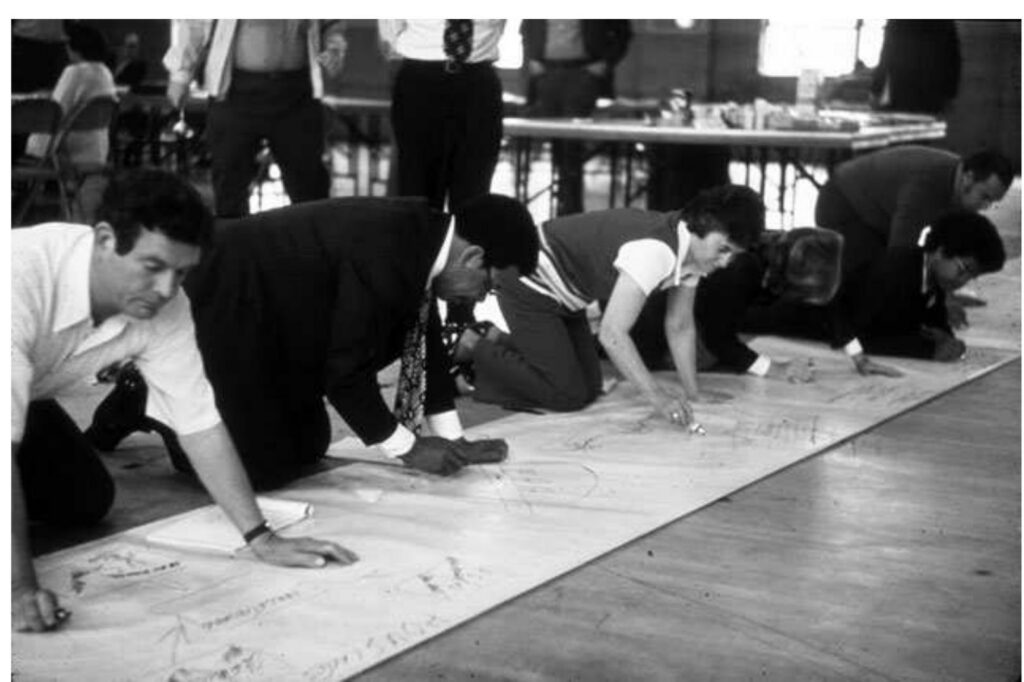
LHA selected 32 residents to represent the “microcosm of Charlottesville’’ within the Take Part workshop, which Hirsch called “fairly diverse.” The group included representatives from city government and local businesses, Black and white private citizens, male and female students, and at least one retiree and one “housewife.” Drewary Brown, a leader of the Neighborhood Youth Corps, acted as an advocate for the marginalized Black community within the workshop. Brown worked with LHA to understand issues and tensions related to power dynamics between different groups within the city, which ultimately helped the firm in the development of its Master Score—a schedule of choreographed activities, exercises, and sharing sessions—that guided the Charlottesville Take Part workshop.
Over the course of three days, the participants followed a number of smaller scores meant to increase awareness of their city—its current design, communities, and needs—and prompt de-centered, democratized views of how the redesign of Charlottesville’s downtown should take shape. Participants were asked to navigate the city by both foot and automobile, to observe from various vantage points, to draw and write out what they noticed, and to roleplay as residents of other communities. “The entirety of the score emphasized relationships, where the choreographed movement from one node to the next would reveal links and interconnections and force participants to consider their optimization,” Hirsch explains. What emerged from the workshop was a final report from LHA outlining 16 consensus items that the community determined the firm would employ in its planning and design process. The items emphasized pedestrian-only areas, a diversity of things to do downtown for a variety of age groups, mixed-use buildings, and urban amenities comparable to the suburban shopping center at Barracks Road.
Choreographing the Downtown Mall
Bodies in motion
With the 16 consensus items driving the redesign of Charlottesville’s downtown, LHA focused on both the aesthetic and humanistic needs of the city when designing the Downtown Mall. Elements repeated in the Mall’s paving built a framework of interconnected outdoor rooms, where the red bricks in herringbone pattern that act as the thoroughfare were offset by gray granite. This patterning was intended to both influence pedestrian movement and create spaces for rest and social interaction up and down East Main Street. To promote and facilitate that rest and social exchange, LHA planned to include 150 custom-designed movable benches measuring three-and-a-half-feet wide, as well as four fountains, meant to provide occasions to pause and gather. The moveable seating also allowed citizens to redefine public space, creating places for retreat or engagement through improvisational arrangement.
Stands of trees referred to as bosques, which were placed to influence movement and eventually provide shade canopy, became one of the defining features of the Downtown Mall. The spaces between bosques were intentionally varied in size, with the locations strategically weighted on either side of the Mall’s center line to encourage meandering and lateral movement toward open spaces. Planters, bollards, kiosks, and lighting were all employed to further define the Downtown Mall as a series of interconnected “rooms” while influencing pedestrian movement.
In a 2022 survey of the Downtown Mall commissioned by the Virginia Department of Historic Resources and the City of Charlottesville, the authors state that “the primary purpose of the Mall as designed by LHA—as a gathering place for residents and visitors to restore economic vitality—has not changed.” But many changes have indeed occurred over the Downtown Mall’s 50 years, changes that have eroded the actions—and potentially the ethos—aimed at achieving that stated purpose.
Dynamic tension
Commerce, community, and creativity
LHA’s plan for the Downtown Mall entailed organizing space and influencing movement, and within those frameworks, mixed-use buildings and urban amenities including residential, shopping, entertainment, and dining spaces.
“The Downtown Mall’s strength has always been its ability to serve multiple purposes at once. It is a place where people gather, celebrate, connect with one another, and support local businesses, and those goals are complementary rather than competing,” says Ellen Joy, the City’s Parks & Recreation Department special events coordinator.
Chris Punt, principal landscape architect at Research and Design Studio and a Charlottesville-area resident for the past nine years, agrees that the social and commercial aspects of the Mall are both important and benefit from each other. Punt, who has worked with communities to reimagine and revitalize public space throughout New Zealand and the United States, says “It’s hard to get the balance right as cities and towns grow and communities change over time. It does feel like the Downtown Mall is prioritizing commercial space leading to what might feel like an imbalance.”
Most of the bosque areas on the Downtown Mall—locations originally intended as spaces for movable benches where pedestrians could rest or socialize—are now occupied by outdoor dining areas for restaurants. Three of the four fountains LHA designed to invite opportunities for pause and interaction during movement along the Mall have also been restricted by dining area enclosures. All of the original LHA-designed benches have been removed, replaced by off-the-shelf seating bolted into place. Instead of the 150 proposed benches, the Downtown Mall has fewer than 35 seats freely available for pedestrians.
This absorption of formerly public space—and the imbalance of commercial and social concerns Punt references—seems to undermine the intentions originally embodied in Anna and Lawrence Halprin’s approach. Without the ample spaces envisioned for residents and visitors to make their own way and simply enjoy public space comfortably, there is a dissonance between form and function.
“It was designed first and foremost to be a dynamic public space for people to meet, to share physical time and space,” says Katie Schetlick, a dance artist and professor in UVA’s Department of Drama. Schetlick, who centers embodied learning, collaboration, and active reimagining through praxis in her creative work and teaching, has done extensive research into Anna Halprin’s practice and legacy—including her influence on LHA’s plan for the Downtown Mall.
In 2013, Schetlick and Veronica Piller, founder and director of concorDance contemporary and artistic director of Albemarle Ballet Theatre, devised “A Dance Score for the Downtown Mall” with musician Sam Cushman. “The path we took reflected some of the original paths of the original scores in the Charlottesville Take Part workshop from 1973. But when we approached the project again in 2014 we wanted the scoring process to be more reflective of the Halprins’ collective creativity approach,” Schetlick says.
When the group performed the work again for Tom Tom Festival in 2014, scores developed by various community members were collected, and organized dancers interpreted and enacted those scores, as they moved along the Downtown Mall with students from UVA’s Dance program, local dance artists, and the passing public. The experience had a profound effect on Schetlick. “Many of my previous understandings of the town were challenged and expanded,” she says. “I met city administrators, artists, and longtime residents with deep historical knowledge of Charlottesville and its complex makeup beyond its center of tourism and commerce. I began to see the way the design of the Downtown Mall was meant to highlight these complexities through the way it connects the landscape and reaches out beyond the central pedestrian thoroughfare.”
In 2016, Schetlick partnered with UVA landscape architecture professor and design theorist Beth Meyer to offer a tour of the Downtown Mall that explored the history and significance of the Halprins’ contributions. At the time, she says, “There was—and continues to be—concern about the privatization of the Mall that was initially designed to be a public and social space available for anyone to enjoy.”
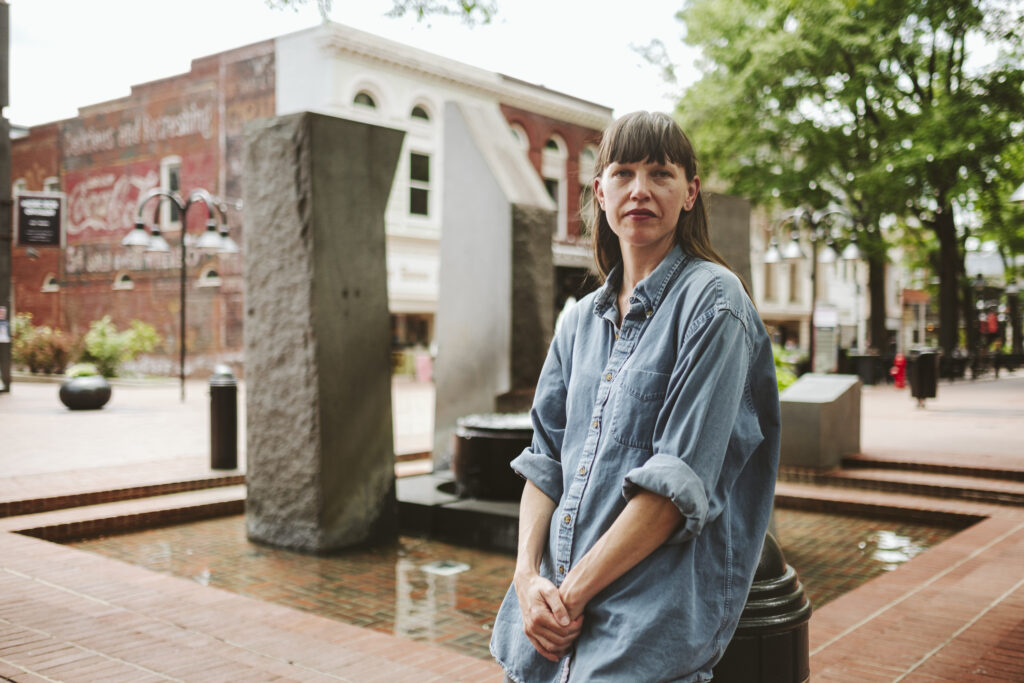
National Poetry Series winner MaKshya Tolbert, who practices placemaking in Charlottesville, recently published her debut work Shade is a place. Through lyric walking poems and Bashō-style travelogues, Shade is a place wanders east-west along the Downtown Mall, seeking “a Black sense of place.” Tolbert, who served four years on the city’s Tree Commission, including a year as the commission’s chair in 2024–25, led numerous “shade walks” for the public on the Mall as part of the Shade is a place project. While the main focus of these participatory walks was placed on the canopy ecology of the Mall’s iconic willow oak trees and the social exchange of being together, the entire project encompassed relationships between place, property, and urban planning in Charlottesville.
“My experience of the Mall is full of awe and plenty of frustration—which seems fair for a public space layered over what has been a crucial corridor for movement, whether as an old Monacan footpath, a drivable road connecting Richmond to the Shenandoah, or as what we call the Downtown Mall,” Tolbert says. Her research into the origins of the Mall and its initial design revealed a perspective that is not always acknowledged by local history. “‘Place’ is as entangled as it is enchanting: Studying the Halprins and their embodied design processes against the backdrop of Jim Crow’s aftermath meant taking a sharper and more attentive look at atmospheric and social tensions in our cities and communities,” Tolbert says.
In addressing the balance between commercial and community concerns as related to the current state of the Mall, Tolbert doesn’t mince words. “The tension is so palpable that I couldn’t help but locate and immerse Shade is a place into the density of the Downtown Mall. You’d have to train yourself not to see it to not see it. Which even I did, for a while,” she says. “Part of the intention behind ‘shade walks’ was to begin to open up my own and each other’s attention, and to see if I could incite a deeper curiosity about the needs of the Mall people, trees, infrastructure, all of it.”
Moving forward
Energy flows where attention goes
One reason the tension between the commercial and community facets of the Downtown Mall may feel so pronounced relates directly to Lawrence Halprin’s practice as a landscape architect. “Halprin’s work has a richer dimensionality, as he was not only interested in the urban organizational scale, but also the human scale. His scores choreographed the body to respond to the ‘sensuous environment’ with heightened perceptual awareness,” Hirsch points out.
That awareness of the sensuous environment—what we see, hear, and feel as we occupy and move through space—impacts how we experience the Downtown Mall, individually and collectively.
“From a distance it is charming, lively, and cherished,” says Punt. “I quickly learned that the Downtown Mall functions like a street where people are squeezed to the edges dodging sandwich boards, safety chains, and other ‘stuff’ added slowly over time and most seating has a paywall in the form of a black railing.” Punt adds that these conditions are “anathema to the spirit of public space.”
Yet by many metrics, the Mall can be viewed as a massive achievement in urban design. Roughly 89 percent of the hundreds of outdoor pedestrian malls built in the U.S. in the 1960s and 1970s failed, with many of those sites reopening to vehicular traffic or being otherwise repurposed. “When so many pedestrian malls failed, the Charlottesville Downtown Mall is already a success,” says Greer Achenbach, executive director of Friends of Cville Downtown, a 501(c)(3) nonprofit created in 2021. Its mission is to make Charlottesville a more inclusive place by working with city government and the community to craft strategies and programs that stimulate downtown social and economic vitality. “However, in order to reach its full potential [the Downtown Mall] needs constant investment, a strategic plan, and clear leadership,” Achenbach says.
Charlottesville’s Downtown Mall was designated a National Historic Landmark in 2024, so it’s highly unlikely it will suffer the same fate as so many other defunct pedestrian spaces. But for the Mall to be continually upheld as a locus of both social and economic vitality—a truly inclusive and equitable site—steps will need to be taken to address current tensions.
For Schetlick, that means the Mall must remain a public space, “a site of interaction, unexpected movement, a site that reflects the multiplicity of place opposed to the staging/performing of a clean harmony,” as she puts it. “I think re-enlivening some aspects of the Halprins’ approach might be useful in understanding which publics the Downtown Mall is not currently serving as a public outdoor space, and in what capacity this public space should be sustained.”
Punt urges going back to basics and remembering the role and value public space has in the community. “Clear out the fences and barriers added to partition and restrict access and movement. Prioritize public seating and elements that promote social interaction and expression for all people regardless of background and economic status in the spirit of public space,” he says.
Tolbert echoes this sentiment. “At the level of the City of Charlottesville, take the wider public’s needs for movement and rest seriously. Put more chairs down that you don’t have to pay to sit in. Practice ‘placekeeping’ in service of everyone on the Mall, not just its paid visitors,” she says. “People really want more seating on the Mall [that] they don’t have to pay for. That particular feedback [from ‘shade walk’ participants] transcended income brackets.”
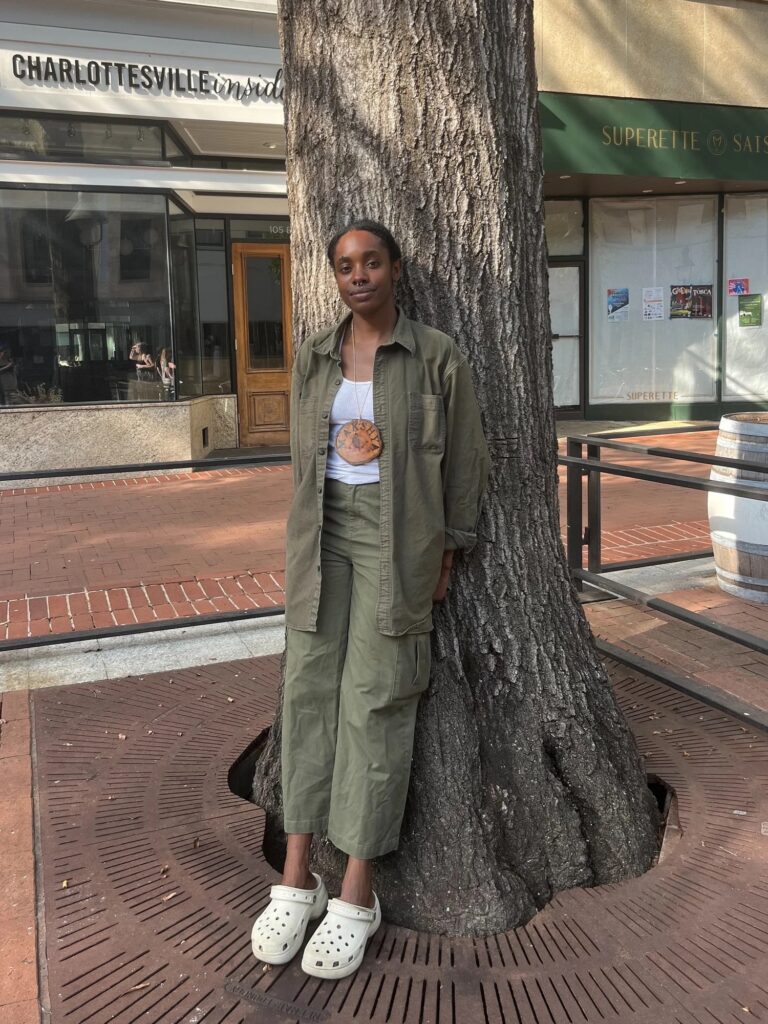
For its part, the city is invested in maintaining the Mall as a site that serves the broader community more holistically. Joy’s position as the Parks & Recreation Department’s special events coordinator underscores this commitment. “I stepped into this role at the end of last year. It’s actually a newly created position, born directly out of community feedback identifying expanded special event programming and cultural events as a priority for the city. That origin matters to me, because it means the work I’m doing is grounded in what the community said they wanted,” she says.
“From a special events perspective, continued success means keeping the Downtown Mall active, welcoming, and engaging for residents and visitors alike. Events help bring people together, create memorable experiences, and encourage people to spend time downtown. The more opportunities we can create for people to connect with the Mall through community events, arts, culture, and celebrations, the stronger and more vibrant the Downtown Mall will continue to be,” Joy says. “Free and inclusive experiences are a cornerstone of what public parks and recreation departments exist to provide.”
Achenbach notes that Friends of Cville Downtown also continues to hear a desire for more interactive experiences on the Downtown Mall. “More thoughtful planning and communication in experience design could more effectively help the Mall serve everyone’s needs,” she says.
Thoughtful planning, increased communication, and expanded free and inclusive events are all steps in the right direction to ensure the Downtown Mall thrives in its next 50 years, steps that should be choreographed in concert with a reattunement toward the principles embodied in the Halprins’ initial vision of dynamic public space. While a certain amount of tension between commercial and community needs may persist, Charlottesville’s pedestrian mall remains a beloved and historic site worth celebrating 50 years after its dedication, as Tolbert acknowledges: “I really do love the Mall—the way I love anything fragile, fraught, and necessary.”