The Glass Building on the railroad tracks downtown was home to breakfast joints for more than two decades, most notably during Bluegrass Grill & Bakery’s storied 19-year run. In early May, the folks behind Aster unveiled the former greasy spoon as a modern, upscale dining room and kitchen.
Aster bills itself as a “restaurant designed to reflect the region,” with a menu “rooted in new American cuisine.” Its offerings are a long way from the biscuits and gravy, chicken and waffles, and beloved Hungry Norman of its predecessors.
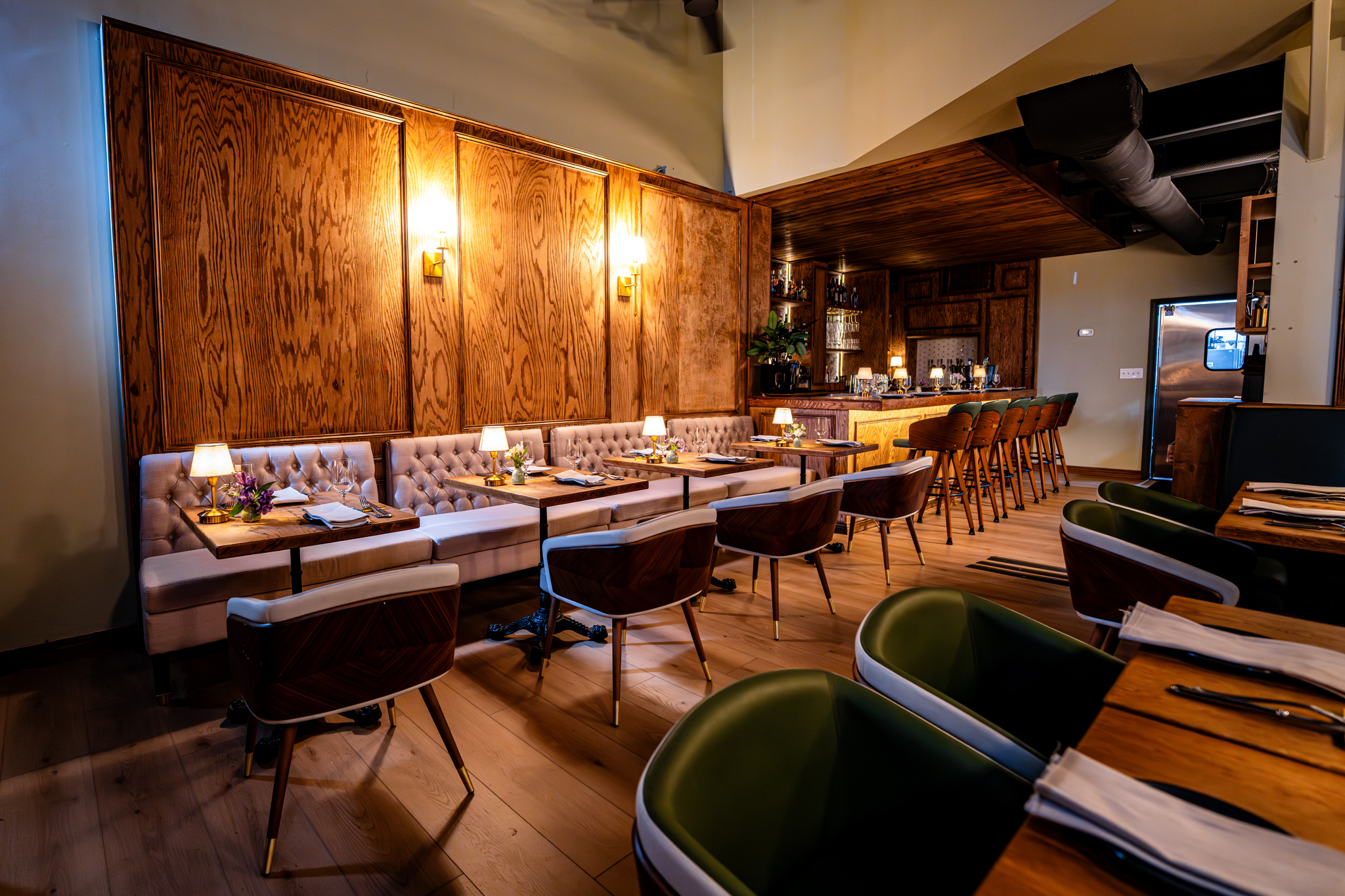
Equally transformed is the space’s design. Walking through a sleek wooden door into the restaurant’s newest evolution, diners’ eyes are drawn to the backlit bar at the rear of the room. To the right along the entry hallway is a large window framing Aster’s high-end kitchen filled with sparkling new appliances and bustling with accomplished chefs.
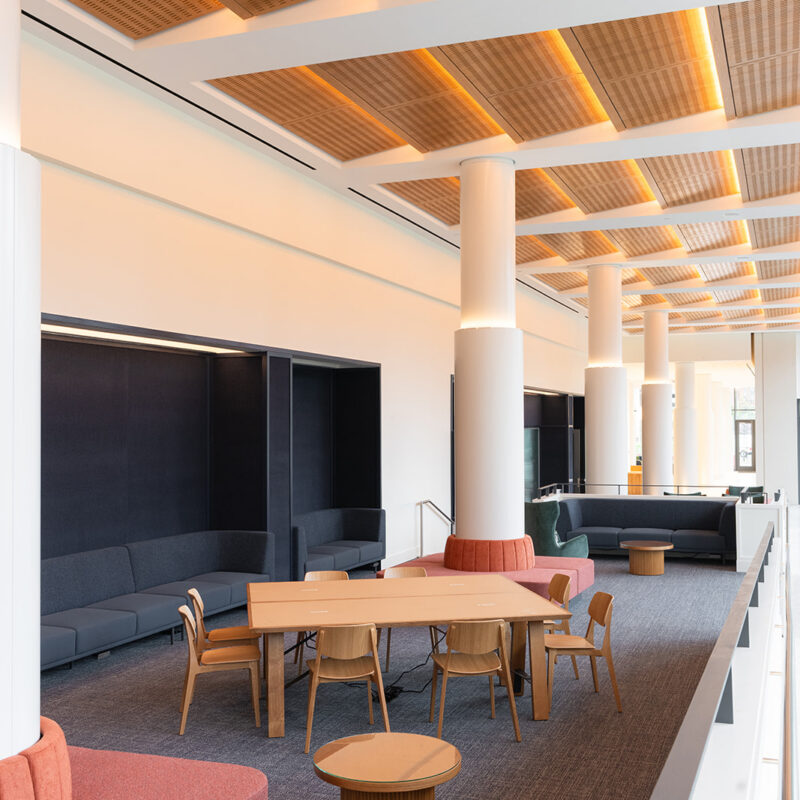
The bar area is marked with a low-hanging ceiling, which then gives way to the high industrial top lines of the restaurant’s intimate 35-seat dining room proper. The space’s nine wooden dining tables, along with the bar top, were constructed of Virginia-grown white oak by Aster co-owner Caleb Russell.
Russell grew up the son of a homebuilder and master electrician. Before becoming a sommelier and making restaurants his life, he spent a brief period as a craftsman himself, plying his trade in woodworking and furniture finishing. Aster gave him an opportunity to bring the two passions together.
“I’m a big philosophy of dining person,” the sommelier says. “You know, you’re not going to remember the drink you had, you’re not going to remember the entrée you had a year after your experience. But you will remember how you felt in the space.”
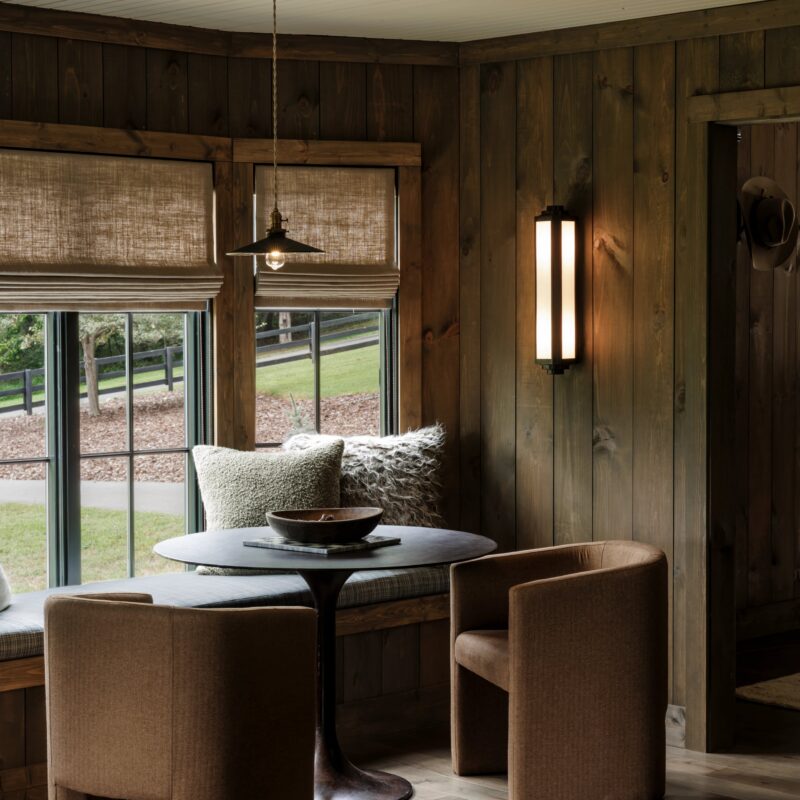
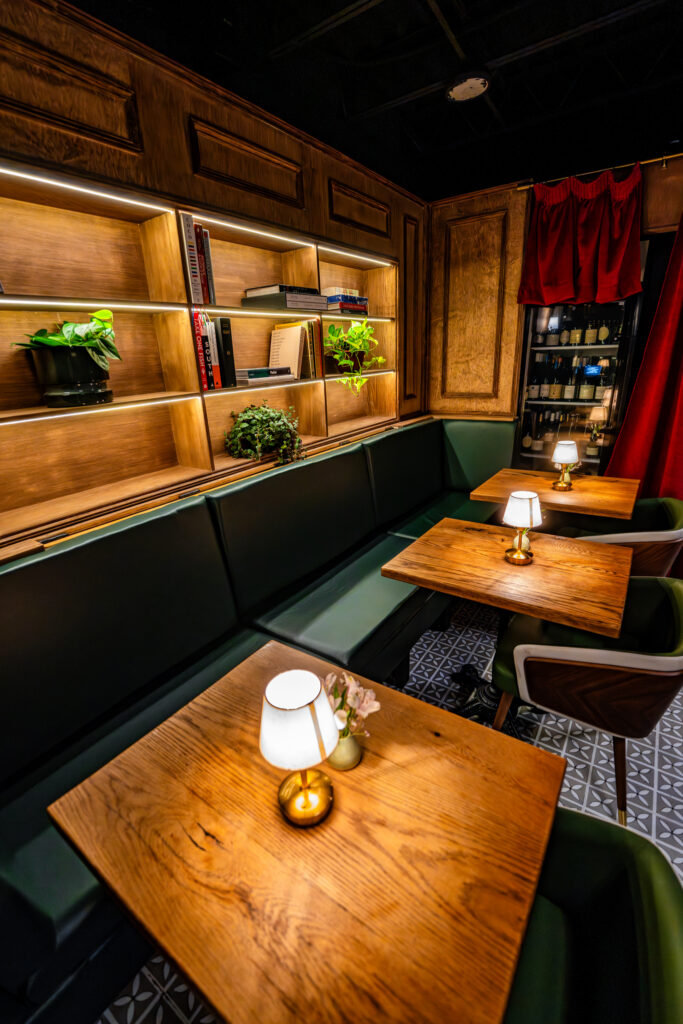
Aster’s color palette and soft surfaces have received the same detailed treatment as the hardtops. Working with Maria Laura Irrazabal from Zaika Design Studio, the team opted for two separate color palettes on the dining room’s two sides. On one, dark sage green elicits a bucolic, classic Commonwealth aesthetic, while on the other, cream chairs and banquettes skew modern Virginia. Grained wood wainscoting stretches around the delineations to tie the room together.
The Aster team brought in international help to upholster its booth seating. One of the owners tapped his mother to travel from Argentina to craft the leather hides that make up the two-toned banquettes. “We flew her up, and she did a fantastic job,” Russell says. “They’re very comfy.”
Lighting the restaurant was critical, according to Russell. The overall service lighting is slightly dimmer than in many establishments, but adjustable table lamps and below-bar LEDs give diners a way to up the illumination—helpful for some guests when reading their menu. Russell says the team expressly avoided overhead chandeliers to maintain the effect of the room’s vaulted ceilings; wall sconces produce the soft lighting permeating the space.
Much of the work in remaking the Glass House diner into a high-end restaurant was less glamorous. PGX Mechanical installed a new HVAC system, Midway Electric updated aging wiring, and MAPF Plumbing helped modernize the kitchen and bathrooms. Russell says all of Aster’s collaborators were critical in making the restaurant an immersive experience for diners.
“The way that I view it, it’s the surfaces you have, it’s the color palette, it’s the way your table feels when you touch it, and the sturdiness of it. It’s how you feel grounded in your chair, it’s the music, the lighting,” Russell says. “All of that comes together to elicit a certain feeling that’s somewhat subconscious.”