Birdwood Mansion opened its doors as a boutique, seven-room hotel on June 11. It was the culmination of a project nearly 18 months in the making for a property with history dating back to the early 1800s.
The mansion was built between 1819 and 1830 and reflected Jeffersonian ideals: a four-over-four brick structure fronted by Doric columns and outfitted with elliptical transoms, latticed sidelights, symmetrical façades, incised brick panels, and four interior end chimneys. A slate roof was added later, and still later, three cottages cropped up around the main house. Several dependencies, agricultural outbuildings, and a formal garden completed the campus.
Throughout the mansion’s history, various owners and builders have made changes while trying to maintain the historical vision. The latest improvements are no exception. The team behind the update—the Boar’s Head Resort, the University of Virginia, and various design and construction partners—made few structural changes. The exception is an upscale kitchen and dining room fitted into what was previously a three-season room at the rear of the main house.
“This was all done with historic restoration in mind, rather than as a renovation,” Birdwood Director of Residence Stephen Kelly says.
The space that would become the new restaurant was in disrepair, according to Kelly, but the team retained as many of the original materials as possible, including the wood slatting and ceiling. The idea for the full restaurant, indeed, emerged halfway through the project—“a fun design opportunity,” according to Leah Stoner, a designer with project partner Glavé & Holmes Architecture.
Part of the fun, Stoner says, was a custom server station placed in the center of the restaurant by necessity. The station provides storage space for glassware and dishes, an addendum that would typically fit into the back of the house. The aesthetic and functional station is modular, capable of being moved about as the restaurant’s need dictates.
A full-service, all-season dining room and commercial kitchen surround the serving station, with extensive windows opening on the mansion’s grounds and surrounding mountains—a nod to the space’s former life as an enclosed porch. The 42-seat restaurant is open to both hotel guests and Charlottesville residents.
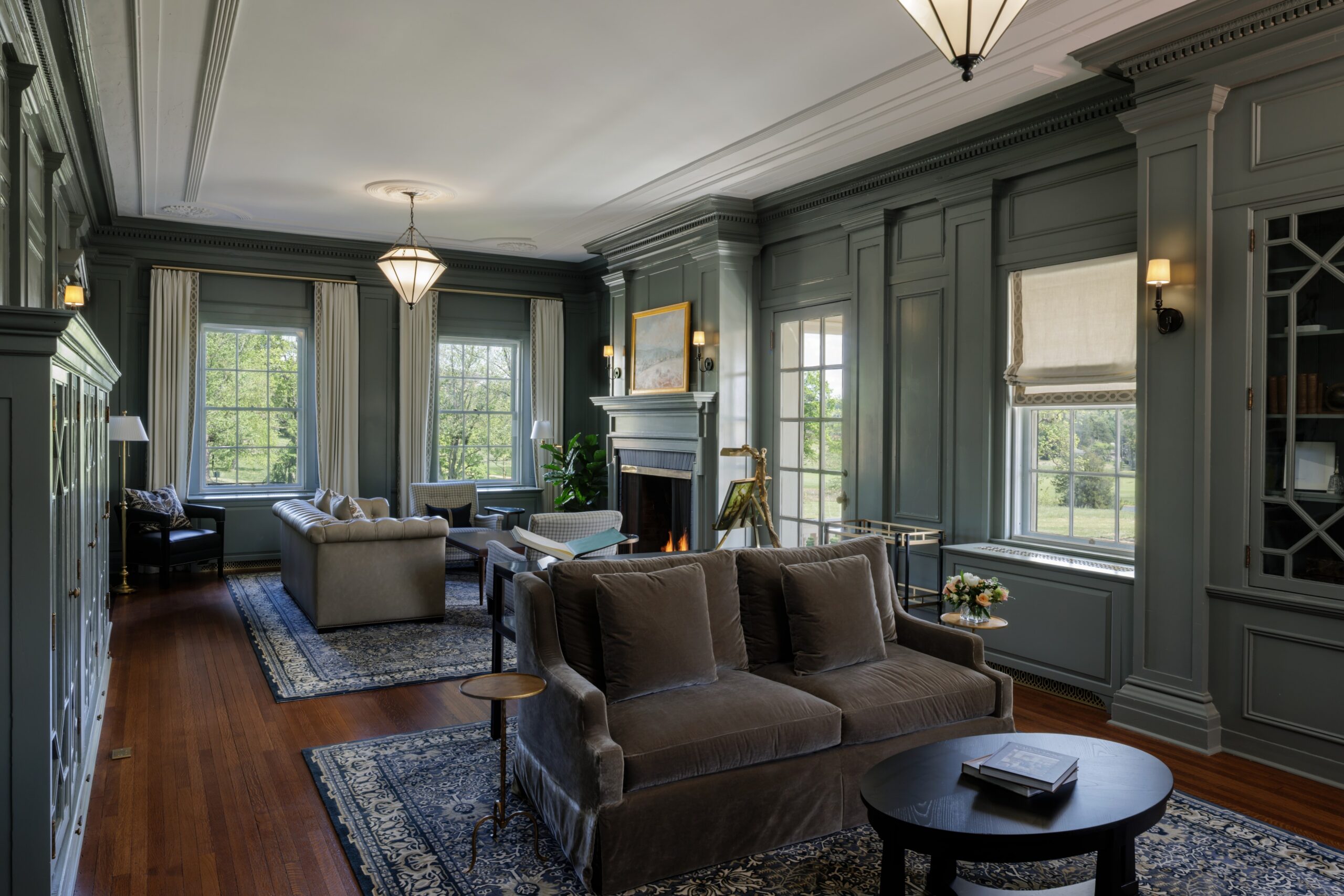
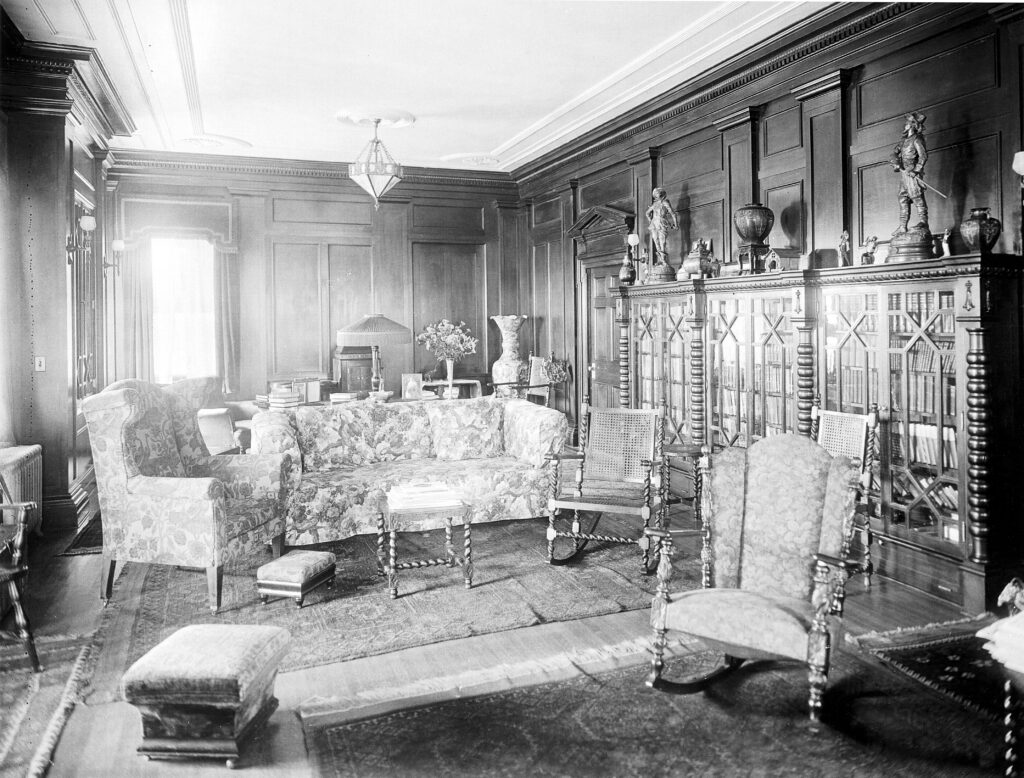
In the mansion’s seven guest rooms and throughout the common spaces, the design team left Birdwood’s original mill work, cabinetry, and built-ins mostly undisturbed, restoring and extending details as needed. The team updated the bathrooms throughout the main house and cottages—all within the U.S. Secretary of the Interior’s Standards for Rehabilitation—with period-appropriate finishes and heated floors. A pocket door between the north and south parlors was restored after being removed at some point during Birdwood’s storied history; the team also resurrected the clear wood finish that had been painted over on some of the home’s built-ins.
Stoner says paint was a point of emphasis. At the time of Birdwood’s construction, shockingly bright colors were the norm—a way for homeowners to show off wealth and privilege. To preserve the historical intention without offending modern sensibility, the restoration team selected a pastel palette calling to mind the period’s agriculture. Light green harkens tobacco leaves, pale yellow nods to wheat, and blush pink recalls red corn.
Stoner says the team devised creative solutions for several Jeffersonian architectural anomalies. The original Birdwood, for example, featured doorways that might now lead to a bathroom shower. Other entryways might be on a wall where beds are now positioned. “Guests might walk in and think, ‘Why is there a door there?’” Stoner says.
Inspired by traditional bed coronas, the designers placed crown-like molding structures festooned with high-end fabrics over the doorframes, not only blocking the superfluous egresses, but also creating a cozy backdrop.
The design team carefully curated each art piece hanging throughout the mansion, and “every single room is designed around a motif,” Stoner says. “We are telling the story of Birdwood.” In the parlor, for example, the art illustrates Jeffersonian farming. Images of prized cattle in a line adorn the walls not to call to mind modern luxury, but to sink guests into the history of the estate.
From an operations point of view, Kelly says a similar respect for history prevailed. Original linen closets still function as such, and when guests arrive in the hotel parlor, they are greeted as guests of the home, rather than at a traditional front desk. “We sit people in the parlor and offer them a glass of champagne,” Kelly says. “When someone comes to your house, you don’t ask for their ID and credit card, you ask them what you can get them to drink.”
Stoner says the team’s goal was to avoid creating a “living museum.” The new Birdwood Mansion furniture and finishes are historically appropriate, but they’re also intended to be comfortable. “We tried not to work around but with the historical restrictions,” the designer says. “I think we’ve achieved a nice mix of history and modern comfort.”