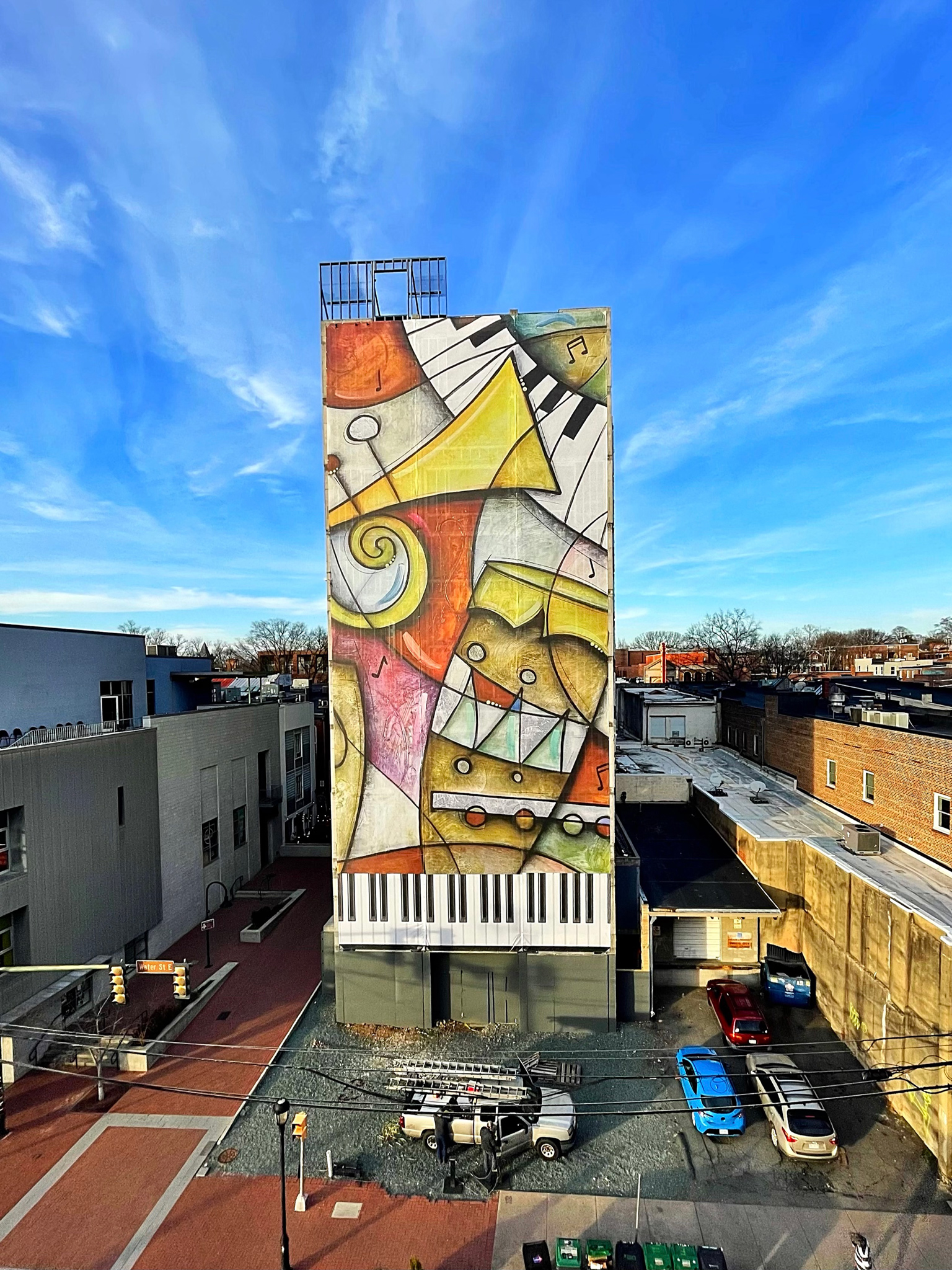
More than 17 years have passed since construction stopped on a luxury hotel in the middle of Charlottesville’s Downtown Mall—and there are no active initiatives to move the project forward or move on.
“The building is currently being marketed for sale by commercial brokers on behalf of the owner,” said Charlottesville Economic Development Director Chris Engel in an emailed response to a question about the property’s status.
A development group led by Halsey Minor broke ground on the project in March 2008 but lost financing during the economic downtown of that year. The unfinished project was sold at auction in August 2012.
Atlanta-based John Dewberry purchased the incomplete skeleton and a quarter acre of land through a subsidiary for $6.25 million. At the time he said he would turn his attention to Charlottesville after completing a similar project in Charleston, South Carolina.
Dewberry lived up to that promise and submitted new plans to the Board of Architectural Review in 2017 that sought to add another story to the top. That March, City Council voted 4-1 to provide assistance to get the project unstuck by providing parking spaces and incentives. Engel and others worked to give a property tax rebate, but Council voted 3-2 against that idea in December. There’s been nothing official since then.
The inaction might sound familiar to nearby residents of a Dewberry-owned office building in midtown Atlanta, who have organized a petition demanding action.
“The abandoned high-rise construction site at Peachtree and 14th streets in Midtown Atlanta, including the long-idle tower crane and exposed structure, has remained a visible concern for years in the center of one of Atlanta’s busiest and most densely populated districts,” reads the petition on change.org that has over 2,700 signatures.
The 22-story building was originally opened in 1987 and Dewberry began a renovation in 2019 that stalled a year later. A safety inspection in March found several violations, which were addressed by the company. But Atlanta City Council took notice and agreed unanimously on June 15 to impose a severe penalty authorized by an ordinance adopted in 2024.
“A blight tax can be applied to properties that remain in a blighted condition for an extended amount of time, equivalent to twenty-five (25) times the current City general operating levy millage rate,” reads the resolution.
How the process in Atlanta will work out remains to be seen, as this is the first time the blight ordinance has been imposed.
This option does not really exist in Virginia, according to Senator Creigh Deeds, who called the project a public nuisance that should be condemned.
“At least steps to stay condemnation would bring the owner to the table,” Deeds said in an email.
Meanwhile, the city appears satisfied that the long-unfinished building is not a threat to the public at 201 E. Water St.
“We have a structural study dated March 2017 that states the structure is in good condition,” Engel said in an email on June 5.