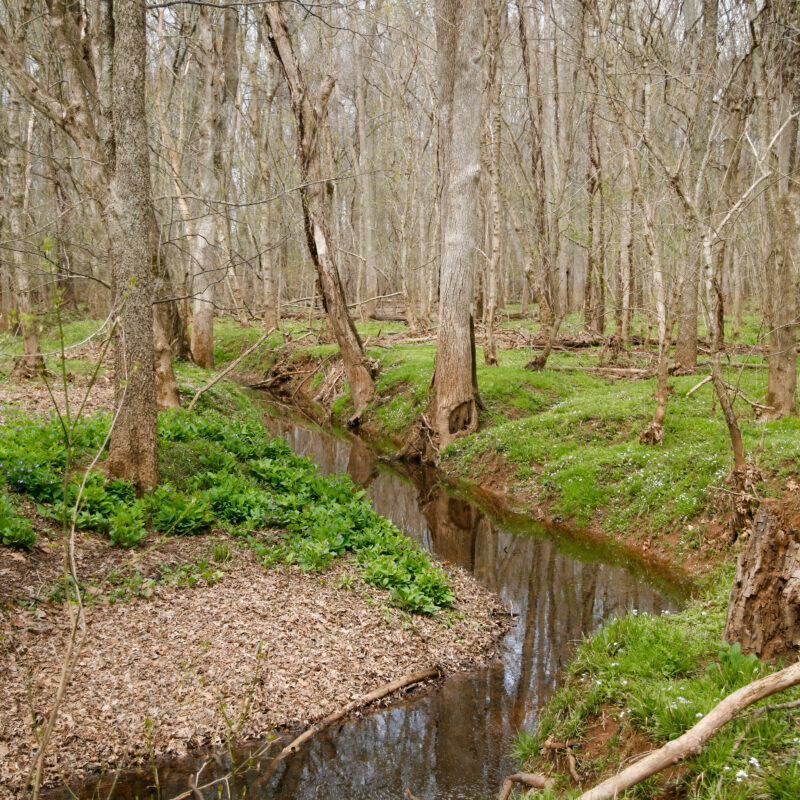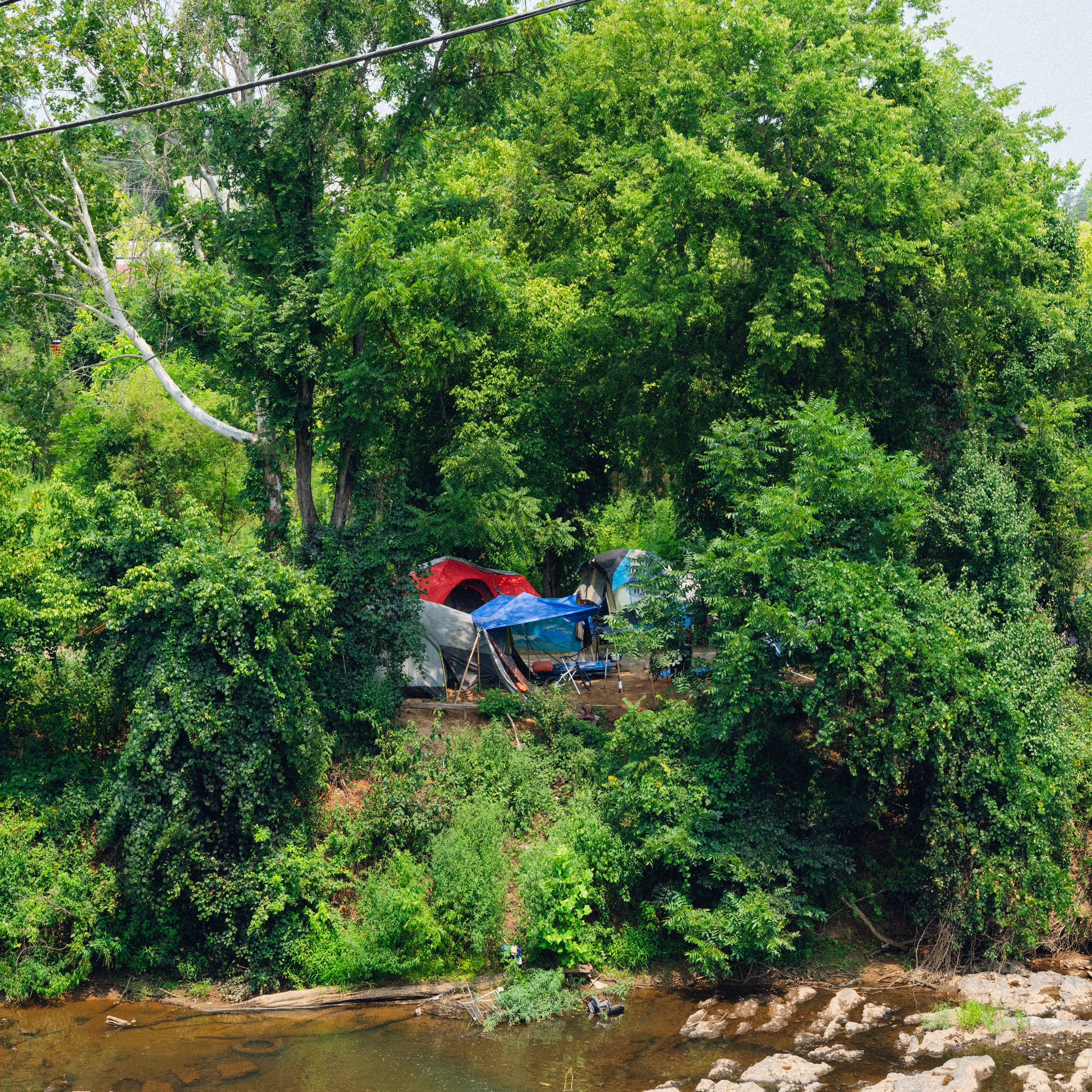
The situation at the Rivanna Trail encampments is reaching a boiling point, with a viral video of a man (who has since been identified as a white supremacist who believes Heather Heyer’s killer should be free) walking through the area. The video, along with the deaths of unhoused persons living at the site, tent fires, two alleged sexual assaults, and growing environmental concerns, have brought increased public attention to the encampments—and increased worries over the safety of encampment residents and community members.
After months of rising tensions, the City of Charlottesville announced the closure of the Free Bridge and 0 E. High St. encampments on September 1. Camping in the area will be banned after that date.
Official signage, posted July 23 while C-VILLE visited the sites, states that “a coordinated transition of all people and belongings from this encampment area is planned to begin on or around September 1” and that “trash, hazardous materials, and all remaining items will be removed.”
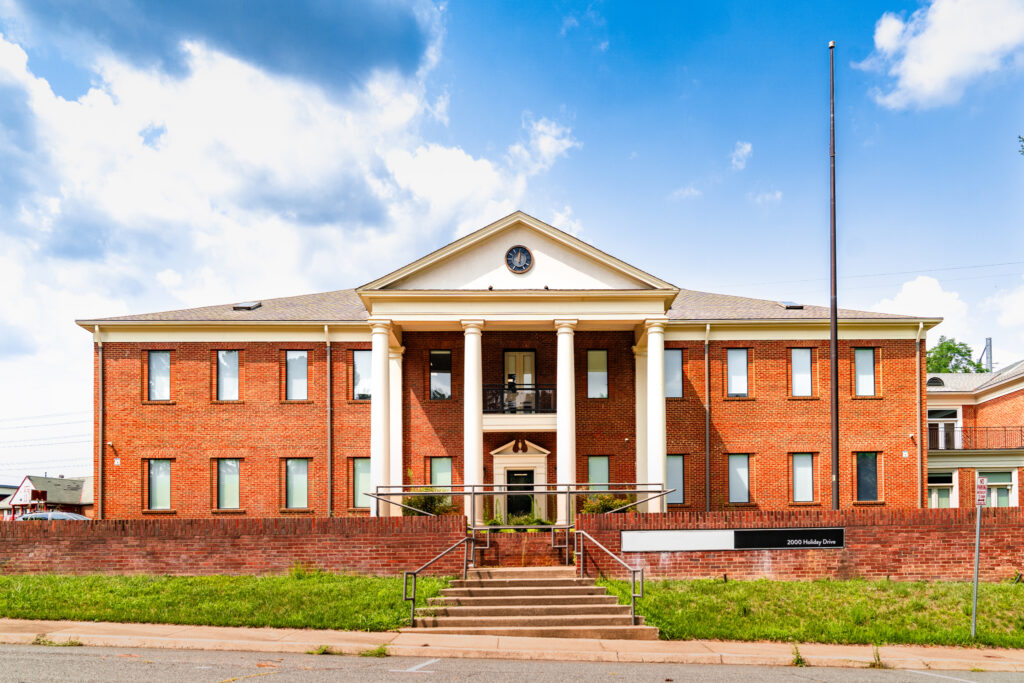
Plans for a low-barrier shelter at 2000 Holiday Dr. have long been in the works, but will not be completed in time for the September 1 encampment closures. With an urgent need for shelter, C-VILLE learned the Holiday Drive site will begin operating as an emergency shelter in the weeks to come. When exactly it will open, the cost, and who will operate the emergency shelter are yet to be determined.
How did we get here?
The two encampments reached a peak population of around 115 people earlier this summer. Current estimates suggest a full-time resident population closer to 50—with more data expected soon from the area’s first summer Point In Time count, completed on July 22 and 23.
The growth of the sites is the culmination of a shortage of shelter and permanent housing beds in Charlottesville amid ongoing housing and affordability crises.
In a May presentation to City Council, the Blue Ridge Area Coalition for the Homeless said it counted 703 people on its By-Name List between May 1, 2025, and April 30, 2026—up from 620 people last year. Compared to the Point In Time count, which tallies the unhoused population on a given date, the By-Name List provides a more holistic view of everyone experiencing homelessness and housing insecurity in a given year.
Department of Housing and Urban Development data from 2025 lists 419 total year-round beds in BRACH’s catchment area, which is composed of Charlottesville and Albemarle, Fluvanna, Greene, Louisa, and Nelson counties. That bed count includes 180 units of emergency, safe haven, and transitional housing, and 239 units of permanent housing.
Chapel Hill, North Carolina—which has a similar unhoused population to Charlottesville, based on census and HUD data—has 625 year-round beds, comprising 521 permanent units and 104 beds for emergency, safe haven, and transitional housing.
With local demand for shelter far outpacing current supply, particularly with no year-round low-barrier shelter currently available in the city, the encampments along the Rivanna Trail grew. Now, the city hopes those living along the trail will utilize the emergency shelter at 2000 Holiday Dr.
“The emergency shelter component has been a part of the conversation since this encampment began. We weren’t sure that we would be able to do it, because we did not feel as though we had an operator,” says City Manager Sam Sanders. “It has been on the list of things that we needed to do. The issue really grew out of the size of the encampment and some of the threats within and coming from outside the encampment.”
“We are planning to use the Holiday Drive [site] as an emergency shelter so that we can tell the individuals, ‘You know what? This is not the best place for you, but we have a place for you to go,’” says Mayor Juandiego Wade.
Service providers and city officials say the emergency shelter won’t be a one-size-fits-all solution for those currently living in the encampments.
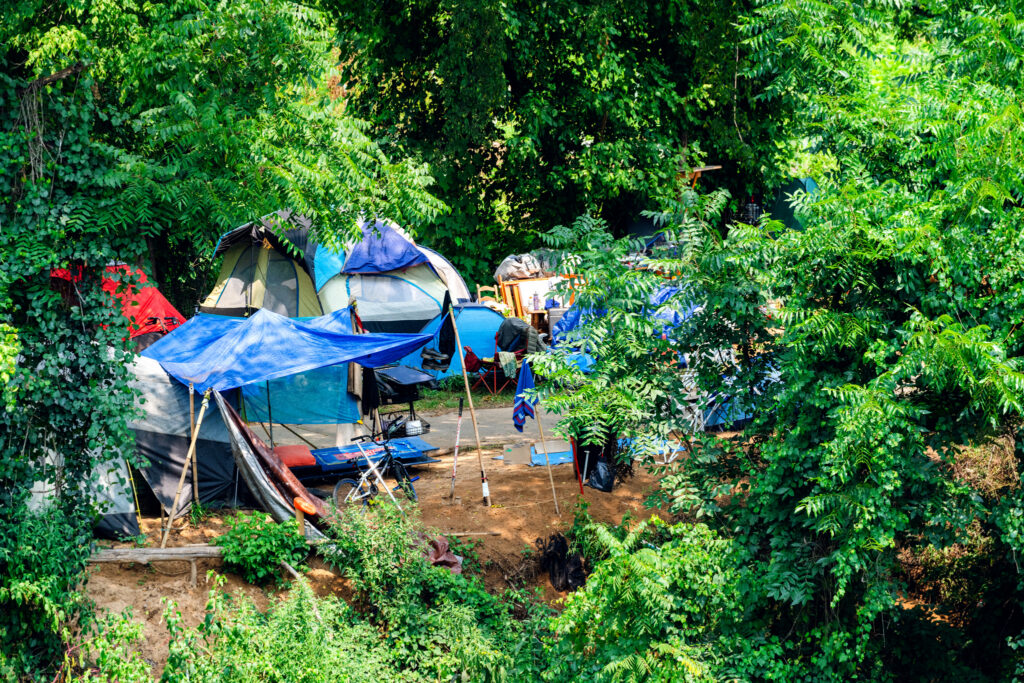
Transition in motion
At press time, city leaders and outreach professionals have more questions than answers about the Holiday Drive emergency shelter. The city has not yet confirmed who will run it, but is in the process of solidifying an agreement with a potential operator, according to multiple city leaders.
The shelter will not be operated by a local nonprofit, but organizations involved in the city’s low-barrier shelter workgroup (BRACH, People and Congregations Engaged in Ministry, The Haven, and others) will likely have a presence at the site.
“At this point, there are two primary questions remaining. One: [Is the potential operator] … ready to commit to it as something that they think is feasible, given the scale of it and the number of staff members they may need?” says City Councilor Michael Payne. “And then two: How is it funded?”
Sanders says the city can’t confirm an operator yet, or the exact cost of opening the emergency shelter so rapidly, but there should be more information within the “next two to three weeks.” He and Payne confirmed that local donors have expressed interest in supporting, and committed money toward, the preparation of the emergency shelter site.
“We know that it’ll be a few hundred thousand dollars to just get the building ready to be an emergency shelter,” Sanders says, noting that immediate changes would be simpler construction measures like removing walls to maximize the space’s utility as an emergency shelter. The longer financial forecast for the Holiday Drive project is in the multimillions. “The actual renovations … that is something that our philanthropic community has agreed to cover, as well as the significant upfit for the long-term operation.”
Renovations and construction to prepare the Holiday Drive site to serve as the low-barrier shelter it was originally intended to be could occur while it is used as an emergency shelter, depending on the scope of renovations and how much space is required for the emergency shelter, which will be operated as a congregate shelter, divided by gender.
“A congregate shelter is one where there are beds that are spread out every few feet. Folks do not have their own privacy in terms of a door or anything under lock and key. … You don’t have your own personal room or space in a congregate shelter setting,” says BRACH Executive Director Shayla Washington. “That isn’t appealing for a lot of folks, understandably so.”
During a previous visit to the encampment, C-VILLE heard this exact sentiment from resident Jerry Gentry. “I like being by myself. I mean, a few people’s all right,” he said, “A homeless shelter type, yeah, I’d rather stay out here.”
Beyond a lack of personal space, emergency congregate shelters like the one in the works at Holiday Drive are not ideal for couples, people with pets, or people with limited mobility.
Washington says some current encampment residents are reportedly leaving ahead of September 1.
“Some folks are actually relocating to other sites because they’re worried about what’s going to come on September 1. They’re worried that there won’t be any option,” says Washington. “I don’t think they’ve stayed long enough to hear what the other options could be or other alternatives could be. …We also are pursuing a potential hotel or motel option for folks who cannot stay in a congregate shelter for whatever reason.”
According to Sanders, the city is also exploring alternative arrangements at the Holiday Drive site emergency shelter for those who cannot utilize a congregate shelter.
“We are working with the city to manage their expectations of closing the encampment by September 1, and whoever is able and willing to relocate to Holiday Drive, that will be set up as a 24/7 temporary emergency shelter,” Washington says. “I’ve been told that we can keep that designation for up to 18 months, as long as it’s a 24/7 designation, and someone is there on site all of those hours to ensure that there’s no fires because there’s no sprinklers currently in the building.”
BRACH does not currently have an outreach worker itself, but has been coordinating ongoing efforts at the encampment sites with City Councilor Jen Fleisher and her team.
Fleisher is leading a primarily volunteer-run assessment effort at the encampment sites, set to run through July 31. The assessment includes questions from HUD and the Department of Veterans Services, as well as general medical and wellbeing inquiries. Teams of two people, one interviewer and one scribe, spoke with willing participants in exchange for McDonald’s gift cards donated by a PACEM congregation.
“BRACH [had] a PIT count that was happening this summer, and PACEM wanted to do an assessment, and the city wanted to support those efforts to find out what residents needed top to tail,” says Fleisher. “We partnered with those two agencies—plus UVA Health, also trying to determine folks’ medical needs—to go out and talk to residents of the 0 East High and Free Bridge encampments now.”
The assessment team has evaluated roughly 38 people at press time, and is shifting its focus toward connecting participants with the appropriate resources.
“The experience so far has been very positive. Residents have been very generous with our assessment teams,” Fleisher adds. “We’ve gotten super information that can be really helpful, and now we’re combining all that information to come back to the residents and say, … ‘Here’s what you’re eligible for. Are you ready? Do you want to get connected to these services?’ As we work to build out Holiday Drive as an emergency shelter … and other direct-to-housing services, we’ll know who is ready and the best fit for either one of those, and anything else we can offer.”
While the response from some encampment residents to the Holiday Drive emergency shelter has been positive, Fleisher says the major theme at the sites is stress.
“It is very hot. It is very difficult to be in this situation. There are not enough readily available options that are easily accessible, and that compounds. And so, to come with another task—‘you have to move with a rapid deadline and without details’—is hard to swallow,” she says. “Another thing that feeds stress and fuels fear is misinformation. So we want to make sure everyone has the right information, and again that we want the transition to be as smooth as possible.”
Building trust and relationships with residents has been further complicated by the city’s recent decision to install cameras at the sites. With the early July viral video of the encampment, residents are wary. When the city began installing cameras without giving the assessment team a heads-up, outreach efforts were paused for the day on July 23.
“Public safety has been down here with us all week and they’ve been helpful in delivering ice and water, which we can’t lug around as we’re talking to folks, so they have been a support in that way. There are other ways we’ve asked [them to] give us some space and distance,” says Fleisher. “It’s always a push-pull. You’re always battling engagement and trust with safety in that regard.”
Sanders confirmed the cameras are a temporary measure and were installed as part of a public safety plan for the area. “As you know, there have been violent matters that have occurred in the area. We’re very concerned about that, we’ve responded with our law enforcement and public safety teams on a regular basis,” he says. “It will go away. That is not something that we are attempting to begin—to put cameras on trails and things like that. Those are bigger decisions.”
Why now?
Everyone C-VILLE spoke with said the encampments were being dispersed, at least in part, for safety. The encampments’ locations in the floodplain makes them high risk for flash flooding that could prove catastrophic. Other environmental concerns are tied to the ongoing drought, with an elevated fire risk compounded by recent extreme heat.
“The encampment had reached a point where the risk to the folks who were living out in the encampment had become unacceptable in terms of recent deaths, fires, sexual violence, people going into the encampment to harass people—and in all those cases, the victims being those who are homeless and in the encampment,” says Payne.
Flash floods present a threat year-round. According to Payne, the specific September 1 date was selected as the earliest that everyone could prepare the emergency shelter for the closure of the encampments.
In addition to known incidents, Payne cited concern about unreported crimes, given the vulnerability of the residents.
“There are folks out there who are extremely vulnerable, who may not know or believe it’s worthwhile to report being a victim of certain crimes to police,” he says.“Personally, I think it far past reached the point in which allowing those conditions to continue without any structure or minimal rules was compassionate or helped lead to better outcomes for those who were homeless and living in the encampment, and that to me is the ultimate question: Has the existence of this large encampment improved outcomes for those who are homeless living here in Charlottesville? Has it made outcomes worse, or has it changed nothing? … With all the victims being those who are homeless and living in the encampment. … I just don’t think it’s improved anything. And we need to have a more compassionate and proactive approach.”
Other city leaders echoed Payne’s concerns.
“We can’t allow it along the trail anymore, because it’s just not safe. And we, as a community, can do better, and we want to be better as far as giving them a place to stay,” says Wade.
“My biggest fear is that we will have some weather event down here that will be catastrophic, and we’ll still have folks out here,” says Fleisher. “I just want to make sure that we have everyone onto safe, higher ground before the threat of that really bears down on us. And if it’s not flash floods, then it’s winter.”
Other service providers agree the city can do better and that the environmental risk is a factor in the move, but that there are other factors at play.
“I do think political pressure is a huge factor in this sudden movement. Some people want it to be moved, and when I say some people, I mean some community members want this encampment to be moved a lot faster. But there’s so many logistics involved with it, and these are human beings. Like, we can’t just herd them like cattle to a different site and expect everything to go smoothly,” says Washington. “Even six weeks feels like a very short time frame. We are trying to focus on getting a lot of the folks at the encampment document-ready for Vista 29 when those units come online in December or January. So we’re also thinking long-term about permanent housing solutions, recognizing that an emergency shelter is not going to be the end goal for really anyone experiencing homelessness.”
Sanders reiterates that the environmental risks are the primary reason for the transition, but that he knows the September 1 date is a heavy lift for both city employees and community partners.
“It’s a push. Everyone has shared with me that I’m pushing really hard, so they feel it. The goal is that we are doing our best to make it possible,” he says. “I do believe that we are making considerable progress in a short period of time, and I feel good about us being able to know that things are going to fall in place in time.”
“Although we have lined up a lot of the ducks, we haven’t lined up everything,” says Wade. “We’re not going to let that prevent us from providing shelter to our brothers and sisters who are out there now.”
What now?
With just over a month left until the September 1 deadline, the city and community partners are working full steam ahead. Fleisher hopes that having more information in the weeks to come will help foster more trust with encampment residents.
“I understand, as someone who works in public health in particular and has done emergency services before … how frustrating it is to not know every detail, but we hope to get those clarified and simplified and out as soon as possible,” she says.
Sanders and Payne emphasized the importance of giving the assessment and outreach teams space to work during this transition.
“This is an all-community issue. It takes all of us to find ways to address it. Patience is something that everyone can find in this matter because … there’s no one single solution, therefore it’s not easy,” says Sanders. “To those who are outside the encampment, agitating those who are in it is not an appropriate action. It does not help matters, especially when we’re in this posture of trying to work with them to figure out alternatives and to shut down the encampment.”
For Washington, the most important thing moving forward is that Charlottesville not overlook the residents of the encampments.
“These are human beings who have been outside for many months, if not many years, and they need a lot of supportive services to help transition them to a site that is no longer going to be considered their home,” says Washington. “We need to be mindful that these are human beings that deserve respect, and they deserve a home, more importantly. … We can’t just rush people into something that’s not already set up and isn’t really meaningfully thought out yet.”