Charlottesville-based Alix E. Harrow’s latest fantastical novel, 2025’s time-traveling The Everlasting, is in the running for a prestigious Hugo Award for best novel. (The winner will be announced on August 30.) “I mostly totally disassociate from things like awards,” Harrow says, “but talking about books that I really like, that I can really check in for.”
For C-VILLE’s most recent two-person book club, Harrow—who’s fractured a few fairy tales in her own work—recommended acclaimed writer Kelly Link’s 2023 collection of fresh takes on timeless stories, White Cat, Black Dog. Alternately tender and terrifying, sinister and sweet, Link’s reimaginings of stories like “Hansel & Gretel” or “East of the Sun, West of the Moon” span the depths of Hell, the outer reaches of space, and the liminal limbo of airport hotels. (Our discussion contains spoilers for some of these stories’ surprise twists.)
We talked with Harrow about what makes fairy tales so timelessly potent, and how she weaves together the extraordinary and the everyday in her own work. “I just think it’s very funny that we’ve reduced fairy tales to being something for women and children,” she says, “when they’re not very comforting at all.”
Nathan Alderman: Why did you suggest we talk about this
book? What was it about it that grabbed your attention?
Alix E. Harrow: I’m going to zoom out a little bit, because any book club with me comes with bonus books, unfortunately. But I have also been reading a collection of Ursula Le Guin’s essays from 1979 called The Language of the Night, and there’s a lot about craft and how she sees fantasy as a genre. She keeps returning to this idea over and over again that fantasy has this unique ability to communicate the unspeakable, unconscious things about human life, to communicate these deep human truths using untruths, and they offer us this way out of our own social, emotional realities to something truer.
And she uses, just very casually, this example of Hansel and Gretel as this thing where, like, in the real world, a good little girl would never push an old woman into an oven, and if she did, she wouldn’t be a hero, right? That’s an insane, almost psychotic premise. But in this world that is constructed by the fairy tale, it is true that there are false temptations, that there are villains who look like little old ladies, that it will take bravery and cleverness and potentially violence to survive the world as a little girl. That’s all true, and it’s this deeper truth that we don’t have other ways of saying.
And to be fair, Le Guin is also hella mean in these essays. She’s such a wonderful critic, but I’m also sometimes relieved [that] she was not writing in the same time that I was writing. And she talks about how few fantasy authors are actually writing in what she calls the language of dreams, or the language of myth.
When I ask myself who is writing in that language today, it is Kelly Link for me. It always has been. So this collection is one of the most important to me. And I also spent the last year writing a bunch of new stories, which was hard and interesting, and this collection was kind of like my best teacher.
What did it teach you?
I think the efficiency and the bravery with which she faces a retelling. She’s so unafraid to have the narrator be very present and loud, and to be driving the story completely. When you read a Kelly Link story, you feel like you are climbing on a train, and it is going where the tracks are taking it. And I think that authority and fearlessness, and efficiency, is just so impressive to me.
As I read the book, all of these stories are about how change is inevitable, and also something to fear. Change and death are the same in a lot of these stories. They’re all full of people running away from death, but only ever buying time. What did you take away from the book? How do you view change in your own life and in your fiction? Is it something to be feared, or embraced, or both?
See, this is what I was talking about with the language of myth. [Link] is talking about these important cycles through what seems like absurd things, like a cat that transforms into a wife, or a man named Prince Hat. All of these things that feel absurd are actually deeply true.
I feel like most fairy tales are, on one level or another, transformation tales. I think that’s because this is one of the things that we have to accustom ourselves to as people and can’t: our own sort of inevitable transformations, from child to adult, from wife to mother to widow. We just have these transformations built into our lives, and we’re always trying to make sense of them.
There’s a class of folk stories called a transformation chase, and it’s where a man or a woman, usually a woman, has to hold on to their spouse as they change into a series of animals, usually dangerous or scary things. I always love a transformation moment in a story because it feels like it gets at both the romance necessary to hold on to someone even as they change, and the terror of it. It’s terrifying to be married to someone for long enough for them to change into all of these things. And I just think it’s very funny that we’ve reduced fairy tales to being something for women and children, when they’re not very comforting at all.
In “Prince Hat Underground,” the protagonist descends into the underworld to retrieve a lost love. It reminded me of your story, “The Long Way Up,” which also plays off the Orpheus myth in ways that I found really clever. Why do you think that kind of story keeps tugging at us down the centuries as human beings?
(She laughs.) First of all, I didn’t know you were going to be doing bonus reading—I’m sorry—to read my stories, too.
I love that story very, very much, because I read the original story, a lot of different versions of it, when I was a kid. “East of the Sun, West of the Moon” was one of my favorites, and if you don’t know it, it’s where there’s a white bear that comes to a young woman and asks to marry her. They get married. She’s whisked off to a palace, and he’s like, “I’m going to visit you every evening, but in total darkness. And if you light a candle or see my face, deal’s off.” Obviously, she breaks the rule, and then the rest of the story is her quest to rescue him from the curse that he’s under.
It is, to me, a story that I loved when I was young, because it’s a girl getting to do the heroic quest things to save the guy, which [was] rare enough at the time that I loved it a lot. But it is now, to me, much more about the fundamental mystery of another person, even one that you love a lot, and the insanity of spending your entire life with that mystery in close proximity. I think maybe Orpheus retellings are that way, too. They’re about just the tragedy of what it is to love another person, which is that love is not enough to keep them next to you, and it is literally all that you have.
Why did you choose to give your story at least the possibility of a hopeful ending? And why do you think Link ends her story instead with a victory turned sour? What’s different from what you wanted to say about life and people with your story, and what you think Link wanted to convey with hers?
I see now that I made a really big tactical error in getting my stories compared directly with Link’s. That was an accident. I’m in trouble now.
I think what I was thinking about in that story in particular was the thing you get to do when everyone knows the story, and you know how it ends, and you know what happens once you start climbing the steps. Which I think mirrors the reality of what we are doing when we fall in love with someone.
Every love story ends the same way, right? We know that at one point, you’re going to look behind you, and there’s going to be no one there. But I think where the love story lives is in that climb, right? It’s in trying anyway.
I think there’s something sort of similar in “Prince Hat Underground,” in that [the protagonist] has this somewhat faithless, somewhat feckless man that he loves, and he follows him to Hell, and he even knows his time with him is limited, and it’s worth it anyway. If you don’t have that sour note, then it loses all its weight. I think the cat in that story says the thesis, which is, “We all want things that would be better not to want. We pursue them anyway.”
Another thing I liked about your story “The Long Way Up” is how the truth of what it was and how it worked kind of crept up on me. When I figured out, “Oh, she’s telling this kind of story,” it was both a surprise, but it also felt wonderfully inevitable. [Link’s] “The Girl Who Did Not Know Fear” works this way as well. It’s like a magic trick. It shouts the surprise twist at you in the middle, but it gets you to ignore it until the trap snaps shut. When you’re constructing a story like that, how do you make it work? How do you misdirect the reader’s attention right up until the moment you want them to pay it?
Isn’t that story so great? That’s the one I would choose out of this [book] to teach if I were teaching. It rewards that line reading so well, because it sneaks up on you. I think it’s brilliant.
It sneaks up on you while it’s shouting, “Hey, this is what I’m about! I’m going to make the metaphor explicit!”
I think that’s part of the magic of it. I think her biggest trick is that she gives you what feels like extremely straightforward and honest narration. It’s blunt sentences that are telling you exactly what this person is doing and what they’re feeling and what they’re thinking, and that seem to sum up their whole life. Like, “She had always feared change.” And you have the impression that you have the full picture. You’re like, “I’m dealing with a real straight shooter here,” and it’s not true at all. And I think literally her tone is one of her best tricks for pulling that trap.
And when you’re writing something where you want to surprise the audience, what techniques do you try to use?
I don’t think it’s very far off from how magic tricks are supposed to work, where it’s mostly misdirection. You are doing something that could be very visible if they looked at your other hand, but you’re distracting them with, maybe, the pacing of a romance story. You’re putting in things that are very flashy that are happening in the plot. And you’re, the whole time, hopefully, building this other story, too. And you can’t have it be a total surprise, because those don’t work. It’s amazing how much a real twist feels totally like cheating to a reader, where it actually can’t come out of nowhere. You have to have been seeding it the whole way along.
Yet another thing I liked about “The Long Way Up” was how you wove together the mundane and the fantastical. What’s the value to you in placing those two elements side by side in fiction?
I do think that’s what fairy tales and fantasy are for. We are constantly retelling these stories to make sense of our lives now, in the present moment. That’s what they’ve always done, [they’ve] been ways for people to make sense of things like sex and marriage and childbirth and death and all these huge things that we have to deal with. So when we take them and we put them in contemporary terms, we’re doing the thing that that story has been built for from the beginning of time. When you have Prince Hat, the son of Hell, as a wandering husband, or when you have the villainous king in “The White Cat’s Divorce” translated to a billionaire, that literally just makes logical sense to us.
I would say, too, that fairy tales—we have this idea of them happening in this fixed sort of murky nostalgic past, but that’s been manufactured since the beginning, too. There’s no such thing as an original fairy tale. When the Grimms were collecting them, they were doing it for the function of creating a melded-together German national identity in a moment when there really wasn’t one. When the Victorians retold them, they were doing it to manufacture moral fables to raise little girls and little boys who would be good empire-builders. When Disney retold them, you’re inventing a nostalgic corporate childhood that you can profit on for generations, right? We’re constantly retelling them for our own ends. Ideally, we as individual artists get to do it in more personal, creative ways.
When you’re writing about fantastical worlds, how and when do you decide to bring elements of down-to-earth reality into them? What helps you to figure out the right balance to strike between the fantastical and the grounded?
I think that’s one of the big tricks, right? A lot of that gets worked out in editing, where I’m like, “That note doesn’t actually work in the story I’m ultimately telling.” I think I often choose by what feels funny, and I don’t think that’s actually a bad metric to go by. I think we have a sense of humor based on surprise, but also, “Oh, that makes sense to me.” When you do something that amuses you, that’s a pretty good thread to follow.
Fairy tales, both in Link’s stories and just generally, are built on repetition and rules and the tension from wondering whether and when those rules are going to be broken, and what’s going to happen when they are. You’ve riffed on fairy tales in your own work. Why do you think that structure of a story is so universally satisfying across different times and cultures? And for you as a writer, what makes it a fun framework to play around in?
I don’t know if there’s any actual story narratives that are truly universal in an anthropological sense. But there are ones that are broadly shared in our culture today because we’ve retold them and repurposed them so many times, and that familiarity is what I like to play with. And the fact that they have rules makes them so, so valuable if you’re writing short fiction, I think, in particular.
In short fiction, you have such limited territory that you’re trying to make the reader do a lot of the work for you in their own minds, in terms of scene-setting and background and assumptions. When you say the word “castle” or “king” or “witch,” it has so much implication behind it, and so many other narratives come into play for you, that you immediately have their assumptions to play with. I think it’s an efficiency thing in some ways, and also this great gift, where as soon as [the reader has] an expectation, you have the ability to fulfill or subvert it.
What is your favorite story from White Cat, Black Dog, and why? And this may not be the same thing, but what story haunts you the most from it?
My favorite story is “The Lady and the Fox.” I’m a simple person. I’m a romantic. You can sue me, but as much as I almost want it to be “Prince Hat Underground”—because I love that bittersweet kind of aching note at the end—I also love a transformation chase scene in folklore, and I love the simple childlike wonder of that story.
The one that haunts me, though, is probably “The Girl Who Did Not Know Fear.” I think the implication of violence at the very end is so well done, and the double meaning of it. I’m going to spoil it for no one who’s read it, but I think she says something like, she might get blood on the seat. And she’s just gotten her period, but she’s also a werewolf, and so that lingering uncertainty of what’s about to happen in that plane is wonderful.
Your output’s split pretty evenly between short stories and novels. What kind of an itch does writing a short story scratch for you? And what can you do with a more compact narrative that you just can’t do with a novel?
I think the biggest problem for me is that I’m just a really, really slow writer, and often with a novel, I’m aiming towards this one scene or moment or payoff that I think is worth it. But it’s going to take me two years to get there.
And with short fiction, you have this totally different timeline, and the possibility of reaching this one payoff moment in a reasonable time frame for me. I also think it lets me experiment a lot with style and tone and voice and setting in ways that I wouldn’t maybe risk in a two-year-long project. I find new things and I get to try out new things in short fiction in a way that keeps me very interested in the process of writing.
What is the most recent new thing you’ve tried out in a piece of short fiction, and how did it work out for you?
The most recent thing I tried was kind of a structural experiment. The story is written as the draft of a pulp story submitted to a magazine, and the other character is the editor in the margins. This is not something that my publisher loved laying out in print, but they did it for me, and I’m really, really glad. It’s a series of exchanges, and what the editor realizes is the story is actually written about her, and that the writer is someone who knows her, and so there’s interaction between the two the whole way. I would not try that in a book-length work at this point, but it was so fun to see what I could do with that.
Oh man, I really want to read that story now. So, in the acknowledgments of her book, Link writes that it was partly inspired by her consideration of the role that fairy tales play in her own work. In your fiction, do you feel like there’s a common thread or theme that goes through everything you’ve done?
If I have another theme, I think it’s broad, but … I had my master’s in history, and I had this really good history professor who talked about how good historical writing is not about the past. It’s about change that happened in the past or change over time. And I do think that’s the basic structure, as I understand a story. You begin in one place and you end in another. It’s tracking these profound changes in a short space of time.
I like to write, and the authors that I admire most inspire envy. What does Kelly Link do in her writing that you wish you could do in yours?
I already talked about the narrator’s presence and the kind of authority that she brings to the page. … I think she’s very, very, very funny in unexpected ways. I think she has a certain frankness about sex and romance that I really admire, because I don’t think that many authors, particularly in genre, are doing this sort of literary, funny, but also still sometimes quite hot middle ground. It’s not romance genre. It’s not strictly literary. But it takes it seriously, and with a light hand at the same time. I really admire that.
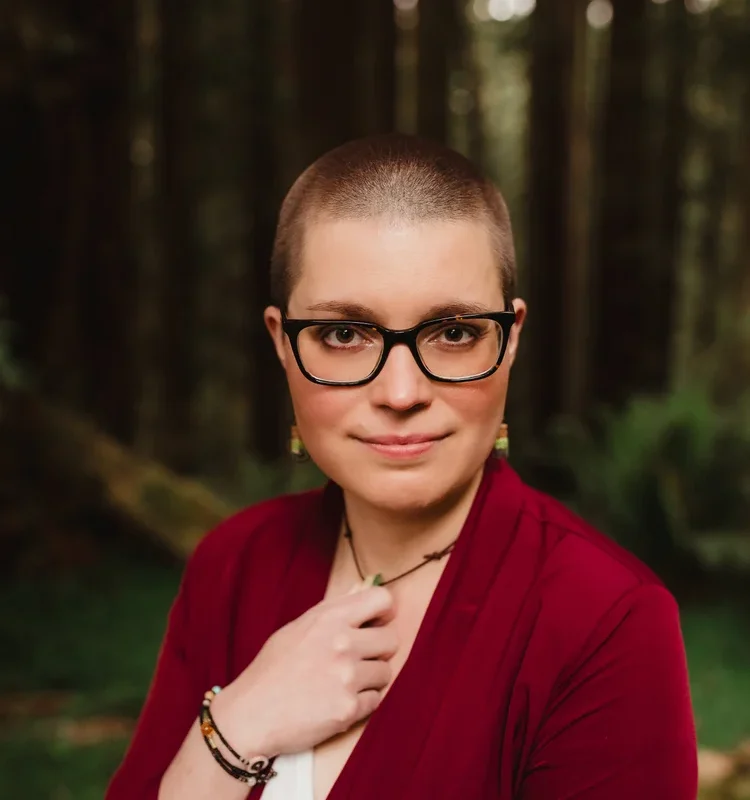
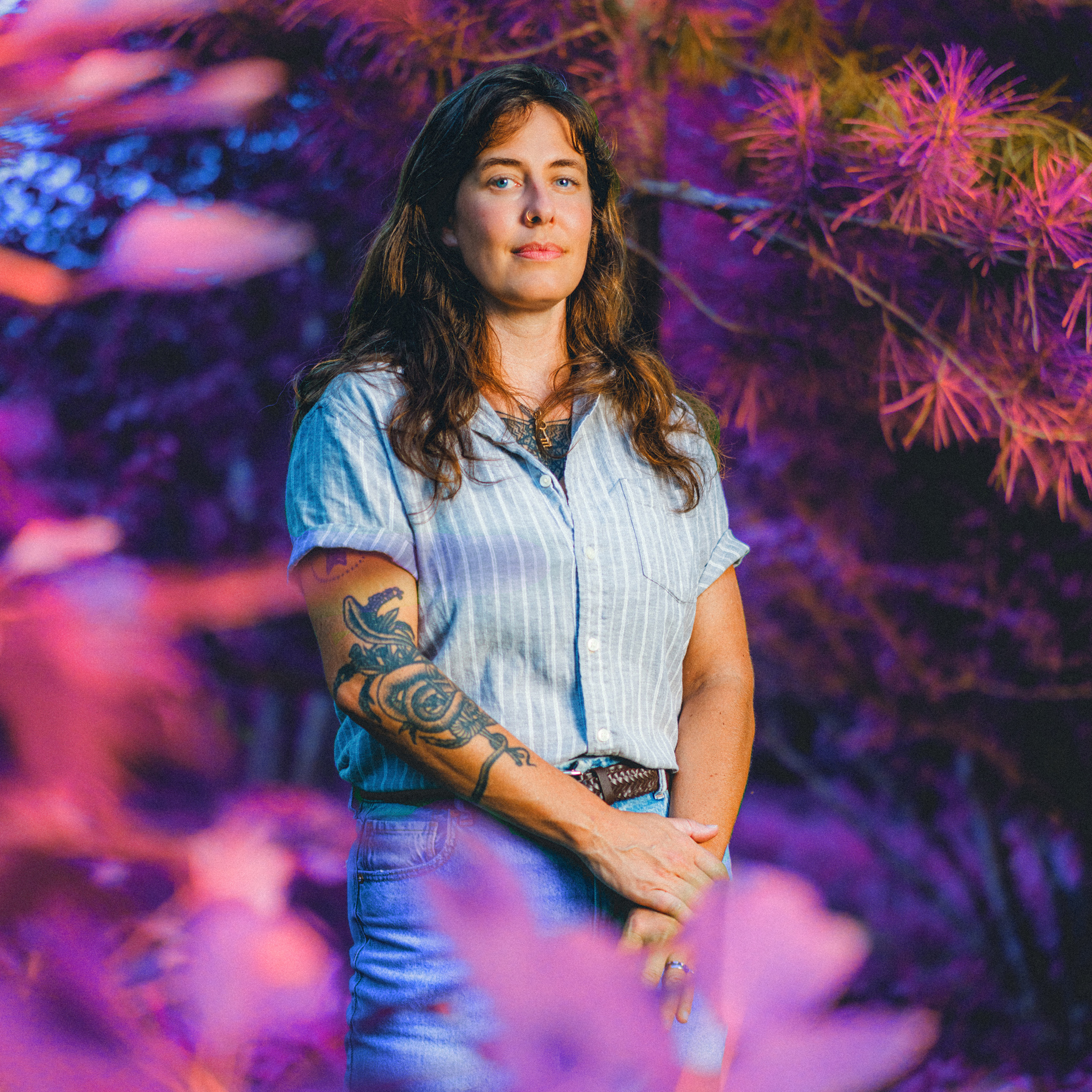
Fairy tales have “been ways for people to make sense of things like sex and marriage and childbirth and death and all these huge things that we have to deal with,” says author Alix E. Harrow.
Fantastic competition
Every year, the World Science Fiction Convention—Worldcon for short—presents the Hugo Awards for outstanding accomplishments
in science fiction and fantasy. Named for pioneering editor Hugo Gernsback, the Hugos are the science fiction equivalent of the Oscars. This year, contenders for the Hugo for Best Novel are:
A Drop of Corruption by Robert Jackson Bennett
The second in a mystery series starring a blindfolded detective and her never-forgets-anything sidekick in an empire beset by skyscraper-sized monsters.
The Everlasting by Alix E. Harrow
A struggling historian gets sent back in time to meet the storied hero he idolizes, only to discover that he’s far more entangled in her legend than he ever realized.
The Raven Scholar by Antonia Hodgson
Seven exemplary candidates are vying to replace the current Emperor. One of them just got murdered. Now the emperor’s chief scholar must solve the case before the candidates’ trials end.
Death of the Author by Nnedi Okorafor
A novel-within-a-novel about a misfit Nigerian writer who deals with a series of personal setbacks by penning an outer-space robot epic that has ripple effects she never imagined.
The Incandescent by Emily Tesh
The supercompetent head of an English school for young magicians—no, not that one—confronts an ancient demon trying to breach the school’s defenses.
Shroudby Adrian Tchaikovsky
Stranded on a lightless, lethal moon, a pair of scientists struggle to escape its deadly environment—and survive the alien species that live there.
An Alix Harrow primer
Besides The Everlasting, Harrow’s novels include:
The Ten Thousand Doors of January (2019)
A lonely young woman in a sprawling house finds a mysterious book whose story changes her life.
The Once and Future Witches (2020)
Three estranged sisters from the backwoods unleash power both magical and political when they meet again amid a growing suffragette movement.
Fractured Fables (2021 and 2022)
Fairy tales get a multiversal makeover, as a “fairy-tale fixer” shakes up the events of Sleeping Beauty and Snow White.
Starling House (2023)
An orphaned young woman in rural Kentucky discovers mysteries and danger within the creepy old mansion of her long-dead favorite author.