Behind every nonprofit doing good work in our community are the people who make it happen. As we launch C-VILLE Gives, our new community-wide giving campaign, we’re shining a spotlight on some of those people—from longtime volunteers and dedicated leaders to the folks working behind the scenes. In the following pages, meet the neighbors making a difference, learn more about the organizations they serve, and discover how you can help. Visit c-ville.gives through December 15 to support the causes that matter to you.
Tom Tom Foundation
Center stage
Volunteer spotlight
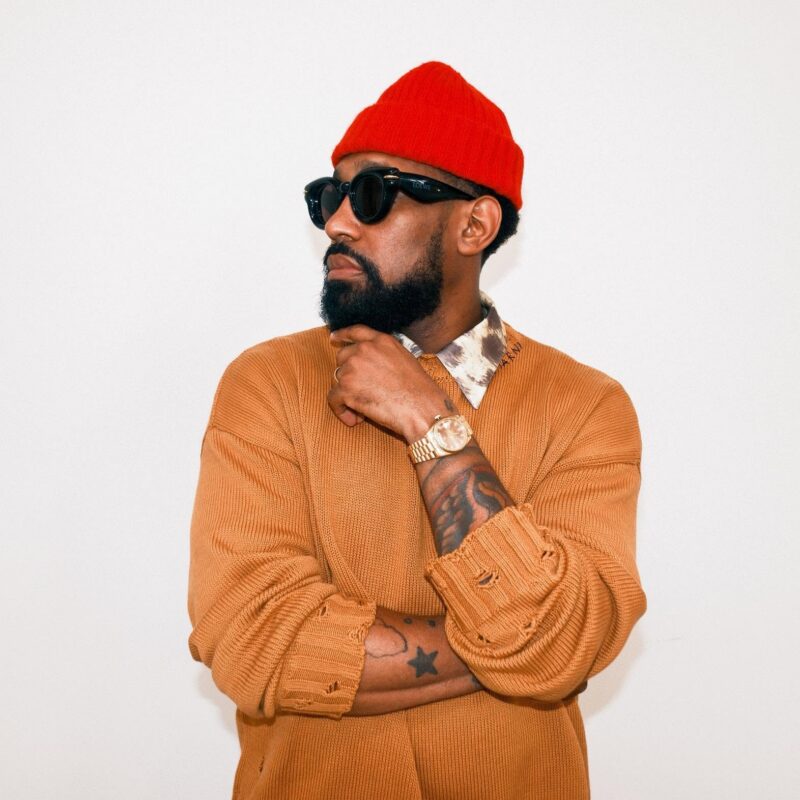
Finding a stage—and an audience—can be a challenge for local performers. Reggie Wattz and Devyn Wildy are working to change that, helping put Charlottesville’s musicians, dancers, and spoken-word artists in the spotlight at the Tom Tom Foundation’s annual festival.
Introduced to the festival by their friend Martize “Tez” Tolbert, the two performers envisioned an R&B stage that would bring together Charlottesville talent from different backgrounds and generations. Today, they help select performers for the Downtown Mall Block Party, showcasing everyone from young dancers to spoken-word artists and musicians.
“Our favorite part is seeing artists from different backgrounds and generations share the same stage,” says Wattz. “Everyone brings something unique, and the audience gets to experience that range of talent all in one place.”
The Downtown Mall holds a special place in their hearts.
“It’s amazing to see the space transform into a stage where people of all races and backgrounds come together to celebrate the performers and our community,” he says.
As artists themselves, Wattz and Wildy understand the challenges facing local performers, particularly finding consistent opportunities to perform and reach new audiences. Tom Tom, they say, helps bridge that gap by introducing the community to talent it might otherwise overlook.
And they hope that support extends beyond the festival.
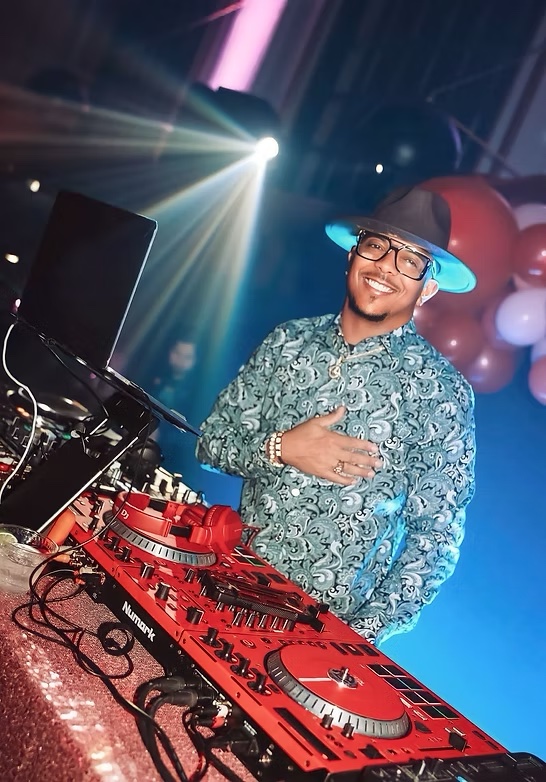
“There are so many local musicians, dancers, poets, and emerging performers who deserve a wider audience,” says Wattz. “I’d love to see more people make an effort to support local artists throughout the year.”
Ultimately, it’s that spirit of connection that keeps them coming back.
“Keeping it going means continuing to create those opportunities and celebrate the people who make this community vibrant.”
Rivanna Conservation Alliance
A shared current
Volunteer spotlight
When Marilyn Smith retired to Charlottesville in 2011, she was looking for ways to get involved in her new community. A retired geologist, she joined StreamWatch to monitor aquatic insects. Her husband, David, followed a few years later, eventually joining her in the field after StreamWatch merged with the Rivanna Conservation Alliance in 2016.
Today, the couple monitors six streams twice a year, collecting benthic macroinvertebrates—small aquatic creatures whose presence helps indicate water quality. Marilyn handles laboratory identification, while David also serves on RCA’s board and participates in river cleanups.
Their work offers a firsthand look at the watershed’s changing conditions. At one monitoring site, beavers built dams that altered the stream. During a subsequent drought, sediment accumulated and water quality deteriorated. Recent rains brought a welcome discovery: dramatic improvement in the aquatic insects they collected.
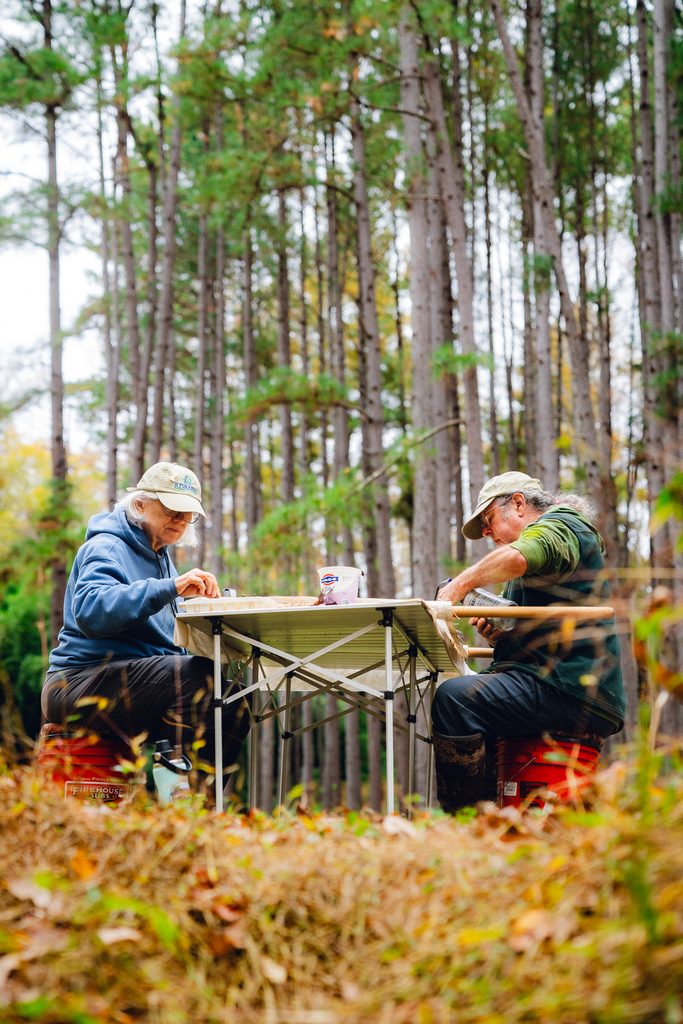
Both also participate in RCA’s watershed education programs, introducing middle schoolers to the wonders of local waterways.
“Some have never been in a river and by the end, they want to do it again,” Marilyn says. “Helping them find joy in nature is our ultimate goal.”
For David, volunteering together offers something equally valuable: time to disconnect.
“I enjoy being able to turn the world off for a bit and just chat, do our field work, and learn about our surroundings,” he says.
And their message to neighbors? Small actions matter.
“Even the smallest changes can make a difference,” Marilyn says, “because we all live downstream.”
C-VILLE Weekly
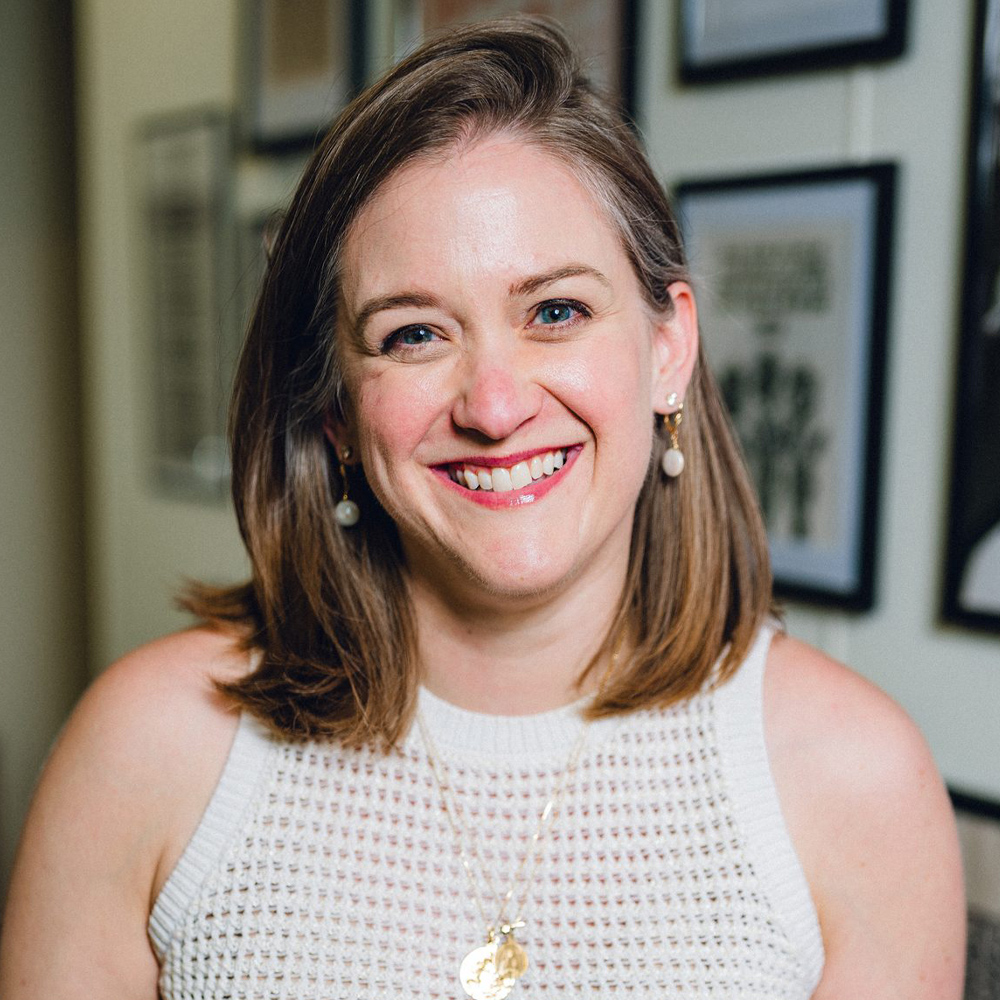
5 questions with Caite Hamilton
Editor, C-VILLE Weekly
Why does an independent, locally owned newspaper matter now more than ever?
A good local newspaper tells you what’s happening at City Hall, but it also introduces you to your neighbors, celebrates the people making this place interesting, and asks uncomfortable but necessary questions. So much of what makes Charlottesville special—the artists, small businesses, big ideas, and remarkable people—might otherwise go unnoticed without us there to tell their stories. When so much of our information comes from national outlets and social media algorithms, there’s value in a publication devoted entirely to the place we call home.
What’s something about putting out a free weekly newspaper that you wish more readers understood?
That free doesn’t mean free to produce! We spend more than $26,000 a week keeping
C-VILLE running, from reporting and editing to printing and distribution. Advertising has traditionally covered those costs, but that model doesn’t work the way it once did. If you value a free, independent newspaper in Charlottesville, your financial support helps keep it that way.
How is C-VILLE adapting to the challenges facing local journalism?
We’re expanding our digital advertising offerings, finding new ways to reach readers, and building a community of supporters who believe local journalism is worth paying for. Through our fiscal sponsorship with the Alternative Newsweekly Foundation, a 501(c)(3) nonprofit, we’re also able to accept tax-deductible donations to support our journalism. We’re making some tough decisions about where to spend our resources, too. The goal isn’t just to survive another year—it’s to build something sustainable for decades to come.
Is there a particular moment during your time at C-VILLE that reminded you why this work matters?
I’ve been at C-VILLE for 19 years, so I’ve seen a lot of ways our work matters. Most recently, our reporting on traffic stops in Greene County uncovered troubling omissions in law enforcement records and raised important questions about how people are being treated in our community. That’s the kind of work that might not happen without a local newsroom willing to dig into the details and keep asking questions. And it’s exactly why I believe so strongly in what we do.
If you could wave a magic wand and give C-VILLE one thing it needs most right now, what would it be?
A thousand more people willing to give us $10 a month! That kind of reliable support would mean less time worrying about how to pay for next week’s paper and more time pursuing the stories that matter. I think the future of local journalism depends on communities deciding that having a newspaper is worth helping pay for.
Service Dogs of Virginia
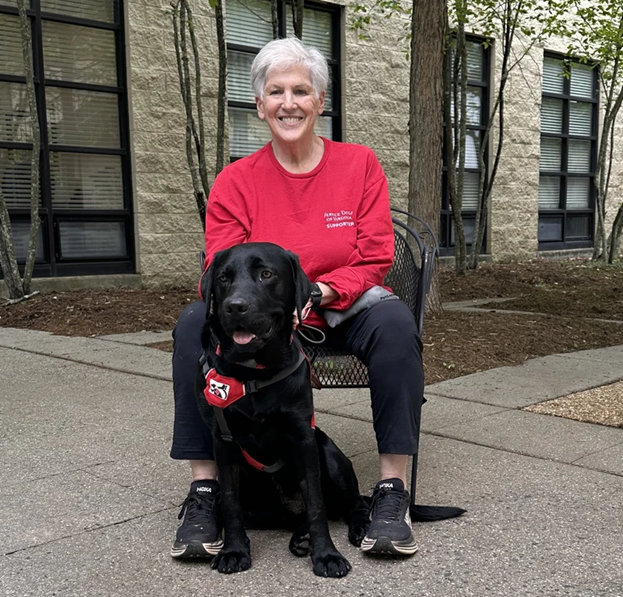
5 questions with Peggy Law
Founder and Executive Director, Service Dogs of Virginia
What inspired you to found Service Dogs of Virginia? Was there a particular experience or moment when you realized this organization needed to exist?
I lost my job, my marriage, and my home is one fell swoop. About a month later, I was kicked in the head by a horse. It easily could have killed me, but instead shattered the left side of my face. I realized (our tag line) that life can change in an instant.
I had a background in working with animals—I had worked for a veterinarian and I worked at the National Zoo, so I always loved working with animals. I had read an article about Service Dogs and decided that I wanted to do that. I did some initial training in California, and then used the buyout I received in my divorce to start Service Dogs of Virginia. I didn’t take a salary for the next six years, but grew the organization instead.
What does it take to turn a puppy into a working service dog, and what’s something about that process that might surprise people?
We start them at eight weeks, and they learn lots, but they lack maturity and the ability to do things in different locations. Impulse control is one of the hardest things to teach, along with walking nicely on a leash. The dogs know so many cues, but they are knuckleheads for a long time.
What do you train dogs to help with?
We train dogs in five programs, and one is medical alert. Medical alert dogs can alert to three different odors: low blood sugar (diabetes), low cortisol (Addison’s disease), and Mast Cell Activation—essentially anaphylaxis brought on by all sorts of things that normal people are not affected by. Because we can’t smell any of these things we didn’t realize dogs did. They can smell them and always have been able to. We don’t teach them to detect the smell; we teach them to tell us when they smell it.
Can you share a story about a person whose life has been transformed by a service dog your organization trained?
Lots, but I will choose one of my favorites.
A young woman on the autism spectrum was trying hard to be independent: “Before I got my service dog, I stayed home all day and used a lot of support services. I was too anxious to speak or make friends. After I got my service dog, I got a job, started and graduated from college, got engaged, and am planning a wedding and cross-country move. I don’t want to think about where I’d be without my dog.”
What’s the biggest challenge facing Service Dogs of Virginia today, and what do you wish more people understood about the need for service dogs?
Volunteer puppy raisers are needed to keep our programs going. People have a hard time doing it because they have to give up the dog, but they receive a great education in training and provide an amazing gift of independence to someone in need. I wish more people would provide this vital help. We pay for everything; they provide time and love. We now need people for [only] six months because of our new prison program. Dogs are with a volunteer for six to eight months, then go into prison for six to eight months before coming in to us for their advanced training.
ReadyKids Inc.
Through counseling, family support, and early learning opportunities, ReadyKids impacts thousands of kids, parents, and caregivers annually.
The unexpected wish list
“When you think about supporting kids and families, vehicle maintenance and mileage reimbursement might not be the first things that come to mind. But at ReadyKids, transportation is an essential part of making sure kids and families can access the care they need.
“In just the first three months of this fiscal year, ReadyKids staff traveled nearly 10,500 miles to bring critical services directly to kids and families throughout our region. From Family Support Specialists visiting new mothers in their homes to Masters-level counselors meeting teens at their schools, our staff travel across Charlottesville and surrounding counties to provide counseling, family support, early learning opportunities, and community engagement. For families facing barriers like limited transportation, financial strain, or geographic isolation, meeting them where they are can make all the difference.
“Everyday expenses … may not be the most exciting items on a nonprofit’s wishlist, [but] these operational costs are essential to keeping our services accessible.
“Unrestricted gifts to ReadyKids support these essential, behind-the-scenes needs, giving us the flexibility to direct resources where they’re needed most and helping ensure that every child has the opportunity to be learning, healthy, and safe.”—Hannah Kroetz, donor and communications specialist
CvilleBioHub
Builds and grows Virginia’s life sciences ecosystem by helping biotech entrepreneurs turn breakthrough ideas into thriving companies.
Where your dollar goes
“A $3,000 donation unlocks a $6,000 paid internship opportunity through our Internship Fund. Every $3,000 contributed is matched by a local biotech company. This investment provides a student with valuable, hands-on industry experience while helping an emerging biotech company access talented individuals it might not otherwise have the resources to hire. We’re especially passionate about showing students that you don’t have to be a scientist to build a career in biotech. From business and engineering to marketing and operations, the industry offers a wide range of exciting career pathways. Through our Internship Fund, we’re opening doors for the next generation of talent while strengthening the companies and workforce that will drive our region’s biotech economy forward.”—Nikki Hastings, executive director
Monticello
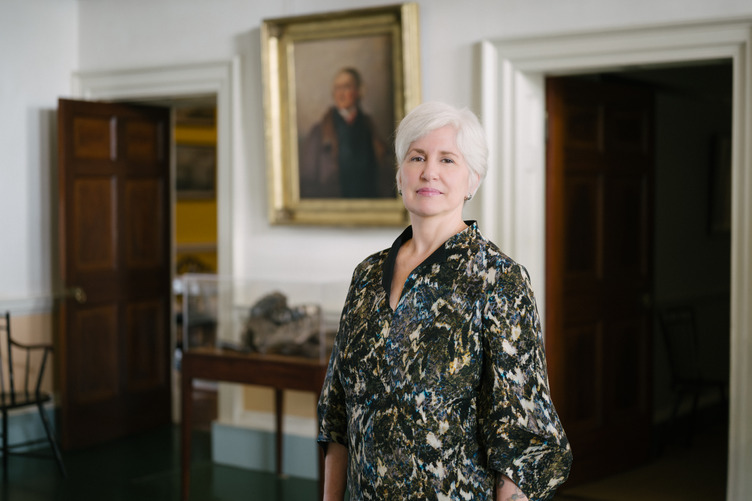
5 questions with Jane Kamensky
President and CEO, Thomas Jefferson’s Monticello
You came to Monticello after a career as a historian and educator. What has surprised you most about leading an institution devoted to Jefferson?
Thomas Jefferson had such a broad impact on the shape of the early United States—everything from the visionary ideals of the Declaration of Independence, to the ways the country would (and wouldn’t) escape the tentacular institution of chattel slavery, to the very shape of the continent. There are few aspects of the founding era that can be discussed without serious engagement with Jefferson, and there are few aspects of our current public life that can be discussed without serious engagement with the founding.
Monticello tells a story that includes both the ideals of American democracy and the realities of slavery. How do you approach presenting those histories together, especially at a time when the way we teach American history is so contested?
As [Jefferson] wrote of the nascent University of Virginia in 1820, “here we are not afraid to follow truth wherever it may lead.” That means extolling Jefferson as one of the foremost philosophers of liberty on the western side of the Atlantic. It means acknowledging that he enslaved some 620 people over the course of his life, and understanding their stories. And it requires coming to terms with the fact that Jefferson, throughout his life, detested slavery as a gross moral abomination. To wrestle with Jefferson’s contradictions is to wrestle with those of the nation he helped to build and, indeed, with our own.
Monticello is one of Charlottesville’s most recognizable landmarks, but how do you see its role in the lives of people who actually live here?
Our local community is vital to Monticello’s thriving, and vice versa. We want to be a place that people in Cville and Albemarle county come back to again and again—not just to bring visiting family on tours around holidays, but also to experience a broad and growing variety of programs, from conversations about the most important new books in American history, to artifact talks, to wine tastings. And of course the community values the Saunders Monticello Trail, which we’re hoping to expand. We’ve had great local uptake for our new membership program, which makes me hopeful that Charlottesville values Monticello as much as Monticello values Charlottesville.
What’s something about Thomas Jefferson, Monticello, or the people who lived and labored there that you wish more Americans knew?
Our Getting Word African American History Department has done incredible work for more than thirty years to recover the family connections and contributions of Monticello’s enslaved community. Their stories are complex, endlessly varied, and filled with both ordinary and extraordinary heroism. I wish more Americans knew the names Ursula Granger, Wormley Hughes, and Robert Hemmings—all founders in their own right.
If you could change one thing about how visitors experience Monticello—or what they take away from a visit—what would it be?
The takeaway piece is so important. We want the Monticello spirit to go home with visitors and spread through their families and communities. So we’re working on more ways to do that, including publications like our Declaration Book Club, and group experiences like our Feast of Reason conversation card deck.
Light House Studio
Equips young people with the skills and confidence to tell their stories and build community through collaborative filmmaking.
Where your dollar goes
“$25: One bag of popcorn kernels for Vinegar Hill Theatre’s concessions. We give out complimentary bags of popcorn to students when we screen their films, and when schools and nonprofits visit the theatre. Each year, we go through about 16 bags of kernels, which makes 3,200 individual bags of popcorn!
$60: Mileage for one round-trip visit to a community partner outside of Charlottesville. One of our current community partners is the Virginia School for the Deaf and Blind, located in Staunton. While many workshops take place in our studios, we also meet our partners at their location if that is best for them. One trip to Virginia School for the Deaf and the Blind costs $59, and we usually visit the school eight times for one complete workshop, bringing the total cost for travel to $472.
$300: Licensing fee to screen a film at Vinegar Hill Theatre. People might not realize that this cost is part of our considerations for when to screen films, and what to screen. We need to be able to earn back from ticket sales enough to cover the licensing fee.
$600: One Teaching Artist’s fee for one Community Partnership Workshop. Our community partnership workshops typically include a total of 20 hours of instruction. We always maintain a 5:1 (or less) student-to-teacher ratio, and most workshops include more than one [paid] Teaching Artist.”—Lindsey Hepler, engagement director
Charlottesville Chamber Music Festival
Dedicated to bringing world-class chamber music to Charlottesville and its surrounding communities.
The unexpected wish list
“We would love to have someone who is/has been a successful marketing and public relations professional who would be willing to donate their time, creative writing skills, and expertise to the organization. Even though we’ve been around for 27 years, I feel that the Charlottesville Chamber Music Festival is one of the better-kept secrets in Charlottesville, and we’d love to be able to work with someone who knows how to tell a nonprofit’s story in a way that connects with various types of people. The musicians and performances are really quite extraordinary, and we’d love to have more folks experience the power of live chamber music.”—Natalie Hokanson, executive director
CASPCA
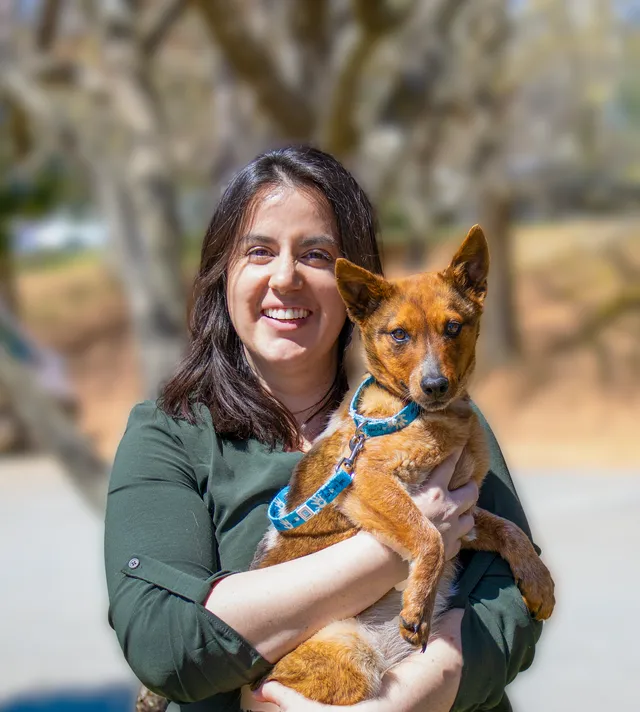
5 questions with Libby Jones
Executive Director, Charlottesville-Albemarle SPCA
People tend to think of the CASPCA as a place to adopt a dog or cat, but its work goes well beyond adoptions. What’s something about the organization’s role in our community that might surprise people?
Workforce development. Our team includes highly skilled animal welfare professionals who are not only caring for animals today, but also helping prepare the next generation of veterinarians, licensed veterinary technicians, and animal care professionals.
What’s the biggest challenge facing animal welfare organizations right now?
Pet overpopulation, particularly among large dogs, coupled with increasingly
limited access to affordable spay and neuter services.
Can you share a story about an animal whose life has been meaningfully changed by the CASPCA’s work?
Two animals immediately come to mind: Rhett, a cat, and Navani, a puppy. Both arrived at CASPCA after suffering gunshot wounds to the head. Today, both Rhett and Navani have healed and are thriving in their homes with families who love them.
What do you wish more people understood about why animals end up in shelters?
Animals often enter shelters because their families are facing challenges, not because they stopped loving them. Financial hardship, housing instability, veterinary expenses, and unexpected life circumstances can all make keeping a beloved pet incredibly difficult. A shelter should be a safety net, not necessarily the first stop when a family faces a challenge.
If you could wave a magic wand and give the CASPCA one thing it needs most right now, what would it be?
I would give CASPCA an expanded, purpose-built spay and neuter surgical clinic. Right now, we have talented veterinary professionals with the expertise and ability to perform significantly more surgeries, but our existing physical space limits them to approximately 60 percent of their potential daily surgical capacity.
Charlottesville Area Community Foundation
Coming full circle
Volunteer spotlight
Kelli Palmer has spent years helping the Charlottesville Area Community Foundation direct resources where they’re needed most. The foundation connects donors with causes across the region, manages charitable funds, and awards grants to nonprofits addressing local needs. Her involvement began on the Grants Committee, reviewing applications and recommending funding for organizations across the region.
“What drew me in was the breadth of CACF’s reach, the sheer geographic span and the range of organizations and efforts it supported,” she says. “There was no other table in town quite like it.”
After serving as a founding member of the Futures Fund and spending nearly a decade on CACF’s board, Palmer stepped away to focus on other philanthropic work. But the foundation’s growing role in community problem-solving, particularly around affordable housing, drew her back.
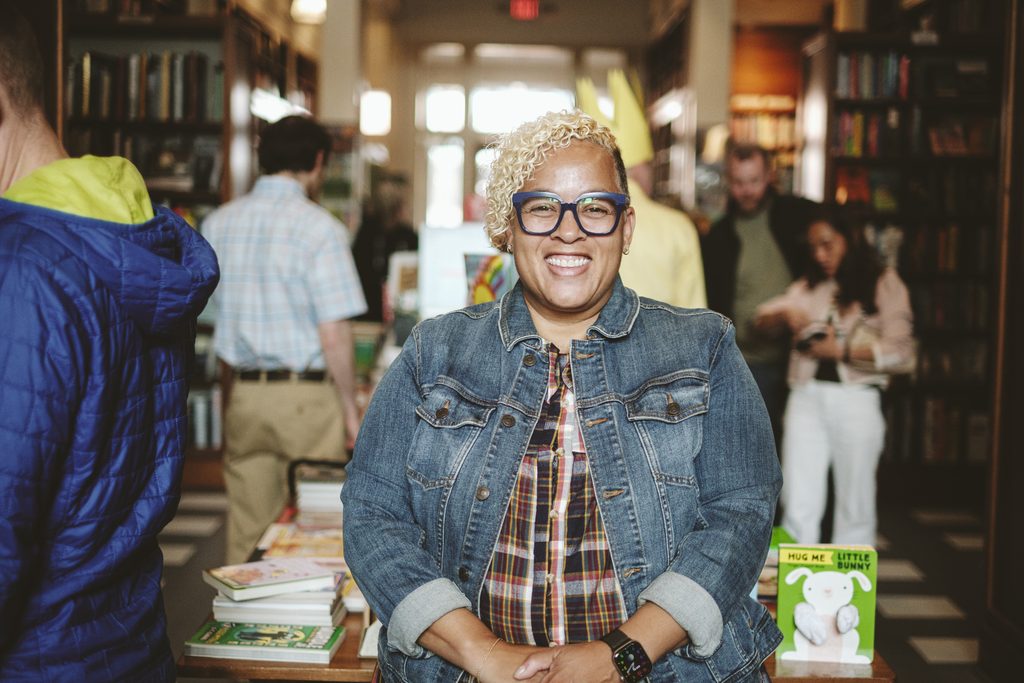
Today, she chairs the Strategic Growth Committee, working to expand CACF’s resources and reach.
One experience that has stayed with her is a visit to Yogaville in Buckingham County, where volunteers were seeking an emergency response vehicle for an underserved area.
“Meeting the people who had simply decided to show up for their neighbors, without resources or infrastructure, and seeing the gap they were working to fill, that stayed with me,” she says.
She’s also watched small organizations like Cville Community Bikes grow from shoestring operations into efforts with lasting community impact.
For Palmer, those experiences demonstrate what thoughtful philanthropy can accomplish.
“Contributions to CACF go directly toward pressing needs in this community,” she says. “Giving to CACF makes a difference. Full stop.”
United Way of Greater Charlottesville
4 questions with Ravi Cooper
President and CEO, United Way of Greater Charlottesville
What does United Way of Greater Charlottesville actually do, and what might surprise people about its role in our community?
We have evolved beyond the traditional United Way model of raising money and passing it along to other nonprofits. Today, we are a direct-service provider and a community partner, working to address underlying challenges that prevent local families from thriving. We connect parents with affordable, high-quality early childhood education and create pathways for parents to grow their careers and build generational wealth. We bring together employers, educators, public agencies, and nonprofits to tackle problems that no single organization can solve alone.
From your vantage point, what’s the biggest challenge facing families in the Charlottesville area right now—and what are we not talking about enough?
Our community has a growing disconnect between cost of living and what working families can realistically afford. There are more than 10,000 families in our region who work full-time and contribute meaningfully to our culture, economy, and local identity—yet struggle to afford housing, childcare, transportation, and other basic necessities. Many of these families are facing a benefits cliff, where earning more money can actually cause them to be disqualified from public assistance and other social services, often leaving them worse off than before they changed careers or earned a promotion. At United Way, we are focused on changing that equation. Through financial coaching, matches to emergency savings, affordable car loans and vehicle repairs, debt-reduction support, and no-strings-attached stipends for professional development, we want to help families move from simply getting by to building long-term financial security.
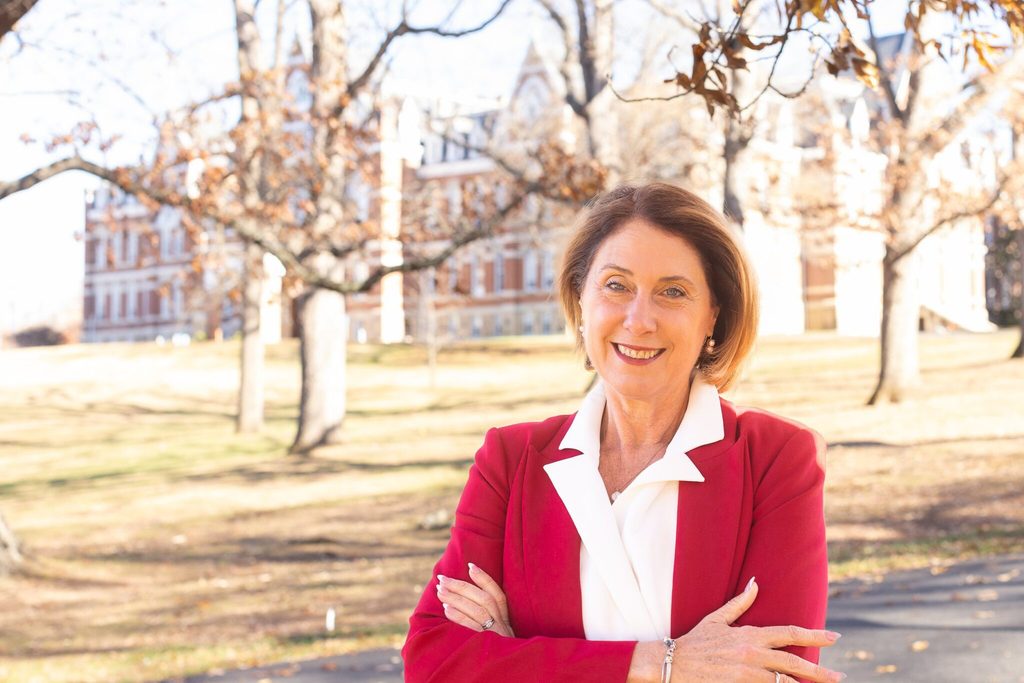
Can you share a story about a person or family whose life has been meaningfully changed by United Way’s work?
Anjana is a graduate of our Early Learning Career Launch (ELCL) program, which we offer in partnership with UVA Pipelines & Pathways and Piedmont Virginia Community College. Anjana and her husband moved here from India several years ago, but despite being highly qualified professionally, her initial visa left her unable to work. Over that time, she welcomed two sons who are now 4 and 6 years old. Once she became a citizen, she immediately applied to ELCL, because she had become interested in early learning since becoming a mom. Now, having received the required training, certifications, and licensing through ELCL, she is working as a teacher at a local early learning provider and says it is a “dream come true” to be able to help support her family. She is a perfect example of how United Way programs help families not only stabilize by supporting urgent needs, but also enable them to dream of future possibilities and plan for long-term success.
If you had an unlimited budget for one year, what’s the first problem you’d tackle in greater Charlottesville, and why?
The shortage of affordable, high-quality early childhood care and education. Our region faces a gap of approximately 3,300 early learning slots for children from birth through age 5. This is not just a childcare problem; it’s an economic development problem, a workforce problem, and a family financial stability problem. When parents can’t find care, they turn down jobs, reduce their hours, delay education, or step away from their careers altogether. Children lose access to the consistent, nurturing environments that help prepare them for success in school and life.
With an unlimited budget, I’d work with public and private partners to close that gap by investing in early childhood entrepreneurs, supporting the educators who make our early learning environments possible, and making care more affordable for working families. We’re already taking steps in this direction as we prepare to open the LaCross Early Learning Center at Kindlewood in partnership with the UVA School of Education and Human Development and Piedmont Housing Alliance, which will serve more than 100 local children starting early 2027.
Live Arts
Forging theater and community.
Where your dollar goes
“A $100 gift to Live Arts helps provide parking support and rehearsal and build meals for volunteers. It is a tangible investment in the people whose time, labor, and artistry make community theater possible.”—Adrienne Oliver, executive artistic director
Wildlife Center of Virginia
A hospital for native wild animals, teaching the world to care about and to care for wildlife and the environment.
The unexpected wishlist
“What does it take to care for more than 4,500 wild animals each year? Our veterinary team relies on specialized surgical instruments, nebulizers, and a wide range of medical supplies to treat injured, sick, and orphaned wildlife. But even everyday items can have unexpected uses. Colorful duct tape is used to make protective wing bumpers for injured birds and to help staff locate turtles in outdoor enclosures as they prepare for release. Plastic file folders become tail guards that protect the delicate feathers of eagles and owls, while a common household plunger can be used to safely restrain a snapping turtle.
Feeding our patients requires just as much variety. Our pantries are stocked with mealworms, fish, acorns, and specialized milk-replacement formulas tailored to the needs of different orphaned mammal species.
Behind every patient’s care are countless supplies, a great deal of ingenuity, and the generosity of people who make our work possible. Donations to the Wildlife Center help ensure that our team has what it needs to care for each animal who comes through our doors.”—Amanda Nicholson, senior vice president
Building Goodness Foundation
Construction organization that designs and builds spaces that help people thrive and pursue opportunity.
Where your dollar goes
“Whether we’re working locally in Charlottesville or internationally in countries like Haiti and Guatemala, each dollar is put to work building safe, beautiful spaces that help communities thrive.
$60: Cost of up to six bags of cement mix to build schools in Guatemala. Concrete is king on a Guatemalan build site, with concrete and rebar forming the foundation and walls of all our projects there.
$120: Lunch on a build day for volunteers who generously give their time and expertise to local projects. Through our network of skilled volunteers, who have backgrounds in the construction and design industries, a lot of work is done across our local and international projects for free or a fraction of market rate.
$300: Solar-powered street lights for Haitian villages with no electricity. Imagine a pitch-black Charlottesville after sundown. It might be fun for a night or two, but permanently? That’s the reality in the coastal village of Destra, Haiti. BGF recently installed solar-powered street lights throughout the village to create a safer, more connected community.”—Lauren Gallander, communications manager
Cultivate Charlottesville
5 questions with Aleen Carey
Executive Director, Cultivate Charlottesville
What first drew you to the work of food justice, and how did you come to lead Cultivate Charlottesville?
My family moved to Charlottesville when I was in high school, but I didn’t learn about the history of our food system—which is deeply rooted in injustices such as the razing of Vinegar Hill—until I was living here as an adult. I believe that food is a human right. We live in an area with an absolute plethora of resources, and too many of our neighbors—including children—don’t have what they need to consistently eat fresh, healthy, culturally appropriate food. As a town, we have the power to change that.
For someone who isn’t familiar with the term, what does “food justice” actually mean—and what does it look like in practice here in Charlottesville?
Food justice is rooted in equity, and focuses on changing the antiquated, ineffective way our food system operates so that all residents have the food they need to survive. The only way to change the current model is to work as a united front of community members, nonprofits, the city and the county, UVA, and private companies to change the actual system of food in our area. One example of that could mean requiring developers to fund markets where they want to build.
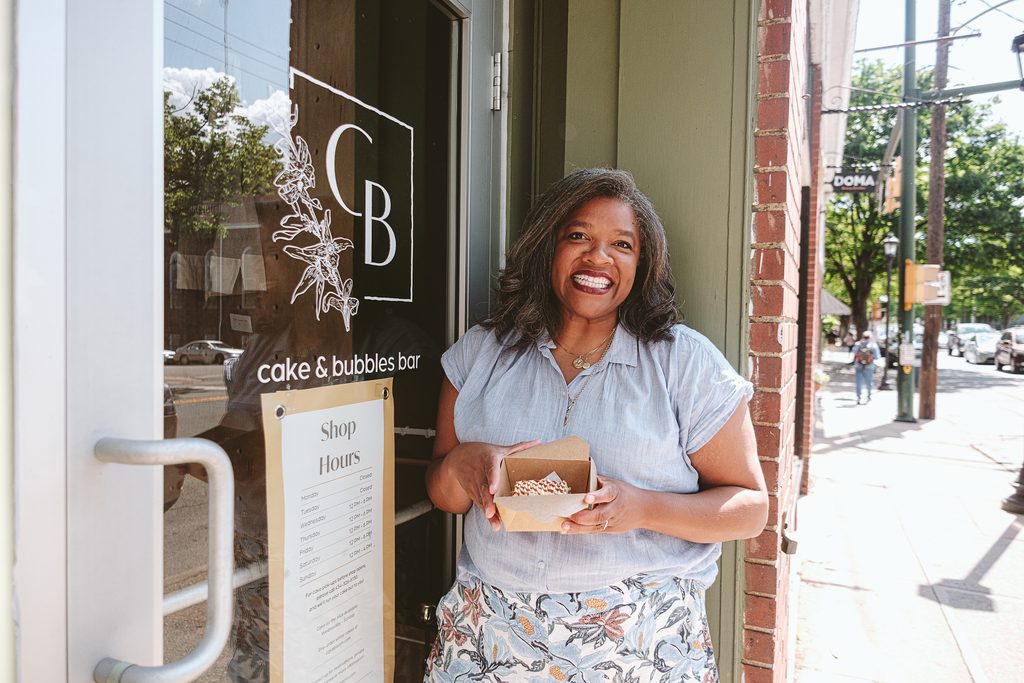
Cultivate works with young people to grow food and understand where it comes from. What’s something you’ve seen a student learn or experience that has stayed with you?
I was volunteering for Harvest of the Month (an initiative we’ve been leading for 12 years to bring a fresh, local fruit or vegetable snack into classrooms across the city each month) and we were passing out multi-colored carrots. When I arrived at the classroom at Jackson-Via Elementary the students were absolutely buzzing. Their teacher had told them that multi-colored carrots were “party carrots” that danced in your mouth, and the students were ready to turn it up! We had the best time eating carrots that day.
Charlottesville has food banks, pantries, and other organizations addressing hunger. What gap does Cultivate fill, and what do you wish more people understood about the root causes of food insecurity?
We need transportation routes to markets that allow folks to get what they need (including from a food pantry) and get home without frozen food thawing. Charlottesville lost two groceries in the last two years that provided walkable access for multiple neighborhoods, and it’s going through a lengthy process to try and bring one back to the Fifeville neighborhood. The cost of food continues to rise at a staggering rate that is not matched by local salaries. Across the nation, advocates are pushing for universal free meals, which would allow all students to receive breakfast and lunch at school each day. These are a few of the intersecting areas of food justice that need to be addressed for people to have the food they need to truly thrive.
If you could change one thing about Charlottesville’s food system tomorrow, what would it be—and what would it take to make that happen?
One of [our] key goals … is a city-wide Food Equity Fund. It would be HUGE to have a pot of money at the local level dedicated to supporting food sustainability. The city adopted the most recent Comprehensive Plan in 2021 and reaffirmed it in 2023; for the first time, there is a chapter dedicated to climate and food security. Along with that plan, several nonprofits are advocating for land urban agriculture in our parks. Having protected land to grow on will massively improve our ability to produce local food by and for neighbors.
Nonprofits need support year after year to have the security to work on advancing our work over time. The City initially funded FJN’s work for a three-year period, and we would love to see that happen again.
Friends of Jefferson-Madison Regional Library
Booked for life
Volunteer spotlight
After more than 20 years running a bookstore, Chris Oakley wasn’t ready to stop working with books. Just two weeks after closing her York Place shop, she began volunteering with the Friends of Jefferson-Madison Regional Library.
Her connection to libraries goes back even further. “As a child, my mother regularly took us to the local library everywhere we lived,” she says. “So maybe there is some payback in volunteering for the Friends.”
These days, Oakley spends several hours most mornings sorting donated books and researching special finds for the science fiction and fantasy section. Her husband, Jim Beall, a retired nuclear engineer, volunteers about once a week. They work in different rooms but share the excitement of discovering something extraordinary.
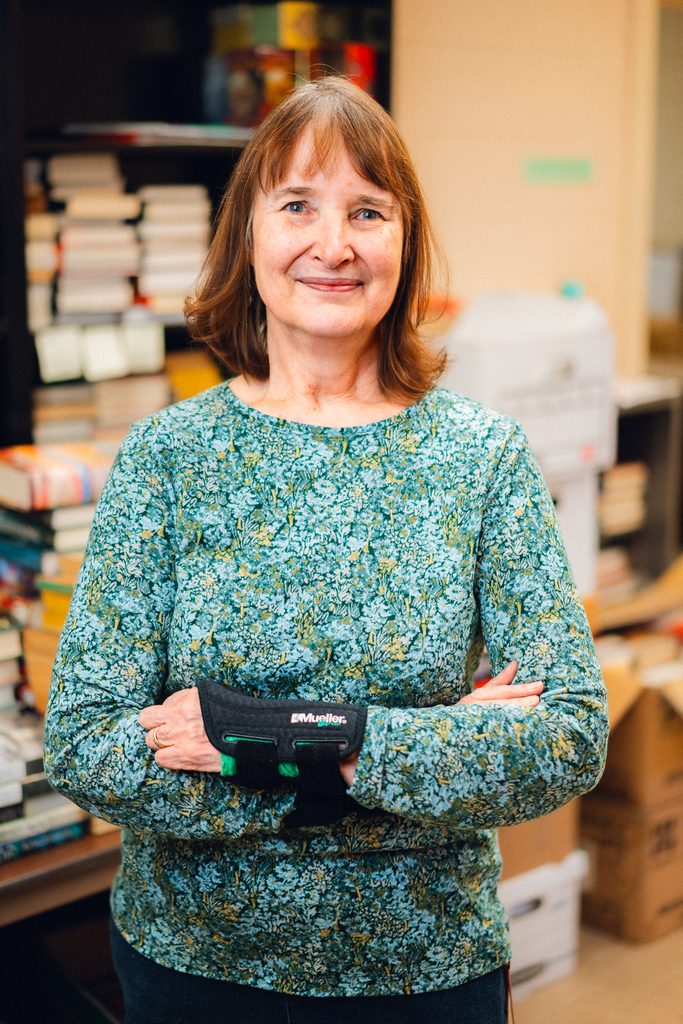
And extraordinary things turn up. Oakley has uncovered valuable first editions, early City Lights publications, and signed books by Pearl Buck and Rachel Carson. One particularly memorable find included a signed Carson book with a signed letter tucked inside.
“You never can tell what the next box or bin will bring,” she says.
But the real reward extends beyond rare books. Oakley loves hearing children laughing and singing during library programs supported by the Friends, and seeing eager shoppers arrive for book sales.
“People are so happy to find a new book or one that they have loved and lost,” she says.
After more than a decade of volunteering, it’s the books, the people, and the mission that keep her coming back.
“Reading is so fundamental to lifelong learning,” she says.
Music Resource Center
Providing unlimited voice, instrument, and dance lessons, practice space, mentorship, access to instruments and equipment, performance opportunities, summer camps, and recording studio time to sixth through 12th grade students.
Where your dollar goes
“Music programs burn through things people never think about, like guitar strings, drumsticks, cables, and headphones. It’s a fun, concrete way for readers to help.
Drumsticks: $10 each (2 to 3 per week)
Guitar picks: $0.34 each (10 per week)
Cables: $20 each (3 to 4 per month)
Tuners: $14 each (2 per month)
Guitar Strings: $12 per pack (8 per month)
Bass Strings: $25 per pack (6 per year)
Headphones: $100 each (3 to 5 per year)”—Alice Fox, executive director
Cville Village
4 questions with Maryann Long
Founding board president, Cville Village
How does Cville Village help older adults remain independent and connected to their community?
Our village isn’t a collection of houses; it’s people! Cville Village is a local, grassroots nonprofit that mobilizes volunteers to help older residents age where they live now and remain active and independent. It’s one of about 300 similar organizations across the country with the mission to help older adults thrive in their homes and communities. Our volunteers set their own schedules, looking regularly to see which members need a hand this week.
Our village brings people together for face-to-face human contact. We hold social events several times a month, including lunches, outings to shows, educational programs, walks, and coffees, all geared to get older folks out of their homes, meet others, and connect.
Can you share a story about a member whose life has been meaningfully changed by Cville Village?
There are as many stories as we have members, and almost all tug at your heartstrings. One texted about having felt without friends, then added he’d realized that wasn’t true, and named off half a dozen of our volunteers. Another member wrote recently: “I consider CV a lifeline. When I gave up my driver’s license because of worsening vision issues I was overwhelmed thinking about how I was going to be able to stay independent while losing my vision. Cville Village has helped me tremendously to deal with that. Plus, they’ve started an active low-vision support group and they encourage us to connect through social events.”
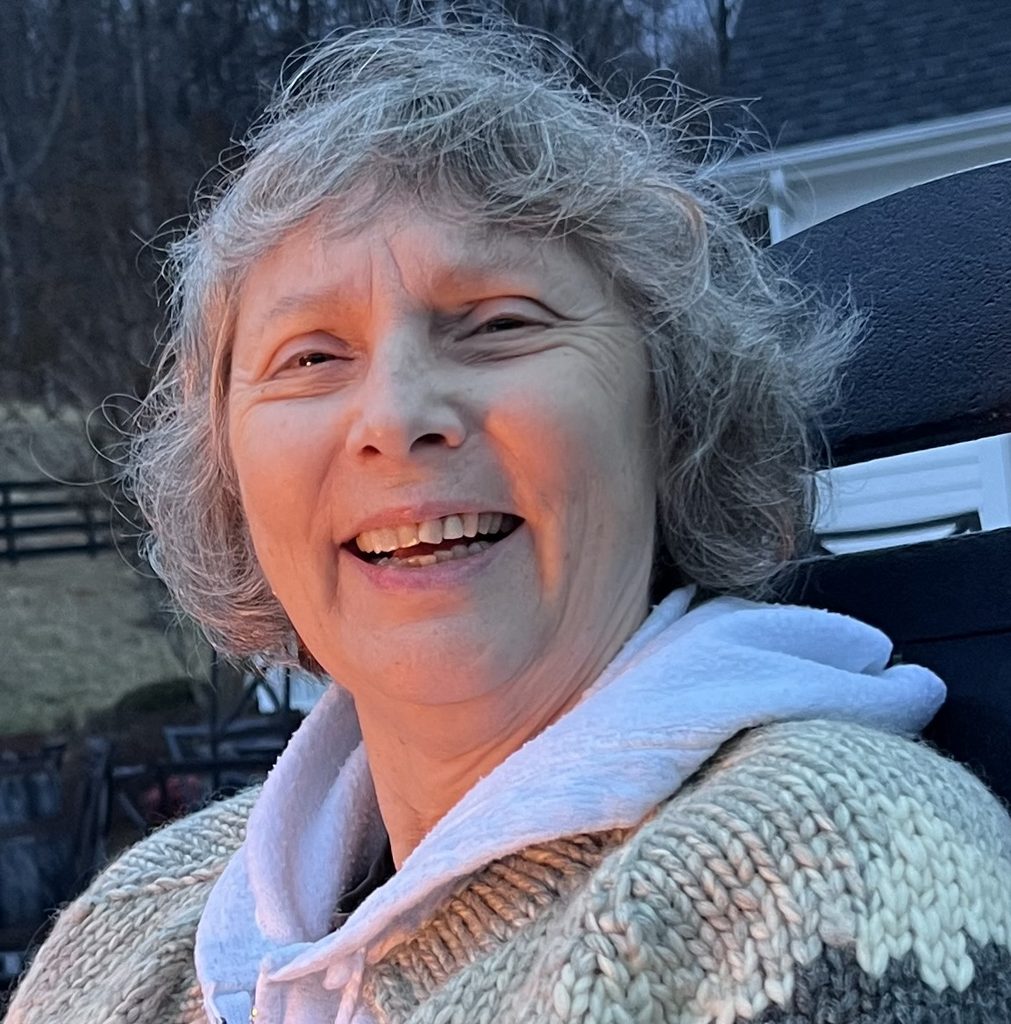
What do you wish more people understood about aging in place—and what it takes to make that possible?
It’s often the little things that make aging in place so difficult and drive people into nursing homes. Sometimes a fall brings a temporary loss of mobility. Often it’s chronic health issues, or vision problems, or hearing loss. Many folks find they are fine in their home until they have to stop driving, or until a partner can no longer help. Then all the little chores we always took for granted begin to look like major problems.
Age and declining health means more medical visits, more places you have to get to at very inflexible times, scattered all over the area. Transportation becomes a critical problem. Public transportation doesn’t work well for older people with low vision, balance issues, or walkers.
As older people become frail and homebound, they become increasingly isolated. It becomes harder to see other people, friends fall away, social networks fray and unravel. Making new friends becomes more difficult, meeting new people is more challenging. Many older people become withdrawn and isolated. And isolation takes its own toll on health, making everything worse.
Volunteers join [us] because they see the need and want to support Cville Village to sustain it into the future when they will need the assistance and community we provide. And I don’t want to leave out the best thing about being part of a village: You meet the nicest people, who have had fascinating lives.
If you could wave a magic wand and give Cville Village one thing it needs most right now, what would it be?
It would be magical to have 20 new volunteers who could each drive someone twice a week! That would allow Cville Village to serve more folks who need to see their doctors and go shopping for groceries, and relieve our board members who are also active volunteers. The need is enormous, but we can grow only as fast as we can find volunteers. As soon as a volunteer gets vetted and starts helping our members, they discover how rewarding it is to help others and get to know a whole community of new friends.
This makes two things, but we want our town to know that we’re also recruiting volunteers with administrative skills to help run the village, and we are looking for new board members to grow our leadership bench.
Hope’s Legacy Equine Rescue
A legacy of love
Volunteer spotlight
When Keena Thomas and her family began volunteering at Hope’s Legacy Equine Rescue in 2013, they had a simple goal: Give their horse-crazy 9-year-old daughter a chance to spend time around horses—without actually owning one.
Thirteen years later, the family has horses of its own, and Thomas is still volunteering.
“We quickly realized that Hope’s is a very special organization,” she says.
Thomas has watched the equine rescue grow from a wandering operation into a permanent home at Castle Rock Farm in Afton, purchased in 2017. Since then, the organization has added fencing, barns, staff, and community outreach programs.
Along the way, Thomas fell in love with Amber, an underweight, lice-covered horse surrendered in 2015. Despite her condition, Amber quickly earned the nickname “Little Miss Thing.”
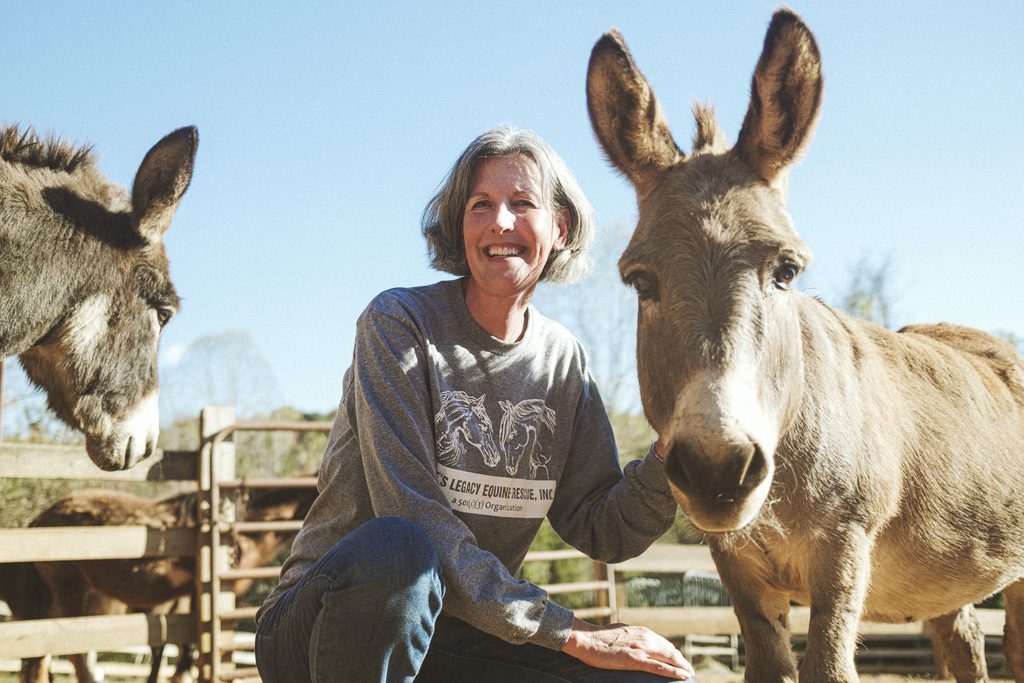
“Amber was special and she knew it,” Thomas recalls. “She was a princess.”
The family adopted Amber as a surprise Christmas gift for their daughter. She competed in local horse shows, went on trail rides, and even marched in the Dogwood Parade. Amber died in 2020.
Thomas also remembers the 2015 Peaceable Farm seizure, when Hope’s Legacy took in 29 equines, including several whose survival was uncertain. Among them was Donkey, now the rescue’s vocal mascot.
Today, more than 130 volunteers help feed the animals twice daily, regardless of weather. The work can be physically and emotionally demanding, but Thomas says the relationships make it worthwhile.
“We shed tears together and as well as celebrate the recoveries, successes, and adoptions,” she says.
And the need never ends. “We will adopt out a horse to its new home and there will be another waiting to take its place at the farm.”
Botanical Garden of the Piedmont
Growing solutions
Volunteer spotlight
From birdhouses to weather stations, one volunteer puts his problem-solving skills to work at the Botanical Garden of the Piedmont
When Rusty Burwell and his wife, Bobie, heard about the Botanical Garden of the Piedmont, they drove over to take a look. Both avid gardeners, they signed up for updates, and when Rusty spotted an opportunity to volunteer, he jumped in.
His first assignment? Rehabilitating 30 birdhouses scattered throughout the garden. Their screwed-on fronts made cleaning difficult, so Burwell designed replacements that could be opened easily for annual maintenance.
Since then, he’s installed shelving, built mason bee houses, mounted signs, and helped construct benches and picnic tables. One particularly satisfying project involved designing and building an 8-foot-tall wooden tower to give the garden’s solar-powered weather station more sunlight.
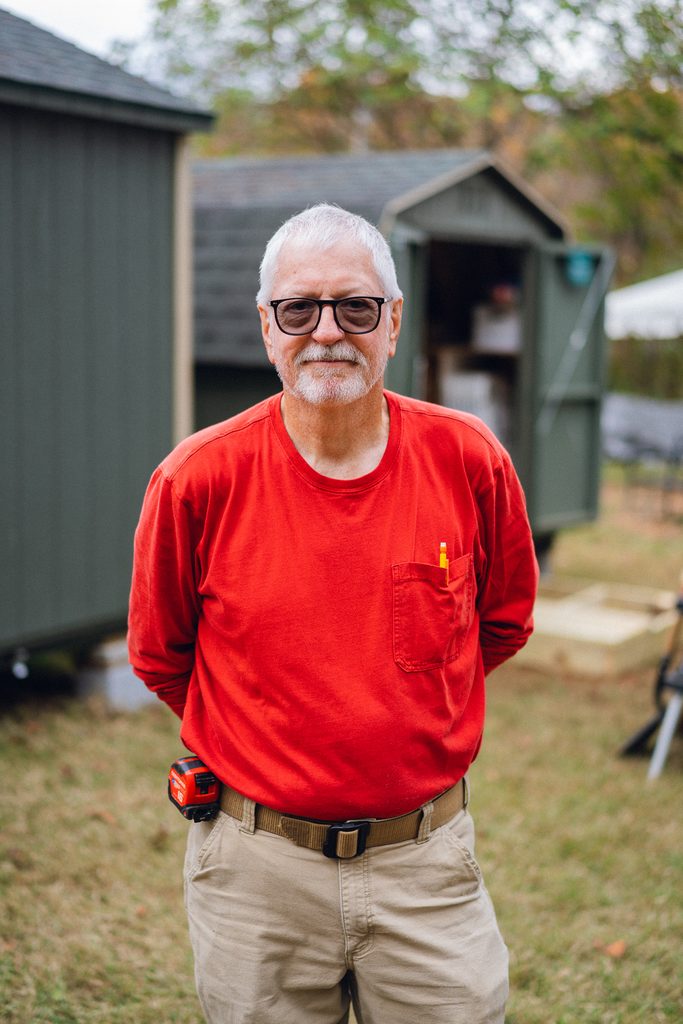
But not every assignment involves carpentry. When a snapping turtle laid eggs beside a garden trail, Burwell rushed to buy wire and construct a protective cage around the nest.
Beyond the occasional unusual assignment, Burwell enjoys joining fellow volunteers to spread mulch, remove invasive plants, and tackle garden cleanup.
“The staff and volunteers are a wonderful, supportive and caring group and it’s a gift to be able to spend time with them,” he says.
He believes Charlottesville benefits from having a public garden, both as a place to learn and somewhere to enjoy the outdoors.
And for anyone considering volunteering, Burwell says experience isn’t required.
“If you don’t have those skills, but would like to learn more or just get out and enjoy a little work with some great people, come join us.”
Hospice of the Piedmont
5 questions with Nancy Littlefield
President and CEO, Hospice of the Piedmont
Many people associate hospice with the very end of life, but your work goes well beyond that. What do you wish more people understood about hospice care and when it might be appropriate?
Hospice is not about giving up; it is about choosing how to live when time may be limited. A conversation with hospice does not create an obligation—it creates options.
At Hospice of the Piedmont, we often see that patients and families benefit most when hospice is involved earlier. As the region’s only nonprofit hospice, our focus is not just on medical care, but on caring for the whole person and supporting the entire family. Hospice provides specialized medical care focused on comfort, dignity, and quality of life, delivered by an interdisciplinary team which includes physicians, nurse practitioners, nurses, social workers, chaplains, hospice aides and volunteers, and specially trained end-of-life doulas who provide expert symptom management, emotional and spiritual support, caregiver education, and practical guidance. Hospice of the Piedmont supports patients and their families, and care can be provided wherever someone calls home.
What’s the biggest misconception about hospice care, and how do you help patients and families see it differently?
The biggest misconception is that hospice means hope is gone. In reality, hope changes: from hoping for a cure to hoping for comfort, meaningful time, reconciliation, or a peaceful day at home. We help families see hospice differently by listening first, explaining what care actually looks like, and returning control to the patient. People can choose the support they want, remain involved in every decision, and leave hospice if their goals or condition change.
Can you share a story about a patient or family whose experience illustrates the impact Hospice of the Piedmont can have?
We cared for a young girl whose family had come to UVA for specialized treatment. As her condition declined, her parents had one clear wish: They did not want her final moments to involve a 911 call and an emergency transport to the hospital.
Working closely with the family and their medical team, Hospice of the Piedmont provided support that allowed her to remain in a peaceful setting surrounded by loved ones. When she died, our team was there to provide comfort, guide the family through the process, and pronounce her death, eliminating the need for emergency responders during an already heartbreaking time.
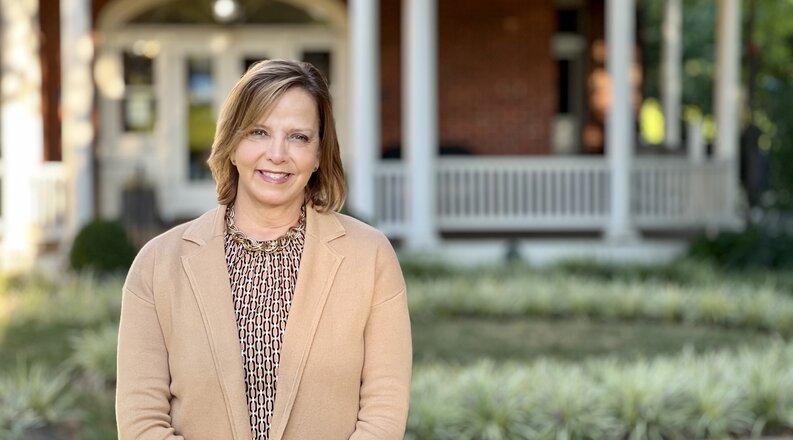
Caring for people at the end of their lives is deeply meaningful work, but it can also be emotionally demanding. What have you learned from the patients, families, and staff you’e encountered?
People are extraordinarily clear about what matters when time becomes precious. I think the letters we receive every day from our families tell it best. “When the nurse arrived, we felt such relief and comfort.” “Your doctors coming to our home and sitting with my brother in our living room—listening to what was important to him and how he is now comfortable—meant everything to me.” “My dad didn’t have to go back to the emergency room, he could stay home and your team came to us to help.” “You made sure we always had what we needed.” “You cared for us like we were your family.”
If you could wave a magic wand and give Hospice of the Piedmont one thing it needs most right now, what would it be—and how would it change the care you’re able to provide?
I would give us sustainable resources to reach every person who could benefit from our care—earlier, equitably, and wherever they live. That means investing in exceptional staff, community education, grief support, palliative care, residential care, and services that are not always fully reimbursed.
In the past three months alone, donor support has provided more than $80,000 in care for uninsured and underinsured patients in the City of Charlottesville. For many, the alternative would be delayed care or repeated visits to the emergency room. With stronger philanthropic support, more families would understand their choices sooner, fewer people would spend their final months in crisis and more could experience care aligned with their values.
Oakland School
Lessons in learning
Volunteer spotlight
Marilyn Bennett knew about Oakland School long before she became a volunteer. More than 40 years ago, a relative’s son attended Oakland; later, a friend enrolled her son in its summer camp program to help with reading difficulties. The progress both children made stuck with Bennett (who asked to be identified with a pseudonym for this piece).
During her 30 years teaching in public schools, Bennett witnessed the struggles of children learning to read. The problem, she says, often wasn’t the teachers, but the resources available to them.
“Large classes, limited classroom assistance, and the specialized instruction some children need can make learning to read an uphill battle.”
Then, during the COVID pandemic, Bennett watched her own nephew struggle to develop reading skills. As he approached third grade, his family decided to enroll him at Oakland.
“I was grateful when his parents decided that Oakland School was the right place for him to receive the specialized instruction he needed,” she says.
Having volunteered in her nephew’s previous classrooms, Bennett was eager to do the same at Oakland. She began volunteering and substitute teaching, experiencing what she calls the school’s “magic” firsthand.
“Watching children who had begun to believe they couldn’t learn discover that they could succeed, gain confidence, and blossom,” she says.
Her nephew has since moved on to another school, but Bennett has stayed.
“I wish every child who struggles to learn to read could have the opportunity to experience what Oakland offers—not just the skills to become a reader, but also the confidence that comes from discovering that they can learn.”
And she dreams of doing even more.
“My husband and I often say that when we win the lottery, we will help Oakland reach even more children.”
Rockfish Wildlife Sanctuary
Caring for Virginia’s injured and orphaned wildlife and the ecosystems we share.
Where your dollar goes
“Every single dollar helps save wild lives at Rockfish Wildlife Sanctuary. Because our wildlife rehabilitation program receives no state or federal funding, your support makes it possible for us to care for over 800 injured and orphaned wild animals each year! A gift of $100 can purchase a week of mealworms for our orphaned songbird patients. Baby birds eat every 30 minutes from sunrise to sunset, and we feed out over half a million insects each year. $100 can also help cover a week’s worth of specialized formula for orphaned mammals, from raccoons and opossums to white-footed mice. And your gift helps care for our beloved non-releasable education ambassadors, who inspire the next generation of conservationists in our community. To our wild neighbors in need, $100 can make a life-saving difference and give them the second chance they deserve at a life in the wild.”—Sarah Cooperman, executive director
Finally Home Animal Haven
An all-animal rescue focusing on donkeys, horses, and barnyard animals in need.
Where your dollar goes
“We have so many medications that are essential in our daily requirements for the animals. A lot of people see what the animals look like on initial intake: They may be sick or suffering from starvation and/or abuse. They follow their story as they recover and see them become happy and healthy. However, that is not always the end of their story.
Some of these animals require a future of daily supplements, physical therapy for a previous injury, red light therapy or massage for aching joints. Some receive daily pain or holistic medications that may help calm them depending on what kind of abuse they have endured. A couple of our equines have been diagnosed with heaves (similar to asthma in humans) and need medications and adjustments to their hay to keep them breathing easier. Most of our elderly animals suffer from arthritis and receive supplements that keep them moving freely, ensuring they can live their life out happy and comfortable, the way they deserve.
There are many day-to-day costs at FHAH that keep the animals going beyond their initial intake and recovery. There is so much hands-on care that isn’t always seen.”—Ashley Jenkins, executive director