The University of Virginia is quietly considering handing over the management of its nonprofit campus bookstore to a private company. Critics fear such a handoff would change the store for the worse.
“A consultant has been charged with assessing operations and providing feedback,” says UVA spokesperson Bethanie Glover. A source familiar with the potential transition says UVA has hired Collegiate Retail to help the university determine whether the bookstore should remain independent or partner with a private operator.
According to Collegiate Retail’s website and his LinkedIn page, founder and CEO Russell Markman previously spent more than 25 years with two of the largest private operators of campus bookstores. From November 2001 to July 2020, he worked for publicly traded Barnes & Noble Education, leaving the company as its vice president of strategic partnerships. From 1993 to 1999, he was employed by Follett Higher Education, another major private operator now backed by private equity.
C-VILLE attempted to reach Markman for comment through his company, but received no response. Asked whether UVA was concerned that its consultant’s extensive experience working for private operators might sway his decision or pose a conflict of interest, Glover says, “The consultant is only responsible for conducting an assessment, and is not in a decision-making role.”
“We’ve been told it’ll be either Barnes & Noble or Follett,” says a faculty member, speaking on condition of anonymity, who participated in one of Markman’s listening sessions during the evaluation process. “The listening sessions about both the bookstore and the strategic plan have so far been anything but. They’ve been pre-scripted.”
Markman “was not there to listen,” the faculty member says. “He was there to dismiss faculty concerns, and he was really good at that.”
“The UVA Bookstore has been a self-supporting nonprofit operation since its inception in 1963,” Glover says. Any money it earns above its expenses gets donated to fund student scholarships. Glover says the impending retirement of bookstore director Cristy Huffman “prompted leadership to use this time of transition as an opportunity to assess the bookstore’s effective and efficient operation.”
UVA did not respond to questions about whether bookstore employees would lose their jobs under a private operator, as they have at other schools. It also did not reply when asked what would happen to scholarship funds generated by the bookstore if a private operator took over.
Via the Freedom of Information Act, C-VILLE asked UVA for any financial reports it had about bookstore operations for the past three years. The university said the time and research it needed to fulfill that request would cost $500.
According to news site The Lever, Barnes & Noble and Follett often automatically bill students for digital copies of the books their courses require as part of their tuition payments. Universities receive a lucrative cut of these automatic sales. Though courts and regulators have upheld the practice, critics say it locks students in to higher prices than they might pay elsewhere, even for cheaper digital copies, and denies students the option to buy physical books they can later resell.
The UVA faculty member says the university itself attempted to implement such a program at its bookstore last year. “The bookstore going to an all-electronic model without consulting faculty was distressing,” the faculty member says. “After much strenuous objection about this, we were told that the bookstore had backed off from this,” owing to faculty’s concerns.
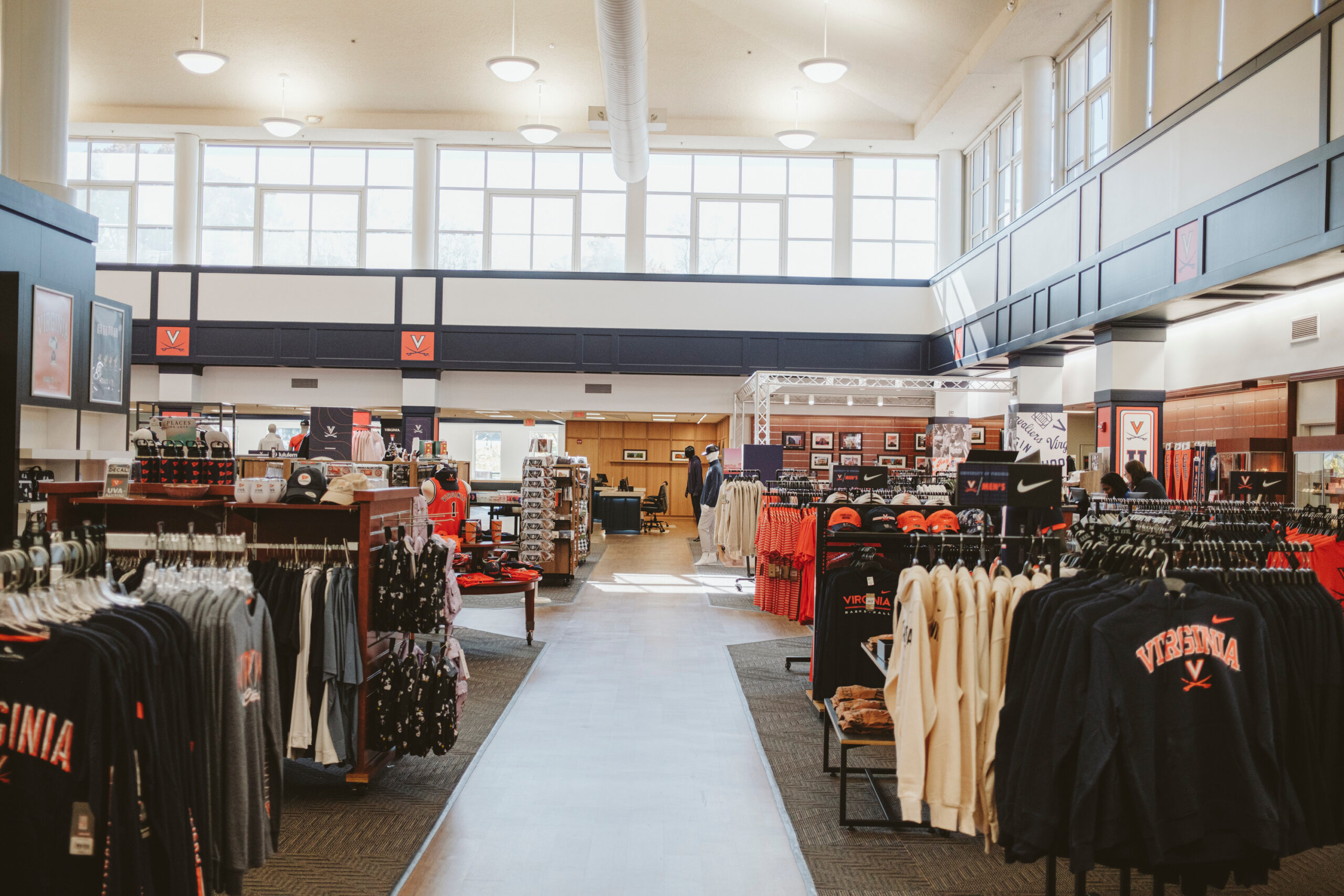
The faculty member already worries that the university has too radically altered the bookstore’s character. Remodeling this summer remade the store so that merchandise dominates its ground floor, with books relegated to an upstairs section.
“At the first place you’d come to when you got out of the parking lot or the last place you went on the way back to your car, there were lots of books … that said, this is an institution of learning first and foremost,” the faculty member says, describing the store prior to the remodel. “And if you asked a question about one of those books, there would be immensely knowledgeable and agreeable people who would assist you with that.”
Now, “go into the bookstore and tell me whether you’d be able to tell that you were at a university campus, aside from the fact that it says UVA on the T-shirts. … It’s a small department store with books oddly lodged in an upstairs corner.”
A source familiar with the review process says Markman’s summary of the listening sessions mentioned students and faculty’s happiness with the store’s customer service, but concern over high prices. The source says those prices, often tied to fixed costs or licensing fees for athletic merchandise, are beyond the bookstore’s control.
Per that source, Markman met with university officials November 10 to deliver his final report. Its findings remain unreleased at press time.
“Books are a lot less conspicuous in the library than they were,” the faculty member says. “Reading is a lot less conspicuous on Grounds than it was. … What’s happening at the bookstore seems to me a conspicuous step in the wrong direction.”