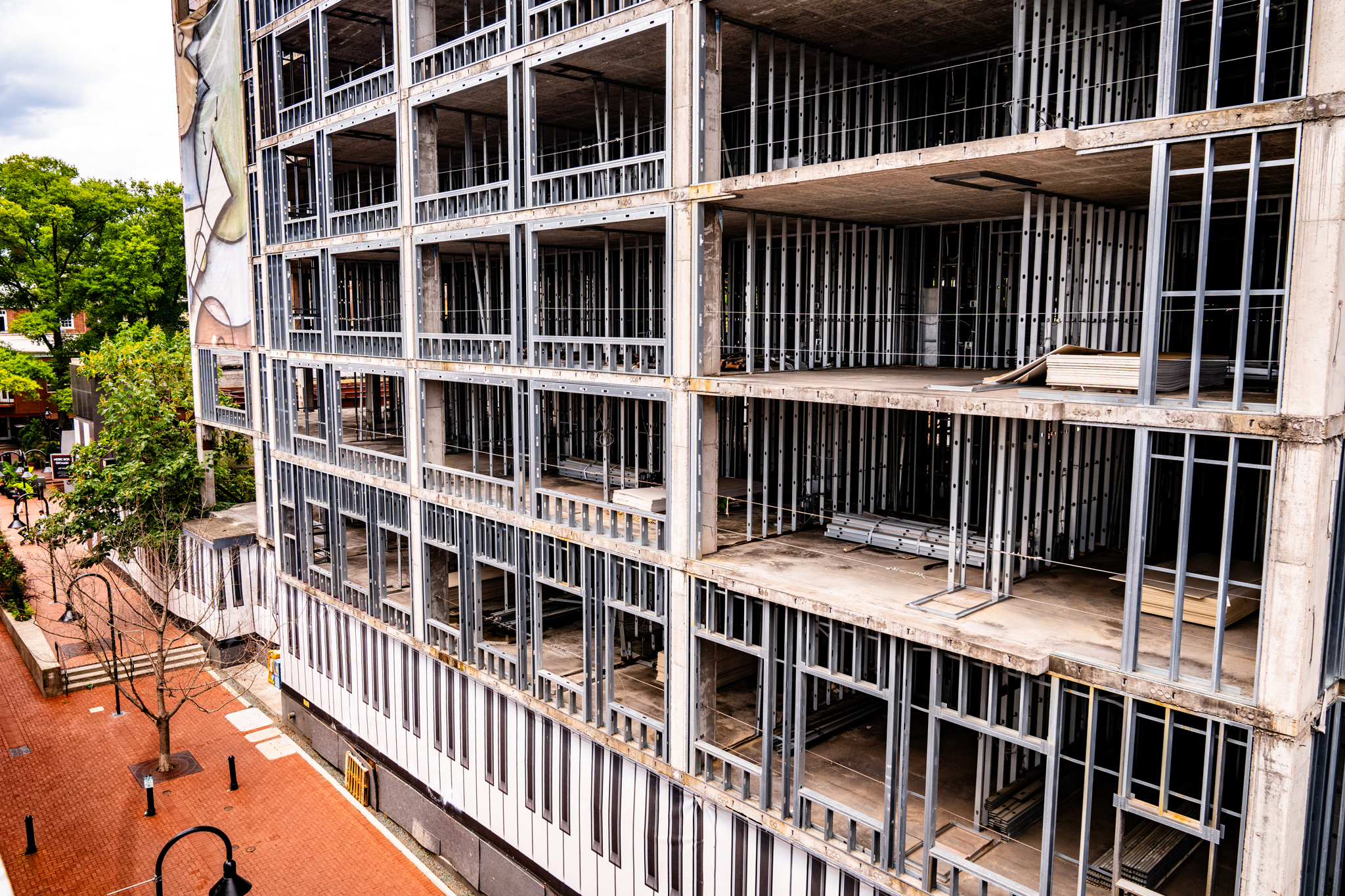
The City of Charlottesville finally seems to have had enough of the half-built Dewberry, née Landmark, hotel at 201 E. Water St. In an August 19 letter, City Attorney John Maddux gave John Dewberry, Dewberry Capital, and Deerfield Square Associates II, LLC 60 days to submit a written plan for the building that’s sat in disrepair for more than 15 years.
Construction of the structure, now covered with a vinyl wrap, began in 2008 and stopped in 2009. Dewberry acquired the property at auction in 2012 for $6.25 million. No construction has occurred since Dewberry purchased the shell.
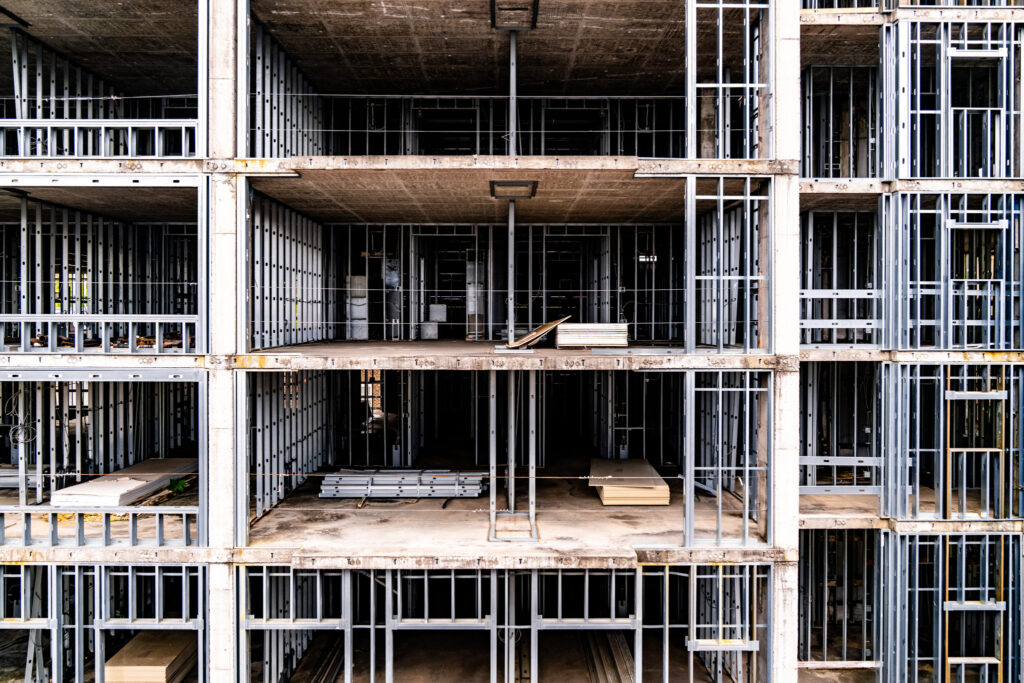
“You told this community … you would turn your attention to Charlottesville once your Charleston project was complete. The Dewberry Charleston opened in 2016,” reads an excerpt from the letter. “The building on Water Street remains a concrete and steel frame, without windows, elevators, or basic building services, in the center of Charlottesville’s Downtown Mall.”
Dewberry Capital’s COO confirmed receipt of the letter via a phone call, says Charlottesville Director of Communications and Public Engagement Afton Schneider.
The city has requested a written plan be submitted with the following information, at minimum: whether the building will be completed, sold, or removed; specific target dates for any planned course of action, including permit and site plan applications; interim actions to secure and maintain the site, including the vinyl wrap; and the name and contact information for the representative and/or legal counsel authorized to speak on behalf of ownership.
At press time, the city had “not received a substantive response.”
As early as September 2013, Charlottesville’s director of Neighborhood Development Services requested a written plan for the building from the developer. In 2017, Dewberry worked with the city on an incentives plan for the site, which City Council ultimately rejected. The letter alleges Dewberry has submitted nothing to the city for the property since.
While there was an attempt to sell the site in December 2024, it is unclear if there was any interest in the property at that time, or if Dewberry still plans to sell. At press time, neither Dewberry nor a representative had responded to C-VILLE’s request for comment. Schneider says the city was “not a party to marketing or any sale for this privately owned property.”
The Charlottesville shell is not the only long-stalled site in Dewberry’s portfolio. The Midtowne building (formerly The Campanile) in Atlanta recently made headlines for safety issues and debt dismissals (the developer’s LLC recently came into full ownership of the site via a quitclaim deed). In recent coverage, Bisnow and Urbanize Atlanta both called the building “Midtown’s biggest eyesore.”
Parallels between the Charlottesville and Atlanta properties don’t end there. Dewberry acquired the Georgia property in 2010, proposed a new redevelopment plan in 2017, and eventually rebranded from The Campanile to The Midtowne in 2022. The Charlottesville shell was acquired around two years after the Atlanta site, similarly saw a renewed proposal in 2017, and has undergone numerous renames since Dewberry purchased it.
Both buildings continue to sit vacant; both cities are still trying to compel Dewberry to act or sell.
“There was not a single event that prompted the August 19 letter,” says Schneider. “The City’s decision was based on the circumstances surrounding 201 E. Water St. and its history in Charlottesville, not developments involving Mr. Dewberry’s property in Atlanta.”
Based on the August 19 letter, Charlottesville may be taking a new legal strategy. The city would not directly comment on its potential approach, and the letter clearly states that it is not “a notice of violation” or announcing “any particular enforcement action.” But the letter also indicates a willingness to utilize any tools available through the Virginia Uniform Statewide Building Code and the Code of Virginia—specifically referencing regulations around “derelict, blighted, and nuisance structures.”
Schneider further confirms the city is taking action now given the improved “stability and capacity within the city attorney’s office to better address longstanding issues of this nature.”
“The property is approaching two decades of vacancy, fourteen years of it under your ownership, and the City is no longer willing to treat the current condition as a temporary situation that will resolve itself,” reads an excerpt from Maddux’s letter. “The City’s posture toward this property is changing, and you should not plan on the coming years resembling the last fourteen. The condition of 201 East Water Street is a matter of legitimate public concern, and the City intends to treat it as one.”
An inspection of the property will be completed with or without Dewberry’s cooperation, per the letter. Nothing has been scheduled yet according to Schneider, but “the city is currently evaluating options for conducting an updated inspection and structural evaluation of the property.” It has not been inspected since March 2017.
The 60-day window for Dewberry to submit a written plan ends October 18.