Eze Amos
There’s a black-and-white photograph of Paul Collinge hanging over the doorway at Ginkgo Bookshop. It looks like the kind of picture you keep of a dead relative. But Collinge is not dead; he comes in almost every day. When Molly Canipe asked him whether it felt strange to walk under a memorial portrait of himself, Collinge said, “It prepares me for what’s next.”
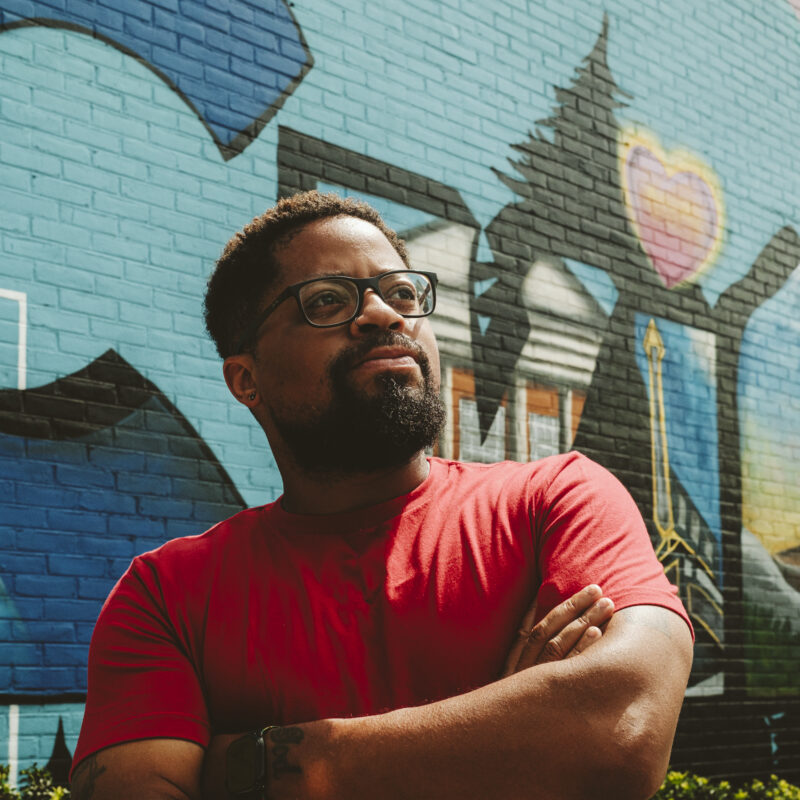
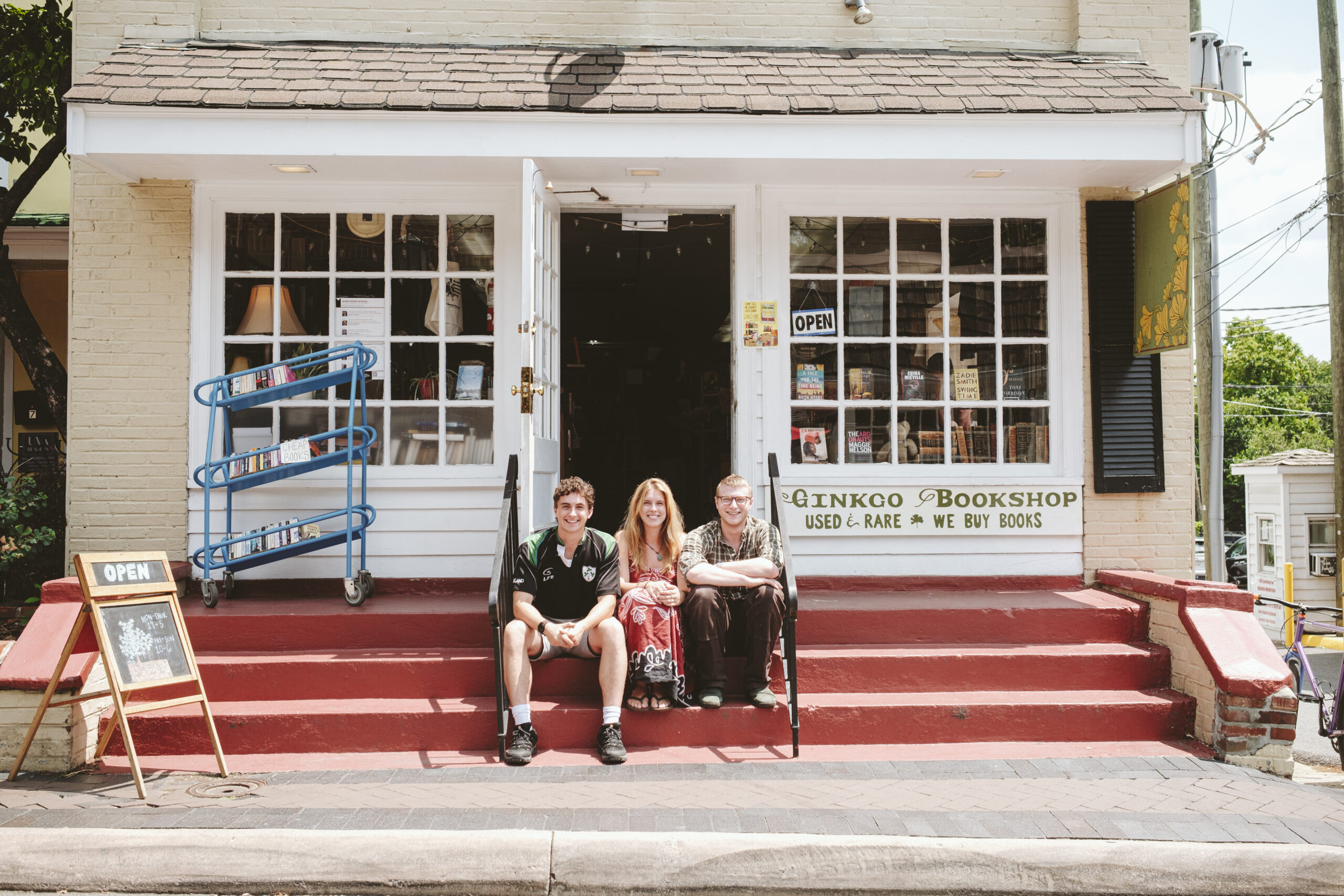
What was next, it turned out, was four undergraduates. Collinge had run Heartwood Books at 5 Elliewood Ave. for 50 years, and when he decided to retire to a smaller rare-book trade next door, it looked like the big shop would retire with him. Max Fleisher, then still a rising third-year University of Virginia student working the register, asked if he might take it over, and Collinge said, well, no. “Which was the logical answer,” Fleisher admits. But Fleisher kept working, learning the business, and meanwhile recruiting Canipe, Miles Miskill, and Margot Ross to his secret ambition. They put together a real proposal and eventually won Collinge over. Even after the outside funding they had hoped for fell through, they persisted, putting up their own money for the security deposit, the first month’s rent, and the books themselves, and they got themselves a credit card reader. On January 1, the day after Heartwood closed, Ginkgo opened.
Then the work began. Jackson Landers, who runs Daedalus Bookshop downtown, taught them how to build bookcases with shelves that angle slightly upward, so the books down low don’t get overlooked. They’re moving books by night, clearing the front of the shop for jazz nights and punk shows (all proceeds to local nonprofits). They’re learning to wrap dust jackets in mylar. They’re handing out the Wi-Fi password and pouring the occasional cup of coffee so students can sit and work, and maybe eventually buy a book (though many don’t). They’re inviting their professors and bonding with neighborhood business owners over their vision for a renewed Elliewood.
They know the conventional wisdom. “We’ve read The
New York Times articles—our
generation isn’t drinking or reading or doing anything fun,” Canipe says. “We all know that.” But they’re betting against the pessimists.
It’s a surprising thing to see undergraduates investing so much in a place they’ll soon leave. Canipe just graduated and moves to Indonesia this fall. Fleisher and Miskill will graduate in the spring, leaving Ross to carry the torch. Their intention was never to land themselves a permanent bookselling job in Charlottesville. Ginkgo will instead be a nonprofit run by a rotating board of students. “This is such a special place for students because it’s other students who run it,” Fleisher says—not 20-somethings who used to be students, not their TAs, but other students like them. They’re working overtime now so that the next group of students will have the hardest work behind them (“so they don’t have to also be part-time carpenters”) and the playbooks they’ll need to keep the shop running.
Like Collinge, they’re preparing for what’s next.