At its May 4 meeting, Charlottesville City Council received an update on “The State of Homelessness” from a coalition of service providers. Led by continuum-of-care coordinator Blue Ridge Area Coalition for the Homeless, the conversation covered everything from the latest data on the local unhoused population to ambitious plans for shelter and housing programs.
Every service provider who spoke noted an increase in the number of people needing help in the last year, and how the area’s network of nonprofits is stretched beyond their capacity and resources.
“The cost of living going up, and rents going up, and wages not following accordingly, those economic pressures are getting so, so strong that we are seeing more and more folks enter our system of care,” said Owen Brennan, executive director of The Haven, ahead of the presentation. “It is really critical that we have a strong system of care now, as the need increases and our need to begin scaling our response increases as well.”
Data from BRACH shows a jump in the number of people experiencing homelessness locally, both on the by-name list (every unique person known to have experienced homelessness in a given year) and during the Point-in-Time count (the number of people unhoused on a specific date) conducted on January 28.
The annual by-name list, which includes everyone in BRACH’s catchment area (the city and surrounding counties) experiencing homelessness, is up to 703 people this May—an increase over the 620 on the by-name list recorded between May 1, 2024, and April 30, 2025. There has been a steady increase in the by-name list year over year, with 498 people in 2023 and 571 people in 2024.
The most up-to-date count from BRACH has 335 individuals on the by-name list currently experiencing homelessness.
“[The by-name list] is people who are either outside or sleeping in a shelter. Any place not meant for human habitation. So if they have a roof over their head, it’s because it’s an emergency shelter or it’s because they’re sleeping in a car or place that doesn’t have running water or electricity,” said BRACH Executive Director Shayla Washington. “If they’re couchsurfing, or staying with friends or family, and just kind of unstably housed, that does not count toward our by-name list. There’s a lot more of that in our community than we know, a lot of that doesn’t even get reported to us.”
This year’s winter PIT count occurred during the historic snow and ice storm that paralyzed most of the Mid-Atlantic for days. As a result, the number of people in emergency shelter, 87, was significantly higher than usual and approached counts from the height of the COVID-19 pandemic. The cash required to make that emergency shelter response possible was substantial, roughly $100,000 over the course of 18 days, and largely came from community fundraising efforts.
Beyond emergency space, which is without question in short supply, Charlottesville’s lack of transitional and affordable housing for people trying to exit shelters is lacking.
Rent estimates for a one-bedroom apartment in Charlottesville range from $1,700 to $1,850 per month. Two-bedroom estimates average between $1,900 and $2,050 per month. The average Social Security check, or Social Security disability income, in Virginia is roughly $1,540 a month.
“People aren’t even making enough to pay just rent, much less the other bills and needs they have in their lives,” said Washington. “As a reminder, affordable housing is defined as not paying more than 30 percent of your income towards rent.”
Other factors contributing to the local housing crisis noted by BRACH include: a spike in evictions, gaps in the local behavioral health system, longer shelter stays, an aging unhoused population, staff burnout, and a limited number of landlords willing to work with homelessness prevention groups.
The Salvation Army currently hosts the majority of the area’s year-round shelter beds, but its offerings are program participation-dependent, and require additional screenings for entry. The organization is raising funds to increase its offerings and bed space, but with a planned 2027 groundbreaking, it will be several years before the Center for Hope opens. There is reportedly already a waitlist for the small supply of spaces for families the Salvation Army will eventually offer.
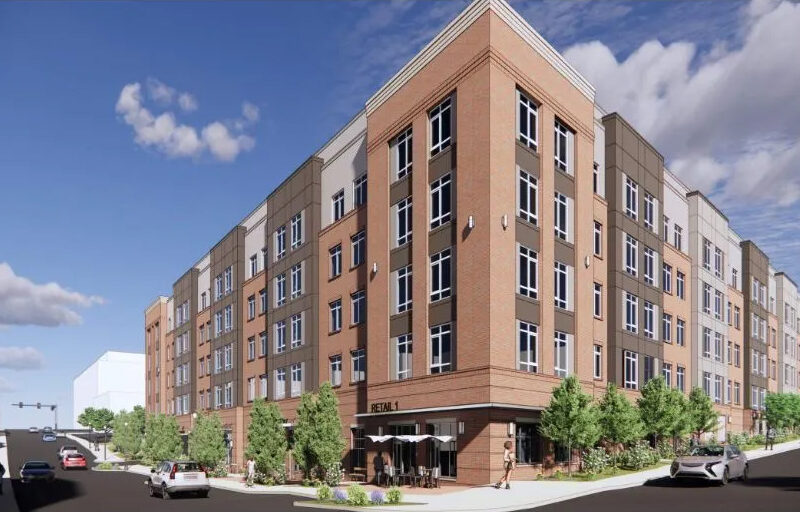
The proposed low-barrier shelter at 2000 Holiday Dr. does not address every need brought up by service providers, but it does offer a starting point for collaboration and a safer alternative to current encampments in Charlottesville.
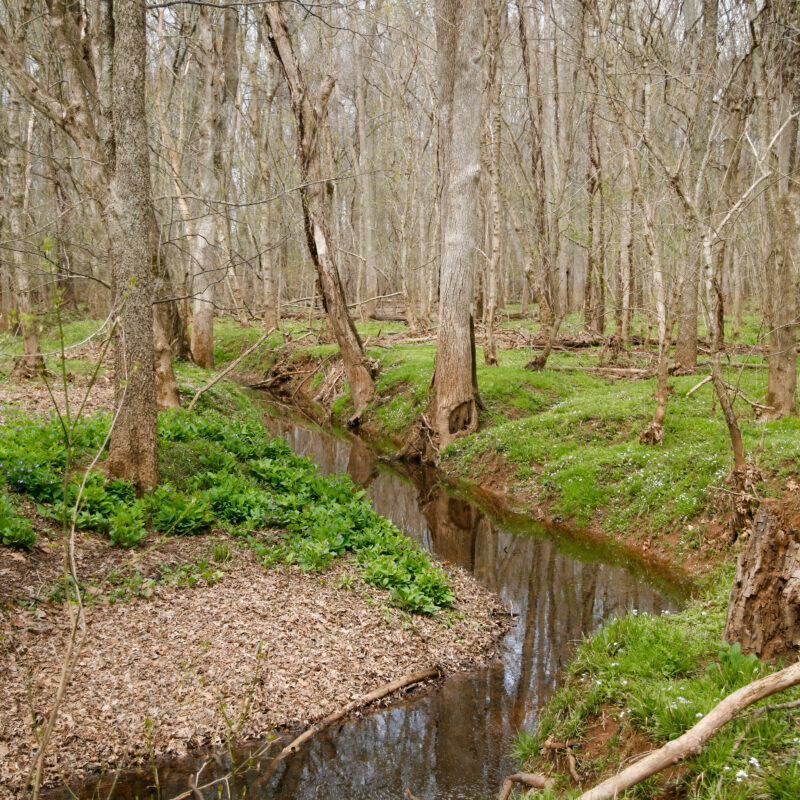
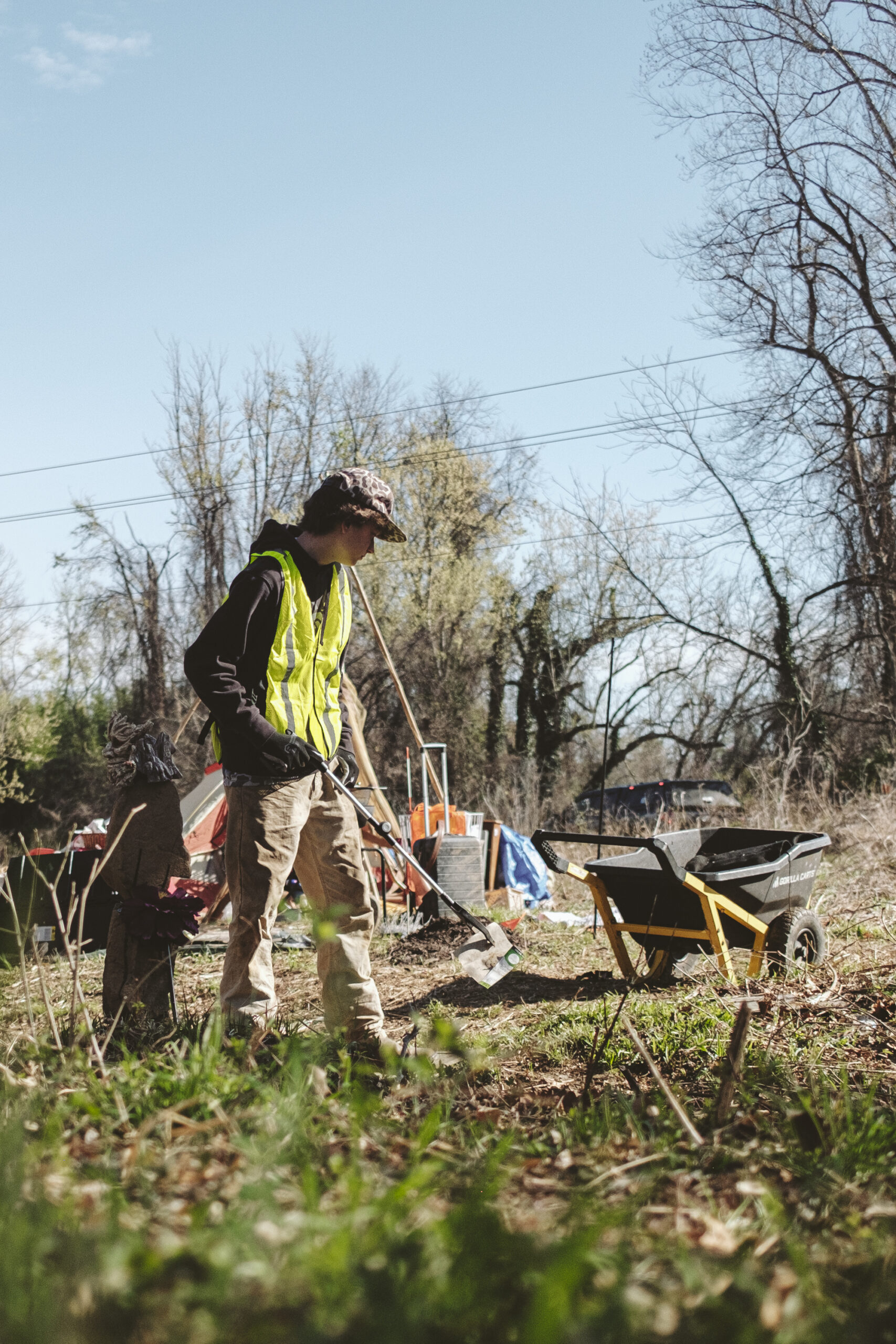
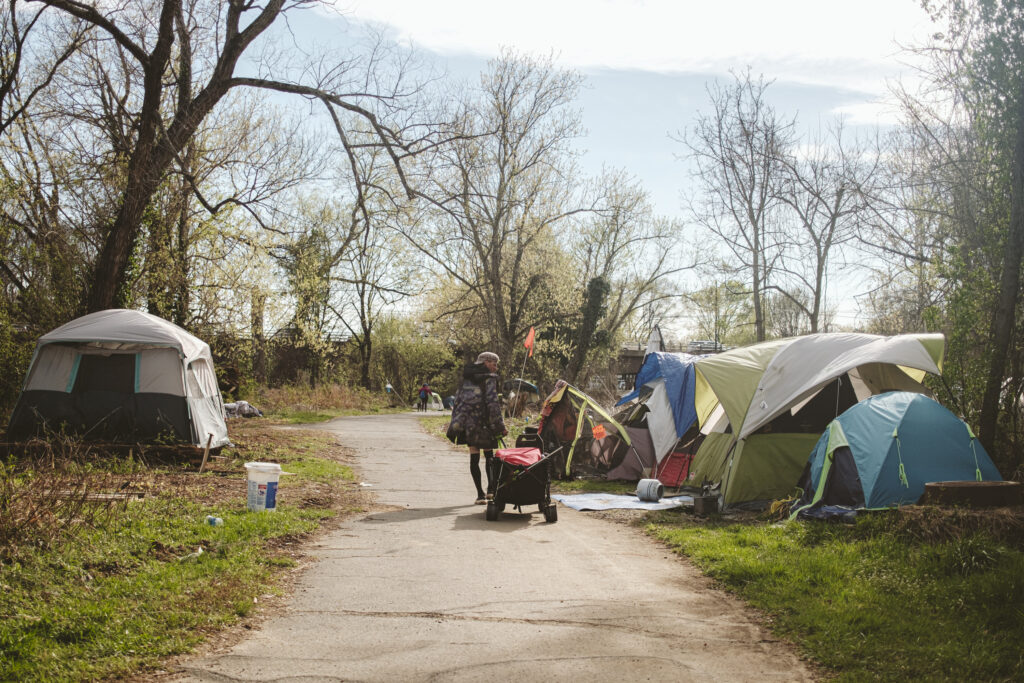
Councilor Michael Payne voiced serious concerns about safety conditions at the Rivanna Trail encampment, including its location along the waterway and fire risk amid an ongoing drought. Homeless service providers echoed many of these worries about lack of structure and safety, but noted BRACH has one outreach coordinator who is responsible for the entire catchment area, and is at the site near 0 E. High St. daily. City Police Chief Michael Kochis and Joe Phillips, Charlottesville Fire Department’s deputy chief of community risk reduction, reported numerous incidents and ongoing safety concerns at the campsite, before confirming one person died there on November 24.
“I walked there and my heart really does break. And I am terrified because what is happening is not any minimum level of care; it is not meeting any level of structure that is going to help these folks,” said Payne. “Someone is going to die out there … I can’t believe where we’re at, and this cannot be it. I say this not wanting to criminalize anything, arrest anyone, but caring about these people as human beings, this just feels like we’ve abandoned folks. … This cannot be sustainable or compassionate to these folks.”
The low-barrier shelter may still be a few years away from being operational, but councilors and service providers seem poised to take action on the Rivanna Trail encampment by creating an alternative camping site at a new location—potentially even at 2000 Holiday Dr. When and how it gets up and running remains to be seen.