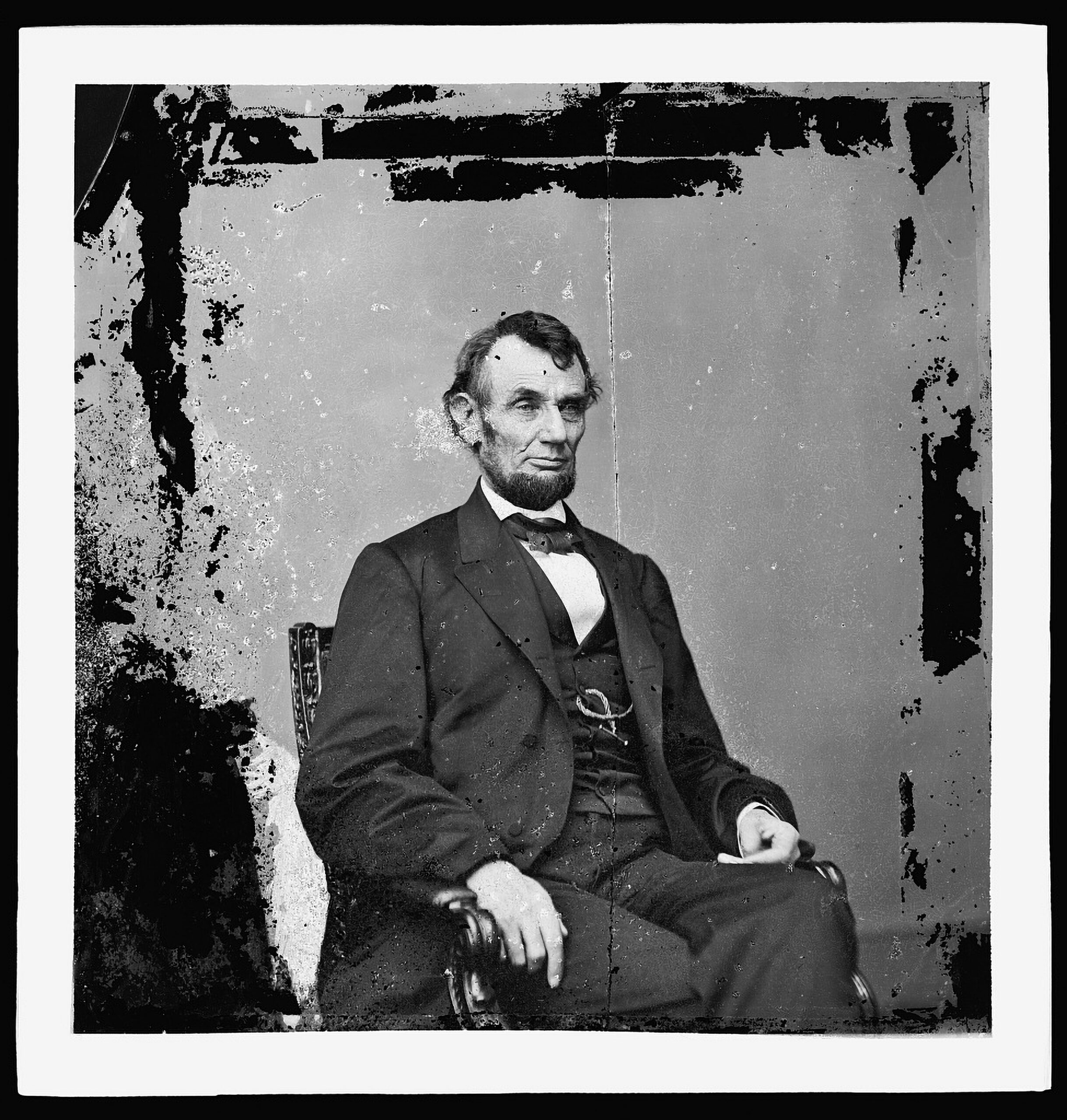
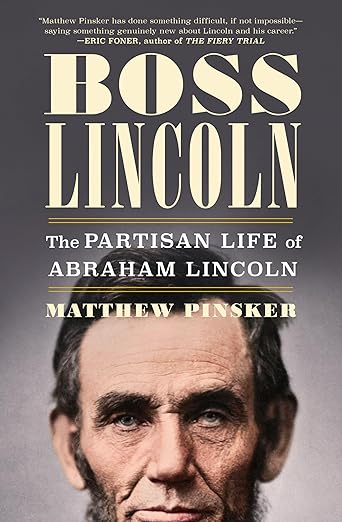
As the United States celebrates its 250th anniversary, the turmoil and division the country faces feel more 1850s than 1776. Historian Matthew Pinsker’s Boss Lincoln: The Partisan Life of Abraham Lincoln, released earlier this year, draws from a trove of private letters and documents to reveal that the president we celebrate as a saintly martyr could also be a fire-breathing, down-and-dirty political operative. The book argues that the so-called Railsplitter’s willingness to draw lines and build fences around his coalition helped him successfully rally Americans around his cause, win the Civil War, and reunite a fractured nation.
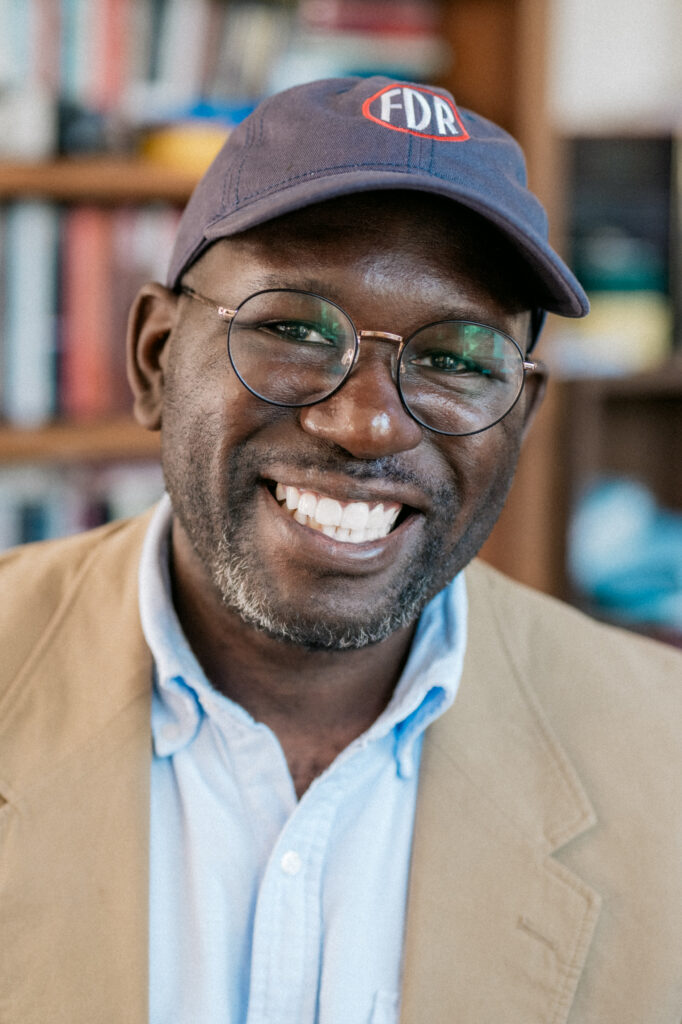
Charlottesville resident and University of Virginia grad Jamelle Bouie—New York Times columnist and co-host of ’90s “Dad thriller” movie podcast “Unclear and Present Danger”—recommended the book to Nathan Alderman, C-VILLE’s senior news reporter. For our issue on stands this July 4, Bouie and Alderman discussed what the book reveals about both Abraham and Mary Todd Lincoln, why it can be good to yell at your elected officials, and which Arnold Schwarzenegger classic Honest Abe might have enjoyed most. (The following interview has been edited for flow, clarity, and word count.)
Nathan Alderman: This book paints Lincoln as a partisan driven by principle, but I came away thinking that his main driving principle was, “I want to win.” We see him shift his priorities and his policies sometimes from one audience to the next to keep his hopes of victory alive. Did you get that same impression, or am I missing something in the text?
Jamelle Bouie: No, I think the text very much does foreground Lincoln as a partisan—first a Whig partisan, then a Republican partisan—but I also think that what is interesting about the dynamic is that I don’t think Lincoln is without principles. His partisanship and his desire to win ends up, I think, shaping the nature of his principles. So I think one of the interesting throughlines of the book is, you see Lincoln going from being kind of anti-slavery, kind of like, “seems bad, wish it wasn’t around,” to being actually quite a hardline anti-slavery politician. And that is driven not by some moral awakening but by the exigencies of politics.
He realizes that, “Oh, to build out this coalition to win, I have to actually be a much more hardline anti-slavery person than I might natively be,” and I find that fascinating. It goes counter to, I think, the relationship between politics and principle that I think we often have, which is that you establish firm moral principles first, and then your politics are downstream of that, and your partisanship is downstream of that. But a dynamic in which your partisanship is actually the thing pushing you in the direction of a particular set of principles—I think it’s just an interesting dynamic, and I actually think it maybe has some sort of implications for thinking about politics today.
You mentioned how for Lincoln, principle is downstream of partisanship. I see a lot of discussion nowadays about [how] Democrats are losing, or lost the 2024 election, because they don’t stand for anything. They need principles first. They need to articulate those principles. In what ways do you think that Democrats could learn from Lincoln’s example of putting policy downstream [from] partisanship?
I think that the thing Lincoln discovers, perhaps, through the 1850s, is that the way to piece together this coalition, this quite disparate coalition of former Whigs, some anti-slavery Democrats, people just opposed to [the Kansas-Nebraska Act of 1854, which repealed the Missouri Compromise and allowed slave states to potentially expand into the North]—there’s not too much of a unifying thing, you have to piece this coalition together from a lot of different parts—is to identify a particular principle that is specific enough that everyone can say, yeah, we’re for this, but broad enough that how you’re for it can be very different from group to group, from person to person.
The way partisanship falls into it, for Lincoln, as I read the book, is that then in service of trying to keep the coalition together, he doesn’t bend from it. This is what the principle is, and when it’s necessary to sort of firm up the boundaries of the coalition, he hardens it. So when there’s talk of bringing in [Democrat and political rival] Stephen Douglas, late in 1859 and in early 1860, Lincoln’s like, “We can’t do it. It would violate—it would dilute the principle too much for us to welcome Stephen Douglas into the fold.”
Where I see Democrats in the present going wrong is they’re looking for particular issue positions that [are] going to reach moderate voters. It’s going to position them well in the center of the electorate. But those issue positions are kind of disparate. They’re not really tied together by anything, and there’s no sense that Democrats are really trying to articulate a single principle of any kind, either a narrow one or a broad one.
I think what this book suggests is that it might be a totally viable strategy to stitch together a winning coalition with a principle that’s narrow enough to be definable, broad enough to include a lot of people, and that is partisan, right? It isn’t actually trying to be about bringing everyone together. [A coalition] that is about drawing distinctions in the larger electorate. That is about saying, if you are for this, then you are with us, rather than trying to pinpoint something in the center in hopes that you’ll be sort of sufficiently inoffensive to enough people.
I do think that part of what Lincoln stumbles upon or discovers is that you’re going to be offensive to some people, and that’s actually part of how you put together a coalition: by creating a sense or demonstrating that actually there are people opposed to us, and if you are also opposed to them, then you’re with us.
Good old negative polarization.
Yeah, very much. Sort of a combination of a positive vision, but then accepting the negative polarization as a consequence of that.
So many of the books I read or have read in the past, including Team of Rivals, portray Lincoln almost in these glowing, holy terms. I mean, [Steven] Spielberg’s movie about Lincoln, especially. And this book was remarkable because it shows him throwing elbows and being dirty and underhanded; and Mary Todd Lincoln, who is usually portrayed as a nervous, neurotic complainer, she’s out there in the trenches, doing political work, too. Why do you think this side of Lincoln and Mary Todd doesn’t come through in a lot of the history books?
I mean, the simple answer is Lincoln’s assassination, right? Lincoln’s assassination almost immediately deifies him, and so one of the throughlines in the Lincoln scholarship since then, in the 160-odd years since he was assassinated, has been actually trying to recover the actual guy. Not the gauzy figure of the Second Inaugural, or the Gettysburg Address, or the First Inaugural, for that matter, but the actual real-life living politician who goes from relative obscurity to becoming president, basically in like five years. It’s quite a remarkable rise. To explain that, you have to recover that guy; you have to kind of figure out what was the nature of this kind of person, that they could go from kind of being a retired politician as the 1850s begins to being the leading member of a new party, and then the president as the new next decade begins.
I think that in recent decades, as we’ve gotten more access to archival material—this book is built from a new trove of archival material—Lincoln the myth has lost its hold somewhat on American popular memory, right? Even in the 1930s and ’40s, you have films like Young Mr. Lincoln. It’s in the same terms, in gauzy “this is a secular saint” kind of terms. Although Spielberg’s movie, I think, does lean into that somewhat, it’s also an interesting text in that it does emphasize a bit of the dirtiness that goes into Lincoln’s political victories.
But in any case, as we get new material, as the cultural memory of Lincoln changes, I think there’s more space to explore the actual guy. I think historical scholarship is always shaped by the demands of the present, even as much as historians try to avoid presentism. And I think that at a time when a lot of Americans are struggling with polarization and partisanship and struggling with how one tries to achieve the good in politics, recovering the partisan Lincoln, recovering the Lincoln as hard-nosed politician, becomes really compelling, I think. Because it’s like, here’s a guy who did accomplish something great for the United States, and did not do so as a saint. [He] did so as kind of a regular politician—an exceptionally gifted one, but a recognizable type.
One of the things that the book mentions in Lincoln’s organizing efforts is how much he funds media. I’ve heard a lot of people arguing that the Democratic Party should be doing that right now, creating its own media ecosystem. Where do you land on that question, and what do you think that current Democrats can learn from Lincoln in that regard?
This is one of those places where I think I break from the consensus from my friends in media. There’s a lot of nervousness about political parties directly funding stuff like newspapers. But I say, let a thousand flowers bloom.
I think that one of the challenges for Democrats in particular—let’s say political parties generally across the globe, center-left parties—is attention, is the overall media ecosystem, is the fact that for-profit platform owners and operators don’t necessarily have the health of the nation in mind when they’re operating. There is a lot to be said for attempting to circumvent some of this by just directly funding media themselves, and even kind of more traditional forms of media. We both live in Charlottesville. The city has several publications that cover the city. But the surrounding counties struggle somewhat for news coverage.
And a political party, Democrats, funding a bunch of rural newspapers, funding a bunch of suburban newspapers that operate as newspapers but also clearly have a partisan tinge, I think, could work to both alleviate an actual problem, but also begin to repair the party’s relationship with ordinary voters, and have people encounter the party in ways that aren’t simply … every four years or every two years in an election.
The 19th-century conception of mass politics, which is essentially that you have to kind of always be campaigning, always be working, looking for ways to connect yourself to voters, I think has a lot to say for it. And if the currency of the current moment is attention, then that ethos of “always be campaigning” works for today. I think you actually see versions of it, you know, at the moment in New York. [New York City Mayor] Zohran Mamdani very much adopts this kind of, you’re always kind of trying to appeal to the public, you’re always in the public view, and I think it could be very successful.
Lincoln’s dealing with this enslaver class that is willing to play by the rules of democracy as long as it gets them their way, but the moment they lose, they flip the table, they freak out, they turn to violence, even when Lincoln’s like, “Guys, guys, I’m not going to take away anything you already have. I’m just going to keep you from setting the rules for the rest of the country.” It’s not enough that they get to do what they want; everyone else has to do what they want too. Where do you see that reflecting our current moment?
I think Lincoln and Republicans in 1860 are being a little bit disingenuous. Their theory of the case is that, yeah, if we end the spread of slavery, then we’ll starve it out. I mean, not to hand it to them, but I do think that Southern slaveholders were kind of like, “Yeah, this is an existential threat to our institution if it cannot expand.” And Republicans are saying, “Yeah, we’re not going to let it expand, because we want the thing to die out.”
Now, the issue, right, for 1860, is that everyone’s supposed to be bound by a fair decision of the people. What slaveholders ought to do is try to persuade the people that you should keep slavery around, and if they can’t, then, well, you know, tough luck. And it’s in the refusal to abide a fair decision of the people that I think you can see the parallels with Trump, right, with his election denialism after the 2020 election, with his forays into election denialism this year. This refusal to accept that a vote of the people in a fair election is binding and ought to shape your behavior going forward. And along the same lines, a rejection of the political authority of your opponents, of saying that just because you won this vote doesn’t mean you’re legitimate wielders of authority. You see that, I think, a lot in our current politics, with politicians very explicitly aligned with the president.
That’s where I see the parallel, in an uneasiness or outright rejection of what [I think] are basic precepts of democratic life: that sometimes you lose, and you just have to accept it and move on.
A lot of people are shouting at Lincoln because they want him to do something and they think he’s not doing it, but they have imperfect information. As citizens who are trying to make our elected officials respond to our wishes, what do you think we can learn from this book?
I think one thing you can learn is that you should continue shouting and yelling at elected officials. I mean, yes, you, the individual citizen, does not have perfect information, but neither does the elected official, right? And your yelling at them, to put it that way, is, I think, an important signal of information for them as well. It helps them understand, if nothing else, the intensity of feeling around certain issues.
Although the book emphasizes [that] Lincoln always, in the end, makes his own decision, and Lincoln’s always trying to collect information, it’s also beyond clear that [abolitionist and influential newspaper publisher] Horace Greeley constantly harassing him about being more aggressive against slavery, that he’s thinking about that. It doesn’t escape him that there are important elements of his coalition that want him to act in decisive ways. So even if he doesn’t give them everything they want, he still is quite clearly attentive to what their demands are and what they want.
That’s important. You’re not going to get a politician who is attentive to your demands and your wants if you’re not voicing those consistently. I think one thing you can draw from this is that politicians are going to be frustrated by hearing people yell at them, and you should yell at them anyway. Because your job as a citizen is not to make sure that they don’t feel frustrated. Your job as a citizen is to try to get them to do what you want them to do.
I’m struck by how Lincoln basically plays head games with so many people. He floats a policy he has no intention of adopting, just to scare people into line, or he pretends he’s doing one thing just to gauge reaction when he’s actually always planning to do the other. It’s pragmatic, but it made me kind of feel uneasy about Lincoln as a person. How do you feel about that? Do you see any national politicians who are using that kind of savvy manipulation to advance their goals?
I think all successful politicians essentially do something like this. Part of being successful, especially on the national stage, is somehow being all things to all people. Everyone looks at you and says, I think that guy’s on my side, and that requires a willingness to, as you note, say one thing and do another, float ideas you don’t ever intend to follow through on, and engage in forms of political deception. I think that is politics. That is what successful politics requires.
I think that for Lincoln, and I think for the most successful politicians in our history, that kind of political deception isn’t done for its own sake. It’s done for the purpose of accomplishing something. I can name quite a few politicians who are slippery in that regard, but slipperiness without some kind of endpoint, without some kind of conviction for what you’re doing, that I think creates mistrust. It can fracture coalitions. Because if you are slippery, but then you eventually accomplish something that the coalition wants, people kind of forgive it. And if you don’t, then they don’t.
For an example of what it looks like when you don’t accomplish anything, I think the fact that Kamala Harris has not a great reputation within the Democratic Party right now is an example of sort of playing high-level politics, but without a kind of a firm sense of principle behind it. And on the other end, someone like [Alexandria Ocasio-Cortez] has done the thing right, where you are clearly trying to appeal to various parts of your coalition by saying what they want to hear, but you have your own path in mind. She clearly has a goal she wants to accomplish, and inasmuch as she can reach that goal, I think people basically say, “all right, well, that’s politics,” and they’re okay with it. But we’ll see. You can imagine a world where Donald Trump is that kind of figure, because he does say whatever anyone wants to hear. But it’s so clear that he does it for his own sake, for his own very narrow interest, that it’s not something that people can look past.
Speaking of looking past flaws in a politician, right now we’ve got a lot of arguments online around people like Graham Platner [Democratic nominee for senator in Maine, accused of alleged mistreatment of ex-girlfriends and other troubling statements and acts]. Is it worth supporting a terrible person if they’re going to vote in favor of the things that you want to accomplish? You’ve written about how Lincoln created this broad coalition by basically not being too picky—I mean, obviously he set guardrails, as with Douglas—but by not being too terribly picky about who was in the coalition, as long as they were all generally heading in the same direction. What do you think are the limits of litmus tests? When are they more important? When are they less important?
A litmus test is important inasmuch as you’re thinking about the broad principles of the party, of the coalition. When it comes to more specific things, like how you’re going to do it, when it comes to even your own motivations for why you support something or not, I think it’s just less important, right? If everyone wants universal health care, and some people want it because it’s the morally right thing to do, and some people want it because it’s cheaper for businesses to not have to directly pay for it, it’s like, who cares? Everyone’s pulling in the same direction in that regard.
When it comes to a candidate like Platner—I should say there are limits to this. If someone is engaged in actively harming other people in really awful ways, that matters. But if it’s just like, aesthetically the person doesn’t appeal to you, it’s like, is he on your same page? Are you moving the same direction? Then it doesn’t have to aesthetically appeal, because that’s not really the goal of politics, right? The goal of politics isn’t to make a bunch of friends—you know, the stupid reality TV show allusion. It’s to win power and accomplish things. And I think that should be the gauge by which you measure these things. Does this help advance a particular set of goals, or does it not?
You mentioned how Lincoln’s own opinions on issues like enslavement were shaped by his partisan drive. But he also managed to sweep up a bunch of other people and change their opinions over time. We watch how he manages to get people realizing that, oh, in order to win the war and preserve the Union, we have to abolish slavery. It’s not just a morally correct thing, it’s a tactically correct thing. Do you think that kind of power to shape opinion is still an active force in politics? And if so, who do you think does it particularly well?
I do think that kind of ability to move people in a direction is still operative. I don’t know if I can name someone who does it well. I think I can identify areas where it is happening, right? For example, a sense among Democrats who 10 years ago would have balked at the idea of, say, major reform to the judicial system or major political reform, have embraced it in part because that might be necessary both to winning elections, but also to having any kind of meaningful recovery from the present moment. So circumstances are demanding that you take a more radical stance than you otherwise would have. That dynamic is happening. I’m not sure it’s the product of any particular person.
In the case of the Civil War, when it comes to like the elite game, Lincoln trying to negotiate his right flank, there was certainly an element of him having to bring them along. But inasmuch as you can talk about left or right in the period, his left flank, the most vehement anti-slavery people, were very early on saying, listen, the only way we’re going to win this war is if we make it a war on slavery. So there’s this interesting way in which Lincoln is both lagging behind his vanguard and jogging a bit ahead of his flank. And that kind of balancing act, it’s very difficult, and I think it’s one of the things that marks him as a gifted politician: the ability to hang right there in the middle of his own coalition, never getting too far ahead, but never falling too far behind.
Are there any other aspects of the book that we haven’t yet discussed that you found particularly striking or interesting?
It’s a glimpse into another facet of Lincoln’s personality. Early on in the book, you learn that he basically proposes to Mary Todd with a big chart of election victories, which is very funny to me. It’s like, oh, these two people were sickos. I know this personality type. These are the kinds of people who today would be looking at spreadsheets of House races and making their own gerrymandered maps for fun.
I think the book is genuinely interesting as a character study. There’s been a lot of work about Lincoln as a humorist and Lincoln as theologian, and Lincoln as all kinds of things. Lincoln as just a hard-nosed political savant, Lincoln as a guy who seemed like his only actual hobby was politics, is interesting, and I think it helps make the period feel more real. I think that’s what’s very useful about a book like this. It helps take it out of the realm of political myth and into the realm of, actually, you know, these people are different than us, but not too different than us.
In light of your podcast, which ’90s dad thriller do you think Lincoln is going to be putting on on a slow night in the residence?
I would say True Lies, just because Lincoln’s sense of humor is very geared towards the dirty and crude joke. So something like a James Cameron movie, or like a Michael Bay movie, actually feels like it would fit Lincoln’s sensibility as a sense of humor. I’m not thinking in terms of the politics of the film, just in terms of what would make that guy laugh. And I think, like a dumb joke, a dumb dirty joke, would make that guy laugh.