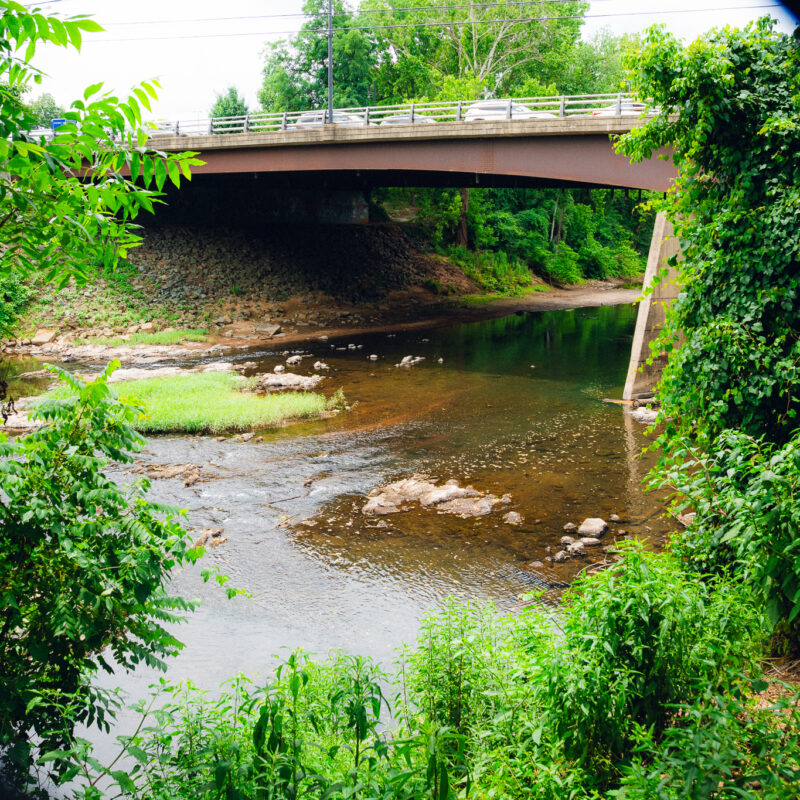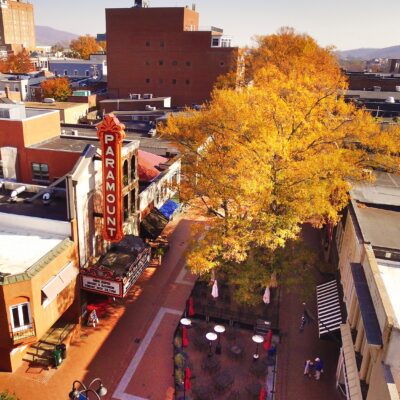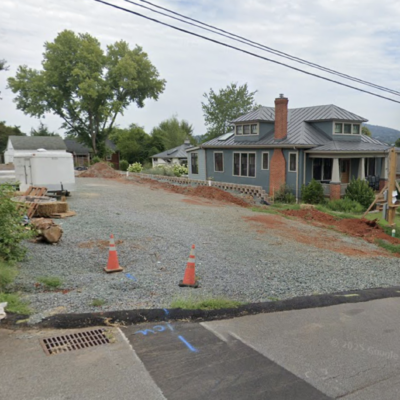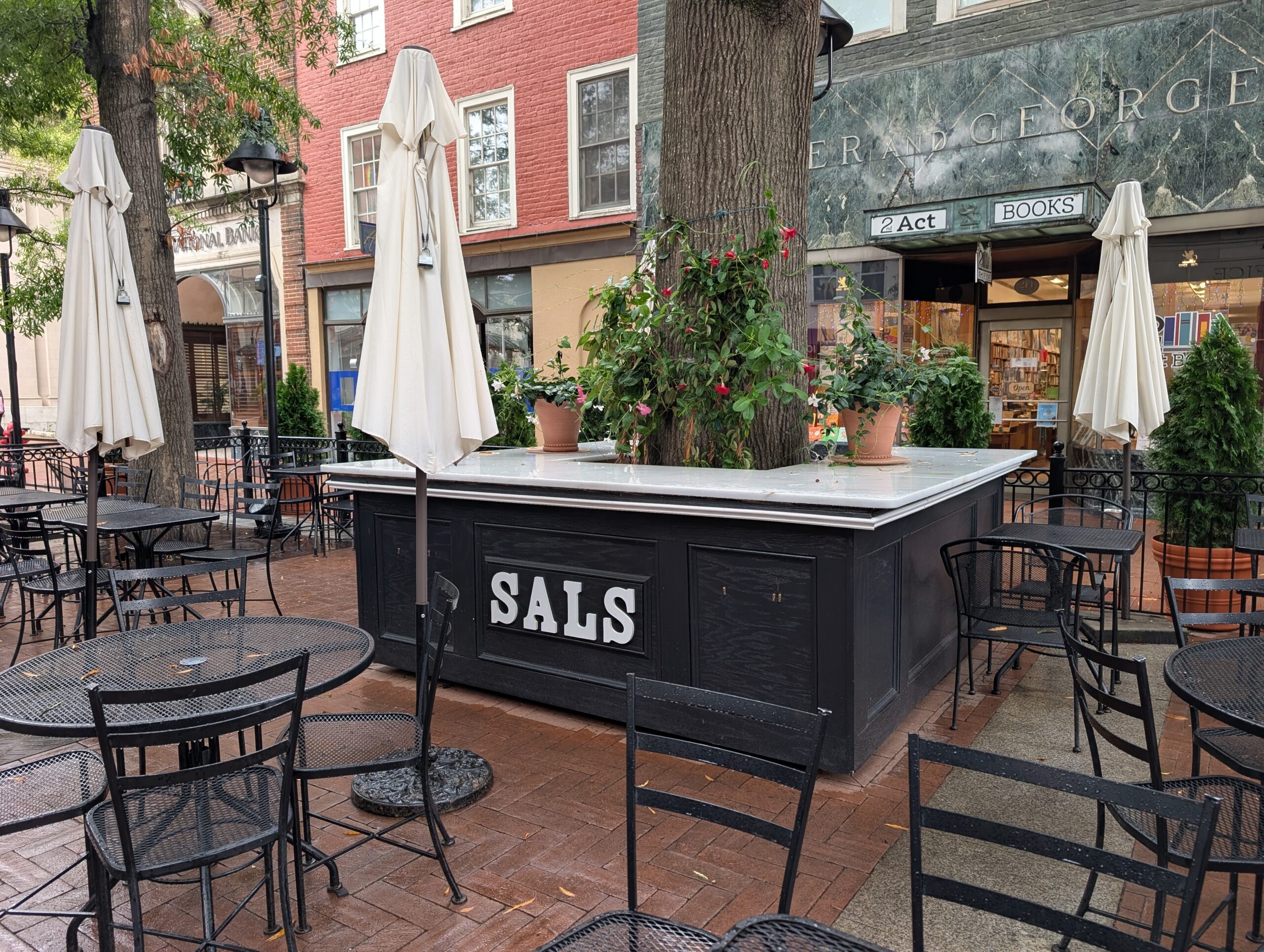
The new counter at Sal’s Caffe Italia is built on a tree grate, less than one foot from the tree trunk on all sides. Staff photo.
The appointed body with power to approve the design of buildings and streetscapes in certain parts of Charlottesville had been expected to weigh in September 15 on a service counter that Sal’s Caffe Italia installed around one of the Downtown Mall trees.
Under the city’s Development Code, staff in the Department of Neighborhood Development Services can approve elements in leased cafe spaces as a “minor historic review,” but an investigation by preservation staff determined the counter did not meet the city’s design criteria.
According to a staff report, city zoning officials saw that construction was taking place in late May and met with Sal’s Giuseppe Finazzo on June 1, while the counter was still being built.
Businesses on the Downtown Mall rent patio space from the city on an annual basis and must comply with all zoning rules and BAR guidelines, which were last updated in December 2024. One of those rules is that nothing in the cafe space can cause harm to the trees, and in recent years the city has cracked down on restaurants using heaters that damage trunks.
Finazzo “was instructed to either remove the counter or submit an application for a Major Historic Review,” reads the materials for the BAR meeting. “The serving counter is built directly on the tree grate, less than one foot from the tree trunk on all sides.”
Staff recommended that the BAR deny the request, which was made after the work was completed. They also found that other elements, such as dining counters placed along cafe railings, were placed without seeking a Certificate of Appropriateness.
Finazzo applied for permission for the service counter on July 12, but included no narrative. A request for comment from him had not been responded to by press time.
At the very beginning of the BAR’s September 16 meeting, Chair James Zehmer announced the group needed to go into closed session in order to “discuss with staff the limits of the BAR’s purview” over sidewalk cafes. Under Virginia’s open meeting laws, such events allow elected and appointed officials the chance to talk and ask questions without the public present. This conversation lasted about a half hour.
Zehmer read a statement when they returned to Council chambers from a City Hall conference room.
“Following the consultation with the city attorney’s office, it has come to our attention that the CoA application for 221 E. Main St. cannot be considered at this time by the BAR because it does not comply with City of Charlottesville Development Code,” Zehmer said.
At the meeting, Zehmer referred Finazzo to Brenda Kelley in the city’s Office of Economic Development.
“Ms. Kelley is here in the room this evening so that you can put a face to the name,” Zehmer said.
According to the city’s permit portal, Finazzo was not eligible to apply for the permit because he does not lease the cafe space. However, he has owned 221 E. Main St. since June 1999.
The city has not yet responded to a request for more information.