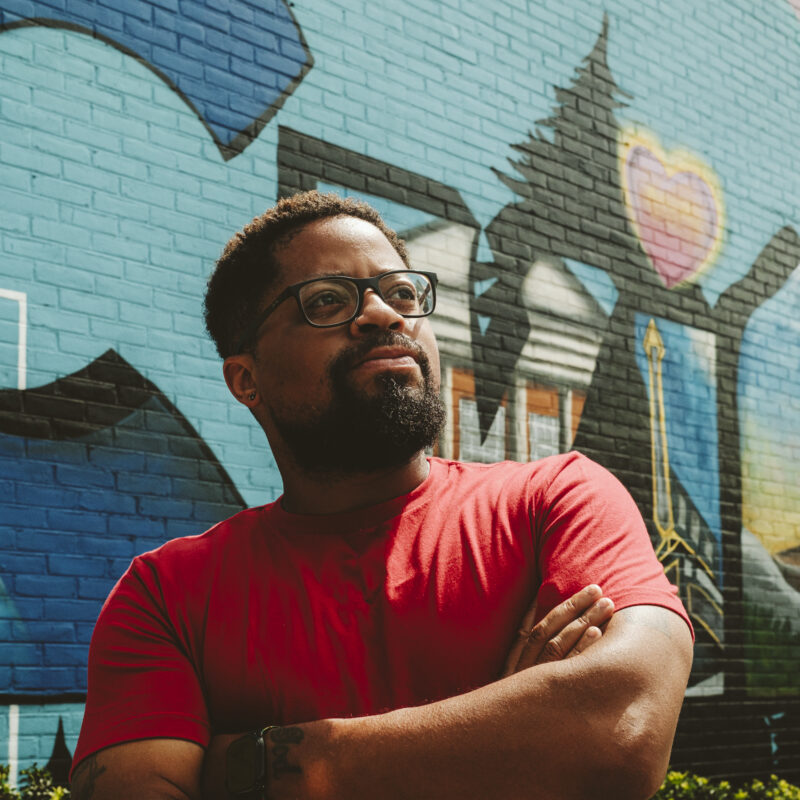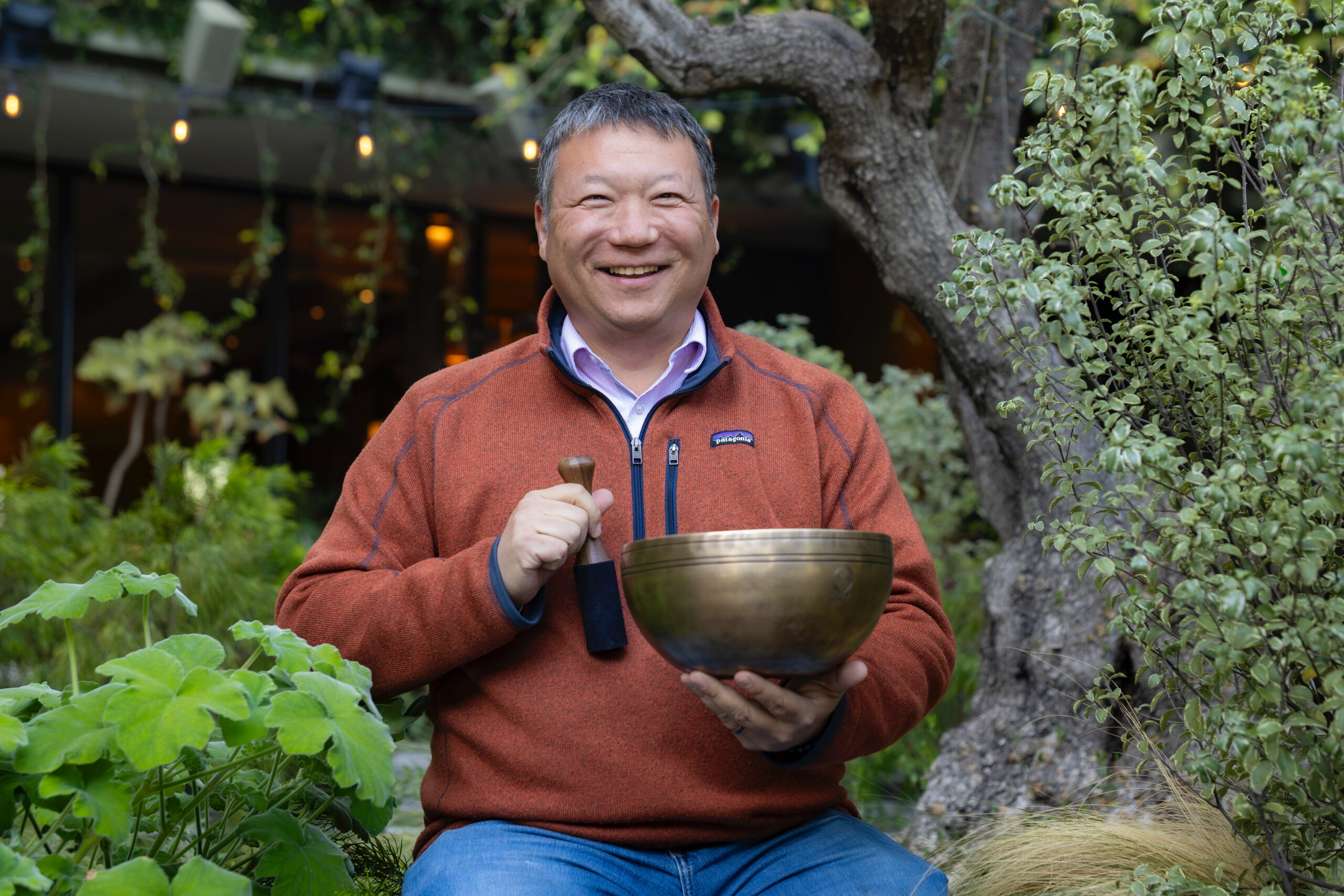
Lewis Nelson needed some peace in his life. He says he’d “gone through a rough time” after two tours in Iraq with the U.S. Army, and three deployments to Afghanistan as a “federal civilian intelligence officer.” Then he saw—and heard—his first singing bowl.
Made of metal or crystal, singing bowls are thought to originally come from China, though today you can also find them in India and Nepal. More bell than bowl, they produce pure, lingering musical tones when struck or swirled with a mallet.
“I just thought it had such an amazing sound,” Nelson says. “It was so neat. And it just felt like I kept running into singing bowls after that.” In summer 2024, in pursuit of his own business, Nelson learned that the Los Angeles-based Bodhisattva Trading Company was seeking a new owner. “And I was just like, that’s it. That’s the one. I’ve got to do it.”
Nelson now makes regular trips to Kathmandu, the capital of Nepal, to buy newly made and antique bowls from vendors who’ve made or collected them for generations. These metal bowls begin with a proprietary alloy that is heated and beaten into shape around a mold. A bowl’s thickness, shape, and the height of its walls all determine the precise note it creates.
“The wider the bowl, typically the deeper the sound,” Nelson says, “The height of the bowl might dictate what we call the sustain. After you hit it, how long does it play for? If you’re a professional practitioner, you want a bowl that you can strike for over a minute. And I can almost know by looking at a bowl if you’re going to get that, because it’s going to be about the thickness of the metal, how wide it is, how heavy it is.”
Nelson says he’s picky about the bowls his vendors offer, choosing only those with rich, harmonious overtones. “If they open a bag for me, and it has 500 bowls in it, I will just hit all 500, and I might pick out, like, these 25 sound really good.” He’s especially fond of “concert pitch bowls,” whose notes are precise enough to match a tuned piano.
Bodhisattva also offers crystal singing bowls made in Utah, with quartz mined from North Carolina. “Crystal singing bowls will give you one steady note, and it’s very easy to play. It’s fairly loud.”
“Nothing’s machine made,” Nelson says of his shop’s crystal and metal offerings. “They’re all very professional grade, master quality bowls.”
Though Bodhisattva’s based in Charlottesville, Nelson says the majority of his sales still go to California. Virginia represents about 5 to 10 percent of the bowls he sells, with international orders providing another 20 percent.
Those interested in a singing bowl of their own can check Bodhisattva’s website, bodhisattva.com, where Nelson includes recordings of each bowl’s precise musical tone. “Find a bowl that resonates with you,” he says. “If you play the recording, and that sound is like, ‘Oh my gosh, that is a beautiful sound. It makes me feel wonderful,’ that means that bowl is resonating with you.”