We know a little about how Jerome Jones lived. We don’t know for certain when he died.
We know from his obituary that Jerome Lee Jones was born on June 13, 1966. We know he worked at the University of Virginia for 20 years, that he rooted for the Dallas Cowboys, that he “loved the dance floor and lit it up with his moves,” that he was “everyone’s favorite dance partner.” We know he was just 59 when he died.
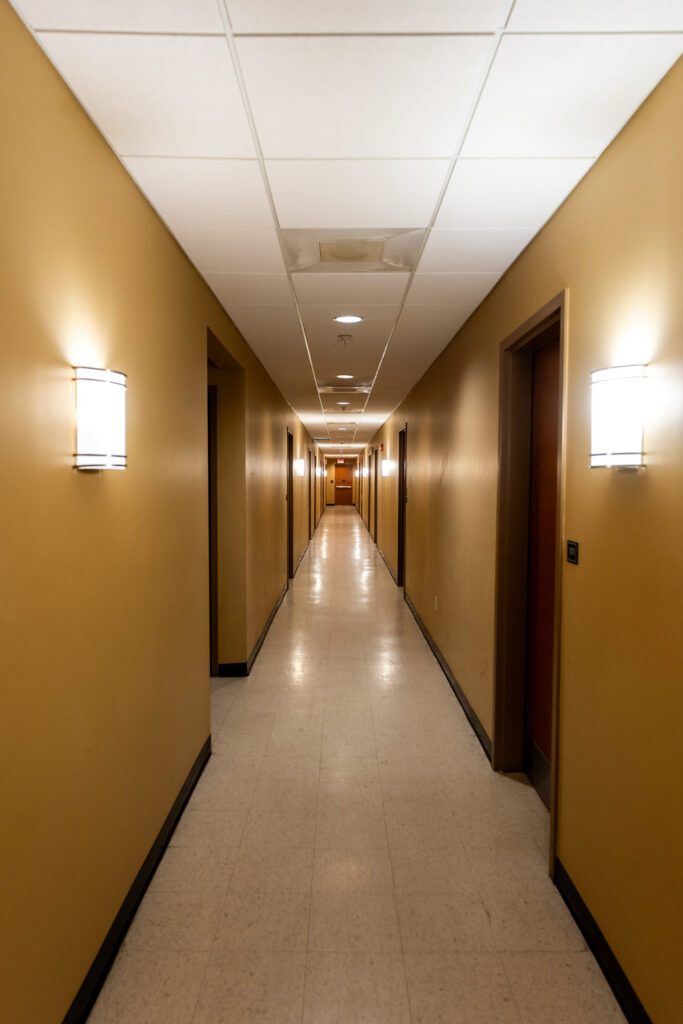
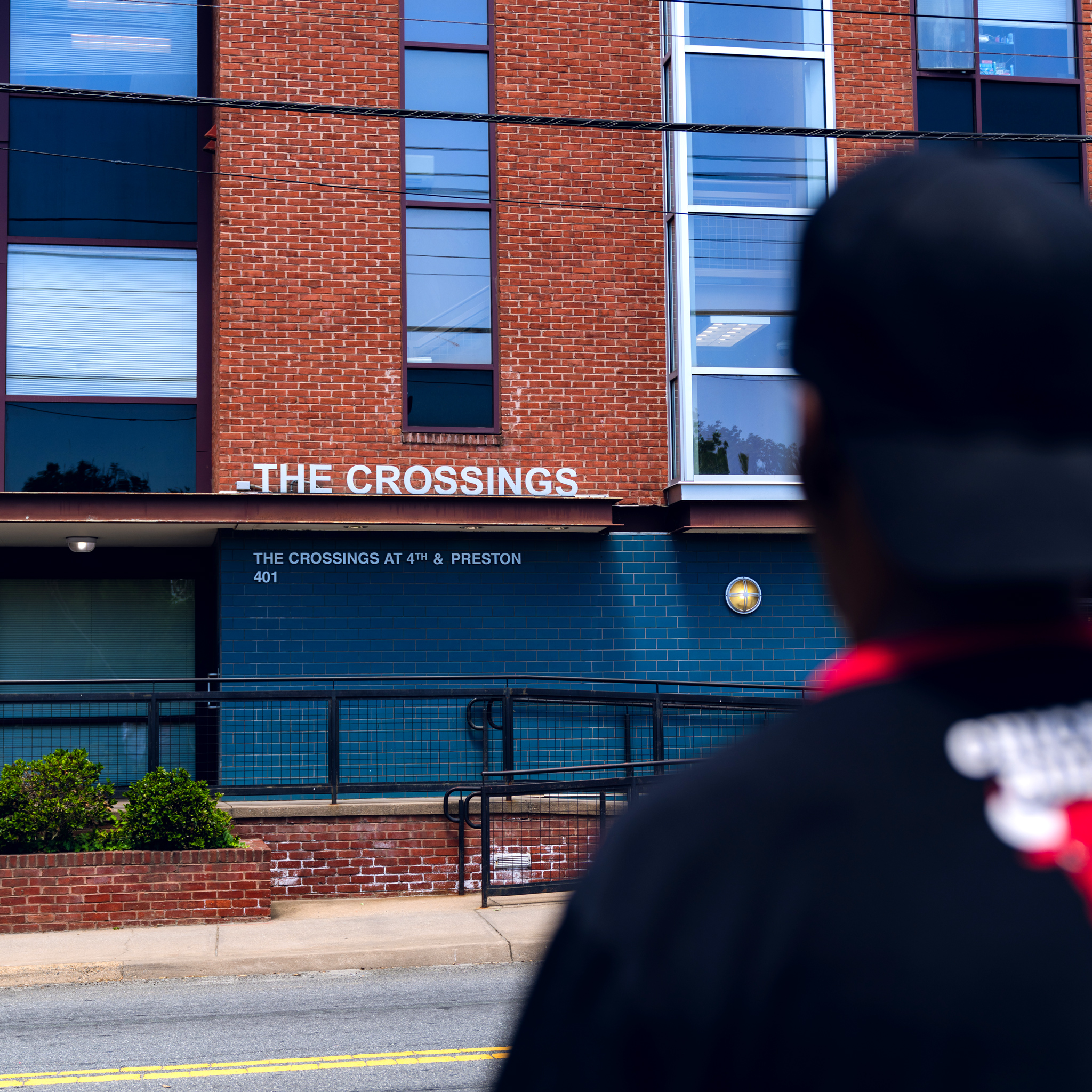
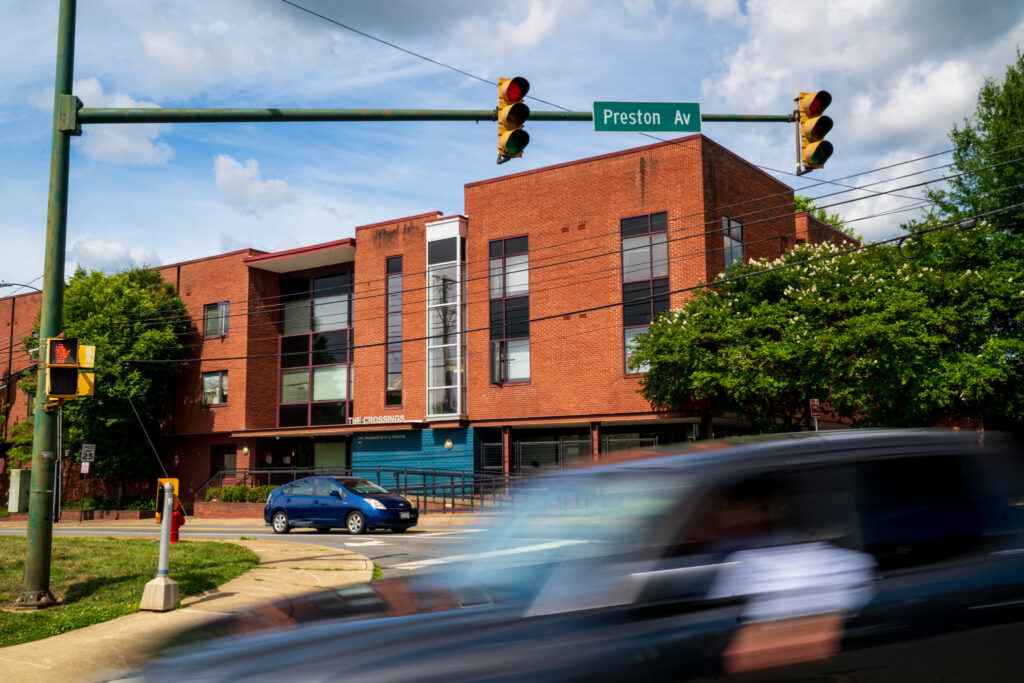
From court records (documenting when he seemingly fell behind on, then caught up on, rent payments), we know that he lived in unit 309 at The Crossings at 4th and Preston at 401 Fourth St. NW in Charlottesville.
On January 16, 2026, 911 records show police were called to that address to investigate a death. Those records remain sealed amid an ongoing investigation. But the date matches Jones’ obituary, and friends of his from the building identify him as the deceased.
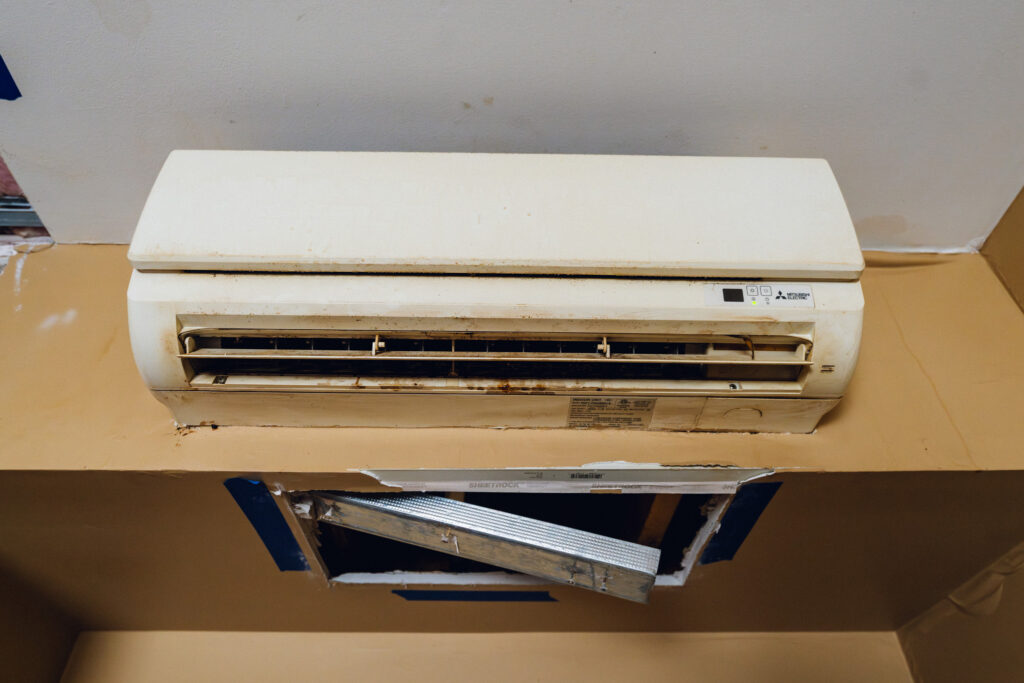
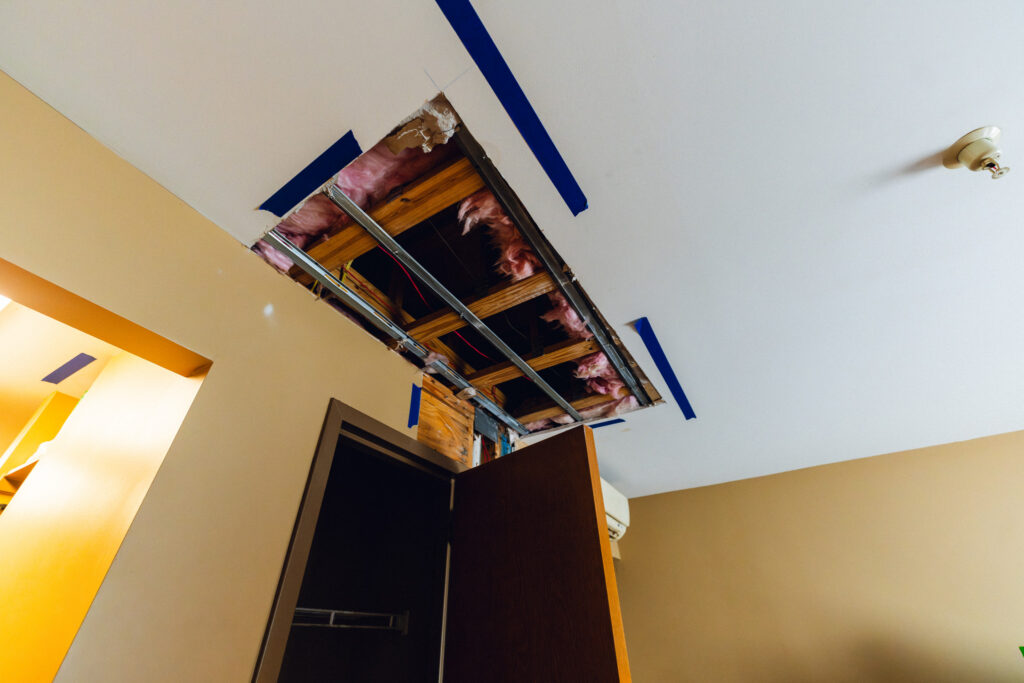
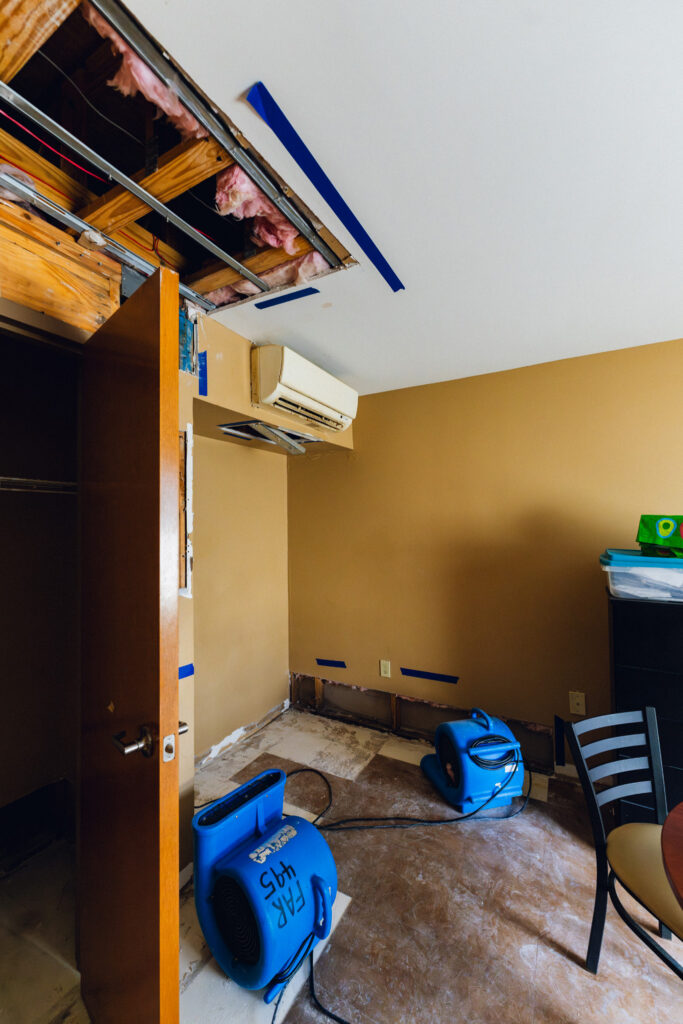
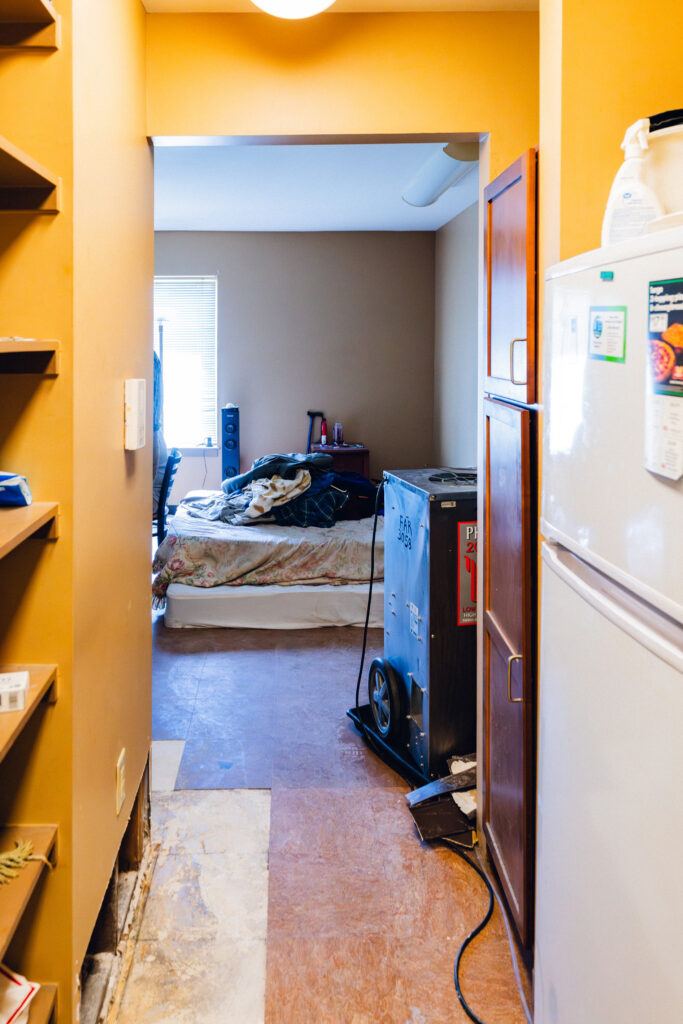
Jones’ brother, Lavon Jones, and sister-in-law, Joyce Jones, say they arrived at Jones’ efficiency apartment shortly after he died. Lavon and Joyce say they saw moldy food in pots on his stove. The air conditioning unit, bearing what looked like black mold, blew foul-smelling air. The pair didn’t see evidence of bedbugs, though Jones had complained of them. They did see roaches, and broken tiles on the floor beneath his bed when they moved it. They threw his belongings in garbage bags and got out of the room as fast as they could.
Joyce Jones works at a funeral home. In her professional opinion, her brother-in-law had been dead at least 24 hours.
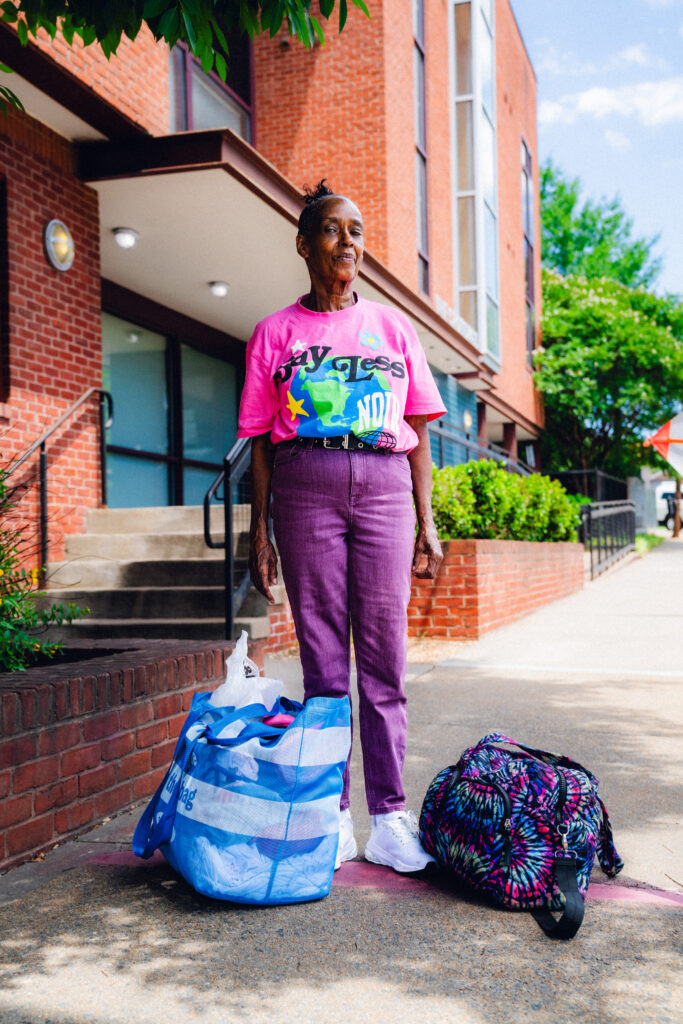
Karen Cooper, 69, lived at The Crossings from 2018 until her eviction in May. “It just tore everybody up in here,” she says of Jones’ death. “We don’t know how long he was there, but we started smelling the smell coming from his room, and then his sister came. Somebody must have called her, somebody from here … she came, and her brother was laid up in there dead.”
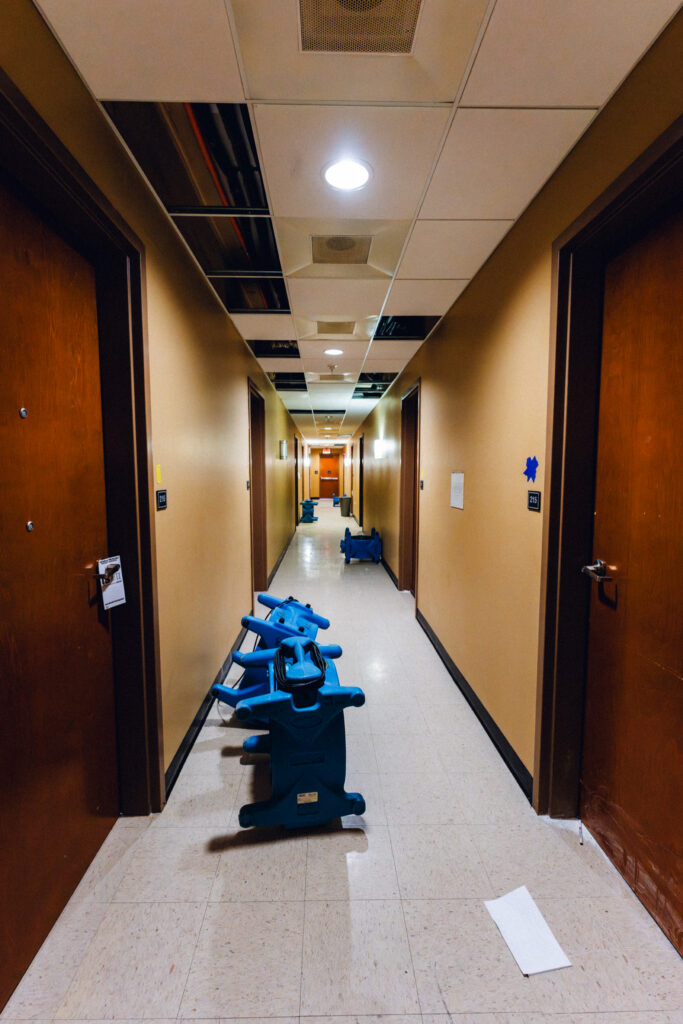
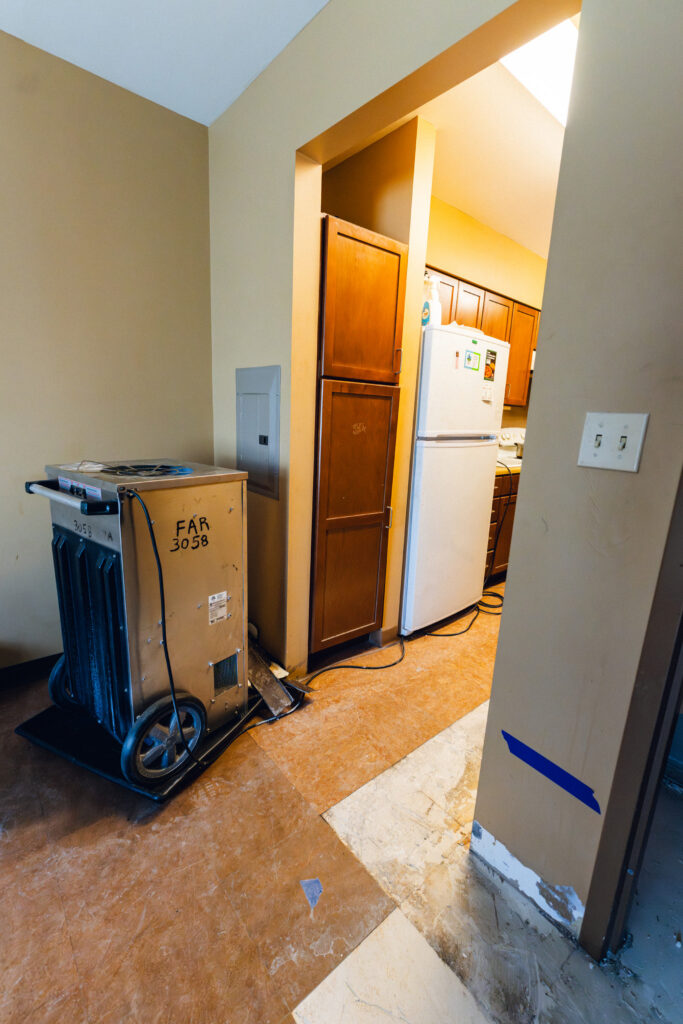
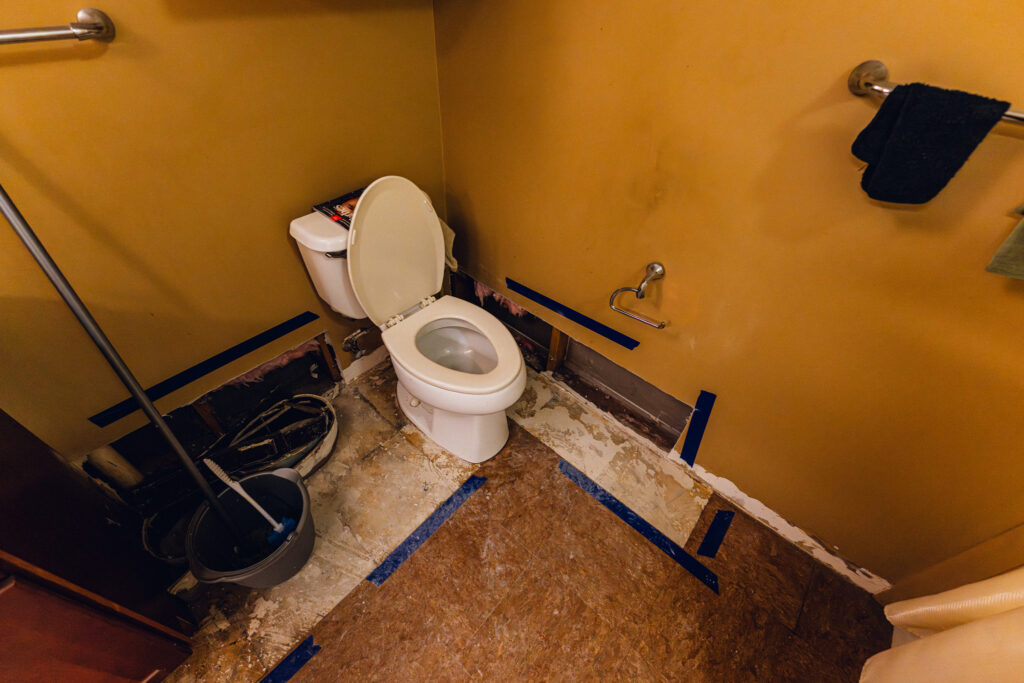
Though not all of the residents C-VILLE spoke to described identical experiences, multiple current and former tenants, and their relatives, reported serial bedbug infestations; floor tiles and appliances left unrepaired; awful odors and black mold in the HVAC system; urine and feces in the halls and elevator; and allegations that some deceased tenants were left undiscovered for extended periods.
Officials from SupportWorks Virginia, the nonprofit that manages The Crossings, say they’re working hard to address some of those issues, and seemed genuinely shocked to hear about others. But they couldn’t always provide solid answers for why conditions in the building appear to have deteriorated, or to some residents’ concerns about how management allegedly treated them.
The City of Charlottesville spent generously to help create The Crossings, to alleviate a shortage of safe, dignified housing for people who desperately need it. Fourteen years later, its return on that investment looks uncertain.
Levels of care
The Crossings opened in 2012 as the area’s only single-room occupancy supportive housing facility. The city purchased the site for $1.55 million in 2010, then donated it to The Crossings as a conditional contribution to the $8.2 million project.
The Charlottesville Redevelopment and Housing Authority refers eligible tenants on its waiting list to The Crossings whenever vacancies open up. The building’s 60 efficiency apartments are split equally between affordable housing units and residences for the formerly unhoused.
Half those units come with federal project-based vouchers: Tenants pay 30 percent of their gross adjusted income in rent, and the vouchers cover the rest, says Sheila Parker, SupportWorks’ director of property management. “If a resident has no income and they’re in a project-based voucher unit … that may mean that their rent is zero.”
“In 2024, out of 38 persons who entered the program [at The Crossings], 15 (40%) entered without income and 20 (53%) entered with a monthly income of $1,500 or less, which is insufficient for a studio unit at [fair market rate],” SupportWorks wrote in a successful 2026 application for a Virginia Housing Trust Fund Homeless Reduction Grant. The majority of the $110,000 The Crossings received from the Virginia Department of Housing and Community Development covers salaries for two full-time support staff at the building.
Building support staff say The Crossings and other SupportWorks properties in Richmond and Hampton Roads operate on a “level of care” system, offering personalized, voluntary services designed to meet specific residents’ needs. “We might have a resident that we try to touch base with every day as a check-in,” says Jennifer Tiller, SupportWorks’ director of services. “We might have somebody that they’re on a weekly schedule, a monthly schedule. But everybody is once a month, minimum.”
Tiller says support staff talks daily about residents and their well-being. “Anything can change at any time, and so that level of care system is flexible,” she says. “We don’t wait for something to happen. We try to be really proactive and [make] sure we know people and we recognize signs.”
Those efforts don’t always seem to succeed.
Alone for days
“The people that we’re trying to support,” says Allison Bogdanovic, executive director of SupportWorks, “are very vulnerable, and they do have health issues. They’ve had hard lives. And unfortunately people pass away with us, and I think that they pass away with us more than in a traditional apartment building.”
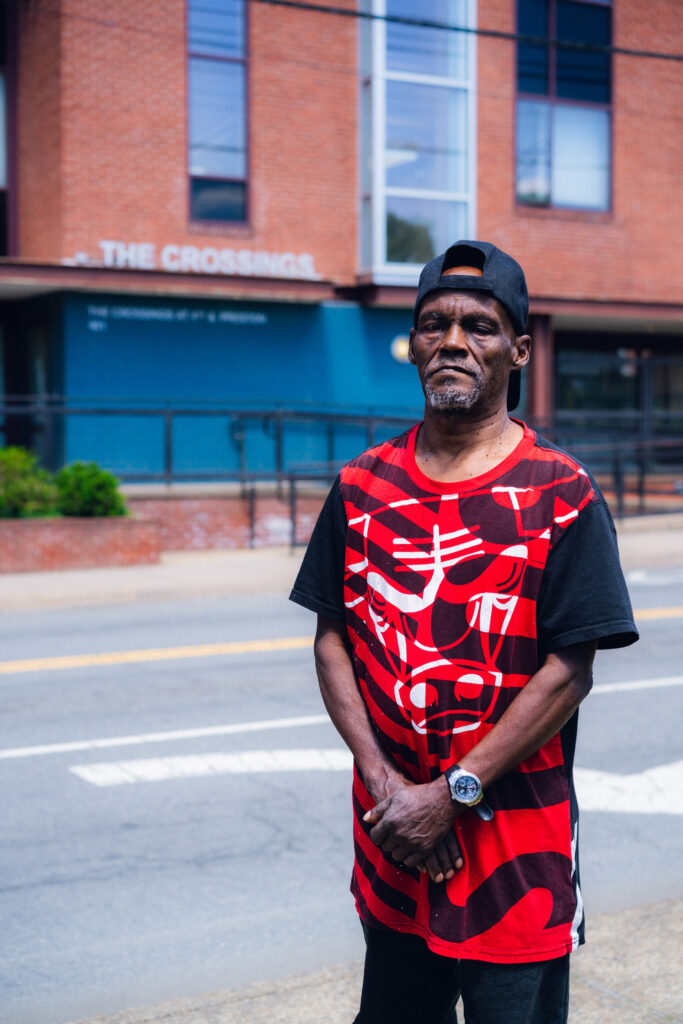
Victor Cooper, 68, is Karen Cooper’s younger brother. He lived at The Crossings for eight years before his eviction in April. “I done seen so many people die,” he says. “I’ve seen so many people where I walked up in the room and the man laying in the floor … They won’t even check on the people that’s sick.”
Not every death in the building fits that description. Todd Jones, 57, died in unit 322 on May 13, per 911 records. His parents, Wayne and Theresa Williams, say he died of natural causes. The Williamses say he was found within four hours of his death by his sister, who also lives in the building. They say Todd’s room had no insect infestations or maintenance issues; Wayne says he visited regularly and kept it clean.
But multiple people described or corroborated residents like Jerome Jones dying in their units and not being found for days. Four are members of the Cooper family, three of whom are former residents. A fifth is not related to the Coopers, and is a current tenant.
Lanitra Cooper is Victor and Karen’s niece. She says she lived at The Crossings from “2014 or 2015” until, according to court records, she was evicted in 2023.
“The first couple of weeks I was there, a guy had OD’d,” Lanitra Cooper says. “And I kept telling them that I had smelled the decomposed body. That man stayed in that apartment almost two to three days later after I had smelled him.” 911 records show one DOA investigation at The Crossings within that timeframe, on October 26, 2015.
According to The Crossings’ 2026 grant application, three residents died—which the application refers to as “exited to deceased”—in 2025.
Per 911 records, three people have been found dead at The Crossings so far in 2026: Todd Jones, Jerome Jones, and a woman Victor and Karen called Lisa. Through a FOIA request, C-VILLE found records that matched the late-February date and general circumstances the Coopers described for Lisa’s death.
“She was a good friend of me and [Karen’s], and we just wondered why we hadn’t seen Lisa,” Victor Cooper says. 911 records show the deceased lived in unit 319, just down the hall from Karen in 316. “Wasn’t but four or five days we hadn’t seen her, and come to find out she had laid up in there. She was dead, up in her room. Ain’t nobody know.”
“Maintenance found her because they was going in there to put a shade up in her room,” Karen Cooper says, adding that to her knowledge, Lisa had been there “for two or three days.”
Records timestamp the first 911 call shortly after noon on February 24. In a recording of one call, a Crossings employee tells the operator that “maintenance was doing rounds today, and they found one of our residents unresponsive.” The employee repeatedly states that she hasn’t seen the body herself.
When the operator asks whether the person is breathing, the employee sighs. “I don’t really know,” she says. “I have no idea why they had me—I know she has health issues. They’re just saying she’s not responding at all.”
Listen to an excerpt from the February 24 911 call:
911 records do not describe the condition of the body, nor an estimated time of death.
A year before Lisa’s death, Karen Cooper says she nearly died at The Crossings herself. In early February 2025, she allegedly slipped on a rug in her room. Karen says she lay there, unable to get up or get to the bathroom, for two or three days. “I was screaming and hollering. They ain’t getting nobody at all. So it didn’t make no difference. Then a friend of mine … heard me [calling] from the hallway, because I had made it to the door enough where I could reach up and unlock the door. So I unlocked the door and she ran and got my brother. That’s when I went to the hospital.”
Victor Cooper and two other members of the Cooper family confirmed Karen’s fall; Victor and one other family member supported her account of her injuries.
911 records from 1:30am on February 11, 2025, report a woman with a broken arm in unit 316. The system doesn’t preserve recordings that far back, but written records note the “caller wasn’t clear about when the injury happened” and they are “calling for another person on the third floor who hurt their arm yesterday.” Emergency responders transported Karen to UVA Hospital.
“If we die up in here, then if our families ain’t coming here to see us or checking on us, then we just here until somebody come in and fix something in the room,” Karen says. “Nobody never checks us.”
“I haven’t heard of this happening,” Bogdanovic says when asked about Karen Cooper’s fall. “It hasn’t happened at the scale that we felt we needed to evaluate our policy, but that doesn’t mean we can’t, right?” She calls the idea that any tenant could be lying in their apartment without receiving help “abhorrent.”
“We are an independent living community,” Parker says when asked about deaths like Lisa’s and Jerome Jones’, and accidents like Karen Cooper’s. “If management is made aware of a concern, then yes, we will make wellness checks, but we don’t just routinely or randomly enter a unit.”
“One of the situations you brought up, we’re very familiar with,” Tiller says, without identifying the specific incident. “[We] immediately brought the team together, debriefed on what happened, the timeline review, who responded, who called, did you follow the protocol, do we need to adjust the protocol? … When something comes up, we don’t ignore it. We absolutely respond to it. Like I said, we’re not perfect. We’re dealing with human beings. It’s not a science.”
Creepy crawlies
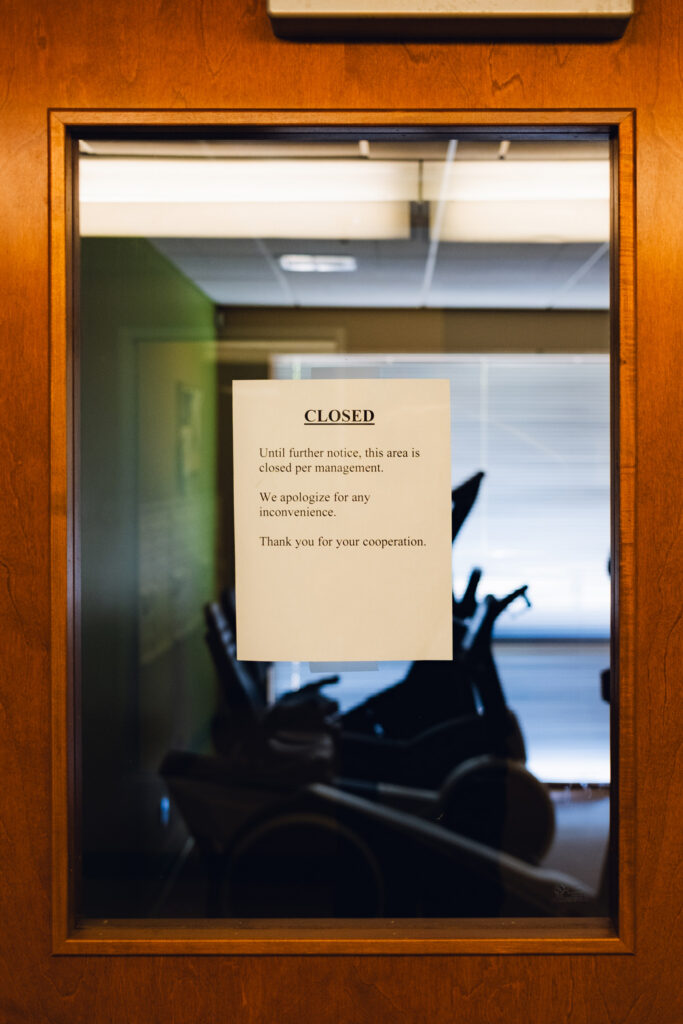
The Crossings’ lease agreement includes the building’s responsibility to “provide extermination services on a monthly basis.” But multiple current and former residents described infestations of bedbugs and roaches bad enough to leave common areas of the building, including the day room and fitness room, locked and inaccessible for months at least.
Tenants confirmed that The Crossings regularly sprayed for bugs. Two current residents said they’d had bedbugs on one occasion, but that The Crossings had resolved the issue. Four current and former tenants, including all three of the Coopers, said bedbugs or other pests kept coming back again and again, in their rooms or others’.
The Crossings “kept doing the same old treatment over and over and over again,” says Victor Cooper. “It’s not solving nothing.” He said bedbugs had never reached his unit, but reported roach infestations so severe that when he opened his front door, the insects would fall down on him from above. Lanitra Cooper and another relative who visited Victor corroborated this account.
Karen Cooper says she stopped paying her rent, and ultimately got evicted, because the building couldn’t get rid of bedbugs. She says she and other family members had to repeatedly purchase new beds for her as each mattress got reinfested. “I don’t have no money like that,” she says.
“If you want to know anything about your rent, or as far as what’s going on in the building, like the deaths, the bedbugs, the roaches,” Lanitra Cooper says, “you can go down and verbally try to address it, and [management] says it’s going to be taken care of, but then weeks later you’re up at UVA because you’re suffering from bedbugs.”
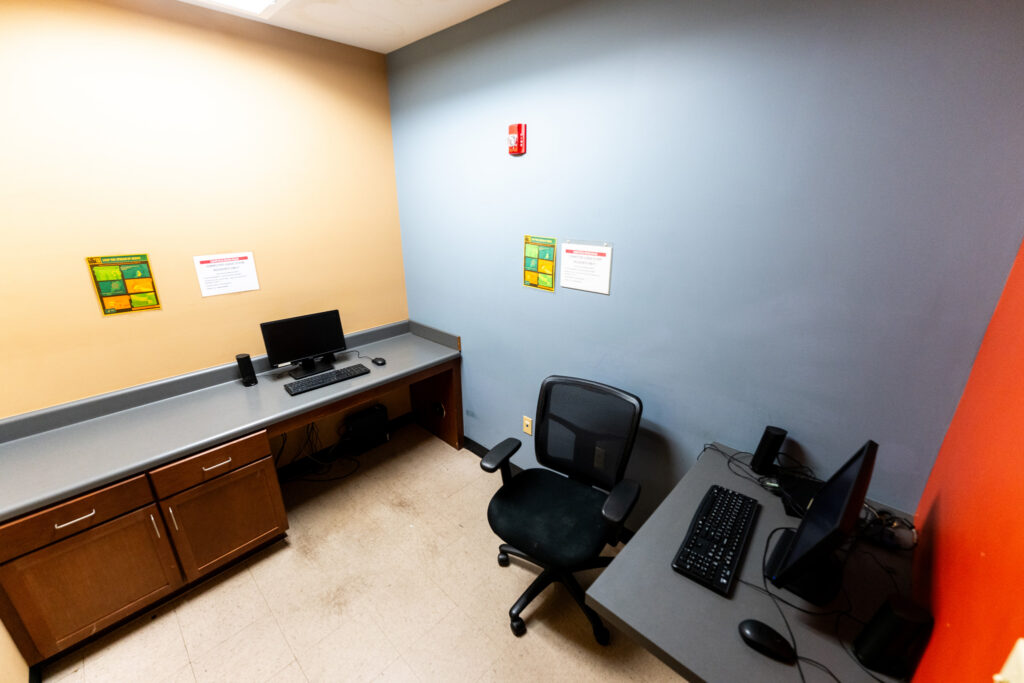
Parker says the day room has been closed for several months, along with other facilities. (Some residents and visitors said the facilities had been closed longer than that; C-VILLE could not verify this.) When C-VILLE visited The Crossings in early May, the day room that leads to the building’s outdoor terrace area was locked, as was the door to the fitness center. On a June 11 visit, the day room had reopened, as had the ground-floor phone and computer rooms, but the fitness center remained inaccessible. Parker says it will reopen soon.
Parker says the building has been working hard to remedy its bedbug problems. In addition to a prior inspection by bedbug-sniffing dogs, she says The Crossings also performed a ‘100 percent unit inspection’ in February. (Two current residents do not remember their rooms being inspected or dogs coming into the building, but they may have been out of the complex at the time.)
Parker says The Crossings changed its pest control provider March 1. “Even though their protocol was industry standard protocol, we just still were not happy,” she says. The new company’s treatment method she described—high heat to kill bugs in an infested unit, with chemicals sprayed in cracks and crevices in every adjacent unit to prevent them from escaping and spreading—matches what another pest control provider described to C-VILLE as “the gold standard” for stopping the bugs.
Mold, maintenance, and access
Multiple current and former tenants and visiting family members reported what looked like black mold around the building’s air conditioning units—one of the most consistent issues C-VILLE heard about.
“You can’t turn it on at all because black mold is coming from it,” says Karen Cooper. “It’s leaking puddles of water. … I told them about this, like seven months ago. When you turn the air conditioning on, it comes out with a bunch of brown-looking stuff.”
“Hard rocks and stuff be falling out of there,” says one current resident. “I don’t know what it is, it’s just falling out on the floor. I gotta get the broom and just sweep it up.”
“The regional maintenance guy came around, I think last year, and he sort of half cleaned [my A/C unit],” another current tenant says. “It’s working better now, but still has little black chunks coming out.” Parker says the building has no record of mold or odors from HVAC units.
Residents also report a range of maintenance response times. One current tenant says that when they mentioned a broken refrigerator, management brought a temporary replacement to the unit within minutes.
But Victor, Karen, and Lanitra Cooper, along with Karen’s son Lindsay, all say that the building failed for months to repair or replace Victor’s refrigerator in his second-floor unit—leading him to store food in his sister’s unit.
When something broke, “it wouldn’t get fixed, until the individual, such as myself or another tenant, actually walked up on the maintenance man and asked him about it,” says Lanitra Cooper.
“I’m not aware of any situation with anybody where a refrigerator went unrepaired for any period of time,” Parker says. “We have been known to take the refrigerator out of our community rooms in order to give it to a resident, put it in a resident’s unit if we are unable to get their unit fixed or purchased within a reasonable amount of time, being within the same business day.”
Parker says the building keeps detailed maintenance records. Asked for records for Victor’s unit, Parker says divulging that information would violate the company’s tenant privacy protections.
In the days before this story’s deadline, Parker sent C-VILLE release forms for the Coopers to sign that would allow The Crossings to share information about their particular cases. Support staff at The Crossings expressed eagerness to provide more details, but said they could not without written permission. C-VILLE was unable to meet with the Coopers in person in time to get those forms signed and returned.
On all three occasions that C-VILLE visited the building, the common areas were clean. But Victor, Lindsay, and Lanitra Cooper all say that’s not always the case.
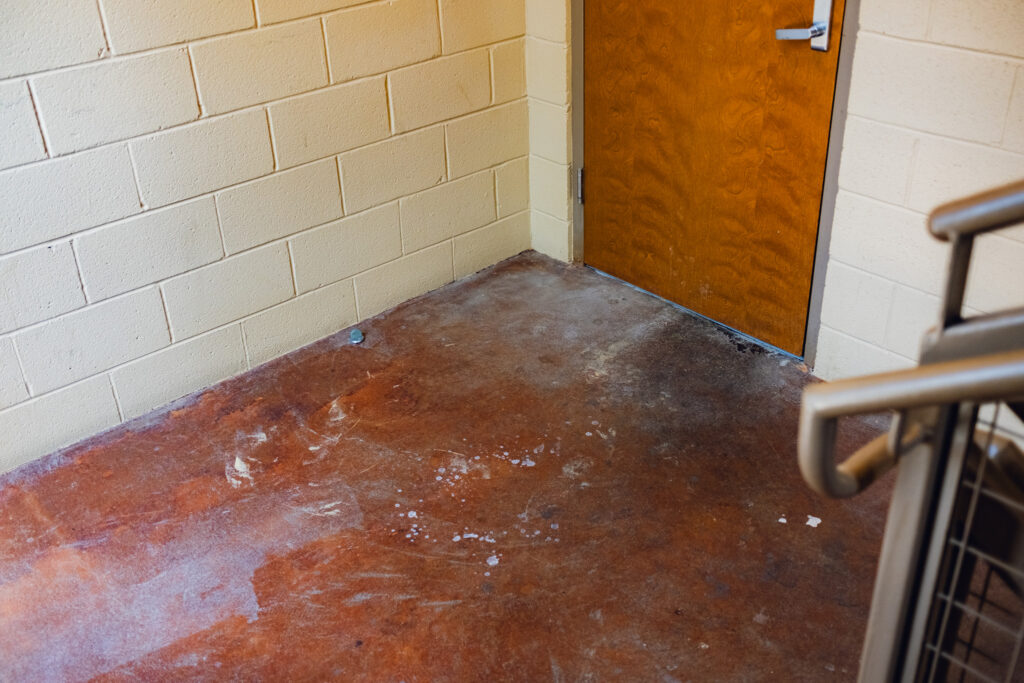
“There’s times I’ve went and visited my mom,” Lindsay Cooper says. “There’s been urination in the elevator. There was feces spread in the elevator, and there’d be urine in the bottom of the steps [in the stairwell].” A photo provided by a visiting member of the Cooper family showed a puddle of unknown liquid on the floor of one of the building’s stairwells, with what appeared to be a wet stain on the adjacent wall.
When specifically asked, no staff member we spoke to denied incidents of urine or feces in the building’s common areas. Tiller says that people who’ve experienced homelessness often want to provide shelter to friends. Some tenants, she says, may also be allowing people into the building for less admirable reasons.
Overnight guests aren’t allowed at The Crossings, and the facility has a night monitor who lives on the premises and remains on call overnight, plus security cameras in the stairwells and common areas. Building management can review that footage to identify offenders, and it documents broken rules in internal incident reports.
Del Smith-Davis, associate director of services for The Crossings, says staff will warn tenants who violate the house rules that further infractions could cost them their housing. The incident report system “helps us to make sure that we are encouraging and redirecting the resident to do the right thing,” she says.
Victor and Karen’s evictions
According to court records, Victor Cooper was officially evicted from The Crossings on April 22, with Karen Cooper following on May 18. Their stories about how and why they were evicted appear at odds with court records and policies described by the building’s staff.
Per lease agreements, residents have five days after the first of the month to pay their rent, after which the building charges a late fee and can initiate eviction proceedings. Support staff say they regularly work with residents to try to avoid eviction by coming up with payment plans or connecting them with outside financial resources.
Court records include a copy of the five-day notice Victor was issued, dated February 6. That form says he owes a total of $617. On February 26, building management filed a summons for unlawful detainer—the first step in the eviction process—against Victor. The form says he owed $612 in unpaid rent and $164 in late fees from August 2025 to February 2026. Records indicate that a sheriff’s deputy personally served this notice to Victor on February 27.
On March 24, the court sided with The Crossings in Victor’s case. On April 10, it filed a writ of eviction. Court documents state that the sheriff’s office placed a notice on Victor’s door warning him of his impending eviction April 13, and took possession of the property April 22.
Victor insists that he paid his rent on time, in full, every month. He says he received no advance notice of his eviction until the day he was told to leave the premises. He says he had payment receipts to prove this, but they were in his and his sister’s rooms.
“I have not seen a notice from my uncle,” Lindsay Cooper says, “a 30-day notice or anything. … He called me one day and just told me, I gotta leave here today.” Lindsay says he came immediately, and left with Victor to go to a store for supplies. When they came back, “his locks was changed within 20 minutes, and his stuff, his bed, his clothes, were still all in there. They didn’t give him no [warning] like, we’re gonna change the locks. I’m like, man, y’all should at least let him get his clothes out of there first.” Victor says the belongings he lost included a high-quality mattress, a television, family photos, and his birth certificate.
Smith-Davis says that in 14 years with SupportWorks, she’s never seen a tenant who paid their rent on time get evicted, unless they repeatedly broke house rules. Unlike other cases C-VILLE saw where residents were evicted for breaking house rules, Victor’s court filings do not document any infractions.
Lanitra Cooper said that when she was evicted in 2023, she similarly received no advance notice. “I went downstairs to do something, and the lady [at the desk] said that I had to leave, that I was evicted,” Cooper says. “I moved some of my property that day, but when I came back, the rest of my property was not there.”
“I don’t know if the locks were changed or not,” she says, “because once I was told to leave that day, and I came back the next day, they told me that I was trespassing.”
“An eviction doesn’t happen with no notice,” says Bogdanovic. “That doesn’t sound right to me.”
“The normal process is that property management would distribute the [eviction] notice to the resident, and then a notice would go to our support services staff, so that we have that documentation and can support the resident,” says Smith-Davis.
“There’s multiple pieces of communication” surrounding an eviction, Tiller says, including how the tenant can retrieve their belongings. “They’ll know who to contact, what date to contact them by, how to make arrangements, how to request an extension, and how to appeal.”
Asked about Victor Cooper’s story, Tiller says, “I think that people have their own circumstances and things going on. Sometimes people get information—and I’m just speaking generally now—people get information, they might not understand it, they might not trust it, or believe it to be true.”
“There’s no specific circumstance in which a property manager would not communicate about eviction with services,” Tiller says. “We know in advance because we meet about delinquencies monthly so we can help connect the resident with community resources.”
Karen Cooper knew her eviction was coming. But by the time it arrived, she was in the hospital. In conversations in the days leading up to her eviction, Karen sounded increasingly distressed and said she’d been ill. On May 12, Karen and multiple members of her family say she went to UVA hospital after a heart attack; she recovered there, they say, for a week and a half. Court records show that Karen’s formal eviction took place on May 18.
Karen and Victor’s cases are part of a spike in evictions at The Crossings this year. Nine people have lost their housing there thus far in 2026, the highest number for any year since 2016. The company has filed greater numbers of eviction cases in previous full years, but most were dismissed because defendants were able to pay their bills. Previously, the building’s greatest number of evictions in an entire year was seven in 2019.
Many eviction cases included a detailed ledger from The Crossings showing what the tenant had paid and owed over time. Parker says The Crossings scans tenants’ checks or money orders, and records each received rent payment. Most of this year’s eviction filings do not contain such documents, including Victor’s and Karen’s. Court clerks say this is not unusual; some documents are presented as evidence in court, but never scanned for electronic filing.
“The judges, they’re not going to give us judgment and possession if we don’t show proof that a person owes rent,” Parker says. She could not provide either of the Coopers’ ledgers, citing privacy rules.
“We help in every way possible in any particular situation, as long as we have full participation from the resident,” Smith-Davis says. “There are times where unfortunately, we’re not able to save everyone’s housing due to certain types of compliance issues. … Sometimes the client isn’t always willing to abide by those things.”
Tiller suggested that Victor and Karen’s cases were more complicated than their stories suggested, and expressed hope that they could sign release forms to authorize her and other officials from The Crossings to divulge more details. “It would make our jobs easier to give you the information,” Tiller says. “It hurts that they’re going through what they’re going through, and it’s important to me that you have the whole picture.”
Building staff confirmed to C-VILLE June 3 at The Crossings that after their evictions, Karen and Victor had been banned from the premises. None of the officials at The Crossings that we spoke to explained why, citing rules against divulging tenants’ private information. “I don’t have any information I can share on that,” Parker says, “but I can say that if there’s a situation that impacts safety or security, then we will issue a ban.”
When C-VILLE visited The Crossings at a tenant’s invitation on June 3, we were asked to leave within minutes by building management. In the front lobby, an employee was calling the police on Karen and Victor Cooper and a teenage relative. The Coopers had been sitting peacefully on the brick planters outside the building, catching up with friends. None of the building staff we spoke to could explain exactly why C-VILLE had been told to leave, or why staff hadn’t simply asked the Coopers to go.
On June 2, Karen called in tears. She said The Crossings had told her they’d thrown out her belongings while she was in the hospital. She apparently intended to hang up at the end of the conversation, but didn’t. “Oh Lord, help me,” she said, and continued to sob.
“As far as I know,” Tiller says, when asked about Karen’s comments, “that was not what was communicated.”
The law favors landlords
The Crossings’ lease agreement states that the landlord agrees to “maintain the common areas and facilities in a safe condition” and “make the necessary repairs with reasonable promptness.” But in practice, tenants have few legal remedies if The Crossings breaches its part of that agreement.
Under current Virginia law, Virginia tenants can’t use unsafe or unsanitary conditions as a defense if they fail to pay rent. “I’ve had [clients] fall through their floor, be bitten by rats, and if they’re behind on the rent, sometimes … you just are like, well, there’s not a lot we can do here,” says Victoria Horrock, senior supervising attorney at the Legal Aid Justice Center.
“We are such a landlord-friendly state,” says Charlottesville Del. Katrina Callsen. “It makes it so that defense is practically unfeasible for people that are facing eviction.”
Callsen’s bill HB281, signed into law this year, lets tenants cite uninhabitable conditions to defend against eviction. The new law takes effect July 1. “It just seems so basic,” Callsen says, “that you should at the very least be able to tell the judge the conditions of the place that you lived and why you might not have been paying rent without having to basically pay to raise a defense.”
Another new state law taking effect in July will give tenants a little more protection. “If there are conditions inside apartment buildings in a jurisdiction that make them unfit or uninhabitable,” Horrock says, “the Commonwealth’s Attorney for the city could sue the landlord.”
A 2007 state Supreme Court decision found landlords not liable for any injuries tenants suffer inside their own homes, even if those injuries result from the landlord’s failure to make repairs.
“If there’s a violation of the building code, the city could condemn the building, or something like that,” Horrock says. “But conditions like pest infestations inside apartments are outside of what cities currently can regulate.”
Virginia localities can create rental inspection districts, within which they can monitor and enforce housing conditions. But Charlottesville has none, says city spokesperson Afton Schneider, and a lack of resources necessary to conduct those inspections means City Council has no current plans to enact one.
For now, Virginia law can be brutal for tenants facing eviction. “If you want to challenge your eviction,” Horrock says, “you’re talking about a minimum of two days you have to take off work to get to the court.”
After an eviction, the law instructs sheriffs to place tenants’ belongings “in the public way,” with 24 hours to retrieve them. After that, “the landlord shall remove, or dispose of, any such personal property remaining.” The landlord can sell those goods to recoup back rent, or throw them away.
Karen Cooper’s story might still have a happy ending. Support staff at The Crossings insist that evicted tenants’ belongings are stored for up to 30 days. “We work with the person,” Tiller says. “It doesn’t matter that they’re not a resident anymore.” She says she’s never heard of former residents being forbidden from retrieving their property. Tiller and Smith-Davis asked C-VILLE for contact information for Karen and her family, saying they want to return her belongings before her 30 days elapses.
On June 12, Karen Cooper said that one of her sons had called the property manager at The Crossings, who told him once again that Karen’s belongings had been thrown away. When C-VILLE reached out to Tiller with this information, she said she’d investigate.
As of mid-June, Victor Cooper was living with Lindsay and another relative. Karen had stayed briefly with Lindsay and Victor, then with another son, before receiving a referral from Region 10 for a 30-day stay in a facility in Radford. (She describes past experiences with sporadic substance abuse, including during her time at The Crossings.) After those 30 days, she says she hopes to return to Charlottesville and find a new home.
Double Crossings
Over months of reporting, C-VILLE heard two stories about The Crossings. In one, staff care about the residents and seem entirely sincere in their desire to help. The other depicts a development with what residents say are unhealthy, even dangerous, conditions, where too many people die alone and unnoticed.
“The building needs to be shut down,” Lanitra Cooper says. “If it don’t benefit me, because I was a tenant there a while back, it’ll benefit the next ones that come in.”
“I think it started out as a good program,” she says, “but that is definitely not a safe nor a good place to live.”
“The place just needs to be inspected and shut down,” Victor Cooper says. “I feel sorry for them, people just living like that. They got them people living like an animal. And it’s a shame that somebody’s doing that.”
SupportWorks is currently constructing a second supportive housing facility, Vista29, along U.S. 29N at the site of the former Red Carpet Inn. Vista29 will offer 80 apartments for residents making up to 40, 50, and 60 percent of the area median income, with in-building services like those at The Crossings. The project costs an estimated $26 million, including $2.5 million from the state and at least $1.5 million from the city and county, and is tentatively scheduled to open later this year.
We asked Bogdanovic: Once you build a new facility, how do you preserve it as a good place that helps people? How do you keep it from sliding into the conditions that have plagued The Crossings?
“From when a bright, shiny building is opened to 10 years later, 12 years later, there isn’t a lot of money to put into keeping it looking like that,” she says. “We are serving people with the lowest incomes, and we take that responsibility really seriously, but it is hard to keep up the facilities to look as good as we can. I want to be candid about that. We do the best we can with the resources that we have.”
The Crossings operates as its own LLC, separate from SupportWorks’ finances, and its “expenses are going up faster than revenues,” she says. “And revenues are very limited, between some subsidies that we do get and what people can afford to pay. Just like everyone else feels the pinch when they go to the grocery store … we feel that [with] the cost of operating the communities, from the utilities to the insurance, all of that. It’s challenging, but that doesn’t reduce the expectation that we have on ourselves to provide a place to live that we all want to live. I don’t want to use that as an excuse.”
“I’m not okay with any of the things you’ve described,” Bogdanovic says, “and I want to make sure that we address them at The Crossings. And obviously, if things need to change, we need to address that before Vista29 opens.”
Victor Cooper and his family have set up a GoFundMe to help Karen Cooper secure stable housing. If you’d like to help her, you can donate here.