
It’s possible that one day physical newspapers will be retro-cool and resurge as vinyl records have in recent years. Circulations will be up. Advertising will be bountiful. Bill Watterson will start drawing Calvin & Hobbes again.
Until then, newspapers have to make money in new ways if they are to persevere in their First Amendment duties, exposing villains and previewing restaurant weeks. Circulations are not up, and advertising is not bountiful, and newspapers continue to die at a rate of about two per week.
That number’s mostly held since before the pandemic, according to research from Northwestern University, as print circulations shrivel and advertisers take their dollars to the web.
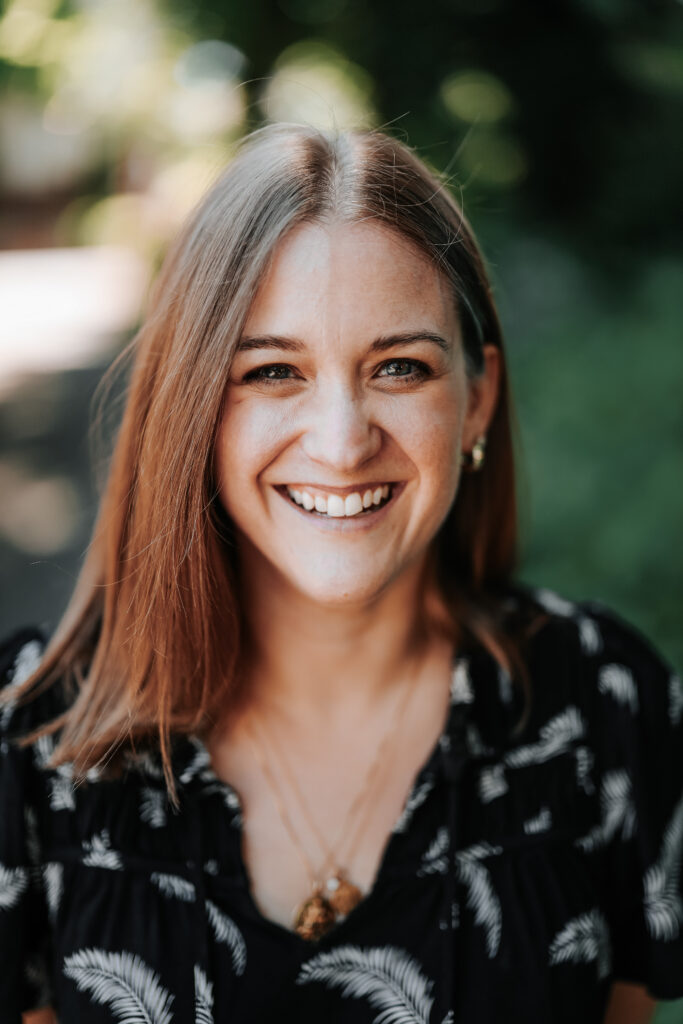
C-VILLE Editor in Chief Caite Hamilton says she’s optimistic about the alt-weekly’s new direction: “In the long term, we’re focused on growth and expansion.”
Over the past 20 years, the combined total circulation of U.S papers dropped about 70 percent, from an estimated 120 million t0 38 million, while COVID finished off many ad budgets (and businesses) for good.
C-VILLE’s boat has been fishing downstream of all this. The 37-year-old, privately owned alt-weekly has always funded itself through advertising, but in the six years since the pandemic, C-VILLE’s ad revenue has decreased by 50 percent.
“Until right around the pandemic, C-VILLE had been pretty consistently profitable,” Caite Hamilton, C-VILLE’s editor in chief, says. “Then, like a lot of small, locally owned newspapers, we stopped being profitable solely through advertising. We’ve been thinking for the last few years [about] how to change our business model so we can survive long-term.”
This is what they came up with.
In September, C-VILLE Weekly brought in the Alternative Newsweekly Foundation as the paper’s fiscal sponsor. The arrangement, which runs indefinitely, lets C-VILLE borrow the ANF’s 501(c)(3) nonprofit tax status, making the for-profit newspaper eligible for philanthropic grants and tax-deductible donations.
“[The ANF works] with a lot of alternative newspapers across the U.S., so they’re very knowledgeable about the state of newsmedia in our country,” C-VILLE Publisher Anna Harrison says. “It opens up some different doors for local businesses that want to sponsor us and local readers who want to support us through a nonprofit donation. Some businesses will have a budget for advertising, but also a budget for nonprofit sponsorships, so they may be an advertiser with us, but then they can also dip into their nonprofit sponsorship-budget allocation to sponsor some of our events.”
Hamilton says the announcement reflects months of preparation.
“Frankly, it’s taken time to get everything in place,” she says. “We’ve been working behind the scenes—building infrastructure, hiring key staff, and setting ourselves up to make this partnership as strong and sustainable as possible.”
The ANF is an arm of the Association of Alternative Newsmedia, a trade organization for alt-weeklies like C-VILLE, and was founded in 2002 to help promote and support local independent journalism.
In 2021, the ANF started offering fiscal sponsorships—these came about in the 1950s as part of tax exemption law—and now works with about 60 newsmedia and newsmedia-adjacent groups, including one dedicated to media literacy and another that helps journalists with their mental health. In total, ANF Executive Director Ellen Meany says the foundation has handled about $15 million for its clients.
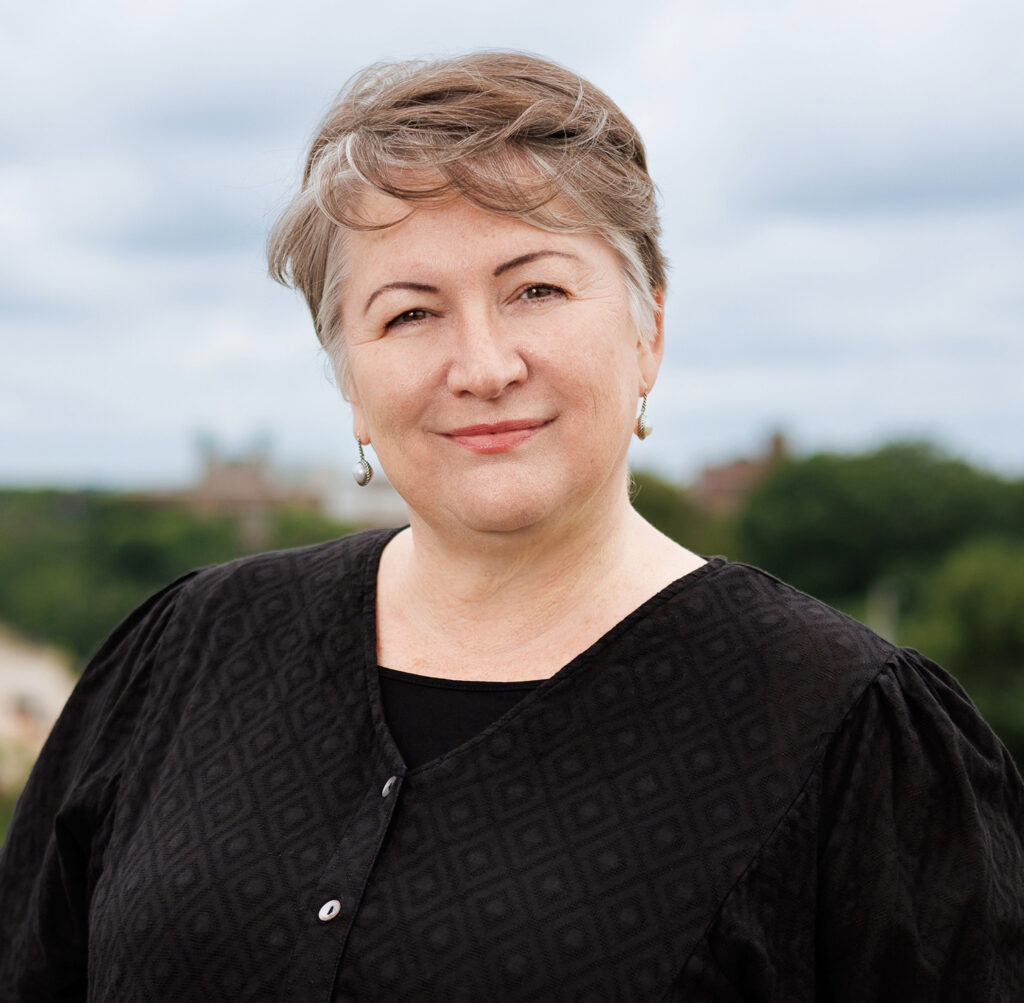
Creative Loafing, an alt-weekly in Tampa comparable in both style and age to C-VILLE, started working with the ANF in 2024 to help raise $750,000.
Editor in Chief Ray Roa says the money will, in part, fund four, competitively paid new staff positions: an arts and entertainment editor, a news reporter, a food critic, and a photographer. Roa says Creative Loafing, worker-owned since January, intends to pay its new staffers $65,000 to $70,000.
The paper currently has just two full-time employees: Roa and a digital editor.
“You’ve got to find a way to make money,” Roa says. “But, you know, we had to find a way to grow the newsroom, and I didn’t want to grow the newsroom anymore and make compromises as far as how much we were going to pay people. I wanted people to show up to work, and I wanted to look at the people I work with and be like, okay, that person can make a living, that person can focus on work, that person can be out in the community and feel somewhat confident about their ability to pay rent, feed themselves and live their life.”
For the IRS to be okay with a fiscal sponsorship, the two organizations’ missions have to match. Both the ANF and C-VILLE promote and support local independent journalism, so, consider that box verily checked. C-VILLE’s paying 6 percent to the ANF for its services, which include bookkeeping and legal support.
“We facilitate getting grants from philanthropic organizations, like the Charlottesville [Area] Community Foundation, Knight Foundation, MacArthur, Hewlett Foundation, Ford Foundation, some of these big places that can only give money to charitable organizations,” Meany says. “We sign for the grants and we oversee how the money is spent. …There is a ton of money in philanthropic revenue. There’s a ton of money where people have already taken the tax benefits. There’s [more than $300 billion] in donor-advised funds in this country. All of that money has to go to charity.”
Hamilton says that before choosing fiscal sponsorship, C-VILLE considered becoming a nonprofit itself—a trendy move for local print-news outfits, legacy and upstart alike—but that would’ve limited the newspaper’s ability to sell ads, still a viable enough business model, despite recent troubles.
C-VILLE also considered mergers with other regional outlets, Hamilton says, but ultimately chose to remain autonomous rather than risk subsuming its identity beneath another masthead.
“We’re lucky to have a diverse local media ecosystem here, including strong nonprofit outlets doing important work,” says Hamilton, who first warmed to the ANF fiscal sponsorship model at the 2025 AAN conference in Madison, Wisconsin. “That diversity is healthy for a community. But we were wary of anything that might blur the lines between us. A merger could have limited our independence or diluted what makes C-VILLE distinctly C-VILLE.”
“We have a very particular voice and personality—one that isn’t replicated by any other outlet in town. That singularity is what readers connect with. Losing it would have been a real bummer.”
While newspapers have spent the past 20 years closing, C-VILLE has stayed comparatively profitable and well read. Today, it has a weekly print circulation of 12,000 after a pandemic-related reduction. Harrison says the company could do this and not get hurt financially because about half of the paper’s readers get their news on c-ville.com. Two e-newsletters a week go out to more than 20,000 subscribers, and most everything in the physical pages of C-VILLE is online, too.
Still, at C-VILLE’s pre-pandemic print-circulation peak, it sent 24,000 papers to newsstands in the city and surrounding counties every Wednesday.
“This fiscal sponsorship helps secure our long-term sustainability,” Hamilton says. “We intend to be here for the long haul and to become a kind of local news success story. Remaining free is central to our mission—access to news shouldn’t be a luxury. In the short term, we’re working to close a deficit; in the long term, we’re focused on growth and expansion. We plan to be around for at least another 37 years.”
News deserts
The Medill Local News Initiative, a research group out of Northwestern’s blueblood Medill School of Journalism, says in a report released last October that since 2005, about 3,400 newspapers have gone to the great copy desk in the sky. Last year, 148 of them shuttered, most of them weeklies.
In 2005, there were 8,891 local papers in the U.S. In 2025, there were 5,419. The loss represents about 40 percent of all local papers, and they took more than 270,000 of the industry’s jobs with them. That’s more than 75 percent. The report also says that less than a fifth of daily newspapers are actually daily anymore.
“Commercial local newspapers, for a very long time, operated as little ad monopolies in the places where they were,” says Mike Rispoli, a former New Jersey statehouse reporter and now the senior director of journalism and civic information at Free Press, a nonprofit advocating on journalism’s public policy side. He’s also taught journalism at Rutgers.
“They kind of had all the local marketing and advertising revenue that they needed to help fund really good journalism—journalism that otherwise wouldn’t really be supported by the market. When you bundle that type of reporting—civic media or civic journalism—with the sports and the weather and the comics and all those other things, you can pay for it.”
Newspapers also unbundled, but unlike the airlines, they didn’t want to.
“When those advertising dollars left these local, print-based markets for online, because that’s where advertisers could better reach people,” Rispoli continues, “it kind of exposed the fact that this type of reporting—local news, community news—it’s always been a public good, but it was always sustained through this weird way that the local ad markets were set up.”
News deserts have spread across the land. Northwestern’s Local News Initiative says that in 2005, about 150 counties had no local news source. As of last year, it was more than 210. The Initiative estimates that 50 million Americans live in a place where there is limited to no access to a “reliable” local news source.
“It’s pretty clear from the research that there’s a connection between local news and information and civic engagement,” Rispoli says. “Fewer people vote, fewer people volunteer, fewer people run for public office, fewer federal dollars go to districts where there’s no local news. Corruption increases. Wasteful spending increases. People feel less connected to their neighbors.”
Rispoli says journalism might be a way to fix that.
“I think people are really craving an ability to make a change in their community,” he says, “and the great thing, talking about journalism and local news, is that it’s rarely anyone’s first issue that they care about, but it is many people’s second because they recognize that I can’t make change in my community if I can’t figure out what the hell’s going on there. I can’t advocate for environmental justice, or whatever it might be, if I can’t get basic information about the power plant down the street.
“There is momentum at the local level and at the state level in a whole host of ways, and I actually, really do believe that journalism and local news should view itself as part of that movement that we’re seeing from a lot of folks wanting to get more involved in the place where they live.”
Nonprofit or for-profit
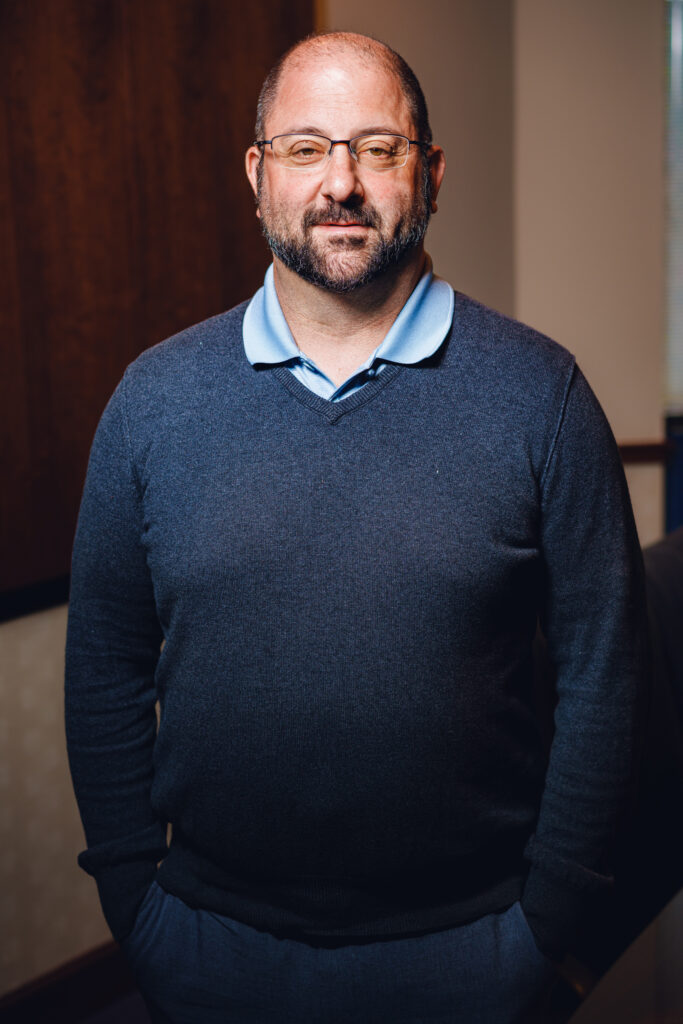
Defying the times and its modestly sized population, Charlottesville has a surfeit of newspapers and news websites. There’s The Daily Progress, the city’s legacy daily, which dates to 1892 and now prints three days a week. Charlottesville Tomorrow was founded in 2005 and is a digital-only nonprofit. Cville Right Now is also digital-only, but for-profit. It came about in 2024.
“It’s a really crowded local media scene,” Cville Right Now Editor in Chief Mike Barber says. “When you dive into it a little more, you see some differences. The Daily Progress and what we do at Cville Right Now is daily newspaper kind of work. We’ve got stories up every day, five to six new stories, minimum. When you look at C-VILLE Weekly and Charlottesville Tomorrow, it’s more a big-picture, big-issue takeout. They’re almost like a magazine kind of style.
“There is a fairly intelligent and educated readership in this community, and I think they want to know what’s going on.”
There’s also Charlottesville Inclusive Media. Formed in 2018, the consortium unites Charlottesville Tomorrow, the WVAI 101.3 radio show “In My Humble Opinion,” and Vinegar Hill magazine. The last two are for-profit and fiscally sponsored by the ANF through Charlottesville Inclusive Media. CT doesn’t need fiscal sponsorship because it’s already a nonprofit—and it just landed a $500,000 grant from the MacArthur Foundation.
CT’s digital-only nonprofit model is one that’s shown promise, though these sites have so far been concentrated in urban areas, particularly the Northeast corridor and around Los Angeles and San Francisco. Meany also points out that “nonprofit is tax status; it’s not a business model.”
“Nonprofit is the trend,” she says. “There’s this feeling, I guess, that it’s more trustworthy or something, but it’s not really. What makes it more trustworthy? Just because we don’t take advertising? I don’t want to diminish the idea that nonprofit journalism is a plus. It is. It’s really made people aware that this is a valuable resource that needs to be funded, but I also think that there are a lot of legitimate news outlets that want to stay for-profit. They like having money and being a legitimate business in their community. I think it can work both ways.”
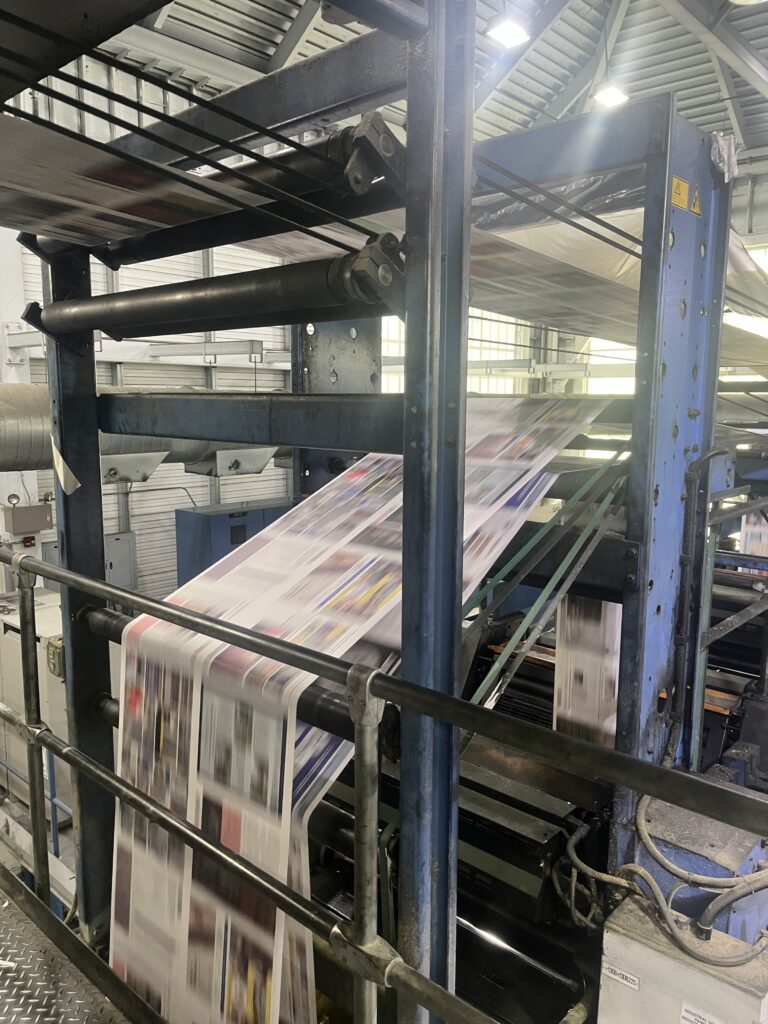
Nationally, ProPublica has been a brand name for the nonprofit approach, famously reporting on how much it costs to buy a Supreme Court justice. After 20 years, ProPublica is flush with Pulitzers. Regionally, there’s the Baltimore Banner, an internet-only newspaper that started in 2022. It recently expanded to cover nearby Montgomery County and last year won a Pulitzer of its own.
In Virginia, nonprofit news sites such as Cardinal News and The Richmonder have emerged from the hollowed forms of once-mighty metros: the Roanoke Times and the Richmond Times-Dispatch, respectively. Alums of those papers founded both sites.
C-VILLE prefers to remain completely itself, in print every Wednesday morning and running local business ads—but with more staff. Hamilton says C-VILLE’s already created three new positions because of the ANF partnership. One, a senior news reporter, will enable the editorial team to pursue more ambitious stories. A digital sales manager will build and maintain a local, searchable business services directory on C-VILLE’s website, and a development director will handle the new nonprofit-liaising end of the business.
“This partnership doesn’t replace advertising,” Hamilton says of the ANF relationship. “Advertising remains essential—not just as a revenue stream, but as a point of connection. It keeps us in constant dialogue with the community we serve. We’re the community newspaper. We’re hosting events, showing up at music venues, galleries, and restaurants. We’re in the grocery store line behind you. We live here, and we love it here—and that proximity is fundamental to who we are.”

Double the fun
This week, an anonymous donor has offered to match gifts to C-VILLE up to $5,000. Jump into March Matchness and help us reach our goal with a tax-deductible donation at savethefreeword.c-ville.com.