For the second time in a few weeks, Woodard Properties has filed a development plan with the City of Charlottesville for a building in what the new zoning code refers to as a Core Neighborhood Overlay District.
According to the Development Code, the district is intended “to implement the Comprehensive Plan goals of encouraging construction and continued existence of moderately priced housing, creating and preserving affordable housing [and] respecting the cultural heritage of the adjacent neighborhoods.”
However, Woodard Properties’ latest application will stay within the by-right parameters of the zoning code and will not seek a special exception to maximize potential height. Instead it is proposing a five-story mixed-use building with 83 units.
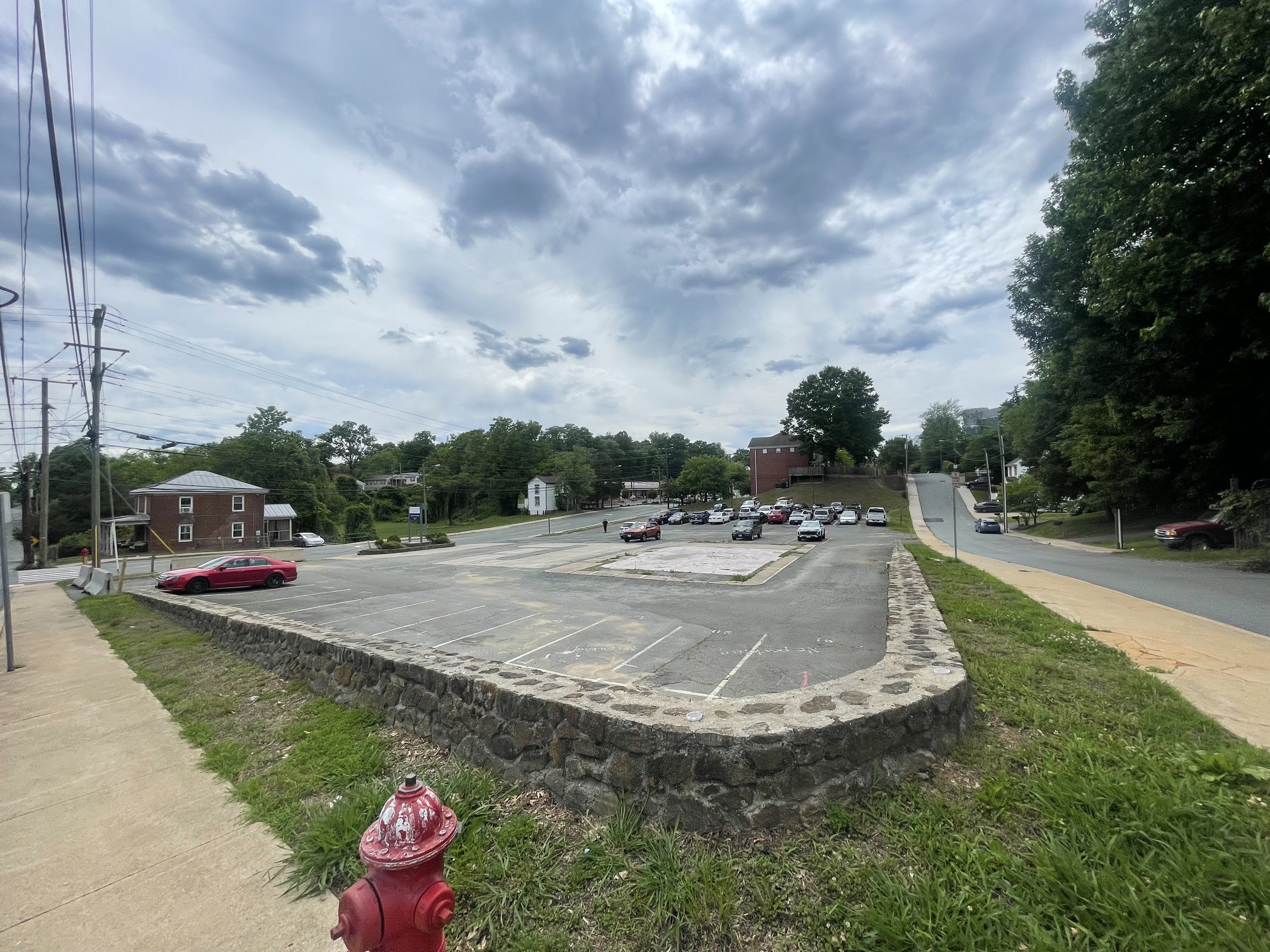
The company purchased a 0.82-acre parking lot at 801 Cherry Ave. in July 2021 for $1.55 million.
“Like all of our projects, we are striving to take an underutilized piece of land and create a thoughtful development for Charlottesville,” says Chris Virgilio of Woodard Properties.
The new zoning code adopted in December 2023 designated the land as Corridor Mixed-Use 3 and allows up to 72 feet of height if the project provides enough units designated as affordable under the city’s policy.
Earlier in May, Woodard Properties submitted a development for 601 Albemarle St. that is also within the overlay district. That project will require City Council to approve a special-exception permit, which includes a community meeting to get input on the design and desired neighborhood benefits.
The company’s proposed project at 801 Cherry Ave. would be the second recent example of new construction on a roadway that serves as the major southern route to the University of Virginia Medical Center. The Piedmont Housing Alliance and Woodard Properties hope to break ground this year on a 72-unit mixed-use development at 501 Cherry Ave.
City Council endorsed a small area plan for Cherry Avenue in March 2021. That document was created under the older zoning code when less density was allowed.
“In terms of developable sites, this location is underutilized and ripe for redevelopment,” the plan reads, stating that the project at the time would have only allowed between 30 to 40 homes under the old rules.
That same plan suggested 501 Cherry could be redeveloped with 35 to 45 units. PHA Executive Director Sunshine Mathon says conditions have changed since 2021.
“The price of the land has escalated and would not have been developable at the purchase price point with half the number of units,” Mathon says. “Land cost per unit plays a big part in project feasibility.”
Virgilio says his company’s project three blocks to the west has also been updated to meet the new rules.
“Our proposal is designed to comply with the city’s current zoning regulations, housing policies, and housing priorities,” Virgilio says. “Our proposal features the same number of stories that the SAP analysis depicted, but with more units.”
The project at 801 Cherry will require a community meeting to discuss a transportation management plan because it is in excess of 50,000 square feet.
The Board of Architectural Review will play no role in reviewing this project because the property is not within an architectural design control.