Eze Amos
In the latest test of Charlottesville’s new zoning code, City Council voted 3-2 on May 4 to allow developers of a private seven-story student housing project to make minor changes to two historic buildings on Seventh Street SW.
“We need more housing,” said Mayor Juandiego Wade during the Council meeting. “This project is the best opportunity to preserve these two units.”
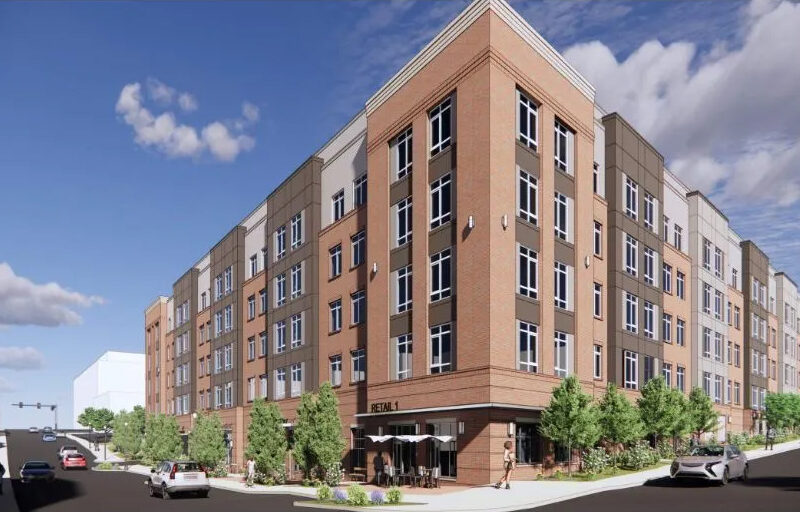
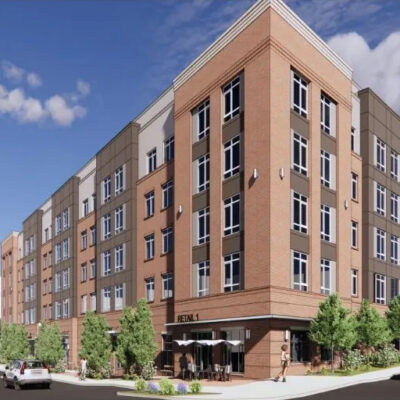
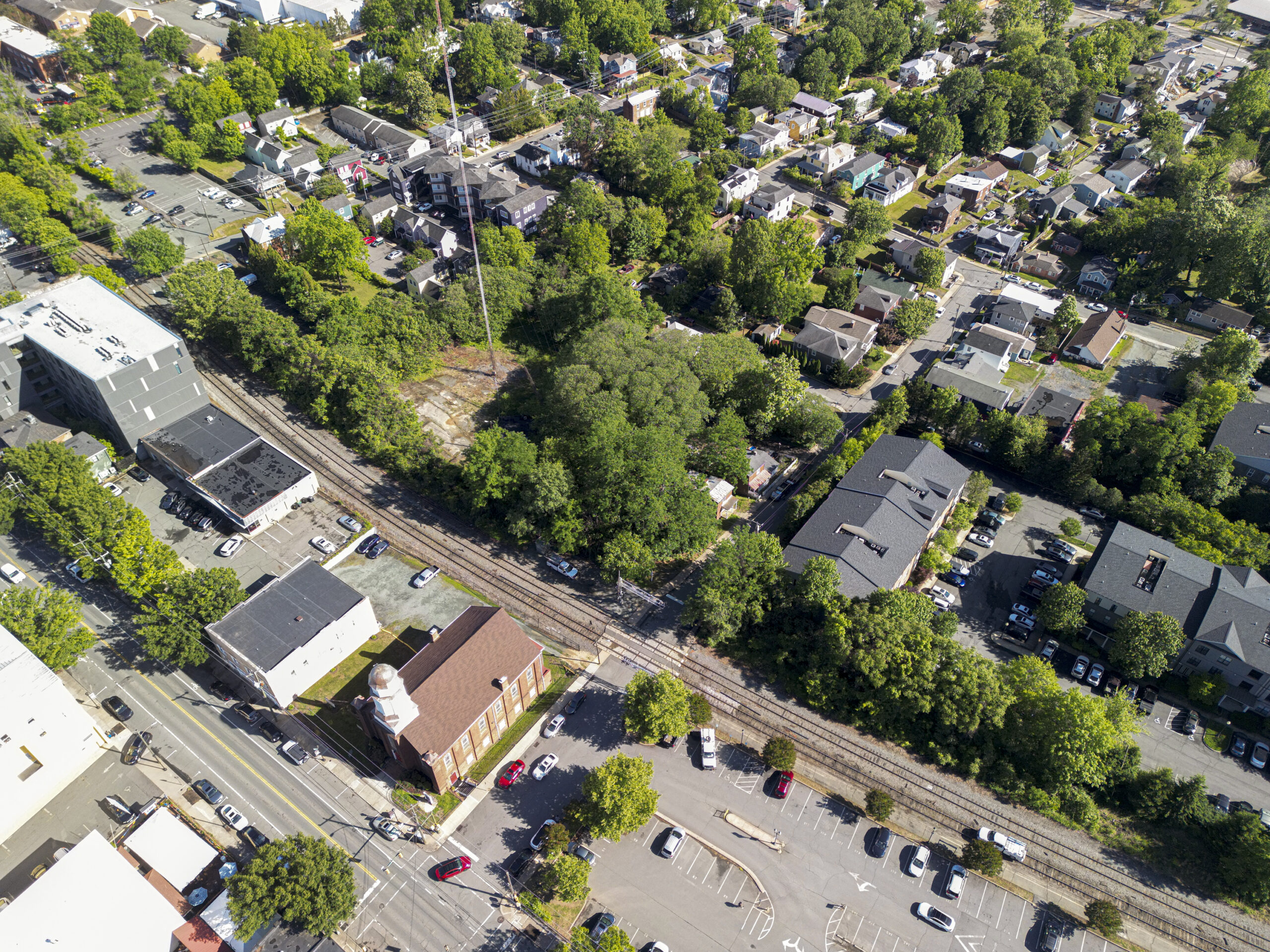
LCD Acquisitions filed plans last summer to construct a project called The Mark on three undeveloped properties zoned Residential-Mixed Use 5 under a code adopted in late 2023. The project also incorporates two 19th-century brick buildings that are “individually protected properties” under city code.
On December 16, 2025, the Board of Architectural Review denied a certificate of appropriateness in a 6 to 1 vote. LCD Acquisitions appealed and Council had the power to decide at its May 4 meeting.
“The simple truth is that a 180-unit, 770-bed, seven-story building is not compatible with two one-room-deep two-story buildings,” said James Zehmer, chair of the BAR.
Attorney Steve Blaine represented the developer and said The Mark would give the structures a better chance of surviving into the 21st century.
“We have a structural report done in November of 2025 that shows that both these structures are in extreme disrepair,” Blaine said. “[The developer] proposes to rehabilitate these structures according to the National Park Service standards at an estimated cost of about $2 million.”
Blaine was joined by Williams Mullen’s Valerie Long, who showed slides to demonstrate how The Mark’s design changed over time through interactions with the BAR, such as lowering the height behind the two houses.
“When it came time to have deliberations at the final meeting, the vast majority of the comments from the BAR members had to do with concerns about the impact of the building on the neighborhood as a whole,” Long said.
Groups such as the Fifeville Neighborhood Association and the Legal Aid Justice Center have asked Council to rezone the property to the Core Neighborhood Overlay District, which would limit height and allow Council to impose conditions.
The zoning code is a result of the Cville Plans Together initiative, which also developed a new affordable housing strategy and a new Comprehensive Plan. The draft zoning map was first released in February 2023. Councilor Lloyd Snook said no one raised a concern about the designation during the 20 months before Council adopted the new rules.
“For better or for worse, we didn’t pay attention to that whole issue,” Snook said. “You’ve got Walker Square, you’ve got this, and you’ve got potentially two more lots going east along there that could also be RX-5.”
Snook said he could not support the BAR’s action, and argued that Council had no power to dictate what would be done on the other properties.
The 2023 rezoning eliminated the role Council plays in determining density and height. City Councilor Michael Payne said Council still has to provide an answer if it wants to restore that power in neighborhoods subject to gentrification.
“We desperately need to have a conversation with the community about these larger issues and that is different from what’s in front of us tonight,” Payne said. “The community deserves that.”
Councilor Natalie Oschrin said the city needs additional revenue in order to pay for services demanded by the community, such as $15 million Council has committed to the first phase of the Westhaven redevelopment.
“Revenue from projects like this are what we can use to pay for our homeless shelter,” Oschrin said. “What we can use to continue the redevelopment of Westhaven, Kindlewood, South First Street, Sixth Street, those dedicated affordable housing projects. Those subsidies have to be paid somehow.”
A vote to approve the certificate was 3-2, with Councilor Jen Fleisher joining Payne in opposition.