This is the second article in C-VILLE’s 2025 election series, covering local and statewide races in the lead-up to Election Day, November 4. For candidate responses to additional questions, visit c-ville.com.
Between the school board and City Council, Charlottesville residents will elect at least two new representatives this November. With council pretty much a foregone conclusion (Mayor Juandiego Wade and newcomer Jen Fleisher secured the Democratic nominations in June), all eyes are on the school board race. Four candidates are vying for the three seats up for grabs in November: Zyahna Bryant, Dashad Cooper, Emily Dooley, and Lisa Larson-Torres.
Incumbents Dooley and Larson-Torres hope to retain their jobs, while Bryant and Cooper want to bring new perspectives to the board.
C-VILLE: How will you approach improving academic performance and closing the achievement gap if (re)elected to the school board?
Zyahna Bryant: Closing the achievement gap begins with building a strong academic foundation for all students. This starts with prioritizing literacy and ensuring that reading specialists and interventionists have the resources they need to effectively support students who require additional help.
Another important element is strengthening partnerships with families and community-based organizations that are committed to fostering the village that is essential for a thriving learning environment and school community.
Dashad Cooper: Improving academic performance and closing the achievement gap starts with one of my top priorities: boosting reading levels and developing skilled, passionate readers. If a student can read well and actually enjoy reading, they can learn anything.
For our older students who aren’t on reading level, we should be providing tutoring and mentorship programs to help them catch up and gain confidence before stepping out into the real world. I also believe in supporting our teachers with the tools and training they need to use proven reading strategies, and giving families resources to keep learning going at home.
Emily Dooley: Closing achievement gaps requires targeted support. We [the board] have worked hard to secure permanent funding for additional [English Language Learner] teachers, interventionists, and social-emotional learning specialists. … We also know how critical early learning is. That’s why I support maintaining small class sizes in the youngest grades and expanding early literacy and numeracy programs and expanding access to high-quality early childhood education.
Not every student learns best in a traditional classroom setting. That’s why we’ve invested in alternative programming for middle and high school students. … We also secured full ownership of CATEC, giving us more opportunities to expand career and technical education so students leave high school prepared for college, career, or both.
Lisa Larson-Torres: I will continue to advocate for continued support/resources to allow for targeted interventions to address those gaps and anything else we, within our school day, can do to provide for our students. The “gap” is more than a test score and there are bigger systemic inequities that fold into how a student shows up for school.

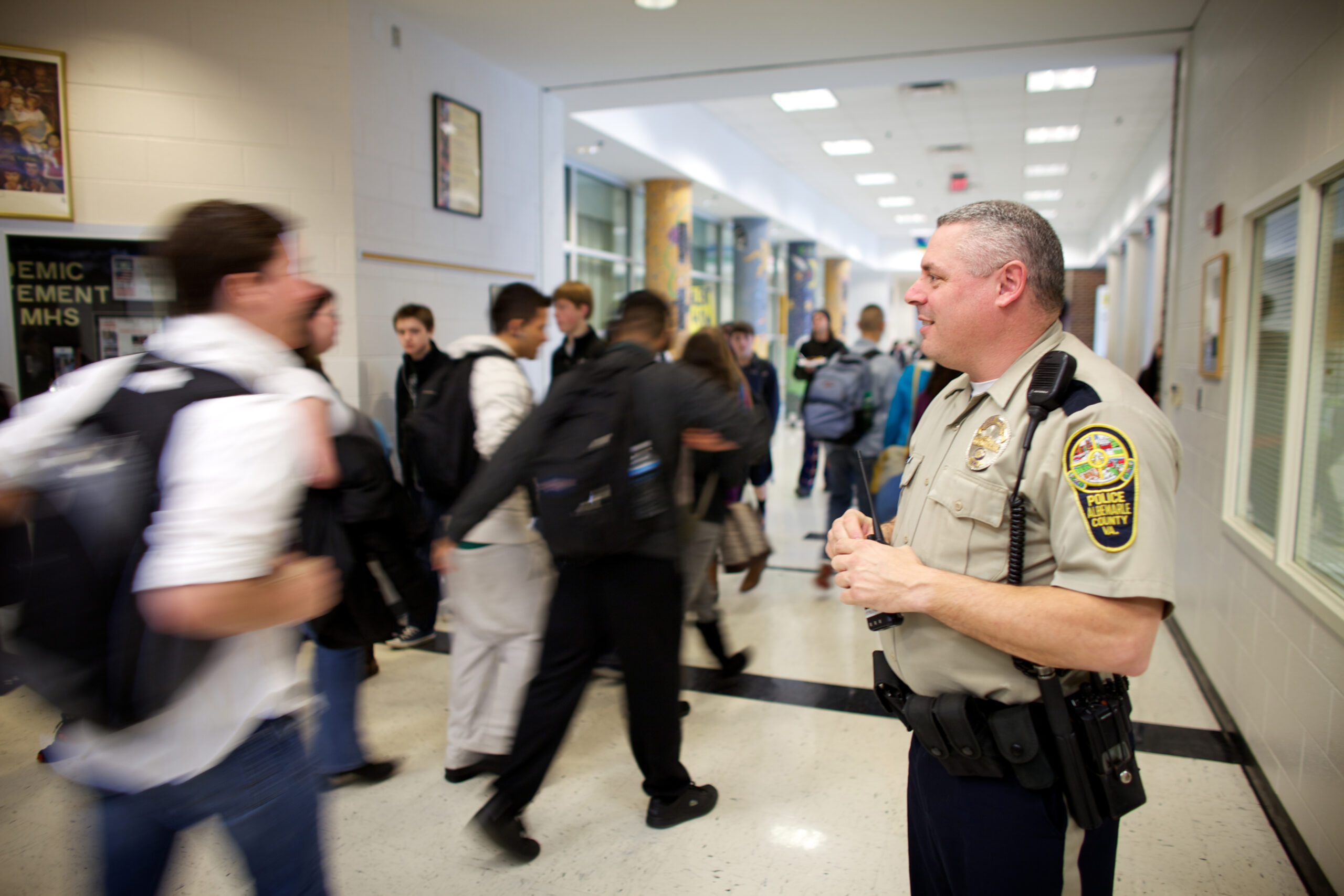
ACPS recently reintroduced SROs to high schools. What is your stance on student resource officers? How will you approach school safety at CCS if elected?
ZB: I believe that the vote to bring back SROs was rushed and I do not believe that the district has been very transparent with how they landed on that decision. With so many competing needs in the schools and in the community more broadly, I do not see the justification for the fiscal investment that has been proposed. However, I want to be clear that safety is a priority for me. If SROs are reintroduced as planned, I do hope to continue engaging with the community to make sure that the model works for all. I also want to keep a close eye on how the [memorandum of understanding] is implemented and evaluated because if it is not handled with care and close attention to detail, there could be consequences that are counterproductive for the division.
DC: If elected, I will ensure SROs receive specialized training in youth development, trauma-informed practices, and restorative justice so they can build positive relationships with students. Mental health and proactive support remain the priority: socio-emotional counselors are the first point of contact, care and safety assistants are the second, and SROs are the last to be called. This hierarchy ensures that safety interventions are supportive and restorative first, enforcement last.
I will also continue to expand access to mental health services like Care Solace and socio-emotional counselors, addressing the root causes of behavioral issues. Community engagement is key and I will maintain open dialogue with students, families, and staff to monitor and adjust the program as needed.
ED: Our schools need to be places where students feel both physically protected and emotionally supported. I supported Charlottesville’s decision to reintroduce SROs, with clear parameters and accountability measures. Done right, this program can strengthen relationships and response capacity without compromising our commitment to equity and student well-being. It’s essential that SROs complement—not replace—the mental health professionals, care and safety assistants, and restorative practices already in place in our schools.
I’ll continue to prioritize safeguards: specialized training in adolescent development, de-escalation, and bias awareness; clear limits on SRO roles; transparent reporting; and regular evaluation.
LL-T: I was a “no” vote for the return of SROs this last spring for many reasons. We have several layers of improved and completed safety measures throughout the school division and we have a safety model that I believe warrants more time and investment before we add another layer (SRO) into the mix. … My approach has been to ask for ongoing investments in social/emotional supports, restorative justice investments and family engagement.

Every candidate in this election has highlighted the need to properly resource and support teachers and staff. What actions will you take as a member of the board to support teachers and staff?
ZB: I am fully supportive of the [Charlottesville Education Association], and I believe that the board should remain open to coming to the table with the teacher’s union to hear their voices and concerns. In addition to supporting teachers, I want to make sure that support staff, such as CSAs (care and safety assistants), administrative staff and custodial staff are being heard as well. … Being present is the first step to building that rapport, so I will be doing everything that I can to show up, engage, and be a partner with those who are doing the work in our school buildings day in and day out. If elected, I am committed to keep advocating for competitive wages for all staff so that we can retain the people who keep the division running.
Teachers have asked specifically for the preservation of their planning time and a guaranteed lunch break; both are essential. I am supportive of making policies that allow those teachers to balance instructional and planning time in ways that do not lead to burnout.
DC: [The board] has made important strides in supporting teachers and staff. … If elected, I will take concrete actions to build on this progress.
First, I will expand wellness initiatives to ensure all staff have access to mental health resources and programs that support their overall well-being. Second, I will enhance professional development opportunities that focus on both academic and emotional resilience, helping teachers manage the challenges of the classroom. Third, I will strengthen support systems by adding socio-emotional counselors in schools, providing additional support to both students and staff. Finally, I will foster open communication, building on our collective bargaining agreement to make sure staff concerns are heard and addressed promptly.
I will work closely with the superintendent and the CEA to ensure salaries reflect experience, expertise, and the increasing cost of living, helping us recruit and retain the best talent in Charlottesville.
ED: I’m proud to have been part of the school board that made Charlottesville one of the first divisions in Virginia to approve a collective bargaining agreement with our teachers—strengthening their voice and ensuring competitive pay and working conditions that help us recruit and retain excellent educators.
We are now negotiating our first collectively bargained contract with support staff. We’ve also responded to teachers’ feedback by adding two mental health days to the calendar and increasing substitute pay.
To attract talent, I support expanding alternative licensure pathways and strengthening partnerships with local universities to build pipelines for diverse, highly qualified educators.
Providing high-quality, relevant professional development for all staff is a key part of retention. Just as important is ongoing feedback and support from instructional leaders, so teachers feel valued, equipped, and encouraged to keep growing in their practice.
LL-T: I, along with Ms. Dooley, sat at the table with CEA representatives to craft the collective bargaining resolution that eventually was adopted and passed by the board. Collective bargaining speaks volumes to how we support both licensed and unlicensed staff—allowing them to bargain for contract wages and items they prioritize.
As a member of the board, how will you promote student and staff health and wellness?
ZB: In addition to investing more in our mental health supports for students and staff, I believe that expanding the restorative justice work that [CCS] has started to invest in is key.
More staff should have crisis prevention and management training—but especially those who work directly with students, such as teachers, instructional assistants, and care and safety assistants. The ability to de-escalate in times of urgent matters with proper training that is trauma-informed is important.
I also support preserving and expanding mental health days that have been implemented across the division as a method of increased teacher and staff retention.
DC: If elected, I want to expand mindfulness and self-care programs in classrooms, giving students tools to manage stress and build resilience. For staff, programs like mental wellness days are a great start, and I’ll work to ensure they have the resources and time to recharge and stay healthy.
Prioritizing wellness isn’t just about mental health, it’s about creating a school community where everyone can thrive, grow, and succeed.
ED: During my time on the board, CCS has expanded access to free breakfast and lunch for all students. I’m also proud that Charlottesville has invested in mental health support by expanding the number of support positions in our schools.
Promoting staff wellness includes promoting positive working conditions like protecting planning time, maintaining mental health days, and ensuring manageable workloads. For students, it means building stronger connections between schools and families and continuing to create inclusive environments where every child feels a sense of belonging.
I also want to explore partnerships that bring community health providers directly into our schools, expanding access to physical and mental health care.
Finally, investing in our physical environments matters. Healthier buildings that include improved ventilation, natural light, and expanded outdoor spaces all contribute to wellness and engagement.
LL-T: If there are any concerns related to students’ health and wellness, I would want to know about those and trust that they would be addressed before being elevated to the board level, but we are always here to support if there’s a need. A great example of staff support would be that last year the board asked for two specific extra days off for staff—designated wellness days—and those have been incorporated into the school calendar.
How will you approach federal pressure and potential funding cuts if elected to the board?
ZB: It is important that the board remains strategic in their budgeting decisions, and that those decisions align with the division’s stated goals and commitment to equity. We must remain committed in thought and with our dollars to the programs that have been shaped by the growing needs of our most vulnerable and marginalized populations.
At the same time, there has been deferred maintenance, for example, that has persisted for far too long. Keeping the state of our school buildings in their best condition must be a priority.
Conversations about and advocacy for funding our schools must extend beyond the local level; we must work to have our perspectives heard on the state level as well. In this moment, cultivating close relationships with community partners, organizations and advocates will be necessary as we truly are stronger when we all work together.
DC: I’ll approach federal pressure and potential funding cuts with a clear focus on protecting our students and maximizing the resources we have. We can’t control every decision at the federal level, but we can make sure every dollar we have is used effectively supporting teachers, literacy programs, tutoring, and mentorship for students who need it most.
I’ll also work closely with the state to advocate for our schools. If Abigail Spanberger is elected, her education plan could help counter many of the federal cuts, and we’ll be ready to leverage that to protect programs and opportunities for our students. Locally, I’ll make sure CCS has a strong voice in communicating our needs, exploring innovative solutions, and building partnerships with families and the community.
ED: Charlottesville students deserve stable funding and schools free from political interference. My role is to keep politics out of classrooms and focus on what matters—students. We must ensure that our budget planning is proactive by maintaining strong financial reserves, identifying areas where we can be flexible, and protecting funding for core instructional and student support services above all else.
Additionally, we should strengthen our partnerships—with local government, the University of Virginia, and community organizations—to help offset potential shortfalls and expand shared services. I will continue working with City Council on long-term financial planning to sustain key positions.
At the same time, we must advocate with state legislators to modernize Virginia’s outdated funding formula and expand local revenue options so our community can directly invest in schools. We must make clear that every dollar cut from education has a direct impact on children. By staying focused on students rather than politics, we can navigate fiscal challenges responsibly and keep our priorities—teaching, learning, and wellness—at the center of every decision.
LL-T: I continue to ask the [CCS] superintendent and his team to stay on top of any programs/grants/titled monies that may impact our schools directly and we are planning accordingly—meaning we will do anything we can to avoid cutting programs that support our students.
Why should you be (re)elected?
ZB: I am a proud CCS alumna. I grew up in this community and I have a demonstrated commitment to educational equity. During my time at CHS I served as a student school board rep as a 12th grader. As a first-year at UVA, I was appointed by Virginia Gov. Ralph S. Northam as a member of the inaugural Virginia African American Advisory Board, where I co-chaired the education subcommittee.
As the youngest candidate in this race, I offer a fresh perspective that remains closely connected to the experiences and challenges that our students face. Having graduated from Charlottesville High School in 2019, I understand firsthand what it means to navigate our school system and can bring insight into developing policies and solutions that are informed by that student experience.
DC: I bring both lived experience and a clear vision for our schools. Growing up, I faced uncertainty, sometimes not knowing if the lights would be on or moving between homes just to get by. … With mentors and community support, I was able to stay on track. That experience drives me to make sure every child has the support and opportunities they need to succeed.
I understand the challenges our students face, and I have the dedication, experience, and practical vision to close the achievement gap and help every child in CCS reach their full potential.
ED: I’m running for re-election because I believe in the power of strong public schools to shape a stronger community. Over the past four years, I’ve helped lead CCS through major transitions—modernizing facilities, reconfiguring transitions for our middle grades, strengthening mental health supports, and improving teacher pay. I’m proud of that progress, but there is more work ahead.
As both an educator and a parent, I understand the challenges facing our classrooms and the importance of thoughtful, steady leadership. I listen carefully, ask questions, and make decisions grounded in what’s best for students—not politics. Charlottesville deserves a school board that stays focused on students, listens to the community, and delivers results.
LL-T: My experience and voice have great value to this school board, school division and community. I have been involved in many wins and accomplishments for CCS throughout my tenure and continue to advocate at the local, state and federal level for our schools. Literacy, funding for ongoing CCS infrastructure needs, and seeing our own state-of-the-art pre-K center completed remain priorities for me moving forward.
Candidate responses have been edited for length and clarity. The deadline to register to vote is October 24.