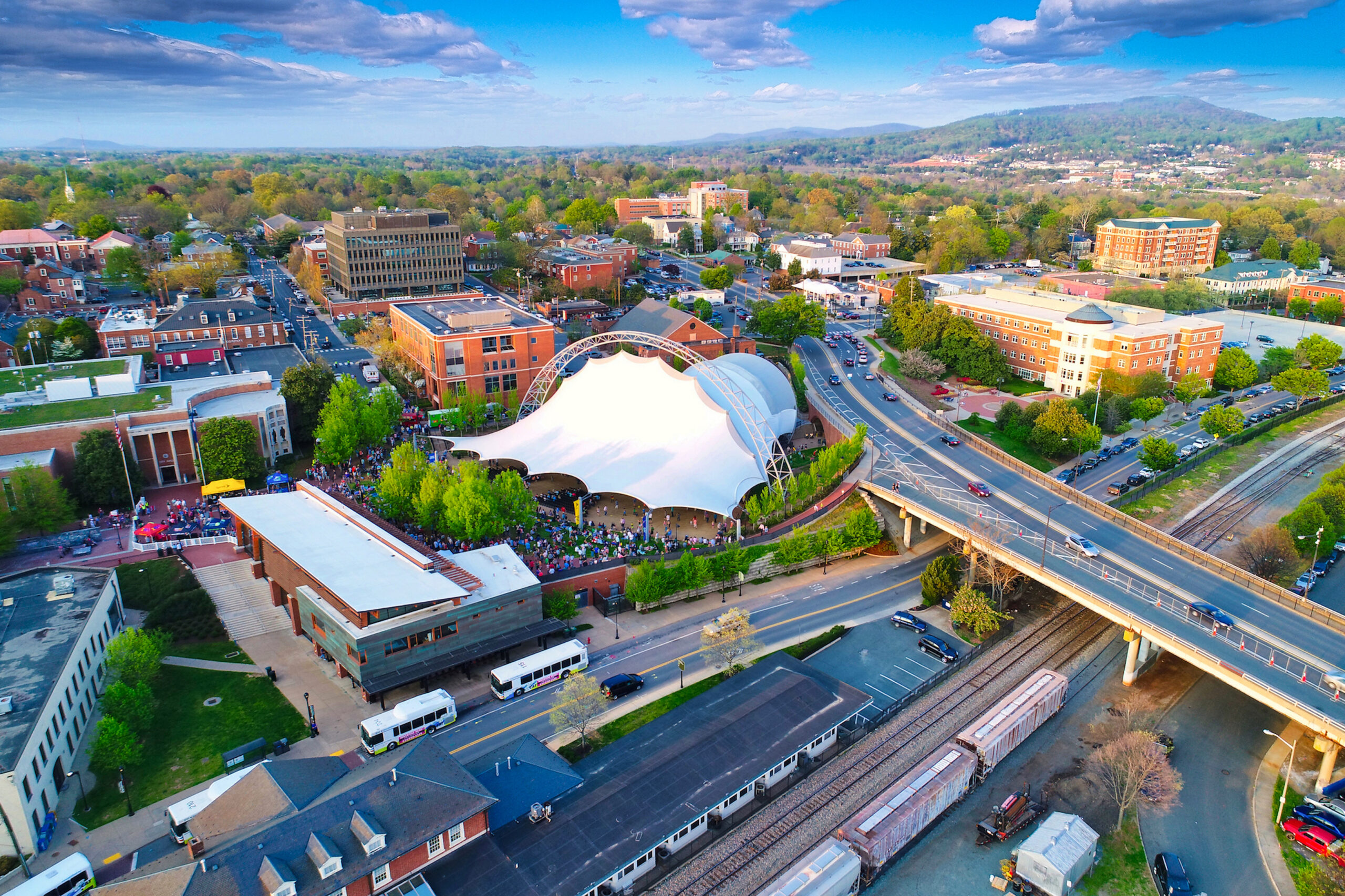
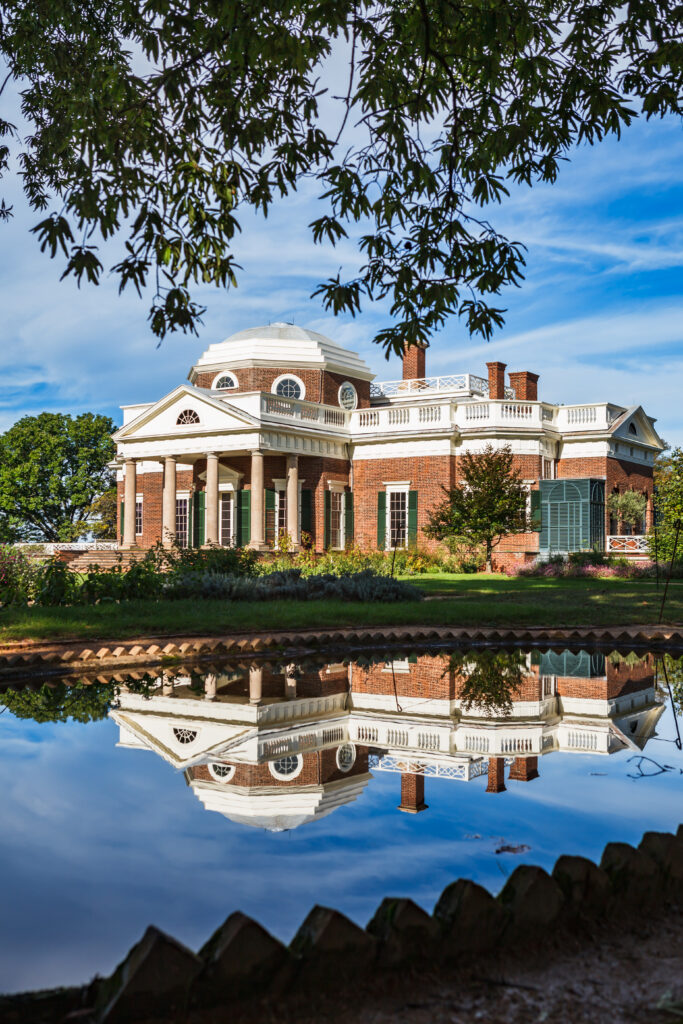
We’re so back. Tourism spending in Charlottesville and Albemarle surpassed pre-pandemic levels in 2024, as visitors poured $989.8 million into the regional economy. With Monticello and other historic sites celebrating the United States’ 250th anniversary, and the Downtown Mall marking its 50th year, the area’s aiming to boost that haul past $1 billion in 2026. Regional tourism looks great—at first glance.
Look closer, and you’ll find signs of potential trouble.
The state of tourism
“While tourism is not the single largest industry, it is one of Albemarle County’s significant economic pillars,” says Ashley Hernandorena, business development manager for Albemarle County Economic Development.
According to Hernandorena, top economic drivers for the city and county include health care, at more than $8.5 billion; higher education, topping $3.3 billion; and national security and biotechnology, each contributing more than $1.2 billion a year in spending.
Tourism—defined as visits from people living 50 or more miles away—pays for a healthy chunk of regional budgets. According to the Charlottesville Albemarle Convention & Visitors Bureau, that $989.8 million in 2024 spending translated into $27.7 million in tax revenue for Albemarle County (around 6.7 percent of its $408 million in 2024 revenue) and $20.8 million for the City of Charlottesville (roughly 9.1 percent of its $228 million in 2024 revenue).
Albemarle County drove those gains, with tourism spending up 6.5 percent in 2024. Charlottesville tourism dollars fell 0.8 percent in the same period, for an overall regional increase of 3.5 percent year over year.
“I wouldn’t say that that slight decrease would mean that Charlottesville is struggling,” says Anna Whitlow, director of marketing for the Convention & Visitors Bureau. “It’s not such a sharp decrease or decline to indicate that there’s any sort of larger issues there.”
Whitlow says more consumers are using digital tools to book travel at the last minute. That makes short-notice trips to the area easier for travelers, but less predictable for businesses.
“We invest in advertising out of our market through digital advertising, streaming, television advertising, and some print, as well as search engine marketing and things like that, to encourage people who are in the mindset to play and travel to come and play and travel here,” Whitlow says.
At Charlottesville Albemarle Airport, CEO Jason Burch is waiting to hear whether the airport will land a $1 million grant from the U.S. Department of Transportation to enable nonstop flights between Charlottesville and Boston. (Previous years’ grant winners were announced anywhere from July to October.) Securing that route could yield $21 million in annual benefits to the local economy, including a new influx of tourist traffic.
Monticello, UVA, and the Downtown Mall represent the area’s three biggest tourist draws, according to Greer Achenbach, executive director of Friends of Charlottesville Downtown, a nonprofit group created in 2021 to promote the Mall. By tracking pings off nearby cellphone towers, Friends of Charlottesville Downtown measured a 4 percent increase in Mall foot traffic in 2025, with 2.8 million visits.

Achenbach says Mall visitors have rebounded from their 2020 lows, but still trail 2019 levels. “Anecdotally, the merchants tell me that most of their money comes from tourists,” she says. To attract more visitors, FCD has installed a network of security cameras for public safety, launched a marketing campaign including video ads, and planned a 50th birthday bash for the Mall with a concert, parade, and light show on July 3.
Monticello “registered more than 2,000 guests in just the first couple of days after opening registration for this year’s July 4 ceremony,” says Jenn Lyon, director of marketing and communications. Monticello reports years of steady attendance, with around 300,000 people annually. Nearby Highland, home of former President James Monroe, reported more than 26,000 visitors in 2025—up from its 2021 pandemic trough of around 14,000, but still far below the 42,409 who showed up in 2019.
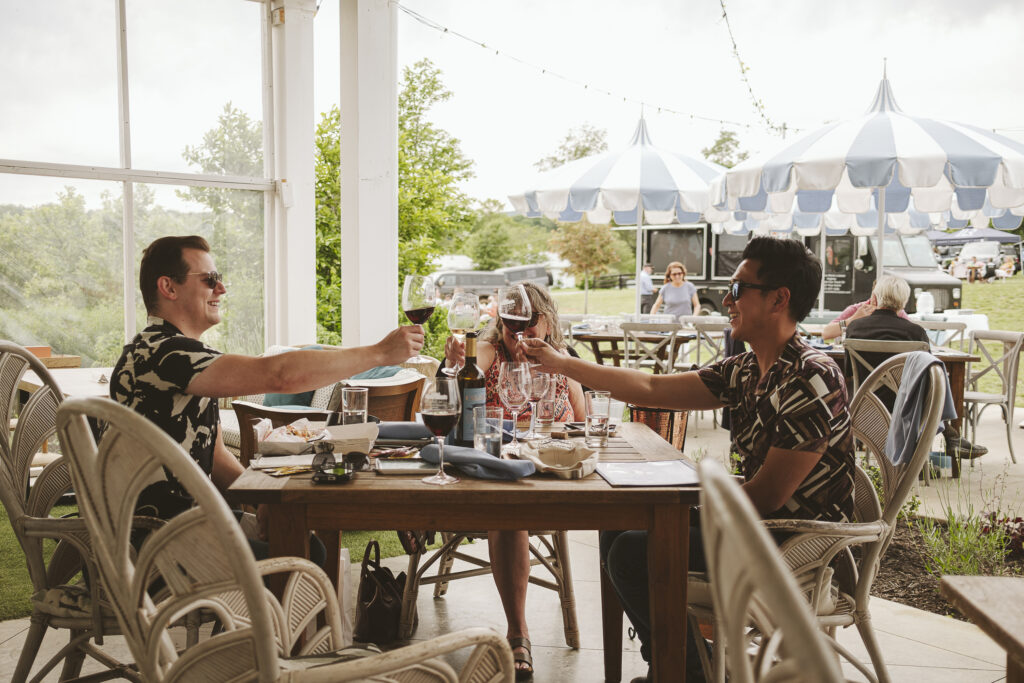
In 2023, Wine Enthusiast magazine named the Monticello American Viticultural Area the nation’s top wine region. Albemarle County’s wineries hope to continue building on their reputation at this year’s Wine Week, slated for June 22 to 28. During its first year in 2023, its assorted events drew an estimated total of 300 to 500 people, says Monticello Wine Trail Executive Director Tracey Love. This year, the organization expects roughly 1,500 Wine Week guests, compared to last year’s 1,200 to 1,800. Since visitors to Wine Week explore other local attractions and amenities as well, Love says “the overall tourism impact is greater than ticketed attendance alone.”
Dying on the vine?
Despite this rosé outlook, cold reality might sour wineries’ fortunes. An April 21 frost damaged wine grapes and other crops across Virginia. Temperatures plunged to 28 degrees, killing nascent grapes on many vines. Damaged vines can sprout a second round of fruit, but winemakers say that crop tends to be much smaller.
The Virginia Vineyards Association surveyed the Commonwealth’s growers in the freeze’s wake. Other counties suffered damage to a greater percentage of their grapes, with some reporting 100 percent of crops afflicted. But Albemarle, with more bearing acres than any region of the state, had the largest reported acreage damaged—nearly 58 acres, or 67 percent of the county’s total grape crop, was reported lost.
Virginia wine sales fell 11 percent between 2022 and 2025, per Virginia Wine Board data—part of a national trend of declining wine consumption. “I think our decline is either on par or slightly less than what you’re seeing with the national average,” says Annette Boyd, director of the board’s marketing office. Aging baby boomers are drinking less, she says, and there just aren’t as many people in later generations to make up for the lost consumption.
As a result, she says, “wineries are having to fight a little harder for attention, and to get people to come out and visit their place.” Boyd says wineries make 72 percent of their sales direct to customers. “Virginia wineries are very dependent on tourism to drive people to their tasting rooms,” she says. “When you’re a small winery, if you’re selling a bottle of wine at your tasting room, you’re selling it for the full retail price. If you’re selling it to a distributor, you’re selling it at wholesale price. You’re getting 40 percent of the retail price of that bottle.”
Though area hotels look solid at first glance, the hospitality industry also faces structural struggles. As of March 2026, year-to-date demand for rooms had risen 6 percent over the same period last year, according to the Convention & Visitors Bureau. Revenue per available room ticked upward by less than 1 percent, with higher occupancy rates more than compensating for slightly lower average room prices.
But a recent check of hotel availability a few days before the typically packed UVA graduation weekend found that while many area lodgings were sold out, a number of hotels, especially at the lower-priced end of the market, still had rooms open.
“Historically I would say no, that’s not normal,” said one source familiar with the local hospitality industry. The openings of the Forum by Kimpton and the Virginia Guesthouse mean the area has more available rooms. “I don’t think we’ve added that many students to the graduating population to be able to all of a sudden fill all of those, plus the Airbnb short-term rental inventory,” the industry insider says. “I think we’re probably teetering on too many rooms in the market.”
“Hoteliers always feel like there’s too many rooms,” says Bill Chapman, owner of the upscale Oakhurst Inn and Little Mod Hotel (and co-founder of C-VILLE). He says both of his hotels have had healthy business on weekends in particular and this spring in general. Despite the new lodgings in town, “I think the pie is growing.”
However, both agree that hotels face high labor costs. “A lot of our labor in our industry comes from over the mountain,” the insider says. “I think we’re paying almost $18 for front desk agents, where I talked to some of my friends in [other nearby states], and the equivalent position is $15 an hour. … It’s not like we can just all automatically add that to every guest room.”
Rising food costs further constrain hotels’ profit margins. “Food costs have gone wild in the last three to four years,” the source says. “We can’t or don’t want to always just pass all that along to our consumer, because it’s already expensive.”
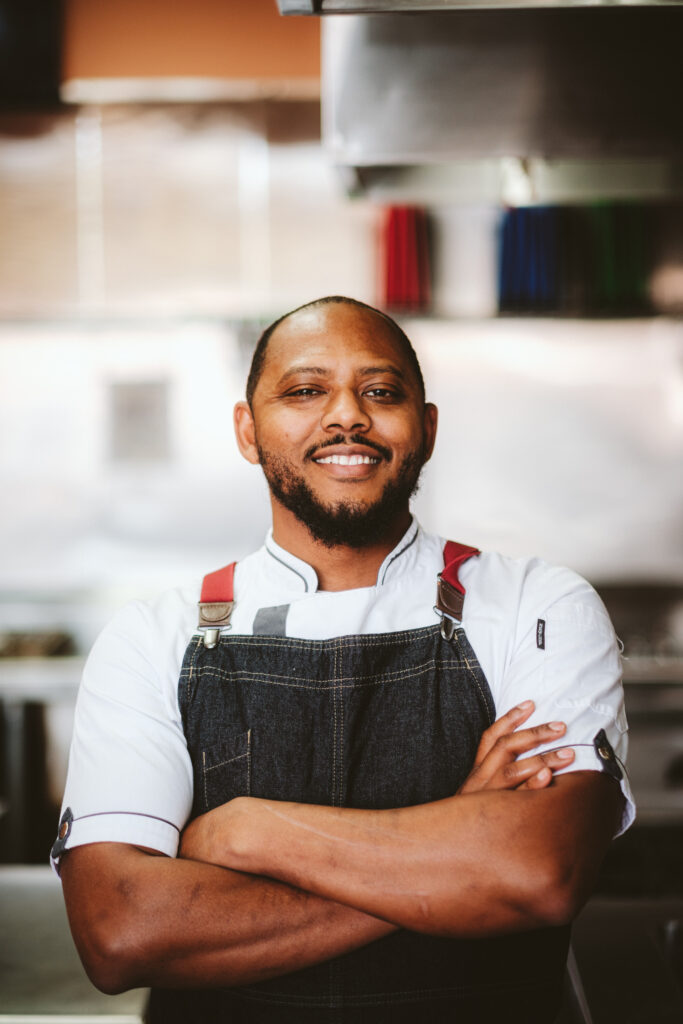
Restaurants are feeling a similar pinch. “The struggle in the restaurant industry continues to be the same,” says Antwon Brinson. He heads the Charlottesville chapter of the Virginia Restaurant, Lodging & Travel Association, or VRLTA, and his Culinary Concepts AB trains aspiring chefs and matches them with jobs in local restaurants. “The margins are small. We’re not tech. Staffing is hard. … It’s always going to be an uphill battle.”
Asked how tourism impacts area restaurants, Brinson says, “It’s everything. … There’s so many people that come to this area, and when you’re here, everyone needs to eat. They’re going to go to the restaurants, they’re going to patronize the bars, they’re going to spend money in these areas.” Tourists provide around 60 percent of local restaurant revenue, according to city, county, and convention and visitors bureau data.
“I don’t want a good moment in a good season to take focus off the fact that there is pressure both from the consumer side and from the backend cost side that is squeezing our industries,” says Tommy Herbert, director of government affairs for the VRLTA.
Tax turmoil
The CACVB board has often discussed ways to increase weekday hotel stays, says Albemarle Supervisor Bea LaPisto-Kirtley, who currently serves on the Convention & Visitors Bureau’s board. “If you get people staying in hotels, they’re going to go to the restaurants in Charlottesville. They’re going to go to the wineries in Albemarle County. They’re going to visit UVA. They’re going to visit Monticello. They’re going to visit Highland.”
Those hotel stays fund the city and county’s tourism promotion efforts. And that money’s currently the core of a simmering dispute between the county and local businesses over how it’s being spent.
Virginia law lets cities and counties tax any business that rents living spaces for less than 30 days—the transient occupancy tax. Both Charlottesville and Albemarle collect 9 cents for every dollar spent on lodging. But while cities can essentially do whatever they want with that money, state law imposes stricter guidelines for counties.
“It’s kind of like a layered cake,” says Charlottesville VRLTA member Roy Van Doorn, owner of City Select, which designs and publishes local tourism brochures. “The first 2 cents the county can spend any way they want. The next 3 cents, the county should allocate for tourism promotion. From six to nine … the county can use it any way they can.”
Those restricted 3 cents, by law, must be “designated and spent solely for tourism and travel, marketing of tourism or initiatives that, as determined after consultation with the local tourism industry organizations, including representatives of lodging properties located in the county, attract travelers to the locality, increase occupancy at lodging properties, and generate tourism revenues in the locality.”
Albemarle County contributes roughly half of this restricted chunk of TOT revenue to the Convention & Visitors Bureau. That’s about $1.35 million for fiscal 2027, per the bureau’s budget, compared to just under $1.5 million contributed from the city. The amount each locality contributes to promoting tourism—30 percent of the first 5 percent of TOT revenue—is written into the city and county’s revenue-sharing agreement.
Aside from a sliver devoted to arts, festivals, and culture, the county spends the other half of that 3 percent of TOT revenue to help fund its Parks & Recreation department, including classes, camps, hiking and biking trails, community centers, and special events.
Critics of the county’s funding approach, including the VRLTA, say that split is a problem.
“They’ve taken half of the marketing money and spent it on what traditionally residents should pay,” says Van Doorn. While the department’s offerings might appeal to tourists while they’re in town, “nobody comes to Charlottesville and Albemarle county based on our parks and rec. That’s not marketing and promotion.”
“If others that are outside of the county aren’t part of this organization, aren’t part of the county, they certainly have their opinion, and we have ours,” LaPisto-Kirtley says.
Albemarle County staff declined to be interviewed for this article, but they provided documents laying out the legal argument they made in response to letters from the VRLTA.
The county’s attorneys say that by attending a single meeting of the bureau’s board on December 15, 2025, the county has met the legal requirements for consulting members of the lodging industry; three of the board’s 15 current members work for local hotels or resorts.
“For them to say that they are talking to the lodging industry, and that they’re always consulting with the CACVB … it’s a bunch of BS,” says one former member of the Convention & Visitors Bureau’s board, who agreed to speak on condition of anonymity. “They never once came and did that song and dance.”
The county’s attorneys also note that the bureau—staffed by county employees—promotes outdoor recreation on its website and in its strategic plan. They say the county’s not required to gather visitor data that might show whether parks drive tourism, citing potential privacy concerns. But they do mention races and other events at local parks that draw out-of-town visitors.
The bureau’s 2024 annual report shows recreation contributing $158.6 million to the local economy, representing roughly 16 percent of all visitor spending.
“It’s a stretch,” another former board member says. “It’s convenient to be able to have that dedicated stream of funding coming from an outside source that you can then spend on an internal service, but I think it goes against the spirit of the law.”
The county’s bluntest argument cites a 1999 opinion by Virginia’s attorney general, which essentially states that local governments can define “tourism” however they want when deciding how to spend TOT revenue.
“We’re not saying it’s ours instead of theirs,” Van Doorn says of the parks and rec funding. “We’re just saying, of the 9 cents collected on TOT, three of those cents have to go to marketing visitation. We’re competing against other parts of Virginia, other parts of the country. Tourism is a very competitive business, and so we are, I would say, underfunded, and have been for a long time, to properly and appropriately market to a variety of locations to visit us.”
Convention & Visitors Bureau Executive Director Courtney Cacatian “has given presentations before, showing how [the bureau’s] way underfunded compared to CVBs in similar markets,” says Chapman. “If Courtney says it’s underfunded, then I tend to believe that.”
“There is no ceiling to what can be done with more resources to bring more visitors to the area,” the VRLTA’s Herbert says. “I think that focusing funds there would produce greater dividends, especially in the context of tourism development, than funding parks and rec projects. … Folks can’t come be a visitor unless they’re aware of the place.”
On the county’s side, LaPisto-Kirtley says she believes that “we’re following the agreed-upon funding formula, which I believe works.”
Whitlow declined to comment on the disagreement between the VRLTA and the county over that 3 percent of the TOT, or on how the bureau might spend extra funding. But she did say that when the American Rescue Plan Act sent the bureau additional money during COVID, the bureau devoted those surplus dollars directly to marketing and advertising.
For every dollar Albemarle County spends funding the Convention & Visitors Bureau, it collects roughly $20.50 in tourism-related tax revenue.
Board battles
Everyone we interviewed on the record praised the Convention & Visitors Bureau’s staff, especially lauding Cacatian, who took over the executive director role in 2019. But when C-VILLE spoke with two former members of the bureau’s board on condition of anonymity, both described an often dysfunctional environment in which power struggles between the city and county made the bureau’s job harder.
Both former members say county supervisors on the board have protected the county’s power and influence relative to the city. Both recall supervisors threatening to pull the county’s funding from the bureau if they didn’t get their way.
Former Member A recalls county representatives on the board insisting on a county-based tourism promotion office in Crozet’s old train station to match the city’s office on the Downtown Mall—an effort that fizzled out during COVID, and has since been replaced by mobile visitor centers.
Both speak about the county’s repeated displeasure at the relatively small size of Albemarle’s name in the bureau’s logo. “If you’re promoting tourism or travel to people in D.C. or Northern Virginia, does anybody actually know Albemarle County, or where we are, or what it is?” Former Member B says. “No, they know Charlottesville, or they know wineries.”
“As a board member, we always thought we were doing a pretty good job of satisfying the interest of both the city and the county,” says Former Member A, describing a period before Cacatian began leading the bureau. “And then at some point it became clear that we weren’t. There was pressure coming back, particularly from the county side, of ‘you need to do more for the county.’ … It seemed like we were spinning our wheels and not really doing what the bureau should have been doing, which is marketing the area outside the area to bring tourism in.”
“You look around at the other peer cities,” Former Member A says, “and a lot of their convention and visitors bureaus are separate nonprofits that are funded by the jurisdictions … and don’t have political representation on their boards at all. A group of us were arguing that’s the direction we need to go with this, and it was very clear the city and the county were not going to relinquish any control whatsoever.” Instead, they say, both entities added elected officials to the staff members already serving on the bureau’s board, cementing their influence over its operations.
LaPisto-Kirtley paints a different picture of current relations between the city, county, and CACVB. “I tease the [heck] out of Charlottesville … absolutely, all the time, every chance I can get,” she says. “But it’s all with respect, kindness, love, apreciation for both. We’re all getting along great. What you’re saying, I haven’t heard of that, and I’ve been on the CACVB for [three or four] years.”

Banding together
At CHO, Burch has a big vision for the airport’s future, including a new terminal—and he believes that the airport can’t achieve it alone. “We’ve got to figure these things out as a community,” he says. “I think it’s about the ability to talk to everyone and find out how we’re going to do this.”
To sweeten CHO’s application for that $1 million federal grant—and its pitch to airlines to add direct flights from Boston—Burch says the community has chipped in another $600,000 in cash and in-kind contributions, including media air time. The experience, he says, has made him realize the importance of closer coordination with other local stakeholders.
“We have made it our goal to be a stronger partner of the community,” Burch says. “I’ve had conversations with [Cacatian] over the last [few] weeks about the potential of a strong partnership, and I am stoked about it again. We spend so much time looking at the runway and looking at the destinations that sometimes we don’t look at our own community and ensure that we’re fitting it correctly.”
Brinson believes this kind of cooperation is exactly what the region needs to thrive.
“I love the Charlottesville-Albemarle region,” Brinson says. “I think that it’s always going to be a destination. I think that what we’re doing really well is maintaining that. I think the opportunity is being able to take that to the next level. How do we scale it? And I think by supporting travel and tourism, it really creates the space for us to be able to win on a bigger level.”