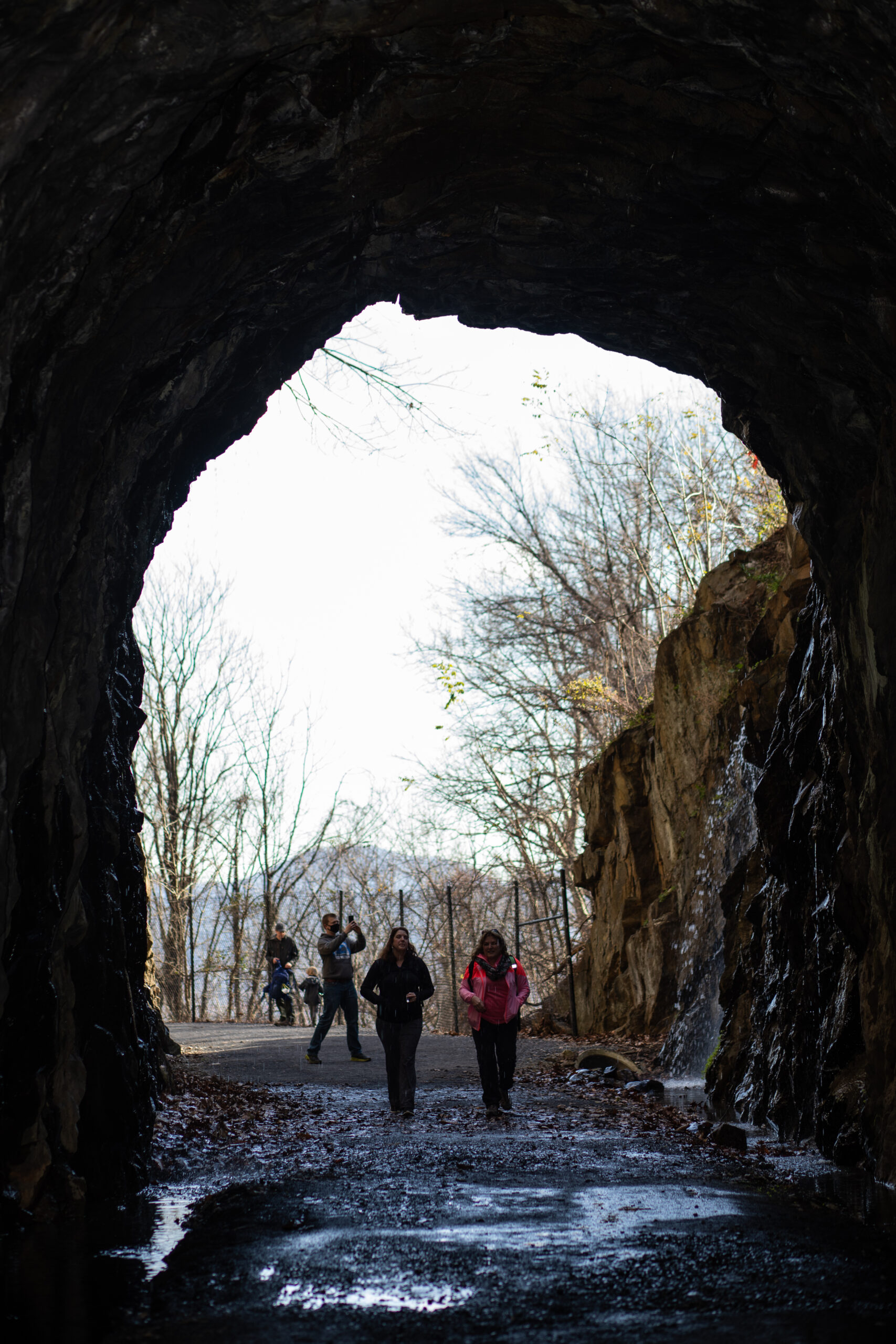
Albemarle County planners have several possible routes in mind for a future shared-use path connecting the Blue Ridge Tunnel to Charlottesville. Photo: Zack Wajsgras.
Building new transportation projects can take many years as ideas make their way through competitive processes to decide what gets funded.
One concept in Albemarle County is to create a shared-use pathway to follow along Three Notch’d Road, a route to the west first carved out of the landscape in the 18th century during the colonial period. This idea is in the county’s Comprehensive Plan, as well as the Virginia Outdoors Plan, and the Rivanna Trails Foundation has been leading the charge to make it a reality.
“We see the Three Notched Trail being a part of a larger Mountains-to-Sea Trail, connecting the Blue Ridge Mountains to the Chesapeake Bay,” reads the RTF’s website on the concept.
In 2022, Albemarle County received a $2 million grant from the U.S. Department of Transportation to conduct a feasibility study and create for the 24-mile Three Notched Trail. It hired the firm Vanasse Hangen Brustlin to do the work.
After nearly a year of preliminary work, Albemarle County planners will reveal, on December 4, the first set of possible routes for a future shared-use path to connect the Blue Ridge Tunnel to Charlottesville via Crozet.
Maps depicting some of the alternatives will be set up at Western Albemarle High School’s cafeteria beginning at 6pm on Thursday. People who attend can ask questions and make comments on the proposed alignments.
Initial feedback was given in March at a local conference sponsored by the Piedmont Environmental Council, which had about 150 attendees. Around 150 people went to the first open house at Crozet Elementary School in May.
Community engagement continued with an interactive survey held over the summer in which 620 people participated with dozens of specific comments about different spots on the map. A summary on the county’s website indicated only one person opposed the project.
The summary identifies six themes across the hundreds of responses, including a desire for the trail to be separate from vehicular traffic.
“Residents described existing roads as unsafe for biking and walking, and expressed strong support for a fully protected, car-free corridor linking Crozet and Charlottesville,” reads a description of the first theme.
Respondents also want the trail to be both a destination for recreation as well as a practical way for people to get around. Other hopes are that the trail would become a way to boost tourism in the same way the Virginia Capital and Virginia Creeper trails have been for other parts of the Commonwealth.
“The trail should highlight Albemarle County’s natural beauty while minimizing ecological impacts,” the summary continues.
The grant funding the project covers a second year of work allowing the consultant to further develop an alignment that can then be used to try to obtain more money to pay for it from the federal government and the Virginia Department of Transportation. At that point, it will compete with many of Albemarle County’s other transportation priorities.
The process is not nearly far enough along for the county to be considering the purchase of land.