If you follow politics, you don’t need ghosts or goblins to get your nerves fraying in late October. Here in Virginia, where staggered elections mean partisans never get a year off, candy-seeking kids on Halloween are always swiftly followed by a different sort of trick or treat on Election Day.
With this year’s midterm elections continuing the last few years’ trend of escalating electoral stakes, it’s easy for the news cycle to offer frights that rival anything to slither off the silver screen. For Midtermsween (yes, we’ve coined that term), we’re offering a grab bag of goodies that explore the intersection between spooky season and election season—and hopefully give you a few useful reassurances to exorcise your own political fears.
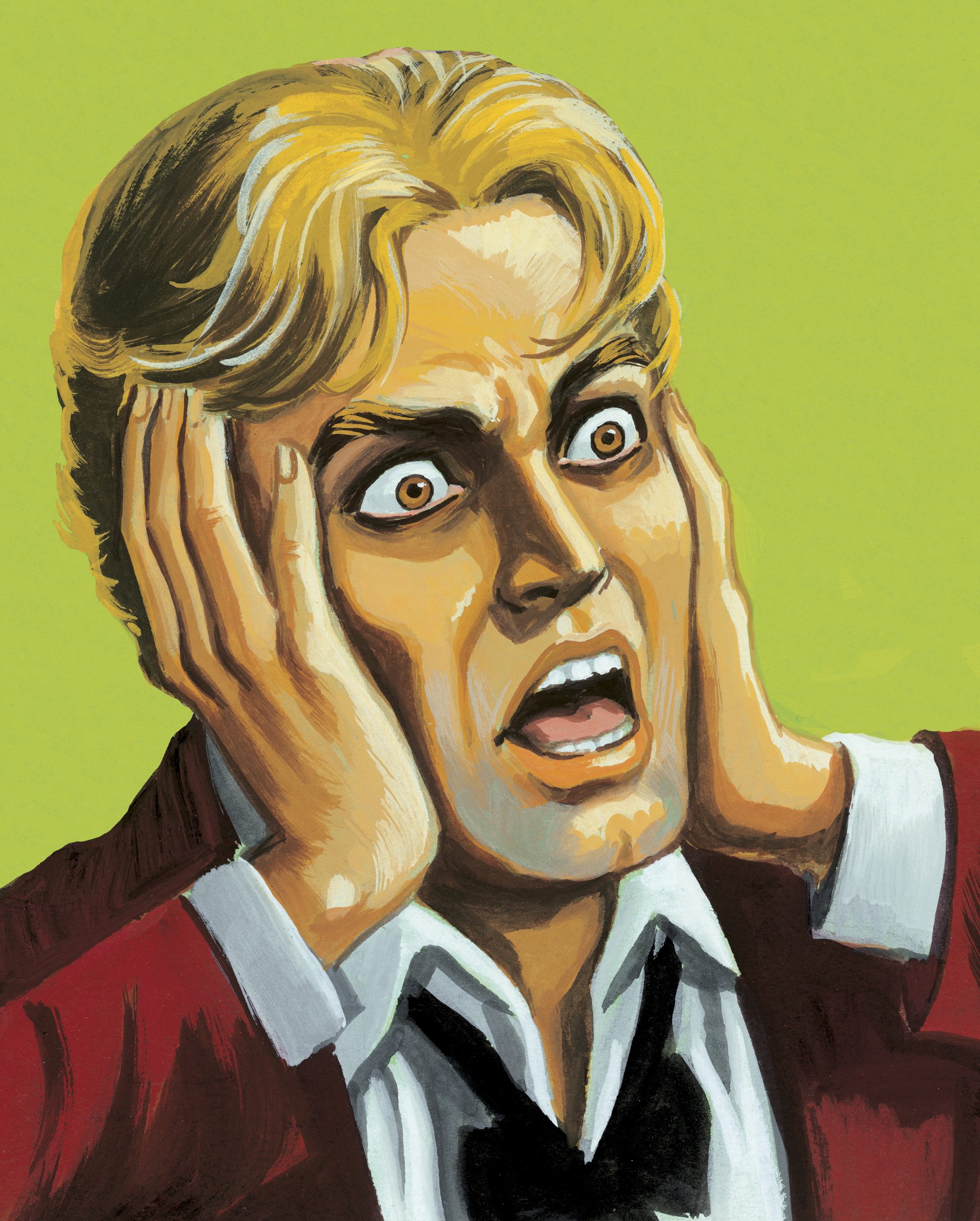
Petrified by politics? UVA psychologist offers advice for battling election anxiety
If you’ve ever lain in bed at night, heart pounding, mind reeling, worried about the outcome of an upcoming election, you’re not alone.
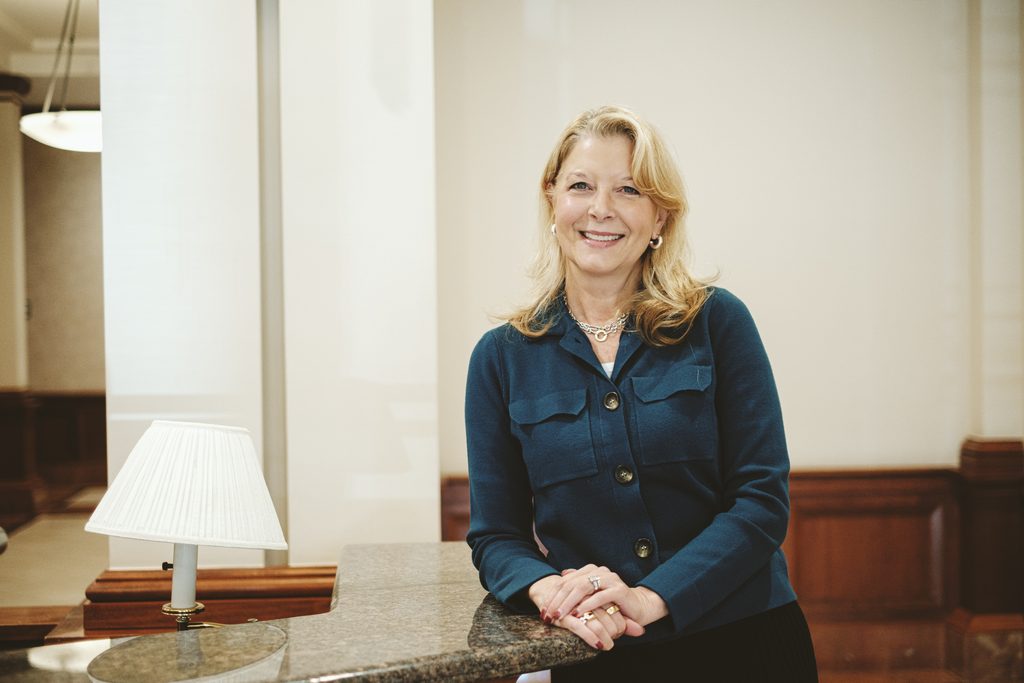
“We know that politics in general, similar to other topics like religion, can be very personal,” says Kim Penberthy, Ph.D., the Chester F. Carlson Professor of Psychiatry & Neurobehavioral Sciences at the University of Virginia. “Any kind of conflict around that, or concerns or worries … can increase our anxiety levels.”
“There’s that old saying that our brain can’t really tell the difference between danger and stress alarms,” she says. “It’s not very good at distinguishing an immediate physical threat, like a car about to hit you, versus something that feels equally distressing, but won’t actually harm you.”
Our brains respond to this stress with two types of unpleasant thought patterns. Catastrophizing can make you feel like you’re spiraling toward a future where everything’s bad and nothing will get better. And rumination, where you can’t switch your train of thought onto a track that doesn’t contain these dire ideas, can make it hard for you to concentrate on other important tasks.
Worse yet, Penberthy says, this gruesome twosome can keep you from sleeping, kicking you into a vicious cycle that only lets them loom larger and nastier in your psyche. “When you don’t sleep, you get more fatigued, and you’re more emotionally vulnerable overall, which means you are more susceptible to feeling anxious or depressed.”
Not every dark cloud that passes across our mindscape needs clinical intervention. “Feeling disappointed, feeling angry, concerned, is okay,” Penberthy says. “Many of us will say, ‘Oh, that’s a bummer,’ or ‘Gosh, I’m really disappointed,’ and then we will move on [and] get back to life. When that doesn’t happen, you may need to be more intentional.”
When political turmoil stirs up our brain gremlins, how can we protect ourselves and put them back in their place? “Anxiety is made up of fear, and also a lack of feeling like you can cope with it or do anything about it, and we can address both,” Penberthy says. For the fear-afflicted, she offers the following advice.
Put your news consumption on a strict diet.
The news is “not really helping us emotionally if we’re bombarded constantly,” Penberthy says. “It’s, for lack of a better word, stressing us out.” If you want to stay informed without driving yourself to distraction, she advises picking one or two set times of day to dip into the news, and then switching it off entirely to avoid compulsive checking. “There’s only so much information, and after that, there’s no new information. It’s just compounding my distress.”
Protect your sleep.
“Stop all media at least an hour before bed,” she says. “Please do not take your phone to bed. Avoid alcohol as a sleep aid. I hear this all the time. ‘Oh, that helps me get to sleep.’ You might think that, but it’s actually going to make your sleep quality so poor that it doesn’t really help.” Instead, make sure you’re going to bed at the same time every night, and waking up at the same time every morning. “Have a nice, dark, quiet, cool room, and try to be still and intentional in letting yourself go to sleep.”
Help your brain switch off.
When you’re feeling anxious, “just go to sleep” is often easier said than done. “If your mind is swirling around with all these worries, give yourself a task,” Penberthy says. “The most efficient one for me is count backwards from 100 slowly in your mind. You have to focus your mind, but it’s not so challenging that you get stimulated. … And if you notice you got to, like, 80, and you’ve now started worrying again, you start over.”
Calm your body.
Middle-of-the-night mental freakouts can include physical side effects. “If your heart’s pounding, that’s sending a signal to your brain: I’m in danger,” Penberthy says. “So the first best option is [to] try to reduce that physiological arousal.”
Different approaches can work for different people. Penberthy’s examples include slow, deep breaths; progressively tensing and relaxing each muscle in your body, head to toe; or even getting up briefly to splash your face or drink some water. “You’re trying to send signals physiologically to your brain that you are okay, and then you can augment that with literal thoughts or words that reinforce it.”
Put catastrophic thoughts in perspective.
“Many of the things that we catastrophize about fall into two categories,” she says. The first involve worries we have some control over—and the best way to face them is to find something to do about them. For elections, that can mean voting, encouraging friends to do likewise, or even volunteering with a campaign you support.
But the second category of fears includes those we can’t control—like the statewide or national outcome of an election. For those, Penberthy says, we need coping mechanisms. She suggests imagining the worst possible outcome for your worries, then the best, and reminding yourself that most of the time, history lands somewhere in the middle. She also advises looking backward, not forward, to face your fears: “Have I gotten through administrations where the person I didn’t vote for was in office, and did I make it? How did I get through that? Can I do that again?”
Remember, Penberthy says, that you can’t control how other people think or feel—and that hating others for views you find ignorant or abhorrent won’t help you feel better. “We think we have a better way of looking at it, and we might be right, but how effective is that in communicating to other people? It’s most effective when we’re open, and when we’re [approaching others] with curiosity instead of judgment.”
Ballot-box boogeymen: Local election official reviews his worst voting nightmares
For many voters these days, the horror begins after all the votes are counted. But for election officials like Bucky Walsh, chair of the Albemarle County Electoral Board, the truly hair-raising scenarios take place on Election Day. After nearly 10 years as an election official, Walsh shared his worst electoral horror stories—and how administrators like him plan ahead to protect voters from those terrifying twists.
Diabolical drips
Like a soggy spectre from a J-horror chiller, Walsh says one particularly waterlogged election day tried to spread a curse on voters’ ballots. “It rained steadily for about the first six hours of the day,” Walsh says. “People all day long were coming into the polling place with their umbrellas and their hats and their raincoats. … We’d hand them a ballot, and then all those things that shed rain would start dropping rain on the ballot.”
Officials could easily replace super-sodden paper ballots as needed. But the real problem, Walsh says, came from ballots dampened by only a few deceptively dangerous drops. “They take it over to the scanner to scan it in, and the scanner would reject it because the shiny spots where the water was. It viewed those as extra marks on the ballot,” he says. “So all day long we were having to have voters [fill out a ballot] a second time, sometimes even a third time, to try and get a ballot that was dry enough that we could feed into the machine.”
Breaking this curse proved simple enough: Walsh and other workers asked people to take off their hats and coats before receiving their ballots, and held their umbrellas at the door while they cast their votes. “A little bit of rain isn’t an issue at all,” he says, “but hard rain is a barrier for paper-based elections, because folks don’t get a chance to towel off before they come into the polling place.”
Cause for alarm
Walsh says fire itself rarely if ever menaces an election—but fire alarms can. That’s especially true at schools during the summer, when construction or refurbishing work can set more than just freedom ringing.
“A little bit of dust in one area, or sparks, or things like that, or sometimes actually very small fires will trigger the fire alarms, and then you have to evacuate the polling place,” Walsh says. “That’s more than a little inconvenient if you’re trying to vote.”
Local voting equipment is capable of working indoors or outdoors, with electronic vote scanners able to run on battery backup for “a good long while” until the fire marshal gives the all-clear. But Walsh says officials have to properly secure any equipment they have to leave behind, to make sure no one tampers with it in their absence. Election workers have some training for these scenarios, he says, but mostly “the planning is, gosh, it’s better if we don’t have those.”
“We rarely see [fire alarm scenarios] in general elections in November, because the schools aren’t undergoing that kind of construction and renovation,” Walsh says, “which is good, because November, sometimes it’s a little less hospitable to go outside and vote if it’s 40 degrees and blowy.”
Tech gone wrong
From The Terminator to M3GAN, tales of malfunctioning mechanical menaces generate reliable thrills and chills. Election workers, it turns out, have their own tangles with crossed wires.
Walsh sets the scene: “It’s late in the day, and you’ve had many hundreds, or possibly [thousands of] voters come through your polling place. The absolute worst scenario is it’s 6:59, and the last voter approaches the scanner and puts their ballot up to the scanner, and the scanner experiences a hardware failure.”
In those cases, the votes are stuck on the busted unit and its attached USB key, with no way to retrieve them without special intervention from the company that makes the ballot scanner. Instead, Walsh says, officials must race emergency backup scanners to the polling place, open up the locked bin where all of that machine’s paper ballots have been stored, and run them through the new working scanner by hand.
“You can scan, at best case, maybe about 300 ballots an hour,” Walsh says. “So if you have 2,000 to scan through, you’re going to be there six hours or so, feeding ballots into the scanner, which makes your already long day much longer.”
Luckily, Albemarle’s now well-stocked with replacement scanners, and can rush multiple units to the scene of a dead comrade to pick up its slack and re-count its ballots in a somewhat shorter time. “But the first time it happened, it was a very unpleasant day,” Walsh recalls. “None of us got home till two in the morning, but we got the results reported in.”
Dwindling supplies
Horror films often involve being stuck in a bad situation while running dangerously low on the essentials you need to survive. Walsh has experienced that tension with the one thing polling places absolutely can’t go without: ballots.
“One year, many of our precincts, five or six of them, ran out of ballots,” he says. Every hour, election workers tally the voters checked in, the ballots given out, and the votes recorded on each scanner, to make sure they all match. “I had figured out by 10 in the morning I was going to run out of ballots that day.” Walsh had to call in to the registrar’s office for emergency shipments of blank ballots three times—and his wasn’t the only precinct to endure that scary scarcity. “One of them, I think, got to the end of the day, and we had voters waiting for 20 or 30 minutes while they were bringing more ballots to the polling place.”
Administrators now plan ahead to avoid such shortfalls. They look at past elections to gauge expected turnout, then print 20 to 30 percent more ballots as a margin of safety. If they still risk running out, “we’ve got five different ballot printers,” Walsh says. “We can print a bunch of ballots, and sheriff’s deputies help us get them out there very fast.”
Freeze warning
Walsh doesn’t seem too worried about one of the biggest fears on many voters’ minds this year: the possibility, repeatedly floated by Trump administration officials, that the federal government might send ICE agents or other armed troops to polling places to intimidate voters.
Walsh says election administrators do as much research as they can to figure out whether anyone’s planning such moves. Voter intimidation is illegal under Virginia law; if armed officials show up, Walsh says election administrators would call the Albemarle County Police to “remediate the situation.”
Most importantly, “non-citizens aren’t voting,” Walsh says. “Polling places are where citizens go. So in the unlikely event that ICE should appear, it’s going to have a wasted day.”
Walsh says election officials don’t scare easily. Once the polls open, “we will do everything we can to keep them open, because that’s what the code says we need to do.”

Monster mashups: UVA media studies professor picks horror movies that come scarily close to real life
With the economy worsening, political tensions rising, and bad news blanketing the airwaves, the monsters who terrify us from the other side of the screen (or not, if you count that freaky kid from The Ring) have their work cut out for them this year.
“Horror obviously works to evoke fear, but it also disrupts our everyday social world,” says UVA media studies professor and horror movie expert Robin Means Coleman. Often, those diabolical disruptions reflect what’s going on in the real world. But “I think it’s getting harder and harder to do that through a horror lens, when horror and our everyday are getting closer together.”
Coleman’s book, Horror Noire, was adapted into a documentary on how horror films have specifically reflected the Black American experience. Right now, Coleman says, she sees two main themes in horror films. The ever-popular fear of the other—from the flesh-eating ghouls of Night of the Living Dead to the party-crashing vampires in Sinners—remains in play. But films like Obsession and The Backrooms, whose concepts or creators emerged from social media, also comment on our phone-fueled tendencies to gaze inward.
“I think that we can hold both things at the same time,” Coleman says. “A mirror that reflects us and one that we turn out to our social world as well.”
For spooky season, we asked Coleman which horror movies, past or present, she thinks best hold that cracked mirror up to this moment in history.
The Birth of a Nation (dir. D.W. Griffith, 1915)
In this notoriously racist, KKK-lauding early blockbuster, one of the key villains is Gus, a formerly enslaved man played by a white actor in blackface. Like Jason Voorhees and countless slasher-movie villains to come, Gus stalks and sexually menaces a young white woman through the woods, terrorizing her until she falls to her death. The film’s heroically depicted Klansmen catch Gus and lynch him, killing the film’s main monster. Those Klan protagonists ultimately stage an armed show of force that intimidates Black people trying to vote in an election.
“People often don’t think of it as a horror film,” Coleman says, “but Birth of a Nation is the popular culture wellspring for how race relationships are understood in the U.S. I think that its pro-Ku Klux Klan narrative gives rise to and permission for the kind of white supremacy that we haven’t been able to shake off, both in the real and in the imaginary.”
Attack the Block (dir. Joe Cornish, 2011)
In this London-set sci-fi horror comedy, a multiracial gang of teenage delinquents and the nurse they’ve just mugged must team up to defend their public housing building from rampaging space aliens. The film initially depicts its heroes as the sort of scary criminals demonized in the media, only to gradually reveal them as frightened, courageous kids. And the creatures they’re fighting—apelike black voids with luminescent teeth—are cleverly designed as grotesque exaggerations of how society wants to picture those kids.
Coleman says Attack the Block explores “the ways in which communities are marginalized by the state [and] not valued. … There is a cadre of young boys who become unlikely heroes and save their community from this alien invasion. The film also depicts a pushback against the kind of adultification that we often see of young boys, particularly boys of color. The film counters the Birth of a Nation-informed portrayal of Black males as villains, menaces, and violent people who need not only to be contained, but be annihilated.”
The First Purge (dir. Gerard McMurray, 2018)
This prequel to writer, producer, and frequent director James DeMonaco’s ongoing series of social horror films explores the origin of their premise: A right-wing government takes power in the U.S. and declares one night a year when all crime is legal. The ensuing violence and terror, the films reveal, are an excuse for white, Christian-nationalist elites to steadily eradicate what they view as the nation’s minority underclass. The First Purge chronicles the initial experiment, contained to a single neighborhood, that leads to later nationwide Purges. Government forces put their thumb on the scale to ensure this test run yields their desired outcome.
Coleman draws lines between The First Purge’s not-so-clinical trial and the historical Tuskegee experiments, in which the U.S. government let unsuspecting patients die of syphilis to observe its effects. “The Purge is saying, we’ll inoculate you and monitor your progress if you sign on the dotted line, and we are going to monitor how you purge, the ways in which you purge. But now there’s this drug involved that heightens this kind of violent activity, and all of it is medical experimentation.”
She extends that parallel to the contemporary MAHA movement’s sowing of distrust and misinformation about medicines and vaccines. “Here’s how these entities, corporate and political, are confusing a populace that is also at times really vulnerable or needs resources,” Coleman says. “And whatever is happening is actually not in the interest of the citizenry.”
Sinners (dir. Ryan Coogler, 2025)
Nominated for 16 Oscars, winner of four, last year’s smash hit pits the twin-brother proprietors of a Deep South juke joint against a pale horde of bloodsuckers clamoring to consume them.
Coleman says Sinners depicts “a group of people of color who band together to do what is necessary in support of their community. They are stepping up and trying to affect positive change by creating a safe space formed around cultural commonalities. When allyship fails them, be it the undercover Klansman or the vampires, they engage in a kind of uncivil disobedience, rising up against white supremacy. This is all a powerful metaphor of colonialism and appropriation, theft and death, as both the Klan and the vampires are putting lives at risk. In particular, theirs is the threat of the appropriation and annihilation of culture, histories, memories, and even the music and dance. Sinners reminds us that allyship often fails folks of color.”
Like writer-director Jordan Peele’s Get Out, which gives its Black hero an unlikely but cathartic last-minute rescue, Coleman celebrates Sinners for making sure that its protagonists triumph, whether that’s through a well-lived life, a well-earned afterlife, or two vampires in an eternally loving relationship.
“We are not going to have a representational diet of Black people be slaughtered in these really horrifying ways, even though there’s some truth-telling in that,” Coleman says. “We’re going to also offer a narrative that does something different … where Black people survive. There isn’t going to be senseless, annihilating Black death—or, as the saying goes, ‘the Black guy dies first.’ There isn’t going to be the Black trauma porn.”
“What horror movie ends with a [heartwarming] smile?” she says, of Sinners’ post-credits final scene. “That’s incredible.”