The state’s already-stretched safety net just got thinner. And, as usual, Virginia’s neediest people are the ones most likely to fall through. Two months after it terminated filling prescriptions, the Community Resource Pharmacy (CRP), formerly the Aftercare Pharmacy, has shut down, leaving thousands of indigent mentally ill Virginians without a source for discounted meds. The culprit is—what else?—budget cuts. The victims are—like always—the people who can afford it least.
The Community Resource Pharmacy obtained prescription medications for people who had been discharged or sent elsewhere from a state mental health facility and were unable to pay for them. CRP would then distribute the prescriptions throughout its 40 community service boards.
|
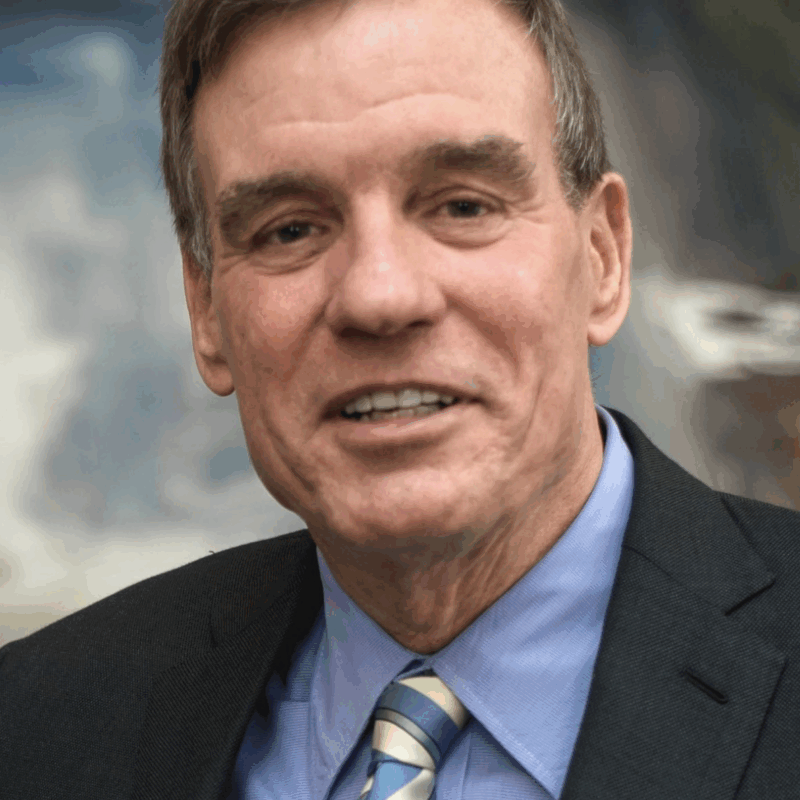
David Moody is the medical director at Region Ten, one of the 40 community service boards that will inherit the $13 million the state used to give the Community Resource Pharmacy. |

With the closing of the CRP on January 1, already stressed agencies like the local Region Ten will be left to handle the load. Some $13 million in state funding that was spent previously on ordering and purchasing the medications will, in turn, be diverted to the community boards directly—sort of like cutting out the middleman. But there’s an advantage to having the middleman, in that he could purchase medication at low, pro-rated state rates. It’s not clear whether local community boards will be able to replicate that.
“We had some concerns about our ability to match the purchasing power of the state of Virginia,” says Dr. David Moody, medical director at Region Ten. “The big change for us is that a process that was not only historical but centralized and very streamlined has now been farmed out to 40 different service community boards to be designed in whatever way they can make happen.”
The story begins, as they so often do when it comes to the Commonwealth these days, with money. Facing a $1.35 billion budget shortfall for the current fiscal year, and a total of $7.1 billion since November 2007, the state asked the Department of Behavioral Health and Developmental Services (DBHDS) to reduce its budget by 15 percent.
Accordingly, state mental hospitals had to cut 5.5 percent, training centers’ budgets were cut by 12 percent, and the Community Service Boards—such as Region Ten—were told to reduce their budgets by 5 percent.
“The decision to close the CRP originated in our department as part of our budget reduction strategy; it did not originate from the Governor’s Office,” DBHDS spokeswoman Meghan McGuire told C-VILLE by e-mail. Instead of serving people directly, the new focus of central office would be “oversight, monitoring and accountability” of a number of service providers.
It also means that potentially, many mentally ill Virginians could be left wondering how to fill their prescriptions. Illnesses like bipolar disorder (when a person experiences periods of excitability with periods of depression), schizophrenia, (loss of perception with reality, hallucinations and delusional thoughts), chronic depression and post-traumatic stress disorder are the kinds of thing that local homeless advocates say they see regularly in the indigent population that spend their days and nights on Charlottesville’s streets.
But tough times call for tough decisions, right? The rub is that eliminating the pharmacy will save DBHDS a measly $600,000—about 13 percent of the $4,568,852 the department was ordered to cut. McGuire, however, says that funding for the drugs distributed by CRP would have also been subjected to a 5 percent budget cut if the pharmacy had remained open. Two other factors contributed to the decision to close it: The department was having difficulty recruiting for vital positions to work at the pharmacy and a needed packing machine would have cost $500,000.
“This means we are not cutting out pharmacy services; the services will continue and each [community service board] that was using the CRP is making its own plan to negotiate contracts,” writes McGuire.
Which leaves Moody, staff psychiatrist in Region Ten’s Wellness Recovery Center—a crisis stabilization unit—with the task of negotiating medication prices with private pharmacy providers.
The hope, says Moody, is to not only find a favorable price for the medications, but also favorable terms of delivery. “There might be instances where the level of service we get from a private provider may be better, in terms of turnaround time, but I don’t know. We’ll have to see how that will turn out.”
In a letter Moody wrote to Region Ten’s board earlier this year, he said that although there have been assurances that the $13 million in medication funding will be maintained, “there are no specifics yet. There are workgroups in place, but the ability to recreate such a system of care in the next 30-45 days is impossible,” he wrote. “Therefore, Region Ten and all the other [community service boards] will have to create emergency ‘Band-Aid’ plans until other options are defined and implemented.”
Moody has concerns, too, about the “donut hole” recently made famous in the national health care debates. Because while CRP serves approximately 42,300 people per year, it also serves many people with Medicare Part D coverage.
Medicare Part D is a federal program that subsidizes prescription drugs for those enrolled in Medicare. Prescriptions are covered until federal funding expires, which usually happens mid-year. At that time, the so-called donut hole, the enrollee has to start paying for drugs out of his or her own pocket until costs reach a set amount. After that, a catastrophic part of the coverage kicks in again and the cost of the medicine gets covered anew with a low co-pay rate.
“If [community service boards] pay for those medicines out of [the $13 million], it will not count toward their out-of-pocket expense, so that’s a big loss,” Moody says. “It’s a significant impact and frankly, we are not sure how we are going to be able to handle that.”
“The Community Resource Pharmacy was the last safety net,” says Moody. “All of us are in kind of crisis mode in terms of what we can do versus what we know needs to be done or would like to do.”
Which brings us to…homelessness. The connection between homelessness and mental illness is mighty close. Charlottesville Mayor Dave Norris, former executive director of PACEM, a local network providing overnight shelter, says that at times, as much as 40 percent of the shelter’s population had some mental illness. Mental health disorders, he says, “are certainly one of the main contributing causes of homelessness and perpetuating cause of homelessness in our society,” he says. “We expect people who have mental disorders to fend for themselves and too often they can’t and they end up on the streets.”
|
Alex Gulotta, executive director of the Legal Aid Justice Center, says that mental health services always get the short end of the stickm regardless of the budget situation. “The level at which we fund mental health services is really not very impressive and we need to be doing a lot more, but this is just not the time when anybody wants to hear that,” he says. “We know that the significant number of people are in jail now have mental health impairment, and many of them, in my opinion, wouldn’t have to be in jail if we had a meaningful upfront service for people with mental health impairments.” |

Region Ten staff, who seem to be left to be all things to all mentally ill people, trained PACEM staff on how to handle mental health situations. “They would come into the shelter and offer their services,” says Norris. “But Region Ten, being the primary mental health provider and their budget being cut by the state, those services are incredibly harder to come by. They can’t be as proactive as they would like to be.” Translated: The potential is great for even more unmedicated mentally ill poor people to be wandering the streets.
Alex Gulotta, executive director of Legal Aid Justice Center, observes that the mental health services get the short end of the state’s stick—no matter what the budget situation. “The level at which we fund mental health services is really not very impressive and we need to be doing a lot more, but this is just not the time when anybody wants to hear that,” he says.
The cutbacks, he and Norris agree, make a bad situation even worse.
“We know that the significant number of people are in jail now have mental health impairment, and many of them, in my opinion, wouldn’t have to be in jail if we had a meaningful upfront service for people with mental health impairments,” says Gulotta.
Indeed, Virginia jails have more mentally ill inmates than the health system, says Col. Ronald Matthews, superintendent of the Albemarle-Charlottesville Regional Jail.
In fact, according to data from the National Alliance on Mental Illness, a national study from 2002 to 2004 estimated that 56 percent of state prisoners, 45 percent of federal prisoners, and 64 percent of regional jail inmates suffer from mental illness. In Virginia, the numbers are also staggering. A 2005 survey reported that 16 percent of jail inmates in the Commonwealth had a mental illness. By 2007, the percentage rose to 18.5 percent.
Today, it’s close to 20 percent.
A study of the Fairfax County Jail found that pretrial male inmates, who were identified as suffering from a mental illness stayed in jail six and a half times longer then healthy inmates. The same is happening locally.
“We have people who have come here for trespassing … where the maximum sentence is 30 days and they may wind up staying 50, 60 or 90 days because of a mental illness,” says Matthews.
“The jails have become sort of the dumping ground of mentally ill,” he told C-VILLE.
And that carries a significant price. “It costs a lot more to take care of them because sometimes they have to be segregated; sometimes the medication costs are a lot more and a lot of them come in here with no medical insurance,” says Matthews. “So, the care that we give them is the only care that they receive and a lot of times we bring them back to the level of them being self-sufficient,” but once they get outside of jail without a set structure, they tend to go back to the old ways.
“We are not compensated differently whether the individual has a mental illness or not. Everything is on the same level.”
According to DBHDS spokesperson McGuire, as soon as the announcement of the closing of the pharmacy was made public, the department and the leadership of all 40 community service boards met to discuss possible new models of operation. One possible model is a “community medication” card that would be given to the individual who receives the medication.
With this method, she says, DBHDS would be able to keep track of the total number of individuals that are supported with federal dollars given to each community board. Also, community boards could enter into contract with Anthem, a health insurance provider, by making a yearly payment to the insurer. At that moment, Anthem would release a card valid to cover below-market-value medications. McGuire also says that Wal-Mart has expressed interest in a contract statewide with the Behavioral Health Partnership (BHP). The last model involves possibly having BHP operate a pharmacy in a new location.
Yet, for those who can’t afford health insurance, the closing of the pharmacy will be heavily felt.
And that’s as true for UVA Hospital and Martha Jefferson as it is for Region Ten.
In fact, the University of Virginia is terminating its agreement with Martha Jefferson Hospital, eliminating 20 beds in the psychiatric unit. With fewer beds available and less federal funding for prescription drugs, mental health providers won’t be able to serve all patients.
Buzz Barnett, director of Emergency Services for Region Ten, told C-VILLE back in August that while psychiatric beds are decreasing at an alarming pace nationally, “the community can’t absorb the services that people need,” he said. “I don’t think we have the capacity in Charlottesville to serve the people who would have been receiving services in in-patient settings, we don’t have the capacity to help them out in a way that they need right now.”
The Haven—which was not yet open at press time—will offer some aid to a small population of homeless people at the PACEM shelter. Kimberly Farish, executive director of Charlottesville Health Access (CHA)—a hub that helps the homeless and the underserved to navigate through the health care system at UVA—says that mental illness left untreated could be “chaotic, not only to the person who has the disease, but also, if they are in a shelter environment, it could be incredibly disruptive.”
“I know that at CHA, we try very hard to make sure that at the minimum for the PACEM guests that their needs are met, including medications for any type of mental health issue as long as we get a doctor to prescribe it,” she says. “Then, if we have to, obviously, we help pay for it.” That financial help comes in the form of a prescription assistance program funded by Blue Moon Fund and the J&E Berkley Foundation. CHA also refers its clients and gets help from the University Medical Associates at UVA, a large primary care clinic.
Although there are some glimmers of light, not all the reported 6,000 people Region Ten serves locally every year will be able to get the same treatment.
“It’s bad when people don’t get their mental health medications,” says Farish.