Speakers at the 2026 Tom Tom Festival have had six months to mull this year’s aspirational central theme: Courage. And mull it they have.
Ahead of the festival—which runs April 22 to April 26 and will draw more than 27,000 attendees to various downtown Charlottesville venues for talks, music, dancing, food, and more—contributors ranging from legendary author John Grisham to African journalist Toyosi Ogunseye spoke to C-VILLE Weekly about the topics they plan to tackle and the way courage girds nearly everything they do.
John Grisham, author and advocate, and Deirdre Enright, founder, UVA Innocence Project
Grisham will join UVA Innocence Project founder Deirdre Enright for “The Courage to Confront a Broken System,” a headlining event slated for 7pm, April 22, at The Paramount Theater. Grisham, an Innocence Project board member and longtime opponent of wrongful convictions, said the session will give the duo a chance to talk about their shared passion.
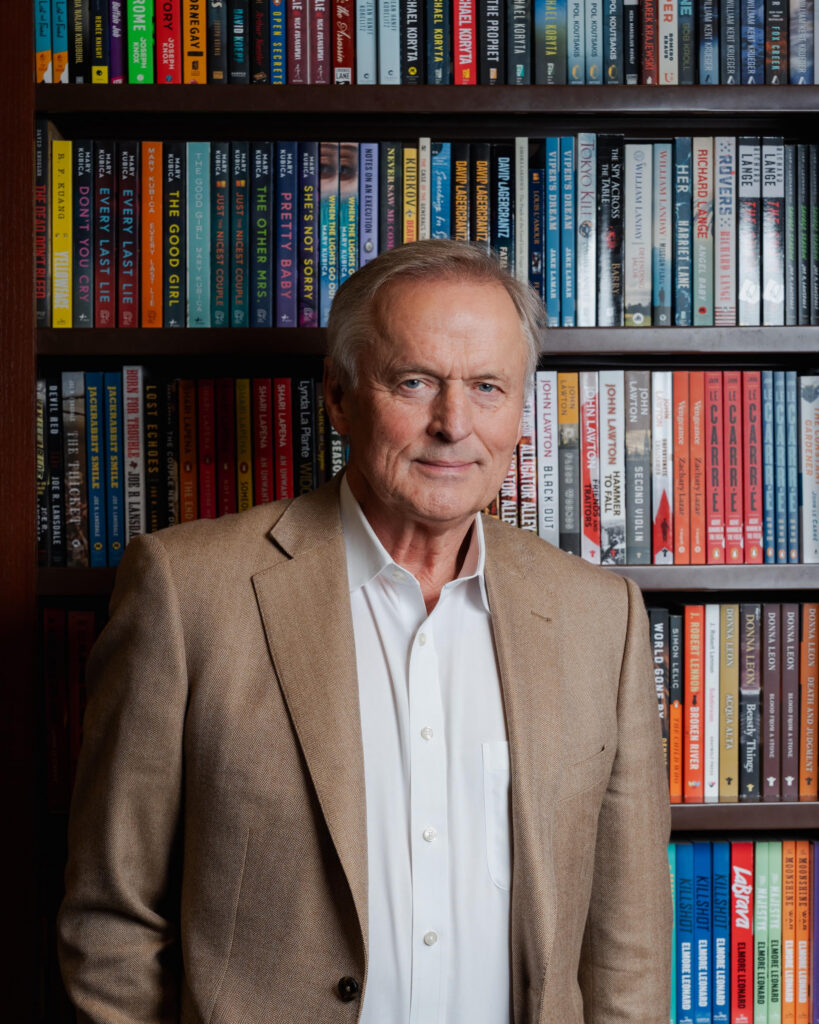
Grisham on the session: “Deirdre and I have lunch twice a year if we can. We’ve been doing it for a long time. The last time we met, it was to decide what we’re going to talk about at Tom Tom. We made no progress. Whenever we’re together, we talk about the same thing—wrongful convictions. She handles these fantastic cases that are terribly interesting, and after the last 20 years working on these cases together, we can tell stories forever. People ask me all the time, ‘Are there really innocent people in prison?’ Even after all these high-profile DNA exonerations, these famous cases, movies, documentaries, books—they still ask the question.”
Grisham on courage: “I don’t feel courageous when I write these stories. I get criticized in some corners for my stance on abolishing the death penalty, but it really takes no courage on my part. The death penalty is slowly dying off in this country, not because of courageous lawmakers (although there are some) and not because of courageous judges (although there are some). It’s because of jurors who have the courage to go to the jury room and say, ‘Wait a minute, let’s look at the whole picture here.’ The courageous people are the clients, the people you meet who get out after 25 and 30 years on death row. It takes a lot of guts to survive what they survive. They become institutionalized, and it takes a lot of courage to keep fighting against huge odds. They know they’re innocent, they go to the law library, they educate themselves, they badger innocence lawyers, they badger anybody who can give them a hand. And they fight and fight and fight. Those are the courageous ones right there.”
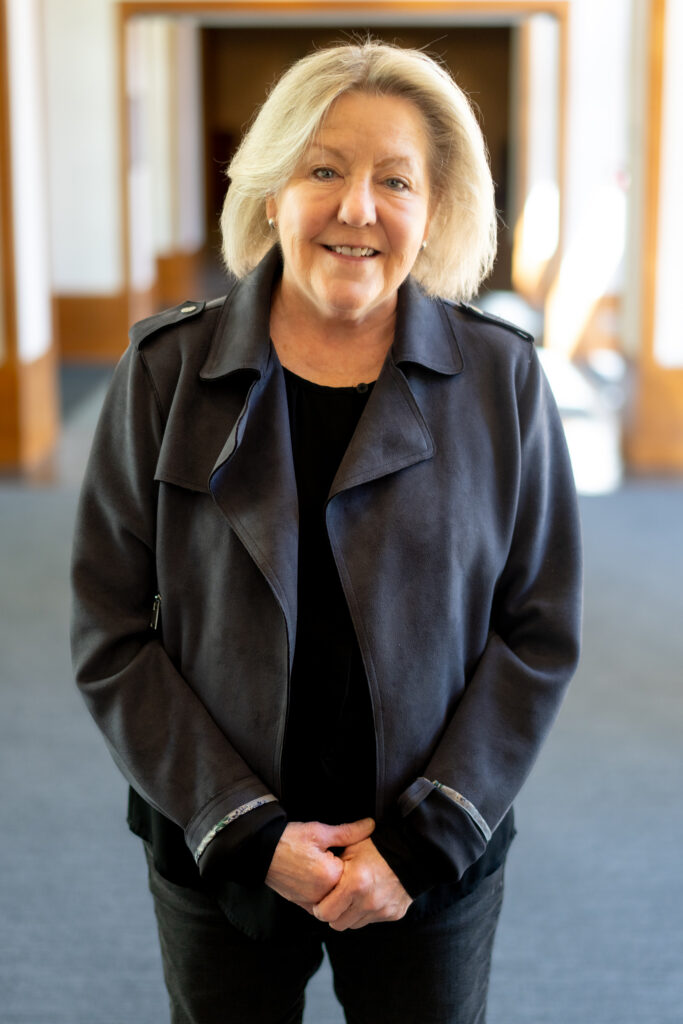
Enright on courage: “Courage is such a great big word, but in the world of righting wrongful convictions, courage is required in small parcels, from everyone involved. Jurors have to have the courage to agree to jury duty, and to truly give the guy in the orange jumpsuit the presumption of innocence. Jurors have to have the courage to disagree with 11 strangers if they’re so inclined. The law (still) allows police to lie to potential suspects and witnesses—but they don’t have to. And if law enforcement is going to be allowed to lie, then we should be teaching our children—educators have to have the courage and the freedom to tell young people exactly what ‘the system’ is allowed to do to and with them. Prosecutors are allowed to stack charges against a defendant to compel a guilty plea, and until the law catches up with fairness, we literally just have to hope they will have the courage to deal fairly. Even though we know that violent behavior on the average is usually significantly diminished or extinguished within 12 years, judges routinely hand down sentences of 35 and 40 years. Defense attorneys should have the courage to represent their indigent client like he or she was their child or spouse (presuming you love them). The legislature should have the courage to admit that although our ‘system’ may look good on paper, true justice is expensive. So far, it is not a bill we have the courage to pay.”
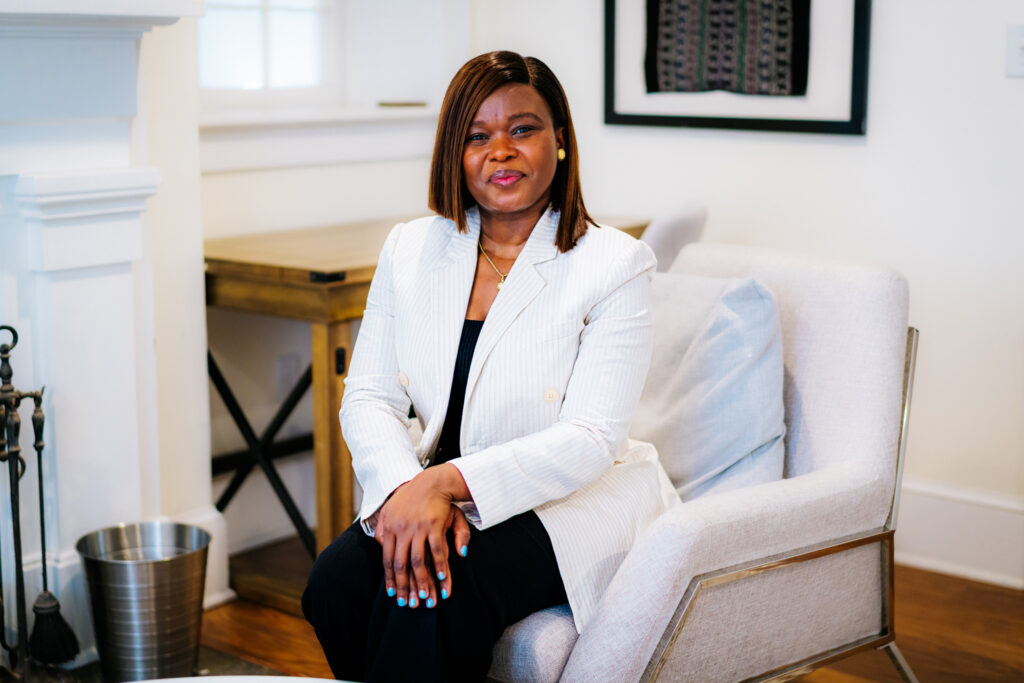
Toyosi Ogunseye, President and CEO, Presidential Precinct
Toyosi Ogunseye left her career as one of the most successful African journalists of all time to join a Presidential Precinct cohort in Charlottesville in 2014. Now, she runs the organization. She’ll talk about her unlikely journey in “Democracy Requires Courage” at 9am on April 22 in the CODE Building’s Irving Theater.
Ogunseye on the session: “First, I want to reinforce how important Charlottesville is at this point in the history of the United States. It’s very interesting how a city of its size punches above its weight in every way. The Presidential Precinct is an international development organization that attracts international leaders from all over the world to talk about democracy. It’s a convening point for people to really understand America, its systems, its civilization, its people. It’s also an opportunity to introduce diversity into our community. We have people coming from Bolivia, from Ukraine, from Afghanistan, from Syria, from Sweden, from different parts of Africa, Southeast Asia, Latin America. All these young, aspiring, emerging leaders just convening and asking themselves, ‘How can we become better leaders for our people?’”
Ogunseye on courage: “Courage is having the conviction, the compass, the spirit to do what is right for your community. Courage is different for different people, but it is having a defined set of values, having a clear definition of your purpose, and being convinced enough and having the strength of mind to use your values to do better for yourself and for your community. We run a program called the Judicial Fellowship Program. Last year, we had Ukrainian Supreme Court judges come who were fighting in the war. Imagine this. You’re a Supreme Court, you’re fighting in a war, and you have to get permission from your general to come attend this program. To get on a plane from the Ukraine and fly to the United States to sit down in a class on democracy, that is courage. We have civil rights activists from all over the world that have been thrown in jail for so many different reasons coming to attend these programs. And we have young people who came from nothing but had the strength of mind to aspire for better for their people. They have nothing. All they have is an abundance of courage.”
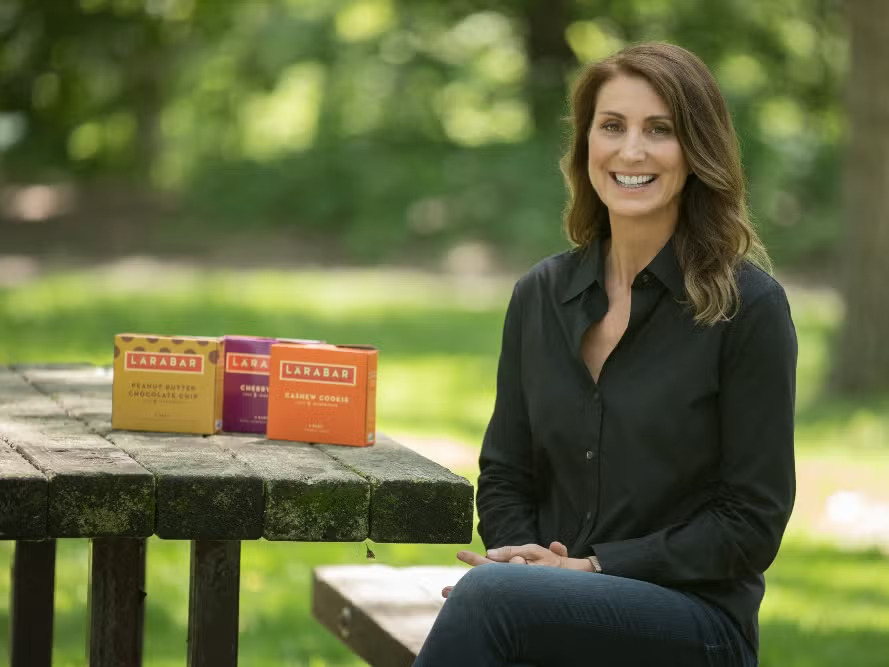
Lara Merriken, Founder, LÄRABAR
Lara Merriken founded LÄRABAR in her kitchen. Five years later, she sold the brand to General Mills for an estimated $55 million. She’ll tell her story and talk about her work as a leadership consultant and psychologist in “Courage Is the First Ingredient,” on April 23 at 9:15am in the CODE Building.
Merriken on the session: “I’m not somebody that takes the traditional path all the time. When I had the idea for my company many years ago, it was a very unpopular idea. Everyone I talked to about it was baffled as to why I would jump into this. I was a social worker by training and had an undergraduate degree in psychology. I was just passionate about natural foods because I had a wheat allergy, which was insanely challenging at the time. But because I had that difficulty in my life, I decided to face it through natural foods. I knew nothing about the industry other than being a consumer. I put myself in the middle of the industry and learned as much as I could. After spending several years building my knowledge and experimenting in the kitchen, I finally launched LÄRABAR. It hit a chord with people.”
Merriken on courage: “My whole career has been an act of courage, but I didn’t think about it at the time. I just said, ‘I can try this and fail, or I can try it and something will happen.’ I knew I had more to gain by trying than by not trying. I hope that the process I went through will inspire others to lean into having courage in their own lives to do whatever it is that they’re really excited about. I was never ready to start a food company, but everything I’ve done in my life has always been about helping people get to a better place in their lives—whether it’s through LÄRABAR, food, as a social worker, or through my degree in psychology. I like to say I’m helping people just unlock what’s important to them, not just kind of mindlessly going through life.”
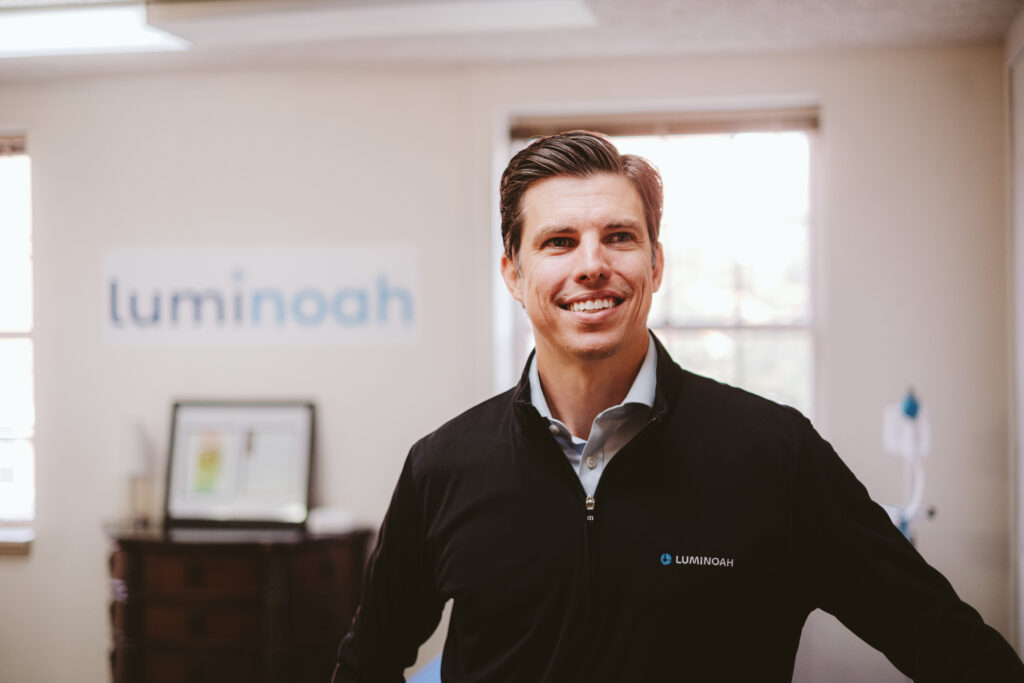
Neal Piper, Founder, Luminoah
Neal Piper started bioengineering firm Luminoah for highly personal reasons: He wanted a more dignified way for his son to take in nutrition while recovering from cancer. On April 23 at 12:45pm, he’ll take the CODE Building’s Irving Theater stage to tell “The Luminoah Story.”
Piper on the session: “It is with courage that so many incredible leaders and innovators do the things that move our community and impact people here and around the world. At Luminoah, our mission is to improve the lives of people with chronic illness who need enteral nutrition. Back in 2020, my son Noah was suddenly immobile and could no longer eat and drink. All he wanted to do was play with his twin sister, but he was tethered to a pole. We created Luminoah to build a brighter future for people that need tube feeding. And while this is a story of a father that had an unmet need, millions are going through the same thing. We said, ‘Let’s build a company to solve it.’”
Piper on courage: “When our son was sick, he was in a medical coma for a week. We were in the pediatric ICU, and it was a challenging moment—unimaginable, really. But we had a mantra that helped us: ‘Sunny days ahead.’ Our home faces east in Charlottesville, and we would wake up with the twins every day, see the sun rise, and say, ‘Sunny days ahead.’ Even though we were going through something hard, we were anchored in a strong community and had a lot of people supporting us. I don’t know if we had courage, but we tried to control what we could control. I had been in healthcare, but we didn’t know how hard it would be to launch a startup. Courage is created when you have good people around you. We had incredible investors who believed in us and leaders that brought so much talent. When you have smart people that are really moving things forward, that increases your courage.”
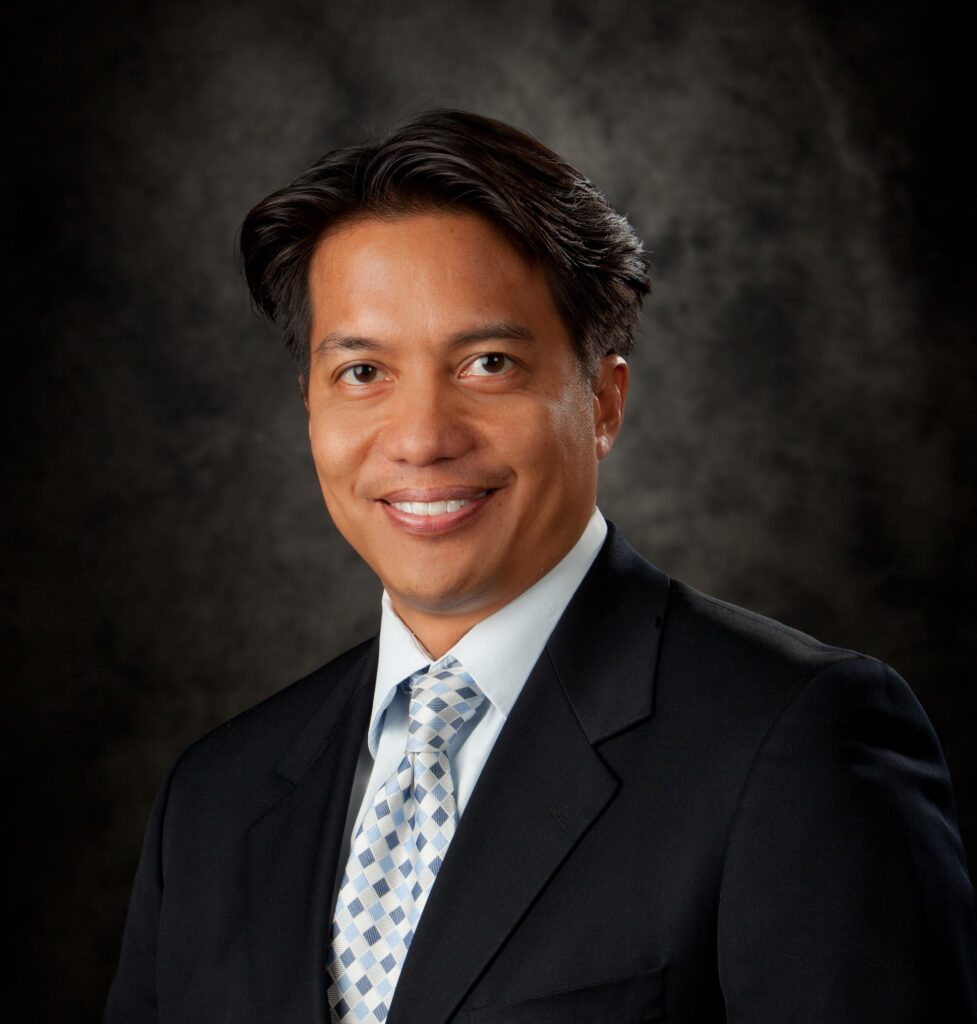
Jay Bernas, CEO, HRSD
The Hampton Roads Sanitation District isn’t just a water treatment organization. According to general manager and CEO Jay Bernas, it is a research organization. In “Spotlight: Virginia Leading the Way in Resilience and Climate Tech” on April 23 at 10:15am (in the CODE Building’s Irving Theater), Bernas will join a panel of five environmental leaders working on climate adaptation.
Bernas on the session: “We are a diverse mix of folks. I plan to talk about innovation and what’s going on in Hampton Roads and how much innovation is happening in Virginia, particularly in the water space. A lot of people don’t know that HRSD is one of the most innovative utilities in the country. We have one of the largest R&D groups—23 people, six PhDs, and seven people working on their PhDs. We have 11 active patents, six patents pending, and 32 active Water Research Foundation projects—the most in the country. We’re probably one of the only utilities in the country that actually collects royalties.”
Bernas on courage: “At HRSD, we choose courage over comfort. We could sit back and treat wastewater effectively. But we’re always researching ways to keep our ratepayer costs low. We try to have the courage to take smart risks. We don’t just try things based on what other people say; we prove it to ourselves. We have our own ideas, our own concepts, and before we deploy anything at scale, we use science and engineering and make a data-driven decision.”
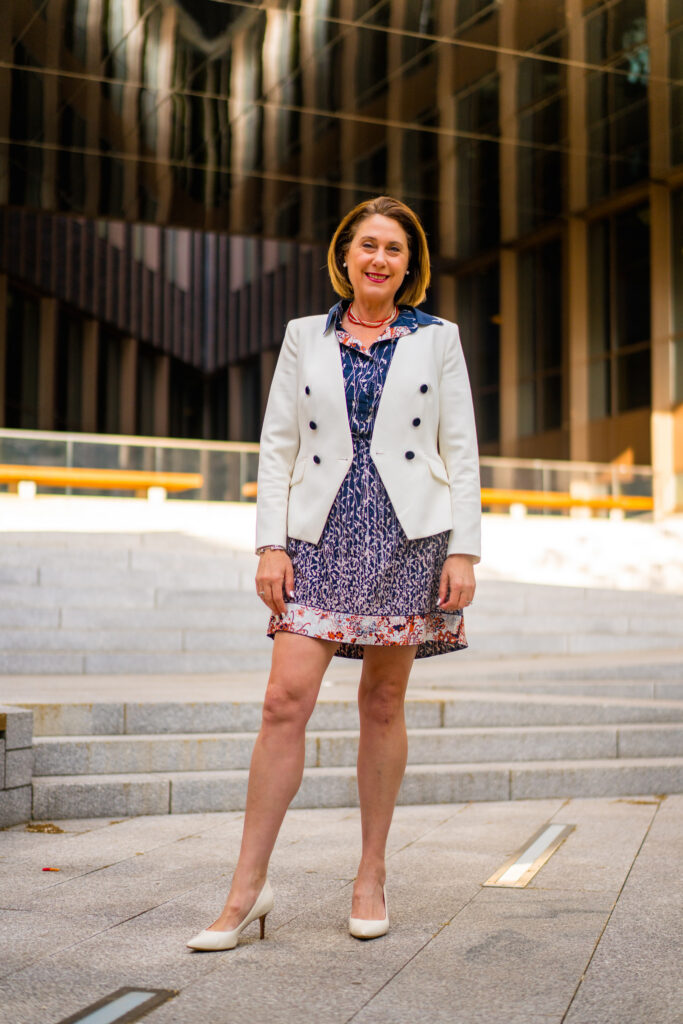
Ravi Respeto, President and CEO, United Way of Greater Charlottesville
As president and CEO of United Way of Greater Charlottesville, Ravi Respeto is focused on community health accessibility. Respeto will join the Civic Futures Summit, taking place throughout the day on April 22, to talk about her big vision for the local community.
Respeto on the session: “The challenges and opportunities we face as a community—from modernizing transportation systems to creating affordable housing to building stronger education and workforce pipelines to enhancing and activating our public spaces—all require more than incremental solutions. They require a shift in how we think, collaborate, and act. I’m looking forward to co-moderating a conversation on Peer City Innovation with Charlottesville Regional Chamber of Commerce President and CEO Andrea Copeland, with local and national city and county leaders who are doing this work in real time. The goal is to surface not just ideas, but practical examples of how communities are using data, cross-sector collaboration, and bold leadership to move from insight to implementation. We are not stopping at conversations. Our hope is that the Civic Futures Summit becomes a catalyst not only for new thinking but also for sustained action. Through the summit, we are launching Cville Innovates, a cross-sector coalition designed to carry this work forward. We will capture the ideas and energy generated and translate them into a shared 2030 vision for our region. This means convening nonprofit, business, academic, and local government partners to align around priorities and move toward coordinated, systems-level solutions.”
Respeto on courage: “Courage, for me, is the willingness to be the first person at the table to say, ‘The current approach isn’t working.’ It takes real leadership to step outside the traditional playbook, challenge assumptions, navigate public pressure, and take on the risk that comes with doing something different. But that’s exactly what’s required when you’re trying to solve complex, systemic challenges. Courage is not just about bold ideas; it’s about the discipline to follow through on them. It’s the ability to stay committed when progress is slow, when consensus is difficult, and when the path forward isn’t fully clear. Courage is rooted in a belief that our communities can be better than they are today … that the systems at play are not working successfully for everyone in a community. It’s courageous to even suggest changing the status quo, because it means moving beyond what is comfortable or familiar to build something more effective, more inclusive, and more sustainable. The risk is trying something new and potentially having it not work, but acknowledging that doing something is better than doing nothing. Learning from failure is still learning, and courage is in accepting that fact. At the end of the day, this work is about more than ideas; it’s about the courage to act. When we come together across sectors with a clear vision and the courage to ask questions and lead differently, we don’t just imagine a better future, we actively build it.”
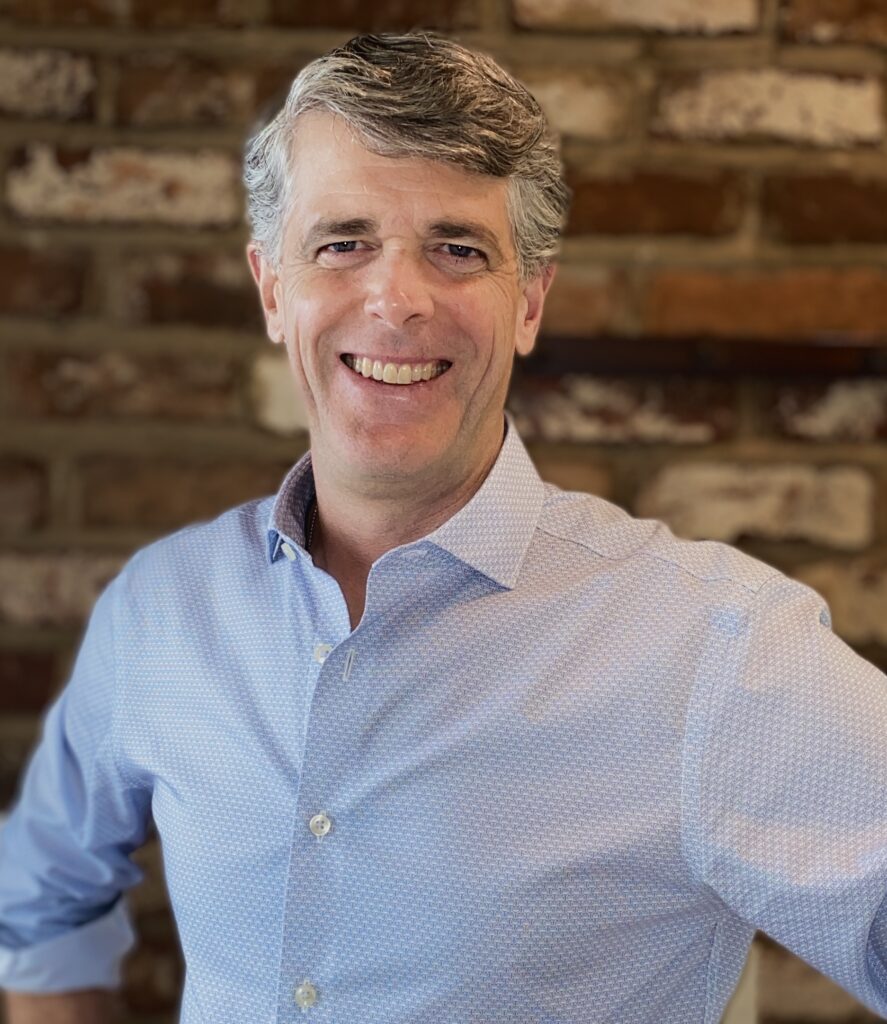
Michael Reilly, CEO, Foodshed Capital
Michael Reilly will join a diverse panel for “Impact Investing in Virginia,” slated for April 24 at 1pm in the Common House North Room. Reilly’s personal experience at Foodshed Capital is with farm loans, but the conversation promises to span multiple industries.
Reilly on the session: “We are sort of a homegrown, Charlottesville-founded organization that does work nationwide to support farmers and food entrepreneurs with low-cost capital that they cannot access through more traditional means. A lot of farmers have difficulty getting credit from banks, so that’s where we come in. Everyone’s interested in food, so our work may come up in one way or another, but the focus is on impact investing. What we call impact investing is basically arranging lending to us at a very nominal rate of interest so that we can then turn around and lend the capital to the farmers that we support.”
Reilly on courage: “I think of courage as people putting their life on the line. So we don’t meet the definition from that standpoint. But where courage comes into our work is in the courage to really buck the system and do things in a way that is looked upon as a curiosity. In the financial world, there is this expectation that everything is about making money. We try to fight against that and say, we’re hoping to get the money back, but it’s more about providing farmers with what they need to keep their business going and buy equipment. It’s to truly help them. That’s where the courage comes in—to not give in to that traditional idea of the financial system. The second place courage comes in is in the courage of the people we’re supporting. They are still out there farming in a way that is pitted against an industrial food system that diminishes the role of farmers.”
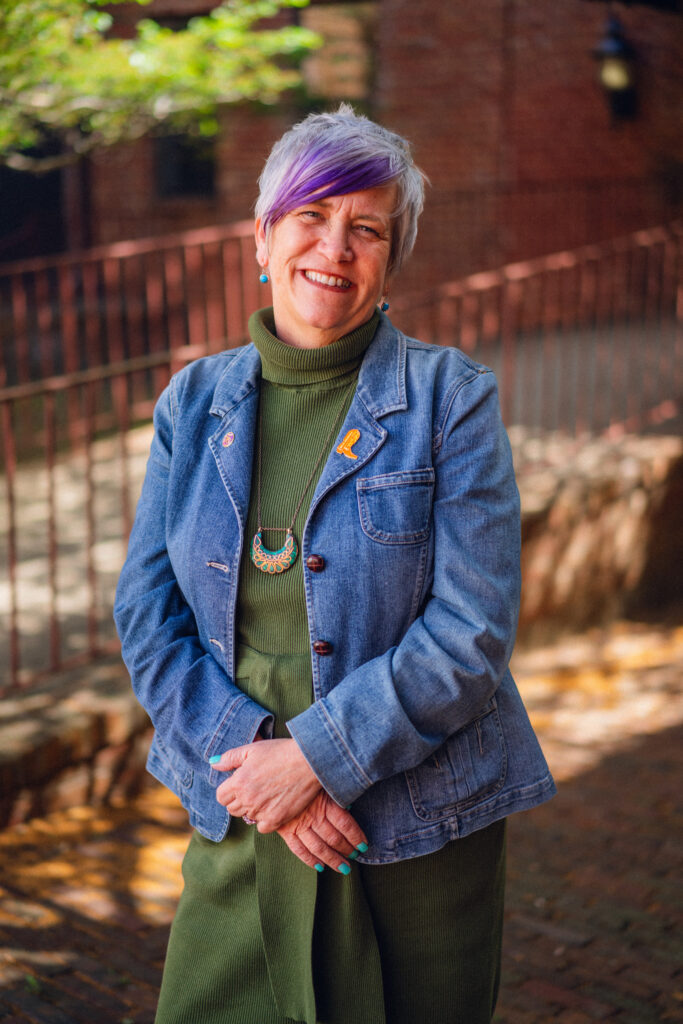
Leslie Lynn Smith, President & CEO,
Charlottesville Area Community Foundation
At 10:15am on April 22 in the CODE Building’s Irving Theater, Leslie Lynn Smith will contribute to “The Downtown Mall at 50 and the Future of Charlottesville,” alongside City Manager Sam Sanders and Tom Tom Foundation Executive Director Paul Beyer.
Smith on the session: “I’ve worked on housing and economic development in places like Detroit, Memphis, Chicago, and now Charlottesville, and the pattern is familiar: strong organizations doing important work and a system under real pressure. Here, we’re seeing rising housing costs, supply challenges for supportive and affordable units, and growing demand for shelter and long-term housing. The issue isn’t a lack of effort; it’s alignment and sufficiency of resources. The need is currently outstripping capacity. We can connect our efforts more intentionally, treat housing as a full continuum, and align sufficient resources to help people move from instability to long-term stability, grounded in data and our shared humanity. At CACF, our role is to help bring people, ideas, and philanthropic capital together to make that possible.”
Smith on courage: “Courage is about showing up, leaning into discomfort, and trusting the process (patiently), especially when the work is hard, slow, and uncertain. Across my career, I’ve learned that courage isn’t about having the answer. It’s about being willing to name what’s not working, to listen to the people most affected, and to stay in the work long enough to build something better. It’s also being unafraid to try new things, learn from them, and adapt. At CACF, that means stepping into the arena with our partners—not just funding from a distance, but engaging in the work alongside the community.”