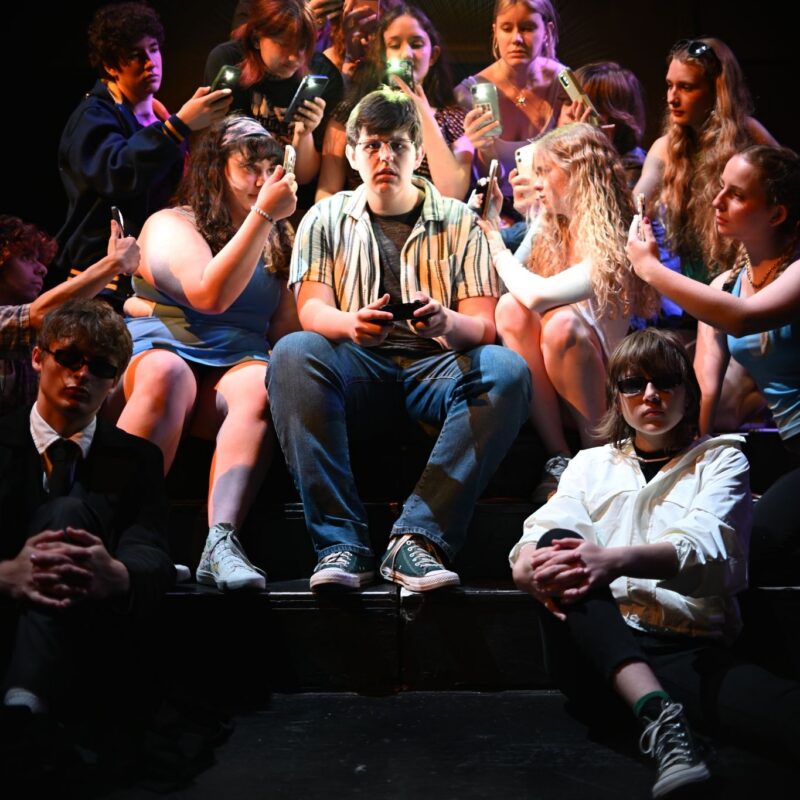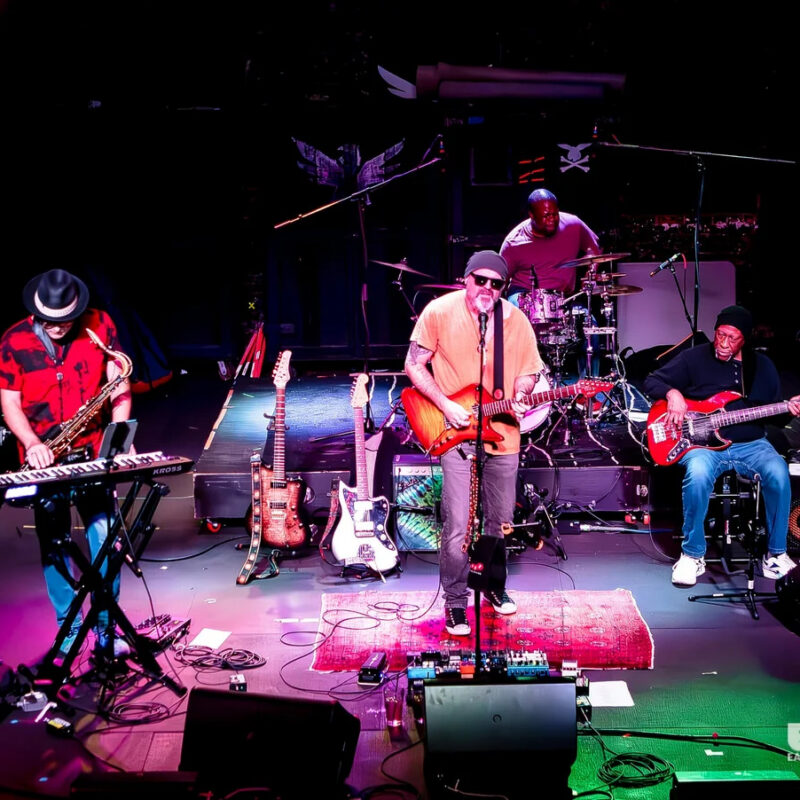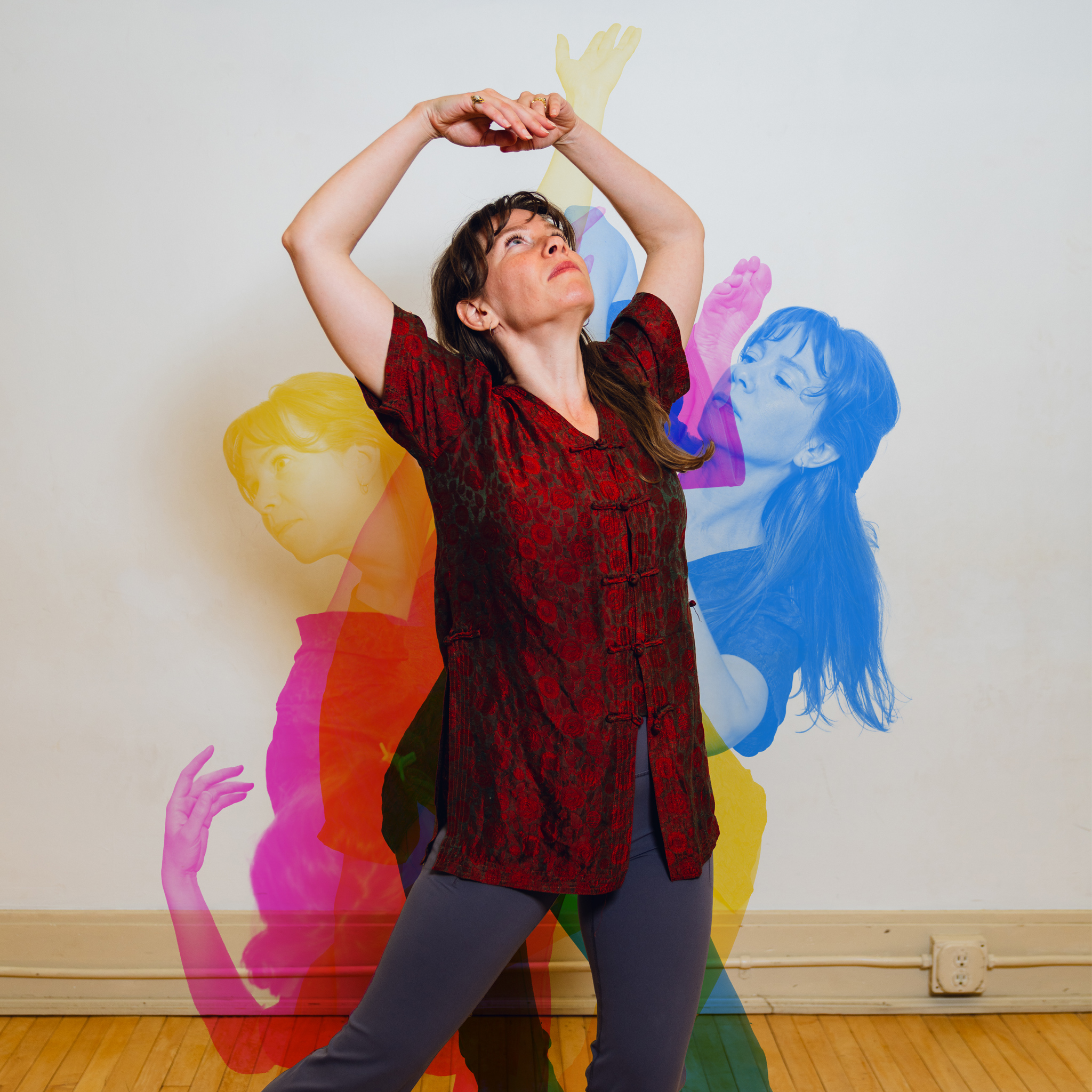
Charlottesville’s performing arts scene is rich and varied, with ballet, opera, and theater offering audiences classic works and contemporary programs. But until recently, the city lacked a professional modern dance company. Founded in 2025, ORH Dance opens its second season later this month with a pair of performances exploring light, shadow, and movement on October 29 and 30 at Phaeton Gallery. Shifting Pieces will feature new choreographed works in collaboration with company dancer and visual artist Audrey Knabe’s kinetic paper sculptures, in an example of interdisciplinary exchange that has become a hallmark of ORH Dance.
First steps
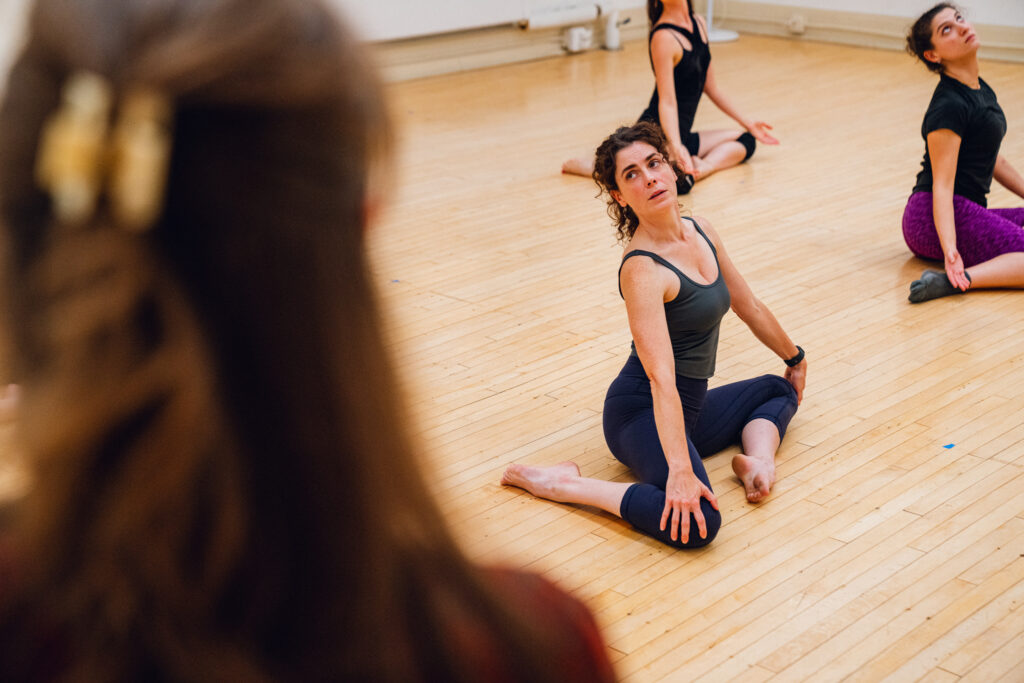
Founded by Olivia Rivard Hill, a professional dancer, movement teacher, and choreographer, ORH Dance is the result of dedication meeting interest. “Charlottesville is already a city that supports the arts. After moving here—almost a decade ago—it didn’t take me long to find local performing arts organizations, theaters, and people,” Rivard Hill says. “What I did find lacking was an established modern dance company that I could easily insert myself into.”
As she spent more time in Charlottesville, it became evident to Rivard Hill that there were more people like her who were looking for a concrete avenue to access and maintain a modern dance practice, including the pursuit of public performance. This pushed her to move forward with founding the professional company. “Potency and consistency of practice—in whatever your art form is—is going to bring it to the next level,” says Rivard Hill. “And because most of what I’m interested in doing is group performance work and not just solo work, it requires a group of people being together more than here and there, in a way that we can both train together, and create together.” But beyond the creative drive of providing a platform for artistic expression and collaboration, the company model needed to also serve as a structure to support working artists financially.
“Although every artist does their art because they want to, it is important that we don’t confuse dedication, passion, and drive with inferred volunteerism,” Rivard Hill asserts. Liz Sumpter, ORH Dance’s artistic advisor, agrees. “I think having a professional company elevates the understanding that dance artists, who have invested much of their lives and livelihood developing their skills, deserve to be compensated,” she says. “It is no small task for a new dance company to set this as a goal, but ORH Dance is committed to acknowledging its dancers’ dedication to this art form.”
ORH Dance operates under fiscal sponsorship with Fractured Atlas, a New York-based nonprofit aiming to make the journey from inspiration to living practice more accessible and equitable for artists and creatives. This arrangement allows the company to receive tax-deductible donations alongside revenue generated by ticket sales. “Ongoing support in smaller amounts that feels drawn from a collective of supporters is really helpful because it’s a reminder that what we’re doing is for everyone, and not just for the few who can support us financially as the driving support,” Rivard Hill says. Community support helps ensure the artists are compensated for their efforts. “Dancers should not have to pay for their training if they’re going to be expected to be at a professional level,” adds Rivard Hill, who is also adamant that dancers should be paid for their rehearsal hours, and not solely through performance stipends. “Donations are paramount to keeping those two things possible,” she says.
Company dancer Aqura Nicholson is grateful for the support and opportunities provided by ORH Dance. “We have company members who are lawyers, mothers, physical therapists, entrepreneurs, while also being professional dancers,” she says. “It’s important for that representation to exist, where you can live in a small town, have a career, and dance professionally, create, grow, and stay connected to this part of yourself. You don’t have to give it up just because your life took another path.”
Building on the movement
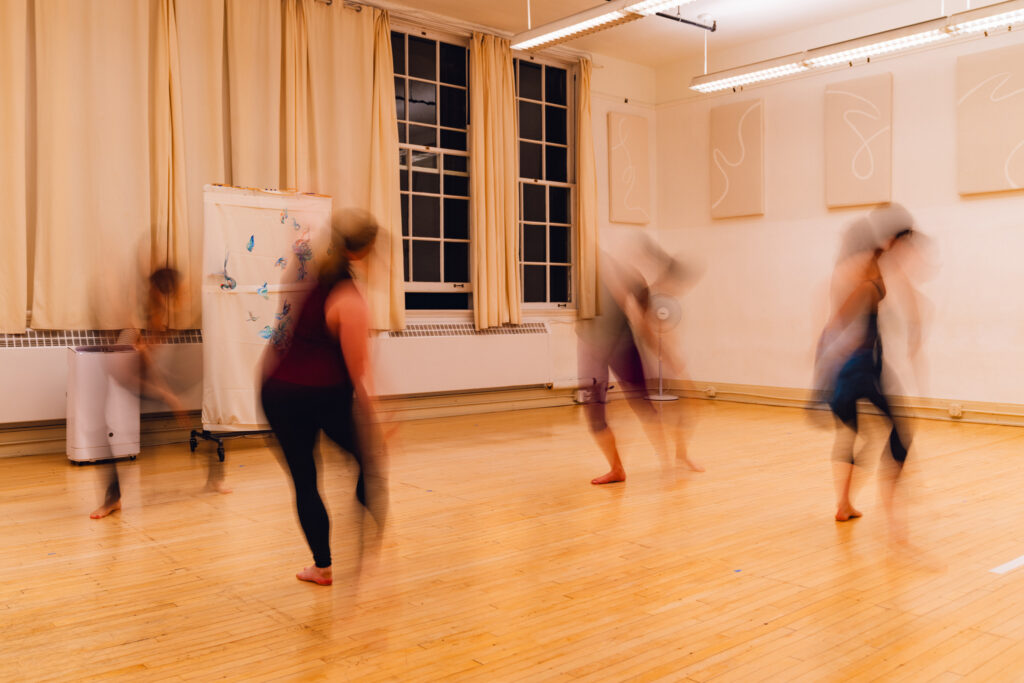
Operating out of a studio on the second floor of McGuffey Art Center instead of within a dance-specific space has pushed Rivard Hill to approach alternative modes of presentation, and to lean into new creative partnerships. In its inaugural 2025–26 season, ORH Dance held several performances there, establishing its identity as a new entity within Charlottesville’s performing arts scene. Being housed within the historic art center means the company is in close proximity to practicing visual artists, and interdisciplinary exchange has become a defining feature of the company’s creative approach.
“Already in dance, there is an inherent relationship with other art, whether it be music, costuming, props and scenery, and of course inspiration for dance pieces,” says Rivard Hill. “I have always been interested in how the presentation of dance can be expanded beyond the scope of concert dance, and even more so in communication with other art forms.” This interest led to an engagement with visual artist Grace Little, whose mixed media exhibition Ordinary Ways occupied McGuffey’s Sarah B. Smith Gallery from January 2 to February 1, 2026. The resulting piece, titled The Invitation, was a single-night, site-specific performance that Rivard Hill describes as more of a response than a conversation, where a theme and atmosphere were already established by Little’s installation, and ORH Dance focused on performing movements that reflected those conditions.
ORH Dance isn’t centered on concert performances, where works are choreographed, rehearsed, and presented for the stage in a traditional theater setting. Unlike classical ballet, which often leans into narrative-driven productions, the modern dance company places an emphasis on concept. This means exploring ideas and expressing emotion through physical movement in ways that elicit a different kind of connection with the audience—where inference, interpretation, and sensuous experience are elevated.
In May, ORH Dance performed PRIMAVERA at The Gallery at Folly Farm in Crozet, a piece inspired by the Renaissance painting La Primavera by Sandro Botticelli. The concept behind the Rivard Hill-choreographed work intrigued art advisor and curator Susanna W. Gold, who envisioned hosting a multidisciplinary arts event at her non-traditional exhibition space. Gold planned an exhibition that would correspond with the performance, programming a springtime show titled Botanicals: Intimate Portraits, featuring an exterior installation of large-scale botanical photographs by Michigan-based artist Laurie Tennent. ORH Dance presented the piece outdoors, in close proximity to the art installation, on a beautiful spring evening where the natural setting reflected the vernal themes of both the visual and performing art.
“Any time one branch of art intersects with another is an opportunity for each to amplify the other for a richer experience of both,” Gold says. “Watching the dancers perform outside next to the botanical photographs helped enliven the movements and gestures of the petals, stems, and leaves of the flowers in the photos, just as the thoughtful arrangement of color, line, and contrast in the photographic compositions paralleled the careful choreographies of the dance. Bringing these together can demonstrate the relatedness of different forms of art, and ideally, bring new experiences to viewers.”
Flutist Cari Shipp, founder of the classical benefit concert series SONOSYNTHESIS, will perform with ORH Dance during the spring 2027 program MOVE. She echoes Gold’s assertion about the benefits of interdisciplinary engagement. “Cross-disciplinary collaboration highlights a deeper means of connection that impacts not only artists but their audiences,” she says. “Knowing the pieces I’m preparing for this concert will be choreographed and danced to by members of ORH Dance is an invitation to know these works on an even deeper level.”
Performing presence
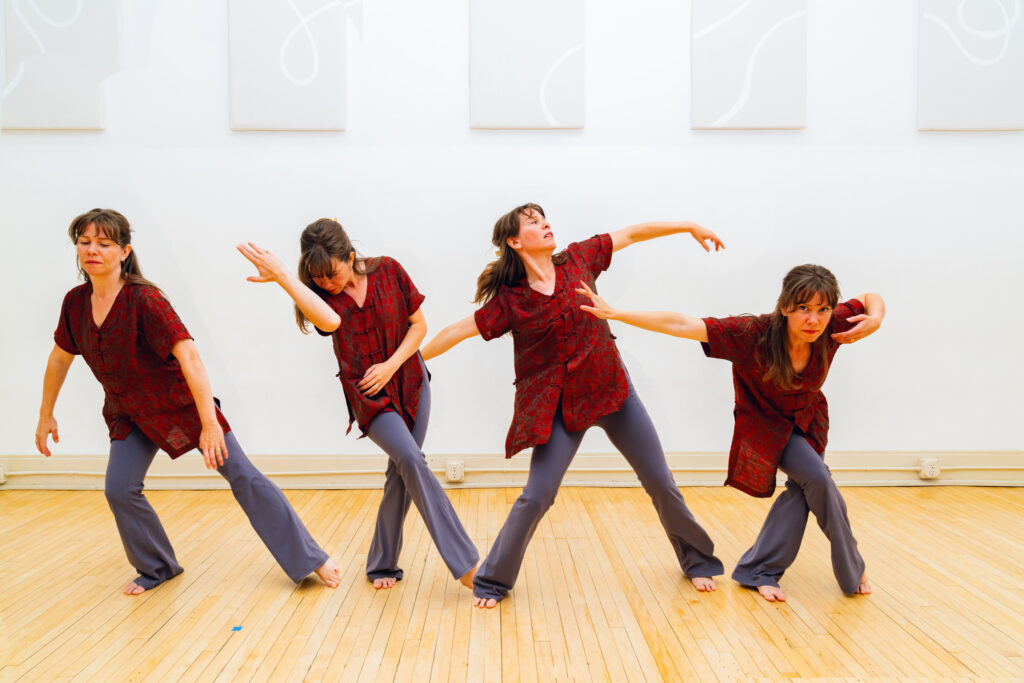
When we talk about the performing arts in the mediated age, with the bent toward comprehensive streaming libraries and on-demand content, ephemerality becomes an important aspect of live performance. The fleeting nature of in-person experiences facilitates a more engaged and embodied kind of viewing because of the immediacy and temporality of the work. Within a saturated corporate-media landscape that is constantly vying for viewers’ attention—even as its content is produced with the acknowledgment that it will be consumed through a second screen—the kind of work ORH Dance engages in calls back to presence. Both for the artist and the audience.
This kind of work reinforces the symbiosis of the artist-audience relationship. Artists can’t perform in a vacuum and audiences need something real and affective to connect to. Engaging with this kind of creative expression is vital to our sense of community and human experience. This is one of the primary reasons Rivard Hill is so passionate about the professional company model. When artists have the time and means to focus on building works from the ground up, they become intimately familiar with their artistry, and that familiarity imparts a depth that transcends the technicality of the medium or even the competency of the creative practitioner. “I think there’s a lot that’s not communicated that the audience feels when whoever is presenting whatever type of work is really dialed into it. And that just takes time,” Rivard Hill says. “Performance, to me, is a demand of pure presence. As dancers, we train our bodies in class not to do the steps perfectly necessarily, but to practice pure presence. And that’s what brings it to performance.”
Performing in non-traditional spaces creates a heightened awareness of the audience and for the audience experience in general, for both viewer and performer. With ORH Dance, presenting its work in the studio at McGuffey, or within visual arts venues with limited capacity, creates a sense of intimacy and connection between artist and audience, one that facilitates critical engagement with new ideas and experiences. The invitation to approach this kind of creative exchange, and the open reception of such an invitation, reveals a generative and expansive cultural ecosystem.
“ORH expands what professional dance can look like in the performing arts community, not being predominantly ballet or connected to a dance school,” company dancer Nicholson says. “Having a professional company rooted in modern dance gives both dancers and audiences another way to experience the art form, and I think that kind of variety is really important to a strong arts community.”
The overlapping of art and community is also an aspect of the performing arts experience flutist Shipp is keyed into. “As part of McGuffey, ORH Dance is visible to the community in an important way,” she says. “Their understanding of the importance of maintaining the highest standard for their art while fostering community connection and education is what enables them and other artists to exist professionally at a time when even the most successful performing arts organizations are struggling.”
“Interestingly, there were attendees who came primarily to see the dance, and there were those who came primarily to see the art exhibition, so I was happy to have a diverse audience,” Gold says of ORH Dance’s May performance of PRIMAVERA at her gallery. “But conversations I had with guests during the event tended not to focus on one experience or the other, but rather, on the relationships between dance and image, which seemed to be a new experience for many.”