Supplied photo
Artist Philip Geiger, who taught painting at the University of Virginia for more than 30 years, depicted how things appear to the eye as opposed to reproducing how they appear physically. His perceptual approach was augmented by a deep understanding of art history, imbuing his paintings with weight and power. Geiger spent his life perfecting and developing an artistic practice that was hyper-focused and rigorous. After battling ALS for two and a half years, he died on January 6.
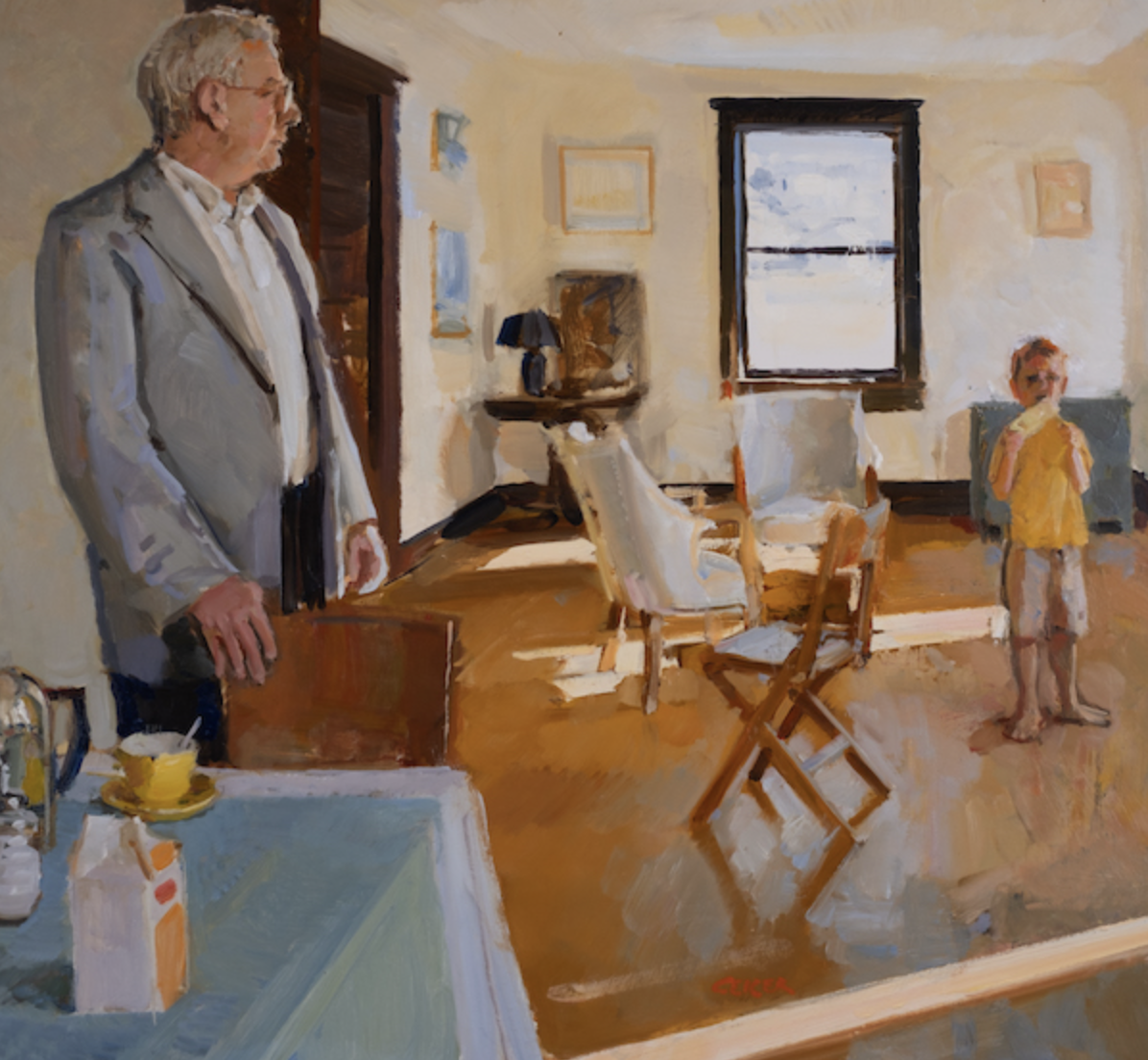
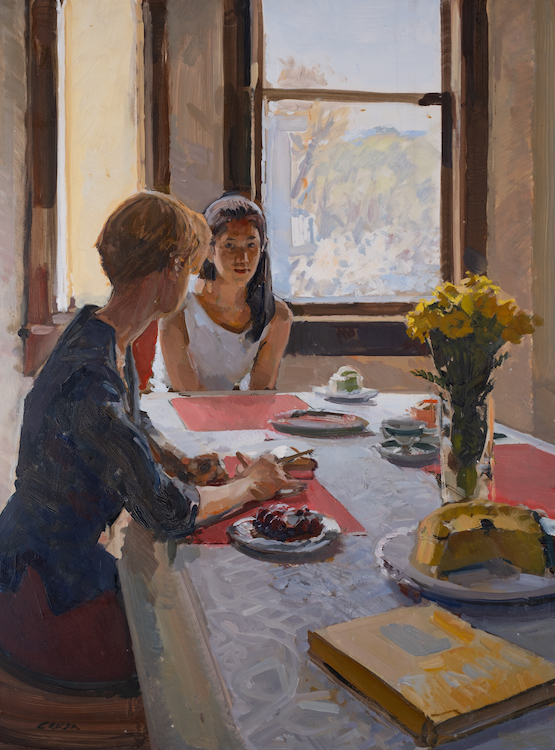
Geiger’s work consisted of painting “what’s close at hand,” which for him, meant domestic life. These everyday scenes, populated with a recurring cast of family, friends, and objects, are deceptively simple, belying the considerable thought that went into structuring their composition.
Characteristic in Geiger’s painting is his use of light—seen though windows, or streaming into a room—sometimes visible in the distance beyond an intermediary area of darkness. Other hallmarks are his astute use of color and his loose, open brushstrokes that add a quality of lush sensuality to the work.
Born in 1956 in Fort Lauderdale, Florida, Geiger was interested in art from an early age, encouraged by his mother whose artistic aspirations had been thwarted by her father. After graduating from Washington University in St. Louis, he received an MFA from Yale.
“Phil was a dedicated and unsparingly self-critical artist who painted constantly and seemed not to need or want any distractions,” says his longtime colleague and studio mate Richard Crozier. “His encyclopedic knowledge of historic and contemporary painting informed his teaching and his own art. … No shortcuts, no half measures, do it over, look again.”
This single-minded, laser focus was central to Geiger’s practice. “His studio time was absolutely non-negotiable,” says his wife, painter Elizabeth Geiger. “Every day he was going to be in there during the daylight hours.” He was dogged in his pursuit, so swept up in the challenges and rewards of creating paintings that, aside from family and friends, he needed little else in his life.
“Being a married couple worked for us as artists,” says Elizabeth. “There was always someone you could show your paintings to. Neither one of us was oversensitive. We wanted criticism and we used it. It was fuel for us to move forward in the painting. We understood each other’s life goals and devotion to art.”
Sticking close to the studio didn’t mean life was dull. Geiger was greatly admired by his peers and his students, and over the years, they sought him out. “People wanted to visit Phil and I got the benefit of that,” says Elizabeth. “I never felt isolated even though we weren’t living in a place like New York. I didn’t go to graduate school, but our lives were like grad school all the time.”
In 2017 the Geigers moved to Staunton, seeking a slower pace of life. Having waited his entire life to pursue painting full-time, Geiger was finally able to do so. And perhaps best of all, “When we moved to Staunton, we got a second chance at a nuclear family,” says Elizabeth. Both of the Geigers’ children are artists who are happily settled in Staunton.