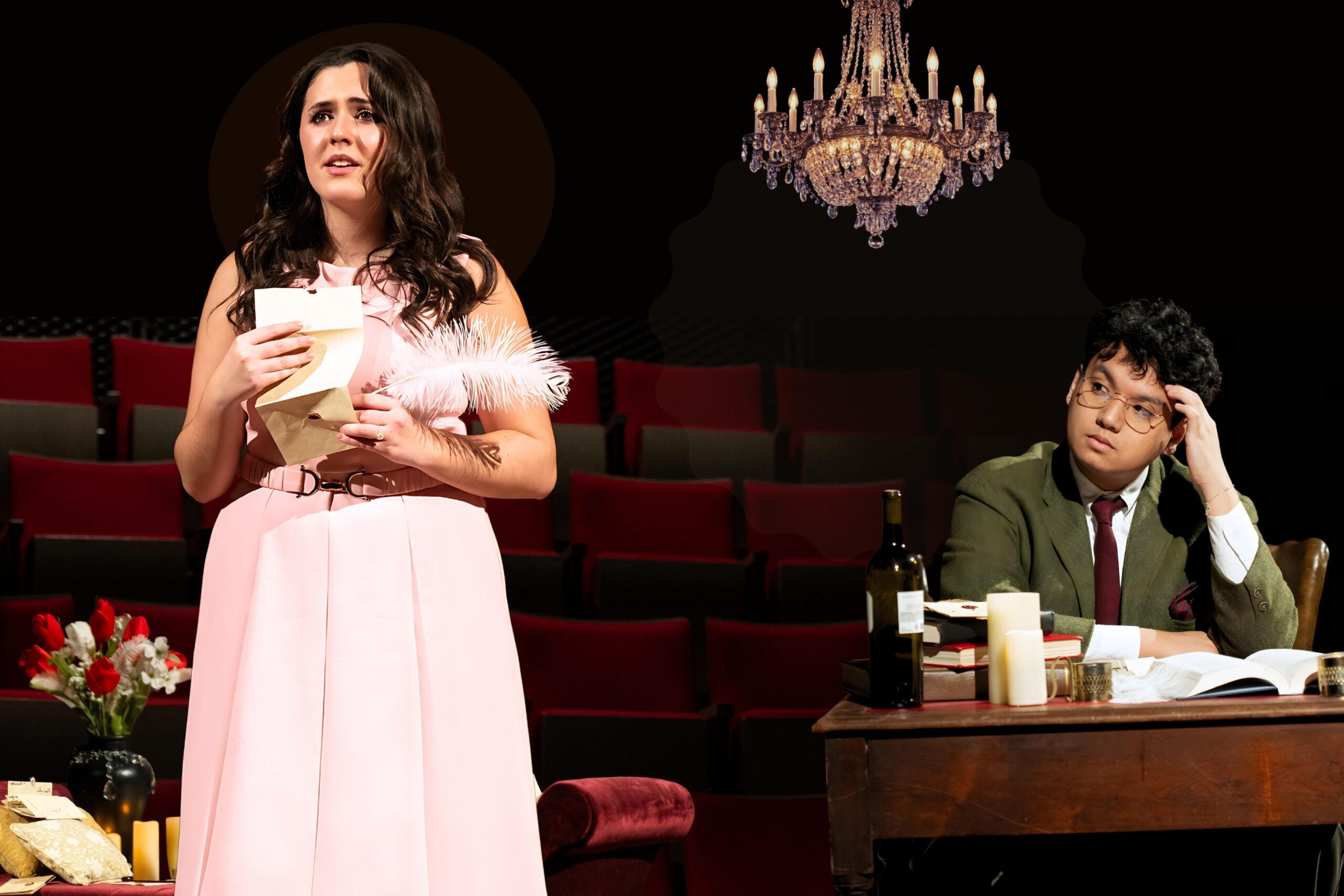
It’s got a mouthful of a title: Natasha, Pierre & the Great Comet of 1812. But we can be thankful that Dave Malloy, the musical’s original composer, lyricist, playwright, and orchestrator confined himself to adapting only a sliver of War and Peace, Leo Tolstoy’s monumental tome.
Self-aware of its complexities, the production reveals what audiences are up against straight away in the prologue: “This is all in your program / you are at the opera / you’re gonna have to study up a little bit if you wanna keep with the plot / ’Cause it’s a complicated Russian novel / Everyone’s got nine different names / So look it up in your program / we’d appreciate it, thanks a lot.”
And there is plenty to keep up with. But if you remember its titular characters are busy sorting out their romantic issues (Natasha) and hunting existential meaning (Pierre), you’ve got the gist.
Also for those unfamiliar with Tolstoy’s big-ass book, you should be aware that the 19th-century fictionalized novel chronicles aristocratic life in Russia during the Napoleonic era. So while that may sound daunting for a roughly two-and-a-half-hour show, the 12-time Tony nominated play serves up a mishmash of musical styles to keep the energy flowing and interest high.
Despite a story that dips back in history, this work forwards the plot on piano-buoyed Broadway show-tune belters, sketchy Russian folk-meets-klezmer-infused ragers, and EDM synth-driven beats.
Though Malloy himself described the practically all-sung work as an “electropop opera,” I would take issue with that description. There’s far too much within the scope of the soundtrack to honestly call it that. There are moments that flaunt electronic pop touchstones, such as the thumping clang and atonal whirring of “Natasha & Anatole,” or the sine wave riffs undergirding “The Duel,” but when you step back it’s not much of an audio throughline.
I’ll say this much, imagining that UVA guest artist director Diego Alejandro González won’t stray too far from precedent: There’s certainly a learned affectation that defines (some might say poisons—but I’ll be nice) just about all vocalists who, like kids gunning for a laugh on a Disney Channel sitcom, find themselves performing in a musical and knowing that they had better stick with the well-established conventions the masses demand. Whether this one’s your cup of tea or not, the samovar really only makes so many kinds of tea when it comes down to it.