“Perhaps you are sick and fear you will never be well, the brochure said, more or less. Perhaps you spend your days off on the couch, half napping, half awake. Perhaps your thighs, stomach, feet, and arms have become not so much you but accessories to you, things to hold and prod. If any of this sounds familiar, the brochure said, Camp Sensation may be for you.” So begins “Camp Sensation,” the final of 10 linked stories in Fat Swim, Emma Copley Eisenberg’s new book of fiction.
The story’s eponymous camp is a forested retreat where characters from preceding stories in the book have journeyed to experiment in embodiment, playing with the five senses through activities and prompts such as a set of cards with suggested activities and questions for self-reflection: “Are you uncomfortable? the last card said. Good, that’s normal. That’s life. Life is uncomfortable. Your body will be uncomfortable sometimes, even a lot of times. You will want to run from it, but don’t. The body’s sole purpose isn’t pleasure. When you feel pain, you feel scared, you panic. You want to escape from your fear or stay very still so you feel nothing. But bodies break, bodies suffer, there’s nothing wrong. You were not meant to feel nothing.” From within the story, these prompts gesture at the larger project of Fat Swim, which explores what it means to have a body, to be in a body, and nurture it in a world that may or may not offer care and acceptance.
Eisenberg, who has an MFA from the University of Virginia, writes stories that go against the current of body norms of fiction, in which characters all too often exist in idealized bodies or, more disconcertingly, don’t appear to have bodies at all, seeming to be simply floating consciousness, untethered from mundane realities like aching joints, itchy skin, or folds of fat.
Instead, the characters of Fat Swim exist in bodies of many kinds—cis, trans, young, old, Black, white, in pain, in pleasure, objectified, free—and they are trying to inhabit them fully, even when it’s a challenge.
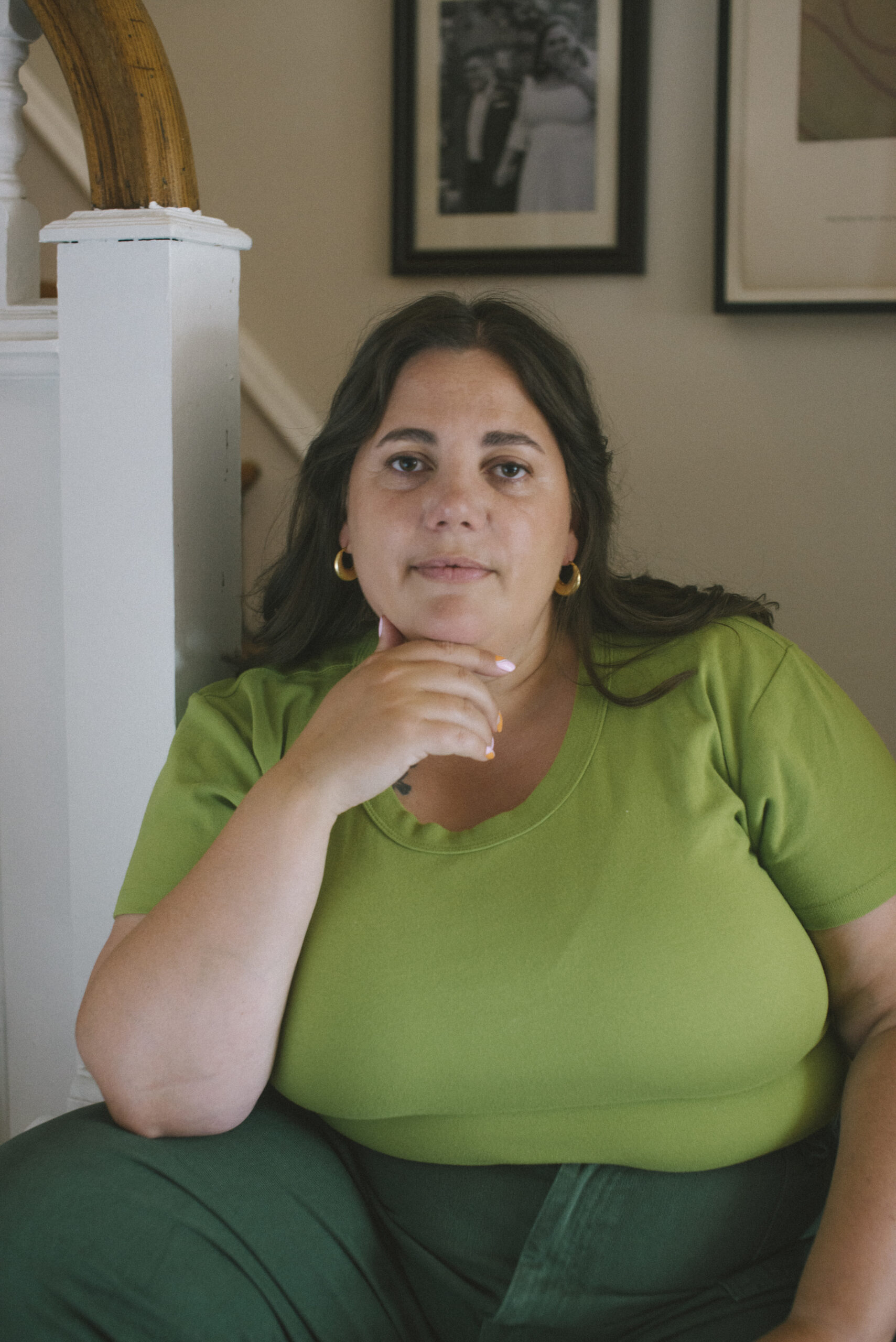
Eisenberg often writes about fatness—and fatphobia—in her Substack newsletter, Frump Feelings, and elsewhere, reflecting on experiences in her own body as well as the ways that fat bodies are treated in our culture. She is also the author of the novel Housemates, nominated for a Lambda Literary Award in Lesbian Fiction and the VCU Cabell First Novelist Prize, as well as the nonfiction book The Third Rainbow Girl.
Fat Swim builds on Eisenberg’s past work, with keen attention to craft and pacing in stories that ask what embodied fiction can do as a mode of storytelling and an affirmation of flesh. For readers, Fat Swim is also an invitation to attend to our own bodies in all of our imperfections and commonplace desires. The book is a joyful and exuberant experience, filled with lush details and nuanced characters. It’s also a very queer book, celebrating self-exploration, desire, joy, sex, and identity.
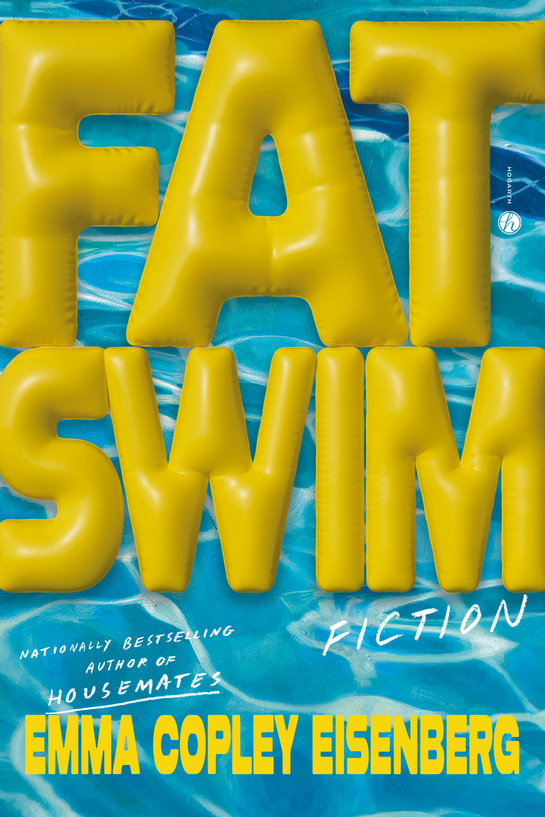
Across stories set poolside in Philly or on the Jersey Shore and Eastern Shore and elsewhere, Fat Swim balances carefree summer afternoons with heavier questions of bodily agency, gentleness, and the choices characters make. They often offer each other empathy and community, noticing when others need something—whether that’s moving to the shallow end of the pool to empower a child to play on even footing, or helping an aging writer find connection on the apps.
Eisenberg’s stories reward re-reading and invite you, as the reader, to bring your own body experience out. Unexpectedly, she does the same, ending the book with a graceful gut punch that enhances the purely fictional world of her stories by reflecting on what it means to create a body of work as a human body.
She writes, “From the start of writing this story to the moment of this writing, the body in question aged 2,749 days. It grew larger and then smaller and then larger again. It cried, it is such a crier, with the tears cried during the writing of this story totalling around 480 gallons—enough to fill a fifteen-foot round inflatable pool. … During the seven and a half years it took to write this story, it had 392 orgasms, became sick with COVID, RSV, regular flu, food poisoning, seasonal allergies, and developed a strange rash between its ring and middle fingers. It ate Pringles and raspberries. … And in all that time, the body in question changed. If, at the start, it did not believe that its involvement was necessary for the writing of this story, it is now, here, nearly at the end, able to believe in itself at least enough to ask the question: Without me, where would you be?”
Conjuring the sweaty gleam of summer, the friction and curative powers of the beach, and the discomfort and disappointments of a body that doesn’t always feel right, Fat Swim is a deeply human look at how our bodies impact who we are and how we navigate the world.