When you’re exploring local art galleries, attending an author event, or going to see a concert or play, it’s easy to see Charlottesville as a city that’s invested in arts and culture—a refuge of the type of creative self-expression and community-building that often feels under attack these days, whether by artificial intelligence, federal funding priorities, or declining attention spans.
What may be less obvious, however, are the very real challenges faced by the local arts community, with arts organizations and festivals competing for limited resources, some struggling to keep doors open or even making the tough call to shut down in recent years. In addition, the high cost of living locally means that artists and arts workers find it difficult to make rent and still have time and resources to make creative work.
“Here in Charlottesville, a place known for arts and culture, artists we survey consistently rank affordable housing, affordable studio space, and funding for their work as their biggest needs,” says Maureen Brondyke, executive director of the local arts organization New City Arts. “The same artists who contribute to Charlottesville’s vibrancy should not find it unfeasible to live and work here.” Affordability is not a new issue, but it continues to become more urgent in our changing economic reality, especially for artists and arts workers.
Through New City Arts’ work, Brondyke notes that, “Local artists asked us to lead efforts to bring back something like an arts council and repeatedly told us they need services that a centralized arts coalition would traditionally manage.” Responding to this feedback last year, Brondyke and her team at New City Arts worked with local funders to launch the Charlottesville Area Arts Council Feasibility Study to explore whether an arts council could be a way to meet the community’s existing needs while also developing expanded arts and culture support.
Led by a local steering committee with independent consultant Ruby Lopez Harper, the study engaged hundreds of local community members, offering a bilingual community needs assessment survey along with in-person and virtual opportunities to discuss topics from affordability, accessibility, and infrastructure, to visibility, transparency, and trust within the arts community.
Throughout the process, the steering committee played a critical role in reflecting on the input and providing their own feedback. “We believe the people closest to the problem are closest to the solution,” says Brondyke. “The 15-person steering committee included artists, arts workers, cultural organizers, community members, arts supporters, and arts grantmakers in the Charlottesville area.”
One of those steering committee members was James Freas, deputy city manager for the City of Charlottesville. “One of the great things about Charlottesville is its strong and varied arts culture,” says Freas. “Sustaining and growing this element of the city requires focused attention and effort, and this study offered an opportunity to explore what that effort could look like in this community.”
Another steering committee member was Natasha Woods, an artist and former assistant director of Visible Records. “My time at Visible Records involved deep engagement with artists both locally and from around the world. Listening to their firsthand experiences has uniquely positioned me to understand their needs, wants, and desires,” Woods reflects. “It is a really tender time in the arts and I am passionate about supporting artists… [The steering committee] was a perfect way to tap in and to learn about what others are doing and how we might be able to build something that is more sustainable and nourishing for all.”
The decision to join the steering committee was also a more personal one for Woods, who recently decided to leave Charlottesville for a more affordable city, demonstrating all too well the risk of losing artists and arts workers as they are forced to make difficult choices about where they can live and work.
“Funding for my creative practice, as well as philanthropic support to sustain the art spaces where I work is a very important issue for me,” says Woods. “I saw artists working two or three jobs, going to school, holding down an inspiring studio practice with whatever energy they had left. I know there is a massive amount of wealth in the area but the majority of folks are struggling to have their basic needs met.”
Study outcomes and recs
Drawing on her experience supporting local arts initiatives at Americans for the Arts, Harper, the study’s consultant, identified themes within the community and steering committee input, which echo Woods’ concerns about livability as well as additional focus areas such as availability of coordinated information about arts events and resources; accessibility of arts spaces; equity, trust, and transparency; advocacy and representation; and capacity considerations related to individual and organizational burnout.
Harper also researched comparable cities in order to provide realistic case studies to inform local possibilities without dictating a specific model to replicate. Arts councils can take many different shapes and provide various types of support, from programming, education, and advocacy, to collaborative marketing and funding. In analyzing comparable cities—including Ann Arbor, Michigan; Boulder, Colorado; Corvallis, Oregon; Iowa City, Iowa; and Winston-Salem, North Carolina—the study provided real-world examples of arts and culture assets, funding structures, and other details that can help inspire decisions for the Charlottesville area.
Earlier this month, the study’s recommendations were publicly released, including a call to establish a new nonprofit arts council to serve the area “as a connective and accountable structure that supports the whole arts community, not just a select few.” The new arts council would not be intended as a replacement for existing organizations, but rather a site of enhanced coordination, advocacy, and support for the cumulative arts community. Though some resources and opportunities do currently exist for local arts organizations and artists, they do not exist at the scale needed nor are they coordinated in a strategic way.
The results of the Charlottesville Area Arts Council Feasibility Study come at a time in which the city recently reevaluated funding to support arts and culture organizations in the coming fiscal year. The city is also working to create a new Public Art Commission, with City Council unanimously voting on April 20 to approve $50,000 from the Council Strategic Investment Fund to help stand up a municipal program that would be responsible for accepting, managing, placing, and deaccessioning local public art.
According to a memo from Freas for a City Council work session held earlier this month to discuss local arts and culture initiatives, “City staff initially requested $100,000 to complete the work associated with creating the proposed public art commission,” but this was scaled back in order to more specifically focus the scope of work on developing necessary infrastructure before undertaking more time-intensive tasks.
The memo also notes that, “Within the work that would be funded there is significant opportunity for collaboration between the efforts to develop a regional arts council and establishing the City’s Public Art Commission… Based on the needs specific to Charlottesville, staff believes these two entities should be distinct with the public art commission specifically focused on the city’s public art collection while the arts council is both regional in scope and more broad in its focus. Despite that distinction, staff expects that there will be benefit to both entities to collaborate as we collectively work towards shared goals of supporting and enhancing the arts community in Charlottesville.”
The same memo also notes that the future arts council would ideally, “receive financial support from the City, Albemarle County, and private philanthropy.” And indeed, Charlottesville used to have an arts council that was funded by the city, Albemarle County, and individual donors, and which worked to provide regional coordination and support. So, what happened?
Piedmont Council for the Arts
Founded in 1979, Piedmont Council for the Arts was the designated local arts agency (also known as an arts council) for the greater Charlottesville community until it shuttered in 2017. Prior to closing, the nonprofit organization reached more than 150,000 people annually and offered education and outreach opportunities, in addition to leading efforts such as the area’s participation in the national Arts & Economic Prosperity Study, a recurring study led by Americans for the Arts that measures local returns on investment in the arts; the creation of Create Charlottesville/Albemarle: A Cultural Plan, a regional plan outlining recommendations for arts and culture infrastructure in the mid-2010s; and the administrative adoption of Art In Place in 2015, the City’s public art program at the time. For years, PCA was an integral part of the community, connecting people and promoting the arts.
Yet, funding was an issue for PCA; when it came to allocations from the City of Charlottesville and Albemarle County as well as local or state grants, PCA was often in competition with the very arts organizations it served. There was also always a question of capacity for the organization’s staff, eventually leading to high turnover (which this writer can attest to, as a former member of the PCA staff). In its final years, PCA also suffered from a lack of transparency and loss of public trust, in part due to the organization’s ineffectual attempts at implementing goals established in the cultural plan as well as changes in staff and board leadership. Still, PCA’s demise left a significant gap in the arts community that has only partially been filled through ad hoc efforts of individual artists and organizations over the years, despite initial funding allocated by Charlottesville’s City Council to support new, professional management of arts and culture resources prior to 2020.
With its emphasis on feasibility, sequencing, and sustainability, the community investment and recommendations coming out of the new Charlottesville Area Arts Council Feasibility Study—combined with the city’s commitment to investing in arts and culture more strategically—might offer the momentum, trust-building, and repair work that’s needed to help ensure that a new nonprofit arts council can overcome the challenges faced by its predecessor.
Next steps
But that new nonprofit arts council must first be created, and to do that will take time. In the interim, New City Arts plans to steward the next phase of planning and advocacy, with ongoing opportunities for community involvement and support. Though the timeline for creating this new nonprofit could be longer than a year, it is a tangible step to making the local arts community more accessible and affordable for all who are interested in taking part.
“An arts council could be an important bridge between the city and the broader arts community, helping us understand the challenges and opportunities in sustaining and growing the arts in Charlottesville and where the city might play a role,” says Freas.
In the meantime, there are smaller steps to take the Charlottesville area closer to having a more holistic and robust support system for the local arts community, in addition to the process underway to create a Public Art Commission. “We talked a lot about small lifts,” says Woods. “While I think it is important to dream big, there are a number of small things that could be initiated to make the Charlottesville arts community a more livable place for artists.”
“Ensuring that the community actually holds the power in these decisions is key to this process,” adds Brondyke. “Our hope is to keep the momentum going, dig into the work ahead, and maintain this community-informed process, which is often slow, so that trust and accountability stay at the center.”
Woods agrees. “Things take time, and making sure the foundation is strong is crucial… Charlottesville needs an arts council,” she says. “My hope is that the city and county recognize the value of this work and support the next phase by keeping equitable labor practices at the forefront. The arts community is clearly committed, but passion and care do not pay the bills.”
Woods adds, “I do believe that if there was a centralized arts council, my experience would have looked very different.”
To learn more about the Charlottesville Area Arts Council Feasibility Study, read the full report, and get involved in next steps, visit charlottesvilleareaartscouncilfeasibility.study.
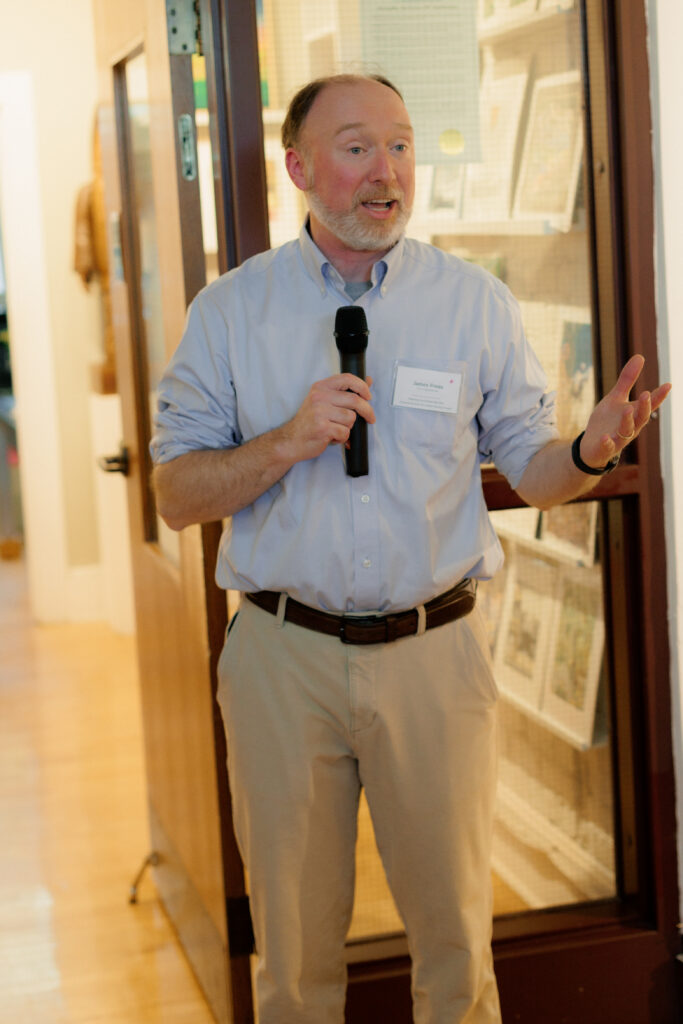
James Freas, deputy city manager for the City of Charlottesville, was on the steering committee for the study. “One of the great things about Charlottesville is its strong and varied arts culture,” he says.
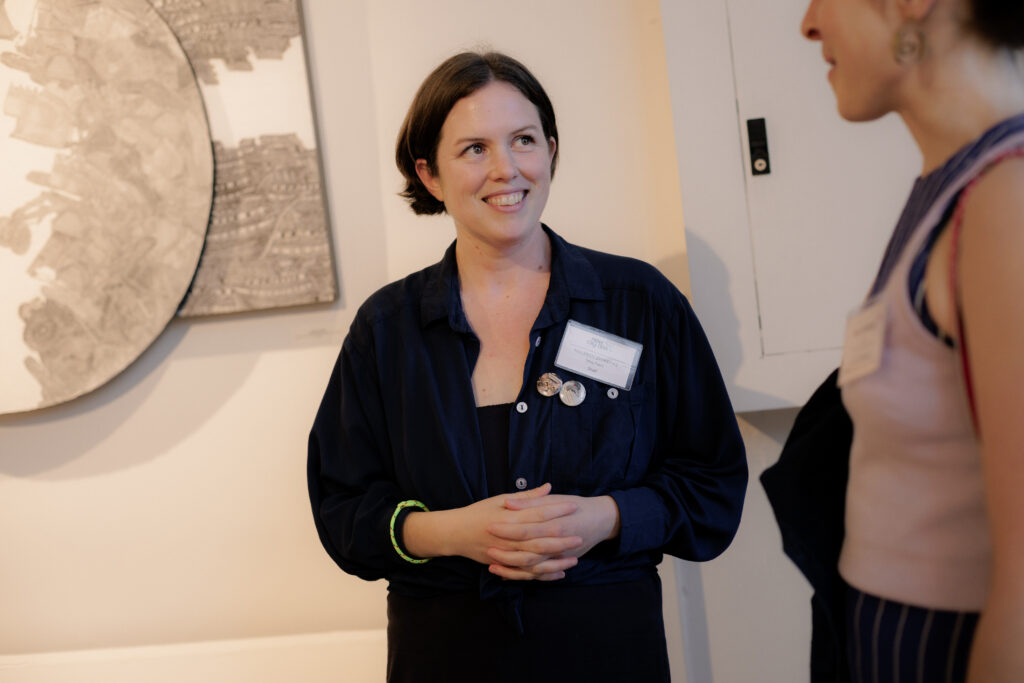
New City Arts Executive Director Maureen Brondyke says community feedback led the gallery to work with funders and launch the Charlottesville Area Arts Council Feasibility Study.
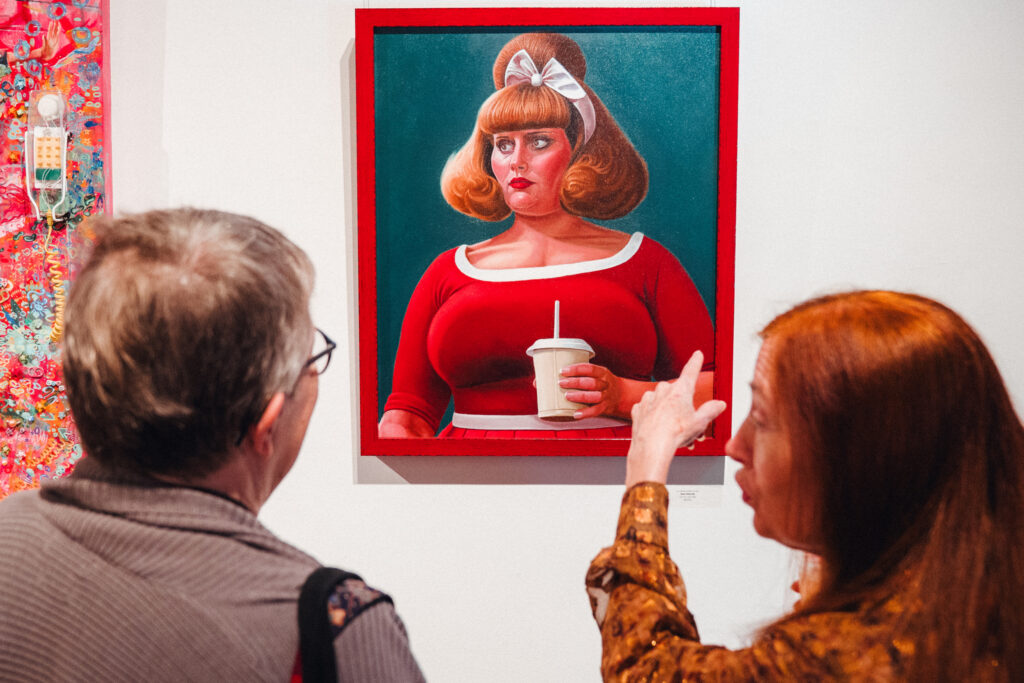
Local galleries and events like First Fridays afford local artists’ visibility, but a formal arts council would offer more concrete support.