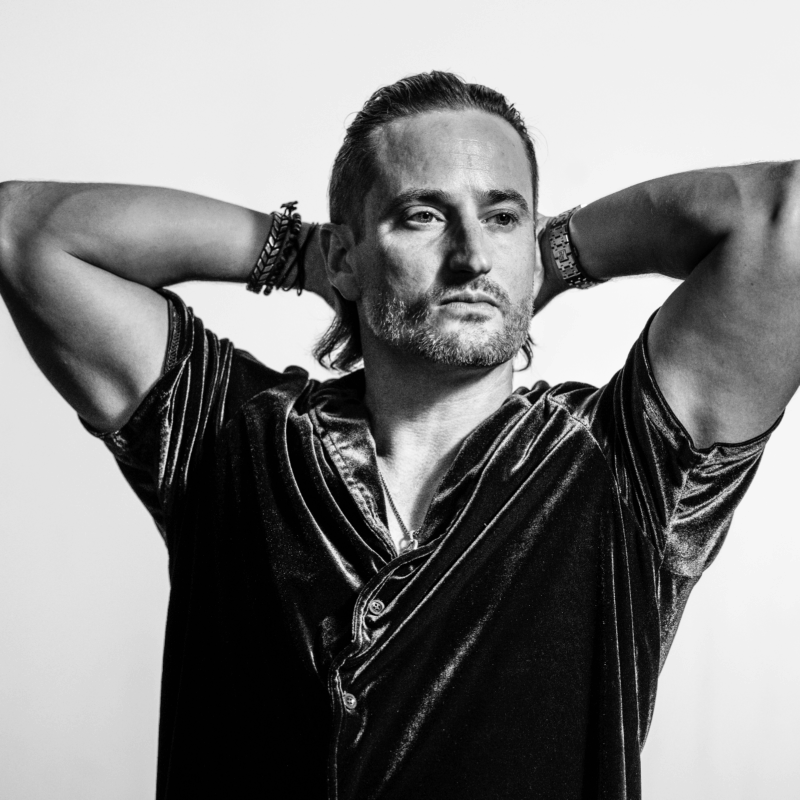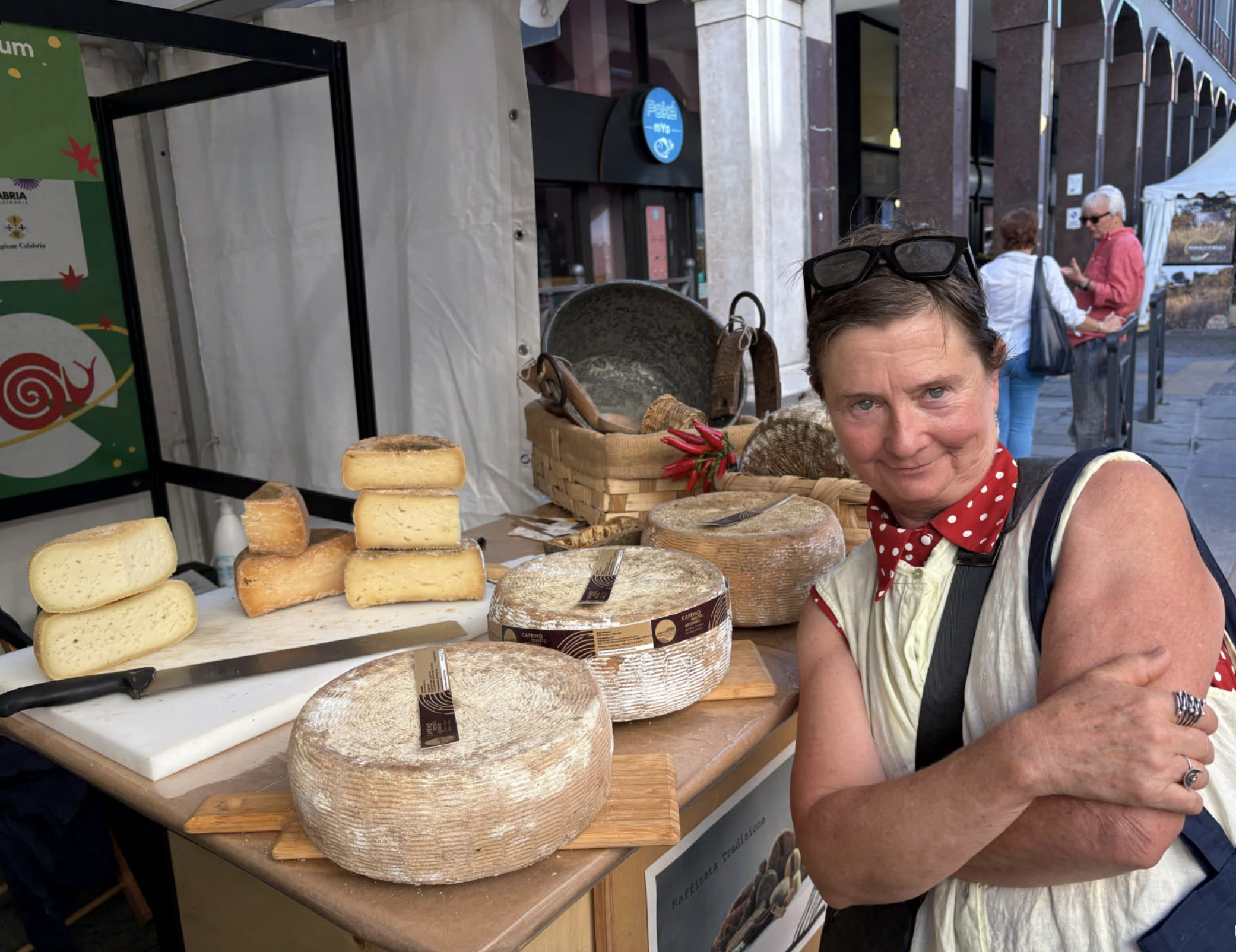
Caromont Farms’ Gail Hobbs-Page recently attended Cheese: A World Around It, the world’s largest event dedicated to raw milk cheese. The conference is held every two years in Bra, Italy, the hometown of Carlo Petrini, founder of the International Slow Food Movement that champions “grandma cooking,” or traditional foodways utilizing whole foods and local, sustainably raised ingredients. As a long-time slow food advocate, the cheese event had been on Hobbs-Page’s bucket list for years.
Hobbs-Page fell into the slow food world as she was being scouted for a James Beard Award when cheffing at Hamiltons’ on the Downtown Mall. Learning that she was being considered for a JBA, Hobbs-Page booked a trip to New York for the potential interviews. When the interviews didn’t materialize, she didn’t cancel, and instead attended A Growing Concern, a three-day festival sponsored by Slow Food and coordinated by greats like Alice Waters and Michael Pollan. “They kind of baptized us all and we all went back to our nooks and crannies,” says Hobbs-Page, who eventually left the restaurant kitchen for the dairy industry.
She caught the cheesemaking bug when she was recruited to develop a dairy project for musician Dave Matthews’ farm, Best of What’s Around. The project didn’t stick, but Hobbs-Page’s passion for cheesemaking did. With a year of research and development under her belt, plus trips to Meadow Creek Dairy and other regional cheesemakers, Hobbs-Page was hooked. “I thought, ‘Wow, I can do this,’” she says. “I can do this on my little farm right down the road.” She opened Caromont Farm, where she’s been raising goats and making cheese since 2007.
It wasn’t all perfect, creamy chevre in the beginning. “Sometimes it was good, sometimes it wasn’t. Sometimes it was too salty. Sometimes it blew up. It was very inconsistent,” Hobbs-Page remembers. After a few courses for aspiring cheesemakers at the University of Vermont and years of trial and error, she found her groove, crafting award-winning cheeses appreciated by chefs and foodies throughout the Mid-Atlantic. “I’m kind of at this point where I’ve got four trips to Europe under my belt, and I’m starting to really enjoy it,” says Hobbs-Page. “I don’t want to stop yet, because I’m still learning and enjoying it, and I’m excited by the cheese world.”
On her most recent trip to the cheese conference, she sampled offerings from all over Europe. She tasted northern Italian sheep and goat cheese with wine to match, goat cheese from Spain, cow milk cheddars from England. “I tasted their world … everything about what they had put into those beautiful little wheels of cheese,” says Hobbs-Page.
One variety from Puglia especially caught her attention. “The texture, the culturing, the irregularity of the wheels,” she says. “They were freeform and just the most beautiful color with a supple, creamy mouthfeel.” Don’t be surprised if you taste something like this from Caromont in the next few years.
Developing a cheese over years, isn’t just a remnant of Hobbs-Page’s Slow Food education—that’s simply how long it takes. Take Caromont’s newest cheese, Porters, which took at least two years to develop. “The spready spread stuff doesn’t take very long, but with these large format cheeses that you have to age, it takes a while to get it where you want it,” she says. Large format refers to the way the cheese is made, in large blocks. Porters is named after the road and community in Esmont near Caromont Farm. The name speaks to the terroir of the region, Hobbs-Page’s beloved goats, and the land she cares for: “It is creamy, supple, and milk-driven.”
Hobbs-Page’s most recent creation is a firm, aged goat cheese. “People in America think goat cheese is chevre. It’s not. There are a lot of different kinds that aren’t that tangy, creamy stuff you put on salads,” she says. At the festival, she says she didn’t spy one speck of creamy, fresh goat cheese, and notes that there was very little plastic used in packaging at the festival in general. “If it was considered fresh, it was in a little cake that had been aged for a while,” says Hobbs-Page. “It’s a completely different way of looking at the cheeses.”
Hobbs-Page plans to integrate her new discoveries into her cheese and cheesemaking classes in 2026. With her farmstead dairy, Hobbs-Page follows the rhythm of the seasons. Since the milk she uses comes directly from her goats, who begin kidding in late winter through spring, the seasonal pause is a time to incubate her new ideas.
Want to meet her goats? Throughout the spring, weekend visitors help to acclimate the baby goats to human connection. Check the Caromont Farm website for details about snuggle season and keep an eye on next fall’s classes, where Hobbs-Page will share what she’s learned, and perhaps work alongside some special guests from Italy. Look for Caromont Farm cheeses at Charlottesville and Richmond farmers’ markets throughout the season.