It’s official: Virginia’s (finally) opening its adult-use retail cannabis market in 2027, though the exact start date is still being hashed out. The Commonwealth may be late to the legalization party, but the state is the site of the earliest-known cannabis legislation in North America.
In 1619, the first Virginia General Assembly not only encouraged, but required colonists to grow hemp. More than a century later, enslavers and founding fathers like George Washington and Thomas Jefferson espoused the promise of the plant. (There’s an extensive record of enslaved laborers at Monticello and Mount Vernon cultivating hemp, but historians say there’s no evidence Jefferson or Washington smoked it.)
Federal regulation of cannabis ramped up throughout the 20th century, culminating in the Controlled Substances Act of 1970. It classified marijuana as a Schedule I drug—entirely banning production, possession, and sale of cannabis outside of government-approved research.
According to the Drug Enforcement Administration, Schedule I drugs have “no currently accepted medical use and a high potential for abuse.” That list includes heroin, LSD, ecstasy, peyote, and marijuana. Drugs the DEA considers dangerous, but which still have medical uses, end up on Schedule II. Substances you may have expected to see in Schedule I, like cocaine, methamphetamine, methadone, and fentanyl, are instead categorized as Schedule II substances.
Hemp, defined by a 2025 amendment to the 2018 farm bill as cannabis products containing less than 0.3 percent THC, has been descheduled. Outside of specific synthetic cannabinoid medications like Marinol, the federal government still hasn’t formally recognized marijuana’s medical applications. Efforts to reschedule marijuana are ongoing.
While national laws remain stuck in the ’70s, Virginia is moving ahead to greener pastures.
The state created its first limited exception to the federal ban of marijuana in 1979, allowing cancer and glaucoma patients to possess cannabis oil, but providing no legal pathway for them to acquire it.
More than 35 years later, the state moved more earnestly toward medical legalization. Between 2015 and 2018, access to medical cannabis oil in Virginia expanded from epilepsy patients to all medical conditions. Beginning in 2019, patients could receive prescriptions in more forms, though they still couldn’t get marijuana flower.
State legislators kicked off 2020 by decriminalizing marijuana use more broadly, and improving the medical cannabis dispensary system. The next year, the Commonwealth formed the Virginia Cannabis Control Authority, and the General Assembly permitted adults to possess up to one ounce of marijuana and grow up to four plants per household, beginning July 1, 2021.
For five years, Virginians have been able to possess and grow marijuana for personal use. There’s still nowhere (legal) to buy it unless you have a prescription, but new leadership is ready to change that: On April 13, Virginia Gov. Abigail Spanberger acted on a slate of marijuana-related bills sent to her desk, signing three into law and recommending changes to other legislation.
“Because of this long delay where we kind of haven’t seen much motion in Virginia, it seems like there are many different topics that the legislature wants to address,” says Paul Seaborn, assistant professor at the University of Virginia’s McIntire School of Commerce, and longtime scholar of marijuana legalization.

Paul Seaborn, an assistant professor at UVA’s McIntire School of Commerce, says “the current
[cannabis] model in Virginia is very confusing for everyone involved.” Supplied photo.
Green deal
If you assumed that Virginia already had recreational dispensaries, you’re not alone. Despite sometimes deceptive marketing, non-medical retailers currently can’t sell cannabis products with more than a modicum of THC.
They can, however, sell certain “hemp” and “hemp-derived” products. In theory, these items can only contain up to two milligrams of THC, or have a minimum CBD to THC ratio of 25:1, under state law.
“The current model in Virginia is very confusing for everyone involved,” says Seaborn. “Right now, if you’re seeing products in the market in Virginia, their origin is from a hemp plant that has less than 0.3 percent THC.”
A growing market for “hemp” products containing illegal amounts of THC has emerged both in Virginia and nationwide in states without legal adult-use markets. Federal oversight of “hemp” and “hemp-derived” products, particularly those categorized as supplements, has been practically nonexistent since the passage of the 2018 farm bill.
In 2025, Congress passed an amendment that updated the DEA’s definition of hemp to close the “farm bill loophole,” which will go into effect November 12. Even the Library of Congress page about the amendment acknowledges that “it remains unclear if and how federal law enforcement will enforce the new prohibitions when the new definition goes into effect,” and “both FDA and DEA may lack the resources to broadly enforce the laws prohibiting intoxicating hemp products on the market.”
A recent investigation by the Milwaukee Journal Sentinel found that many of the “hemp” products sold around that city contained “illegal amounts of THC.” While the amounts found weren’t “life threatening,” the lab testing conducted by Infinite Chemical Analysis Labs found contaminants in some of the products, and “a carcinogen used in paint stripper” in a package of Indacloud Orange Funta Gummies.
In the Commonwealth, the Virginia Department of Agriculture and Consumer Services currently regulates these products because of their legal classification as “hemp.” Cannabis policy expert JM Pedini says VDACS’ oversight isn’t up to snuff.
“If there had been stronger regulatory enforcement required for so called ‘hemp-derived’ products, we wouldn’t be in this position, but here we are,” says Pedini, development director for the National Organization for the Reform of Marijuana Laws and executive director of Virginia NORML. “[A] cannabinoid is a cannabinoid, and calling it ‘hemp’ doesn’t exempt it from the need for regulatory oversight.”
“The consumer has literally no idea what they’re buying. They’re just taking the word of the person who’s selling it, or taking the word of the package,” Pedini says. “Sellers might have the best of intentions, but when you don’t uphold consumer safety standards, consumers get hurt.”
In addition to their work with NORML, Pedini served as co-chair of the Legal and Regulatory subcommittee of former governor Ralph Northam’s Marijuana Legalization Work Group. They were directly involved in the creation of the CCA, and worked on and lobbied for several bills this legislative session. Beginning July 1, hemp and hemp-derived products will move under the CCA.
“CCA is our cannabis regulator,” says Pedini. “If you’re growing hemp for rope, you still do that at VDACS. That’s fine. If you’re growing hemp for hemp seeds for your salad, still going to go under VDACS. But if you’re growing something for cannabinoids, that should be at CCA where it belongs.”
With Spanberger’s signature, VCAA now leads that state’s oversight of all cannabis products and sales, including medical marijuana, hemp products, and the much-anticipated adult-use market.
License to grow
The General Assembly has, at last, created a framework to let Virginians not only legally possess and use marijuana, but also sell it commercially.
While the General Assembly passed the legislation with a January 1, 2027 start date, Spanberger has recommended retail sales be pushed back to July 1, 2027.
“Virginia is quite unusual in having had such a delay between when we legalize consumption and possession, and then introducing a full commercial market,” says Seaborn. “We have neighboring states that already have adult-use markets in place, and they’re selling millions of dollars of legal cannabis in a regulated system.”
Preparation for an adult-use market has been going on for years, despite stagnation in the legalization process under former Gov. Glenn Youngkin. The CCA took over regulatory oversight of medical cannabis from the Virginia Board of Pharmacy in 2024.
“We already regulate cannabis in Virginia, and we do it very well. We have some of the best consumer safety standards for cannabis in the United States right here in the Commonwealth,” says Pedini. “These adult-use dispensaries are going to look just like medical cannabis dispensaries do. It’s not going to be the flashing pot leaf neon sign that you see in these unregulated smoke shops. That’s not what regulated cannabis looks like in Virginia.”
The state can issue up to 350 licenses for retail marijuana stores by January 1, 2028. If more than 350 qualified applicants apply, the licensure process will proceed to a lottery. (Early interest from potential applicants makes this scenario all but certain.) If the General Assembly decides 350 isn’t the right number of licenses, it can reevaluate that cap during future legislative sessions.
The legislative framework sets further guidelines for retail marijuana stores, including square footage caps, location restrictions, and authorized methods of sale.
Beyond establishing the adult-use market, likely new laws create pathways for enforcement of regulations and penalties for the illegal sale of marijuana or marijuana products by people and businesses licensed by VDACS, CCA, and the Virginia Alcoholic Beverage Control Authority.
Consumer protections going into effect include requirements for display decals, which people can use to verify a store’s license—a particularly important detail for Pedini. The civil penalty for failure to display a decal in the establishment is $10,000 a day. Falsifying a decal carries a heavy civil fine of $100,000.
The good stuff
The Blue Ridge Health District doesn’t have a medical dispensary or retailers. While that should change soon (owing not to a change in the law, but to the settlement of court challenges that have plagued the license), BRHD residents will likely see retail stores open before any local state-licensed medical dispensaries.
“A lot of people probably don’t even know that we have a medical cannabis industry that’s been legal for a number of years,” says Seaborn.
Legislators also clarified rules around and expanded the accessibility of medical cannabis for Virginians this year.
One of the biggest changes to medical cannabis in 2026 will be surface-level: Its packaging must include the total amount and per-serving amount of THC and CBD in edible and topical products, and total percentages of THC and CBD for inhalables.
Soon-to-be laws further outline where medical marijuana can be delivered in Virginia, and create a system for dispensing medical cannabis to a patient’s registered agent, parent, or legal guardian. State law already protected terminally ill patients’ ability to possess, use, and receive medical marijuana in hospitals and other medical settings, and new laws further affirm it.
Still, existing and incoming laws allowing an authorized party to handle medical cannabis on behalf of a patient are particularly important for ensuring accessibility.
“Patients in these types of facilities may not be able to go to the dispensary and get it themselves, they may not be able to physically answer the door at the facility where they live,” says Pedini. “Somebody else has to be lawfully authorized under Virginia law to physically receive their medicine or dispense it to them. … We already did that for nursing and hospice a number of years ago.”
Beyond the smoke?
Whether it was “just say no,” D.A.R.E, or a different slogan, you’d be hard-pressed to meet anyone raised in the United States who hasn’t sat through a classroom presentation about the “dangers of marijuana.” Fearmongering around cannabis can be traced back to the early 20th century, when anti-immigrant, racist, and xenophobic rhetoric converged to form the popular demonization around the recreational use of marijuana.
The bias of 20th-century fearmongering translated into a biased enforcement of cannabis law for decades, which Virginia’s newest laws acknowledge directly in its creation of a legal retail market for adult use.
“The General Assembly finds that laws prohibiting the use and sale of marijuana have been ineffective and have had devastating collateral consequences for individuals and communities across the Commonwealth, disproportionately impacting African Americans,” reads an excerpt from HB642. “The purpose of this subtitle is to create an approach to marijuana regulation that is rooted in principles of restorative justice, economic equity, and public health in order to generate significant revenue dedicated to community reinvestment, create small and local businesses, strengthen the Commonwealth’s vital agriculture sector, end the racially disparate impacts of prohibition, and protect the health and safety of all citizens of the Commonwealth.”
On the financial end of things, the Virginia Cannabis Equity Business Loan Fund aims to at least partially address the historic wrongs of disproportionate law enforcement through its licensure system.
Other major developments in the equity space include new protections for parents. Perhaps not the first thing that comes to mind when you think about marijuana, but custody and visitation has been a recurring issue.
“Parents or guardians simply being certified as medical cannabis patients should not, in and of itself, be grounds for prohibiting guardianship or parental rights or visitation,” says Pedini.“And unfortunately, that has been happening in courtrooms across the Commonwealth for years.”
The change in law also raises questions about sentencing for anyone still serving a cannabis-related sentence in Virginia.
Under the version of HB26 passed by the General Assembly, anyone found delinquent, convicted of felony offenses, or with probation or supervision violations related to marijuana would be able to receive an automatic hearing to consider sentence modification. An April 13 amendment by Gov. Spanberger changes the process from an automatic appeal to requiring a petition. To be eligible, the offense must have been committed prior to July 1, 2021, and the person must still be in custody, on probation, or on community supervision as of July 1, 2026. The proposed law expires July 1, 2029.
Beyond laws directly referencing cannabis, a change to Virginia’s rules for judicial record-sealing—which allows for expungement if a person is not convicted or their charges are reduced—will affect those with previous marijuana charges as well.
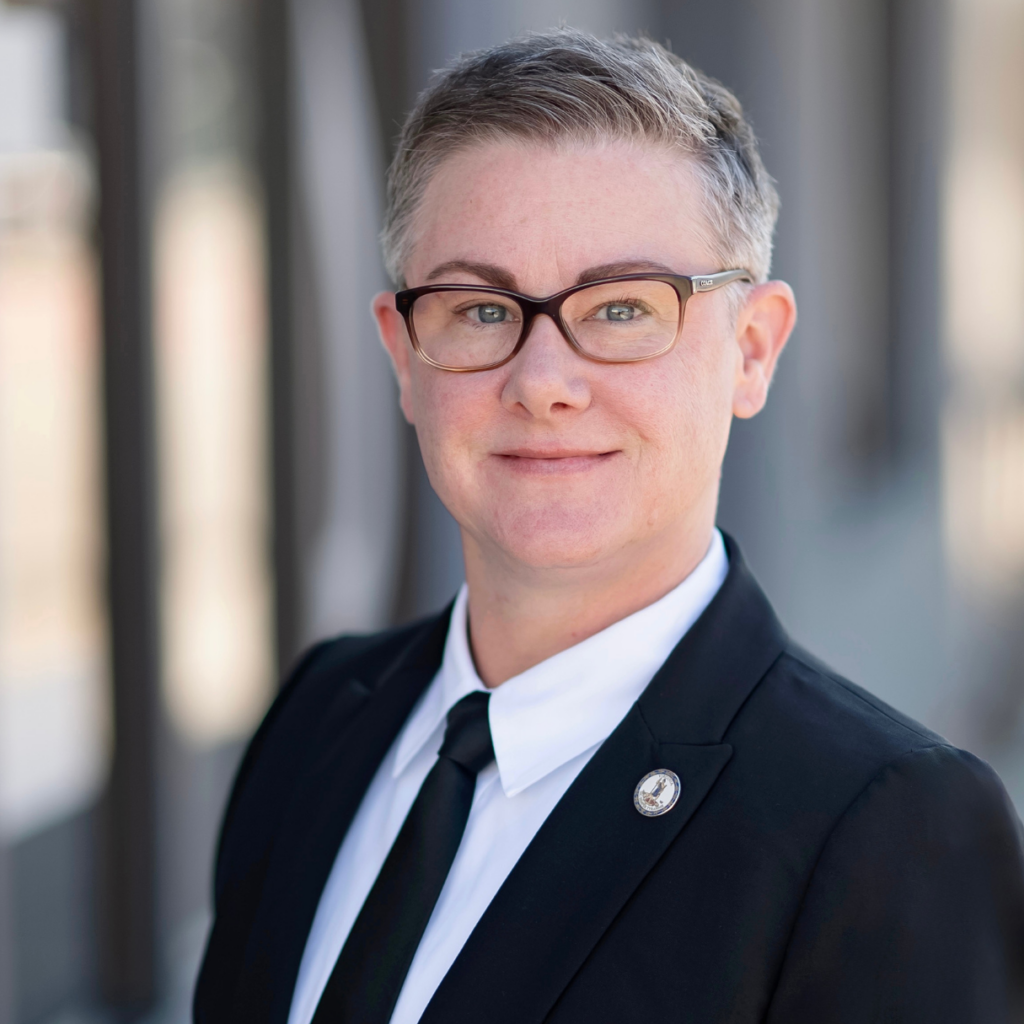
“These adult-use dispensaries are going to look just like medical cannabis dispensaries do,” says JM Pedini, development director for the National Organization for the Reform of Marijuana Laws and executive director of Virginia NORML. “It’s not going to be the flashing pot leaf neon sign that you see in these unregulated smoke shops.” Supplied photo.
Latest buzz
Virginia’s newest cannabis laws are a lot to take in. But practically, cannabis is in the Commonwealth.
“It’s already in all of our states, regardless of whether it’s legalized and commercialized,” Seaborn says. “We’re just talking here about whether we move from unregulated sale, and really no oversight or taxation or testing, to a more regulated system.”
Meaning of the word(s)
While they may sound like synonyms, many of the common terms and labels used to discuss marijuana have different meanings—legal, industrial, and scientific. Here are some important definitions of terms in this article.
Cannabinoids: Active compounds found in cannabis. Common cannabinoids include THC and CBD. Can occur naturally, or be synthetically created.
Cannabis: A plant genus that includes species like Cannabis Indica and Cannabis Sativa.
CBD (Cannabidiol): A non-intoxicating, but still pharmacologically active, cannabinoid. The World Health Organization’s 2018 report on CBD found it is relatively safe and not associated with abuse potential. Purported medical applications include the treatment of seizure, neurological, and sleep disorders. Its largest safety concern is a lack of regulation and oversight.
Hemp: The definition of “hemp” varies depending on who you ask. Virginia defines hemp as a cannabis plant with no more than 0.3 percent THC by dry weight. The commonwealth currently allows hemp-derived products to have up to two milligrams or THC per package, or a CBD-to-THC ratio of no less than 25:1. At the federal level, the 2018 farm bill defines hemp as cannabis products that contain less than 0.3 percent Delta-9 THC by weight. This definition has created nationwide loopholes in the regulation and classification of cannabis.
Marijuana: Any part of a cannabis plant that contains one or more cannabinoids. Often used in place of the term “cannabis” in the Code of Virginia. The Code’s current definition of “marijuana” excludes some formulations of hemp.
THC (Tetrahydrocannabinol): An intoxicating cannabinoid responsible for the “high” sensation associated with marijuana consumption. Compared to CBD, use of cannabis with THC is associated with more adverse side effects and abuse potential. FDA-approved indications for synthetic THC (like Marinol) include appetite inducement and nausea reduction for chemotherapy and HIV patients.
More information on and resources related to cannabis can be found on the Virginia Cannabis Control Authority website.