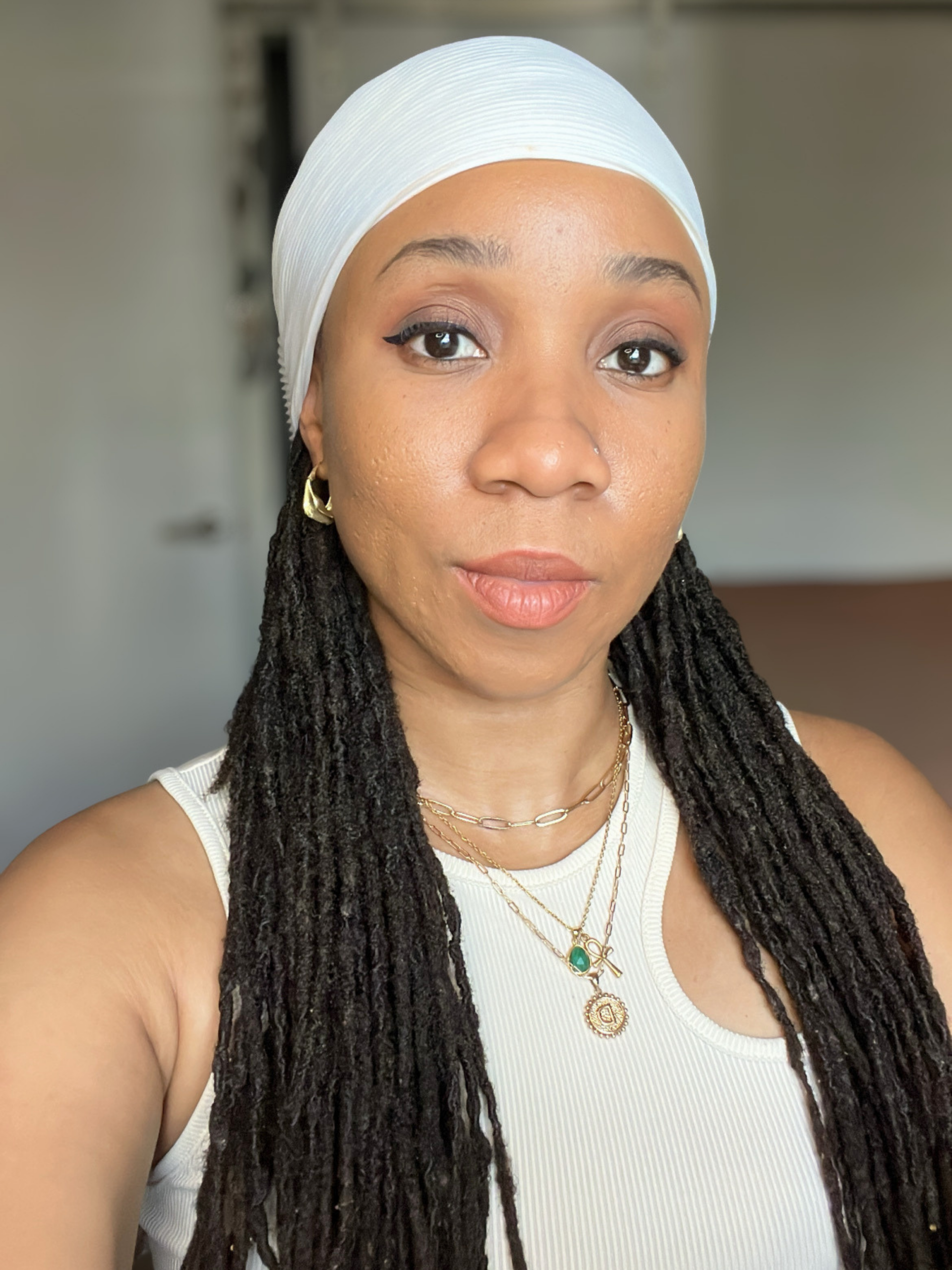
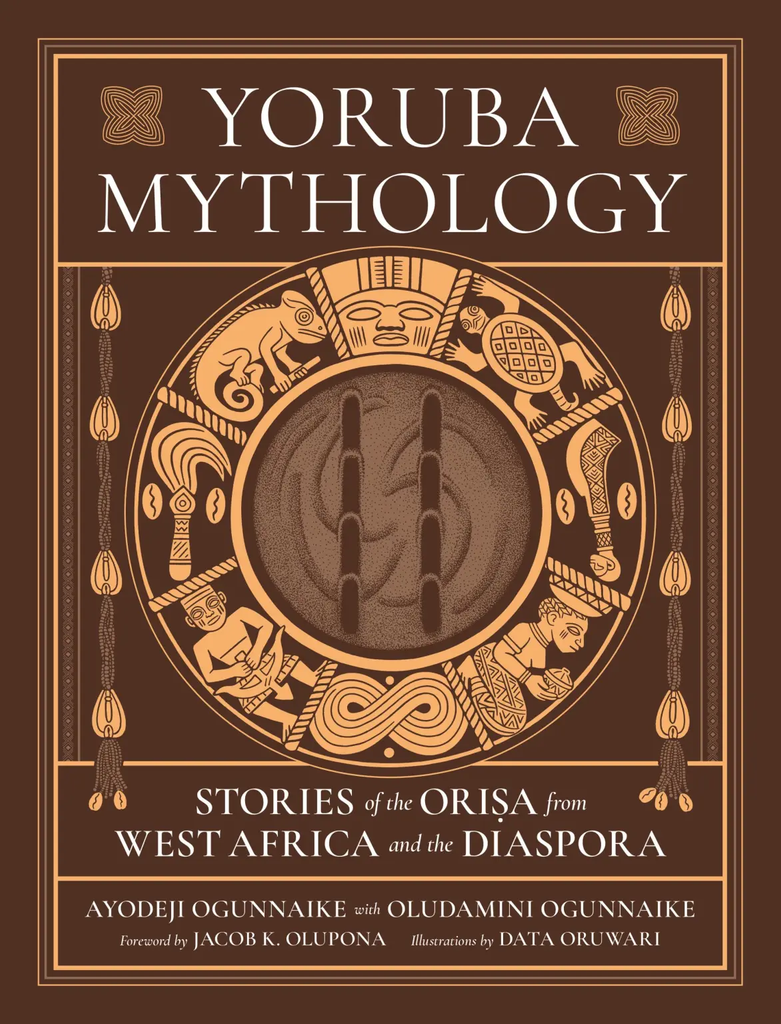
Yoruba Mythology: Stories of the Oriṣa from West Africa and the Diaspora offers an in-depth look at Yoruba culture and religion around the world, collecting more than 300 myths and tales. The book’s authors—brothers Ayodeji
and Oludamini Ogunnaike—worked to translate the oral tradition of Yoruba storytelling into this comprehensive tome, featuring detailed and lush illustrations by visual artist Data Oruwari. Oruwari spoke with C-VILLE about her inspiration and artwork.
C-VILLE: Describe your relationship with Indigenous African spiritual traditions and their influences on your creative work.
Data Oruwari: My relationship with African spiritual traditions grew out of a deep journey of self-discovery that began around 2015. Part of that journey involved decolonizing how I saw myself and made sense of my reality. I was born in Nigeria, a post-colonial country, and raised in a predominantly Christian environment shaped by British colonial influence. As I became an adult, I began to realize that many of the beliefs that had shaped my formative sense of self no longer served me. … Art became one of the ways I tried to make meaning of what I was experiencing.
That search led me toward the worldviews of my pre-colonial ancestors. I became almost obsessive about studying Indigenous knowledge systems across different African regions. … I was especially fascinated by their cosmologies and philosophies: how my ancestors understood the world, our place within it, and how those understandings shaped the way they lived. … Over time, those teachings became part of how I see and move through the world. They live in me now.
But study was only one side of the journey. I also began to embody and practice these traditions, and to undergo initiation into their deeper mysteries. … Through deep meditation and sound-induced trance, I seek to quiet the noise and bring clarity to my mental and intuitive faculties so I can receive their vision and guidance. My work as a visual artist is deeply influenced by the visions I receive and my desire to preserve and reactivate ancestral wisdom. … Much of this knowledge has been marginalized or disrupted by colonial erasure and the forgetting that follows. My role is to make the unseen seen—to give abstract concepts and philosophies a tangible form that people can engage with and apply to their lives today.
Ultimately, I am creating something I wish I had encountered growing up. I want people to see the beauty and relevance of African ancestral wisdom, and to approach it with the same reverence afforded to other spiritual traditions. … I want to make space for a different relationship—one rooted in curiosity, dignity, and the possibility of remembering something of ourselves.
Is there symbolism in your color choices for the book’s artwork?
Yes, there is a lot of symbolism in the color choices, especially in the illustrations depicting the myths in Brazil and Cuba. The colors associated with the òrìà communicate something of their essence: the forces of nature they embody, their qualities, and their spiritual domains. It was important to me that the palettes reflected those associations.
Although my signature palette is predominantly black ink on white with gold accents, this body of work called for me to expand beyond it. Color became another layer of sacred symbolism—a way to express the essence of these deities alongside their gestures, adornments, and ritual objects.
How did your artmaking for the book incorporate other sacred art influences?
My first approach was to nerd out on the wealth of references the authors had gathered before the project even officially began. That material became my most influential source. There were books, articles, and folders upon folders of images exploring different aspects of Yoruba culture, including how its spiritual traditions had transformed and survived through the transatlantic slave trade into diasporic continuations such as Candomblé in Brazil and Santería, or Lucumí, in Cuba. With the authors’ close guidance, I learned which adornments, ritual objects, poses, clothing, animals, and other symbols were associated with particular traditions and òrìà.
The next layer was paying homage to the masters of Yoruba art. For the illustrations depicting the stories in their Yoruba context, I drew inspiration from carvers such as Lamidi Fakeye, lw of Ìs, Areogun, and Bisi Fakeye. I was especially interested in how they used proportion to communicate meaning. … Rather than simply capturing a snapshot of the physical world, these approaches were used to make spiritual presence and significance visible.
Another entry point was allowing myself to be intuitively led. Before this project, I had already spent a lot of time immersing myself in African sacred symbolism, so some of the subjects felt deeply familiar. … The process was a conversation between [the authors’] research, the inherited visual traditions, and my own intuitive understanding.
It was also important to me to challenge the colonial gaze. In the spot illustration of Yemja becoming a river, she is bare-chested, as is un in “Founding of Òogbo.” Those choices were informed by the traditional Yoruba carvings I studied. Through a colonial gaze, the exposed bodies of African women have often been framed as primitive or sexualized. I wanted to approach these figures through the sacred visual language of the traditions themselves, where the female body can communicate nurturing, fertility, and the power to sustain life.
For me, that is part of the spiritual restoration these illustrations can offer: an invitation to encounter these figures with reverence, and to understand their imagery through the worldviews that gave it meaning.