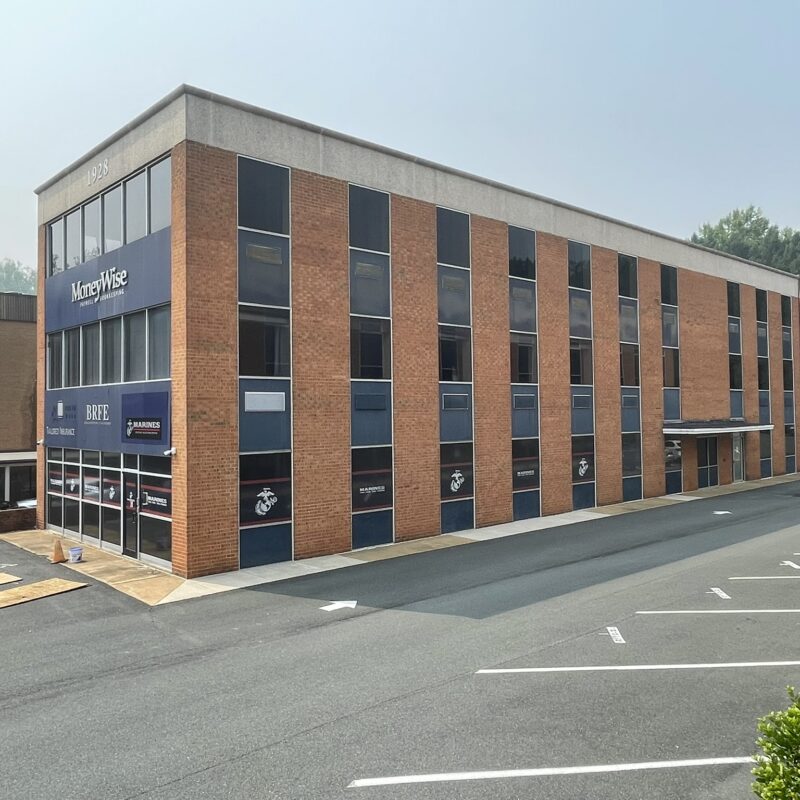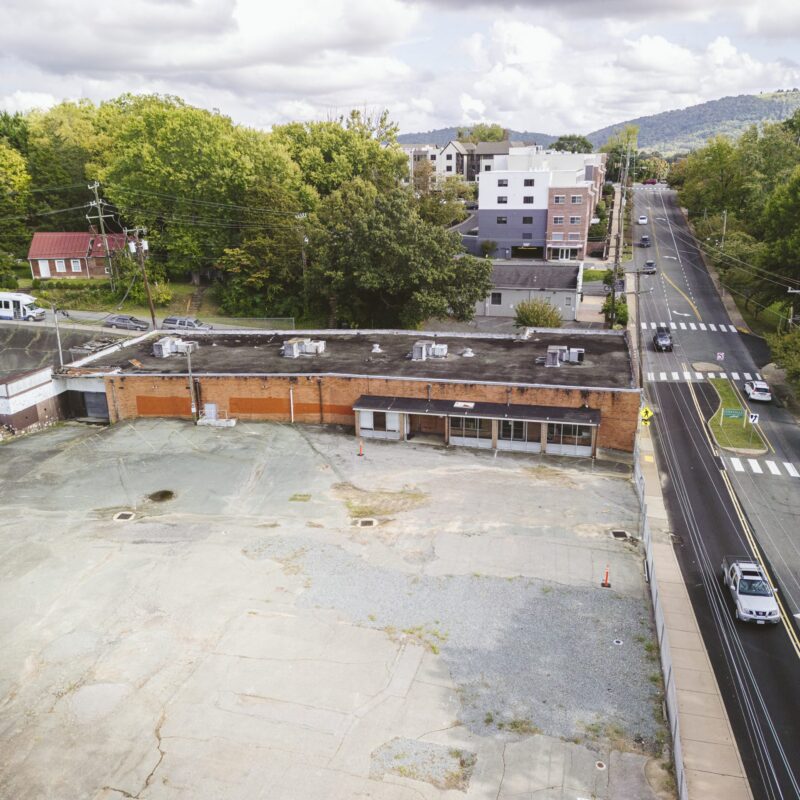
Since the University of Virginia held its first classes in 1825, West Main Street has served as an important thoroughfare between town and gown. The buildings and structures constructed along the major roadway between the two spaces since then reflect the changing economies as both Charlottesville and UVA grew. But in the absence of solid development plans from the city, amid housing conflicts between the needs of locals and UVA students, the corridor’s future has yet to be mapped out.
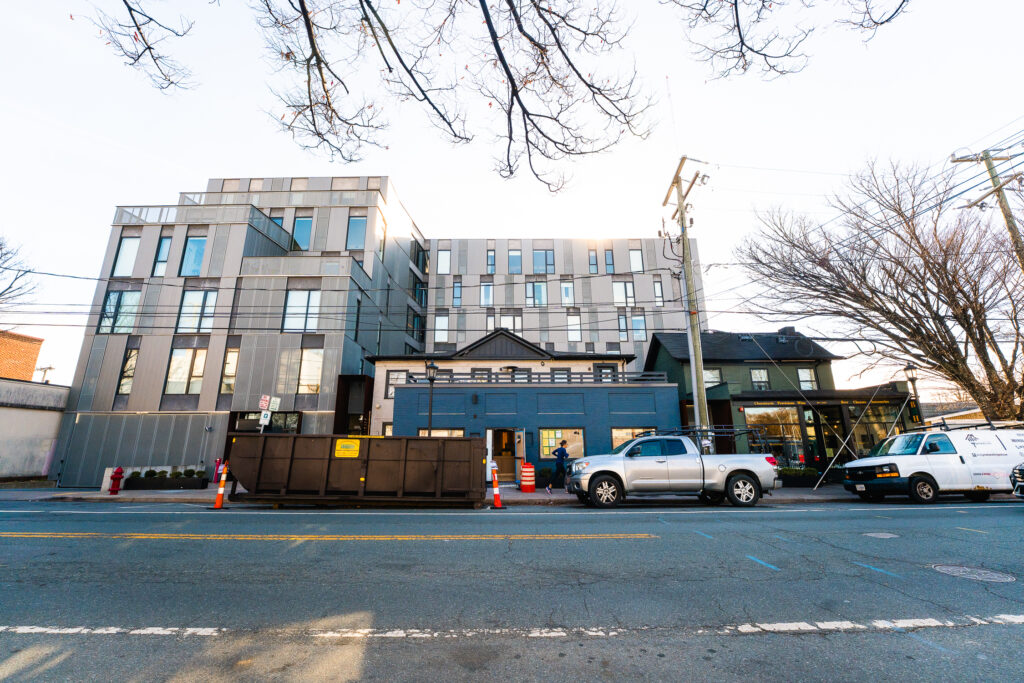
Yesterday and today
Hotels sprang up with the arrival of the railroad in the 19th century, and with the rise of the automobile in the 20th century investors built many buildings to service the ubiquitous vehicle. West Main reflects the difficult social policy of urban renewal that resulted in the destruction of the Vinegar Hill neighborhood.
The early 21st century has seen a shift toward student housing, a lucrative business that has helped bring in revenue for an ambitious city government while raising the ire of some in the community who want the city to stop two more apartment buildings along West Main Street.
“The only people who can afford to live there are the rich mommies and daddies of mostly white students,” said Wendy Gao, an organizer with the Public Housing Association of Residents at the January 20 meeting of City Council. “I can tell you who is not living there: the single Black mother working two jobs in the gig economy making less than $30,000 a year—and neither is the average registered nurse at UVA.”
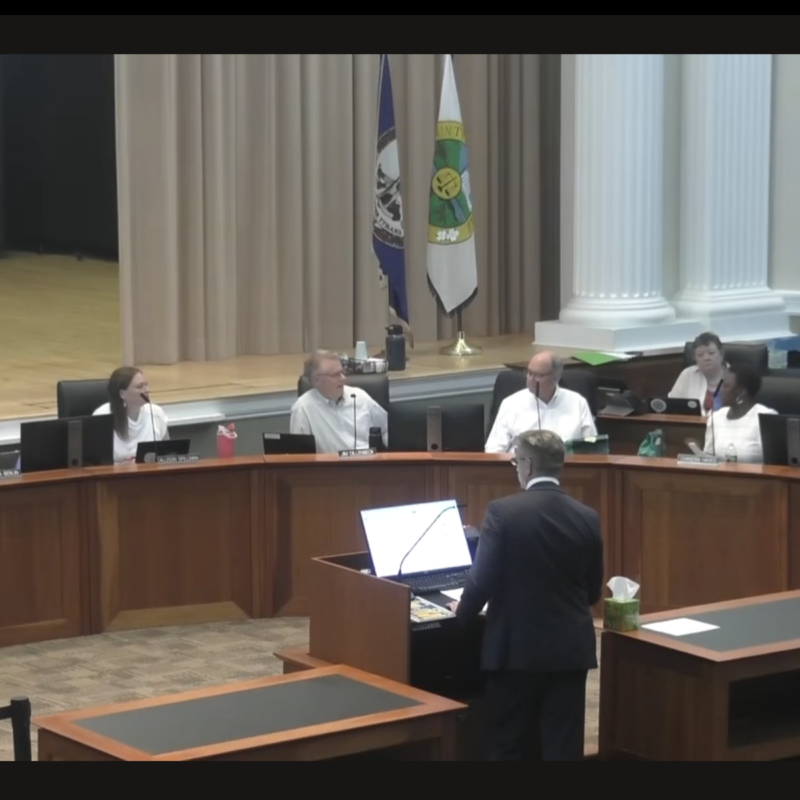
Gao made her comments after City Council held a work session on technical reforms to the city’s new Development Code related to where student housing can be built. She and PHAR have led the charge against an 11-story apartment building at 843 W. Main St. and a seven-story building called The Mark at 208 Seventh St. NW, a block away from West Main.
A new zoning ordinance adopted in December 2023 generally allows structures to be built without getting permission from City Council, as opposed to rules enacted in 2003 that required developers to get a special use permit first.
One of PHAR’s concerns is that the building at 843 West Main will overpower Westhaven, the city’s first public housing development, built as a replacement for the homes at Vinegar Hill that were razed in 1964.
Under the new zoning, the Charlottesville Redevelopment and Housing Authority is moving forward with plans to double the number of units on the 9.9-acre Westhaven property from 126 to 266. City Council is contributing $15 million to the project, the latest contribution from Charlottesville taxpayers to help CRHA build a new generation of housing units.
West Main as a place to live?
City Council upzoned West Main Street and other corridors in large part to make more efficient use of land. The 2003 rezoning was influenced by a December 2000 study that suggested ways the city could reverse declining revenues, a trend that had some calling for Charlottesville to revert to a town in Albemarle County. The city hired a team led by the architectural firm Torti Gallas + Partners to suggest ways to increase density to bring in more tax revenue.
“The goal of the City of Charlottesville should be to eliminate or mitigate the obstacles that currently limit development within the City,” reads a portion of the Charlottesville Commercial Corridor Study. “This requires a clear and consistent development plan, as well as a deep and frequently updated understanding of market trends and development obstacles.”
The Torti Gallas study identified the Downtown Mall and West Main as the top two areas where the city could generate additional revenue. The study’s vision called for the roadway to become a “live and work destination for high-tech users” and paints a picture of what West Main was like at the turn of the 21st century.
“The corridor ranges from a physically intact retail street to open parking lots and abandoned auto-oriented service facilities,” reads page 70 of the study, the beginning of several pages devoted to ideas for what was then the future.
The Torti Gallas study suggested housing was in high demand on West Main Street, and the 2003 rezoning created the ability for developers to ask for additional height and density through a special use permit process that required public hearings and gave Council the chance to negotiate for each individual project.
Since 2012, three student housing buildings, three new hotels, an apartment building at 600 W. Main St., and the UVA children’s hospital have risen along West Main. Two of those projects incorporated structures protected by an architectural design control district using adaptive reuse techniques.
Thanks to those changes, the additional revenue suggested by Torti Gallas materialized.
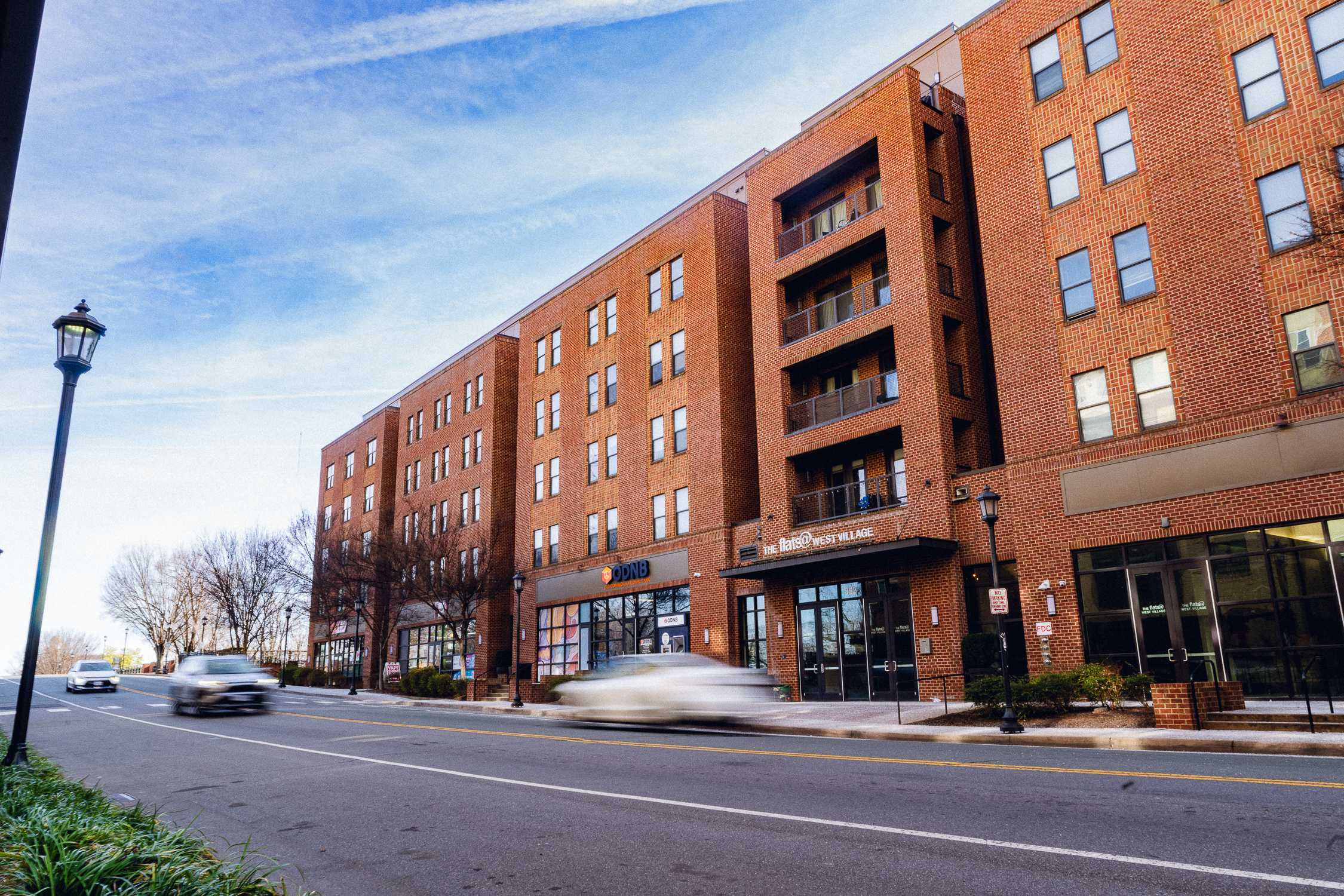
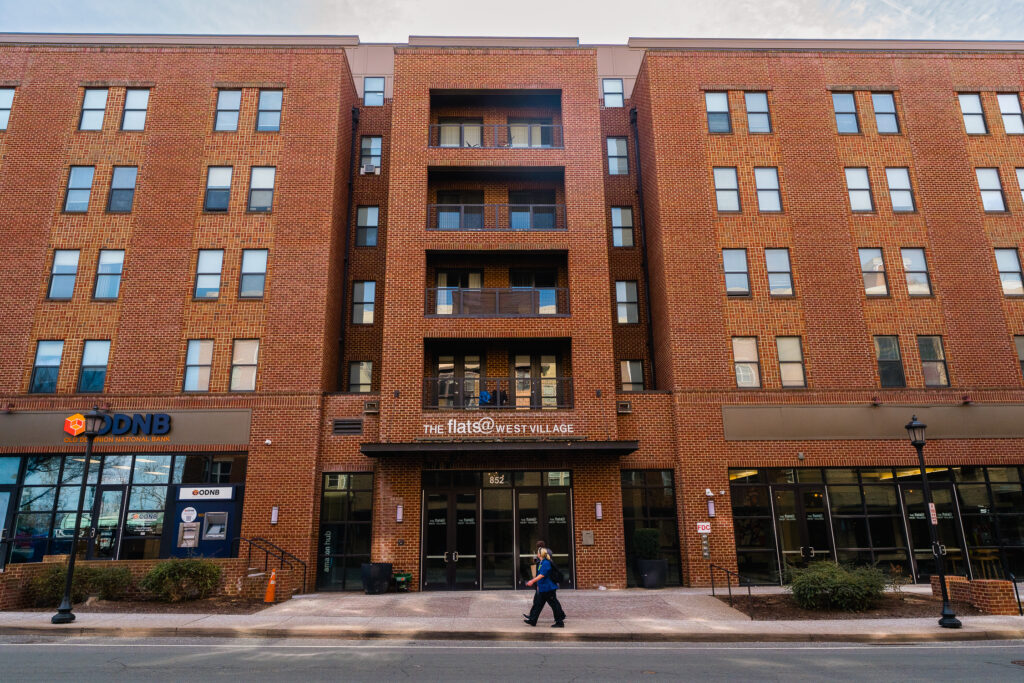
In 2014, the 2.24-acre Flats @ West Village property had an assessed value of $6.77 million, which yielded $64,275.10 in property taxes. A year later, the assessment for the 595-bedroom building jumped up to more than $35.5 million and has continued to increase.
In 2025, the city assessor put the fair market value at $92.1 million, bringing in tax revenue of $903,258.16. In October, The Scion Group acquired the property for $107 million. Scion also manages the 342-bedroom Lark on Main student apartments. The undeveloped property’s 2015 tax bill of $26,433.25 grew to $587,817.72 in 2025.
In October 2025, a new ownership group took over the Standard at 853 W. Main St. and rebranded it Yugo Crestline. In 2016, the property was home to an office building and a former grocery store, with a tax bill of $63,164.55. After the Board of Architectural Review approved a request for demolition, those properties were torn down to make way for a six-story, 612-bedroom building that generated $979,144.46 in real property taxes in 2025.
Changing the rules?
A first set of changes to the city’s development code is making its way through a review process. Next, the city intends to study changes to how the zoning code treats student housing.
City Councilor Michael Payne wants to make more radical changes. He said allowing 11 stories on West Main would put pressure on both Fifeville and 10th and Page.
“Our primary goal should be trying to stop displacement and economic harm done in those core neighborhoods,” said Payne on January 20. “Investors are going to say, there’s a ton of students there. Let’s make every business cater toward student preferences because that’ll be the highest and best use.”
Payne said Council made a mistake when it upzoned areas still recovering from urban renewal. He wants the Planning Commission to study ways to expand protections currently in place for sections of Cherry and Preston avenues, where height is capped at seven stories. Even then, Council has to approve a special exception for projects in the Core Neighborhood overlay.
“We as City Council just have to decide, do we view seven to 11 stories of student housing in those neighborhoods as a good policy that we want to continue, or is it a problem we want to address?”
Other councilors supported the study of an overlay district for student housing, but they were less supportive of adding new regulations in areas where developers have the right to build what is allowed in the zoning. Staff said such a study would take longer.
“We would have to look at the potential legal ramifications of essentially down zoning what is currently allowed by right to lower heights,” said NDS Director Kellie Brown.
Staff will come back to Council in the near future with some potential alternatives.
At least one real estate professional is concerned that changing the rules would send the wrong message to those who want to build out the rest of West Main. “The zoning code explicitly states that dense development on downtown central corridors is desired,” said John Pritzlaff, senior vice president at Cushman & Wakefield | Thalhimer.
“Yet, when a development group implements this plan, the response is emotional and contradictory to the code that has just been created at great cost to the city.”
Pritzlaff warns that changing the rules again would send the wrong message.
“The move would signal to developers of all kinds that Charlottesville is not a place that adheres to its own guidelines,” Pritzlaff said. “Developments cost millions of dollars in study, design, and up-front costs before a shovel goes into the ground.”
In mid-December, the BAR exercised its discretion and denied a request for the Mark to incorporate two historically protected properties. Council will hear an appeal sometime in the near future.
Tracking commercial on West Main Street
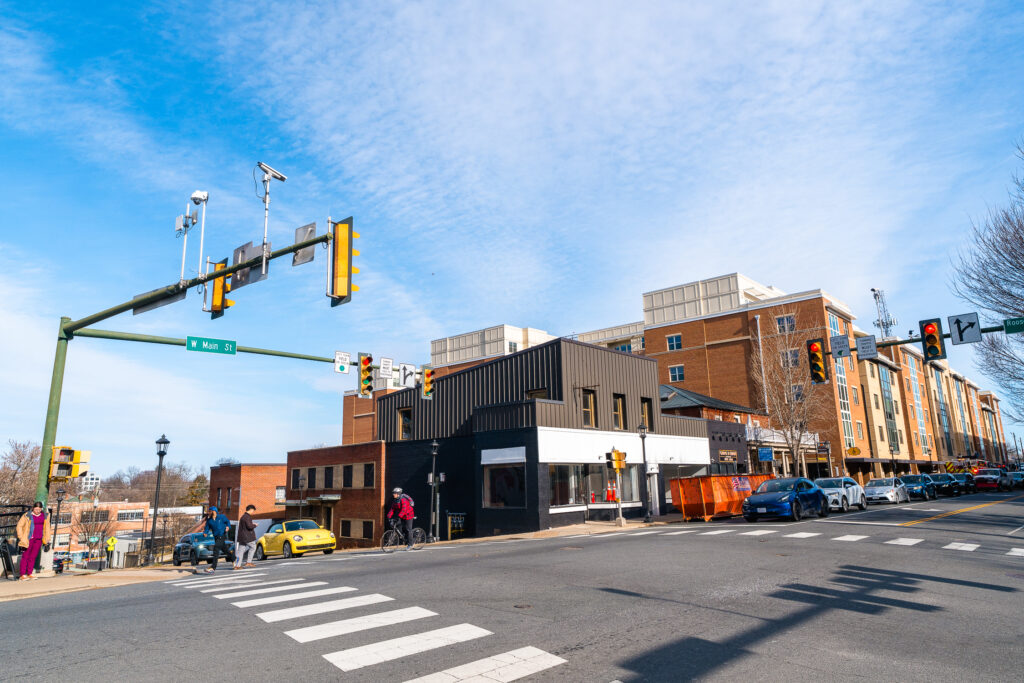
Meanwhile, several businesses continue to operate on West Main Street with no specific trade organization and limited attention from city government. The Office of Economic Development tracks retail vacancies in six areas of the city, but not the area in between UVA and downtown.
When Council approved special use permits for the three student apartment complexes on West Main Street, the developers were required to reserve the ground floor space for commercial use under the 2003 zoning code. But they weren’t obligated to finish out those spaces or secure tenants for them.
The building formerly known as The Standard has four empty retail spots on the ground floor; only one has ever been occupied. Three of the storefronts are covered up, hiding that the spaces are unfinished.
“I’ve looked inside there, and those buildings don’t even have plumbing or concrete on the floors,” says River Hawkins, co-owner of Mejicali across the street. “And for anybody who knows what it costs to invest in that, millions of dollars just to lay the floor and the plumbing, you know, I think that keeps people out of this.”
Hawkins and his partner John Ornelas opened Mejicali in late 2024 in a space that lay dormant for several years after a chain restaurant petered out. Hawkins wants more longevity.
“What we’re hoping to do here is kind of be an anchor business,” says Hawkins, who is also known for opening The Bebedero and starting the Milkman’s Bar in Dairy Market.
Hawkins suggests one way the city or some other entity could help would be to get the sites ready for someone else to move in.
The city has other requirements as well. The BAR said developer Jeff Levien had to retain two protected structures in front of a six-story apartment building at 600 W. Main St., which was completed in late 2019. He has approved plans to construct another structure next door but is waiting to see how the zoning code might be changed.
“I am bullish on West Main,” Levien says. “It has become its own walkable mixed-use submarket which is continually growing.”
One of those buildings housed the former Blue Moon Diner and will soon be home to a new restaurant. The other is an upscale wine store called the Bottle Shop.
Around the same time the three student housing buildings were being built, developer Mark Green converted an automotive repair shop at 1001 Main St. into a retail center with four spaces that cater to students and UVA employees. Though there have been vacancies, he’s been able to keep the space filled thanks to a steady stream of foot, bus, and bike traffic.
“The hospital keeps growing, the east end of the university keeps growing, and it seems like that additional traffic benefits the businesses on West Main,” Green said.
Another new business soon will open at 919 W. Main St. to serve as a rental office for a 12-story student housing building under construction at the intersection of JPA and Emmet Street adjacent to central Grounds. Plans had been filed for this to be a donut shop, but it never materialized. Instead, the space will handle leasing for the Verve.
Others continue to make investments despite the zoning uncertainty.
The former Greyhound Bus Station at 310 W. Main St. sold for $1.5 million in July to an entity controlled by Woodard Properties. No plans have yet been filed.
“I think West Main should feature more residential living options for year-round residents, not just students,” Woodard said. “There are a couple sites that have tremendous potential to further activate West Main and contribute to residential supply, which would help the West Main businesses and Charlottesville economy as a whole.”
Woodard said one of those sites is the surface parking lot between First Baptist Church and Union Station. The 1.75-acre site is now owned by Allen Cadgene, a San Francisco-based developer who converted many former automotive properties on West Main Street into new purposes, including Main Street Market and the lot that now houses Oakhart Social and Eloise.
Cadgene is also part of Union Station Partners, which owns 820 W. Main St. That site doubles as the Amtrak station and includes restaurant space that closed in June 2020 because of the COVID-19 pandemic. There are no public plans to develop either site.