River Hawkins knows tequila. More to the point, he knows mezcal. When you’ve gone deep down the wormhole of tequila’s smokier, more bracing brethren, Hawkins says, tequila is almost too sweet.
“I think of it as a dessert drink,” the Bebedero and Mejicali owner says of the typically 80 proof liquor—without a trace of irony.
For many people, tequila is a party starter, associated with margaritas at Americanized Mexican restaurants and shot glasses rimmed with salt and lime. But for a growing cohort of connoisseurs like Hawkins, tequila is the new bourbon: a complex elixir produced of simple ingredients, sometimes aged in barrels, and intended to be sipped, savored, dissected.
According to global drinks market analyst IWSR, agave-based liquors, known collectively as mezcal and including the tequila sub-genre, entrenched themselves as the third-highest-selling spirit in the United States in 2020, passing rum to settle behind only vodka and whiskey. Indeed, mezcal outpoured whiskey’s largest subcategory, bourbon, that same year, growing sales roughly 20 percent by volume. IWSR projects mezcal will only continue to blossom in the years to come.
One of several drivers behind tequila’s rapid ascent has been celebrity buy-in. George Clooney opened the floodgates when he launched the now ubiquitous Casamigos line in 2013. He later sold the brand, with some reports indicating his payday was close to $1 billion.
Would-be tequila titans like Dwayne Johnson and Kendall Jenner followed. Other actors and entertainers, including Ryan Reynolds and Matthew McConaughey, dipped into the gin and bourbon markets. Today, estimates of the number of entertainer-backed spirits brands range from 150 to 350—though some indications are that the trend is slowing. The celebrity booze e-commerce platform and app GrapeStars launched with a pop in 2020, but went flat just two years later.
Hawkins, true to type, says he doesn’t give a whip about celebrities. When he’s considering carrying a new spirit at one of his restaurants, what he’s mostly interested in is quality and price point.
Still, Hawkins admits he’s not completely immune to clever branding. And when a local spirits rep walked into The Bebedero almost two years ago with a new tipple, Don Gato, he was intrigued by the masked Mexican wrestler emblazoned on the label. “I love companies that don’t take things too seriously,” he says. “Spirits are supposed to be fun, and I thought Don Gato was hilarious and brilliant.”
On top of that, a tasting told him what he needed to know: The tequila was delicious.
Hawkins grew up in California in the home of a Mexican mother and Caucasian father. He’s long identified with his Mexican lineage, but it wasn’t until he began working at a resort near Puerto Vallarta in the western reaches of Jalisco that he dug into agave. Tapped to provide vacationers tequila and mezcal classes, he prepared by reading books, touring agave fields and distilleries, and drinking and discussing countless iterations of Mexico’s most revered beverage.
Tequila, Hawkins says, is simpler than mezcal. It’s crafted from only Weber blue agave by roughly 150 distilleries in and around Jalisco. The region is said to produce the world’s best agave—indeed, if a tequila weren’t from Jalisco, it would be no more a tequila than a California sparkling wine would be a Champagne.
The comparisons to wine don’t end there. The conditions in which agave is grown lend tequila much of its flavor. Traditionally made solely of water and agave, tequila can express the sweet succulent’s terroir in delightful ways—green apple, natural vanilla, vegetal notes, earthy tones—all affected both by soil and weather, as well as harvest practices and production methods.
Many agave spirit brands, however, use additives to make their drinks more accessible for inexperienced palates. Hawkins says that even tequilas claiming to be “100 percent agave” can include additives like syrup, caramel coloring, vanilla, or oak extract at a rate of up to 1 percent by volume. The result is a sweet, often artificial-tasting concoction that nevertheless might go down “smooth” for rapid consumption and max intoxication.
Hawkins says a growing movement toward additive-free production has taken hold in the tequila world, but the approach requires intensive care in farming, distillation, and fermentation practices. Plus, it can be more costly than modern methods. Many of the celebrity brands Hawkins has tasted are far from additive free; they’re sometimes saccharine vanilla bombs designed mostly for pop appeal.
“We often equate sweet and smooth with quality,” Hawkins says, “when the reality is that something made with quality in mind typically has more complexity to it.”
As soon as he placed his first glass of Don Gato’s tequila blanco back on The Bebedero bartop, Hawkins knew he had an additive-free spirit in front of him. Given the price point, he signed on to carry the blanco variety, as well as Don Gato’s tequila reposado, a darker, bourbon barrel-aged version of the flagship product.
As it turned out, the rep who’d approached Hawkins was a University of Virginia student, the daughter of Don Gato co-founder and UVA alum Chad Walldorf. Walldorf, a restaurateur now living in South Carolina, had helped launch Don Gato in mid-2024. The tequila quickly earned acclaim. The blanco base won gold at the San Francisco World Spirits Competition that year, while the reposado earned a Best in Show at the New York World Spirits Competition. At the same time, the brand’s distribution expanded rapidly, reaching 13 states (including Virginia) and Washington, D.C., by the end of 2025.
According to Walldorf, Don Gato’s success owes to the painstaking process he and his co-owners went through to bring a high-quality, additive-free tequila to market. The group traveled to Jalisco and toured multiple distilleries, eventually deciding to work with Casa Natima, known for making acclaimed additive-free spirits like Tequila Komos, Astral, and Onda. Walldorf says the distillery’s focus on sustainability—using solar power and repurposed agave fibers for construction materials—was also a selling point.
In production, the Don Gato bottlings from Casa Natima use only fully mature agave plants. As in the production of most tequilas, the distillery uses traditional brick ovens to cook the agave—another distinction from mezcal, which is often made using pit-roasted agave to yield the drink’s signature smoky flavor.
The resulting tequila, according to Hawkins, is a spirit with the charm of higher-end brands like Don Julio but a slightly lower price point. No, not everyone loves Don Gato—more than a few reviewers rate the reposado offering lower than the blanco—and the product list remains short. (Walldorf says the company needs to “earn the right to add an anejo.”) But the two current bottles have earned their place alongside the legacy tequila players in at least a dozen bars around town.
“We tend to like the lighter-style tequilas, and their blanco has a lot of character,” Alley Light co-owner Chris Dunbar says. “The way people are drinking tequila now—it is night and day to where it was 10 years ago. I notice people sipping it with their appetizers, and with craft cocktails, there’s so much you can do with tequila.”
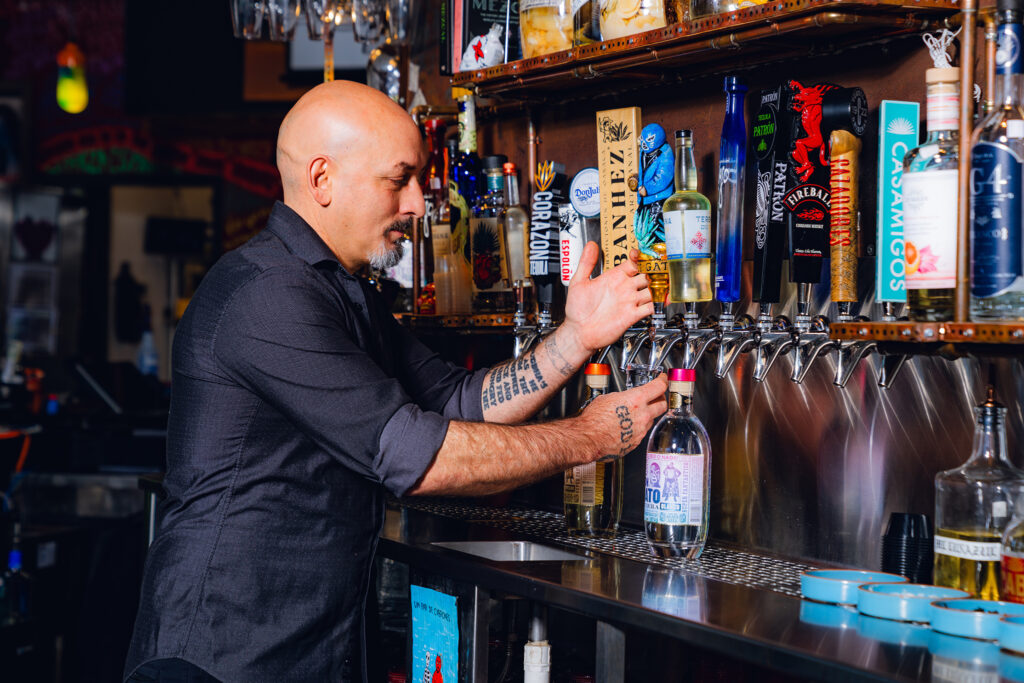
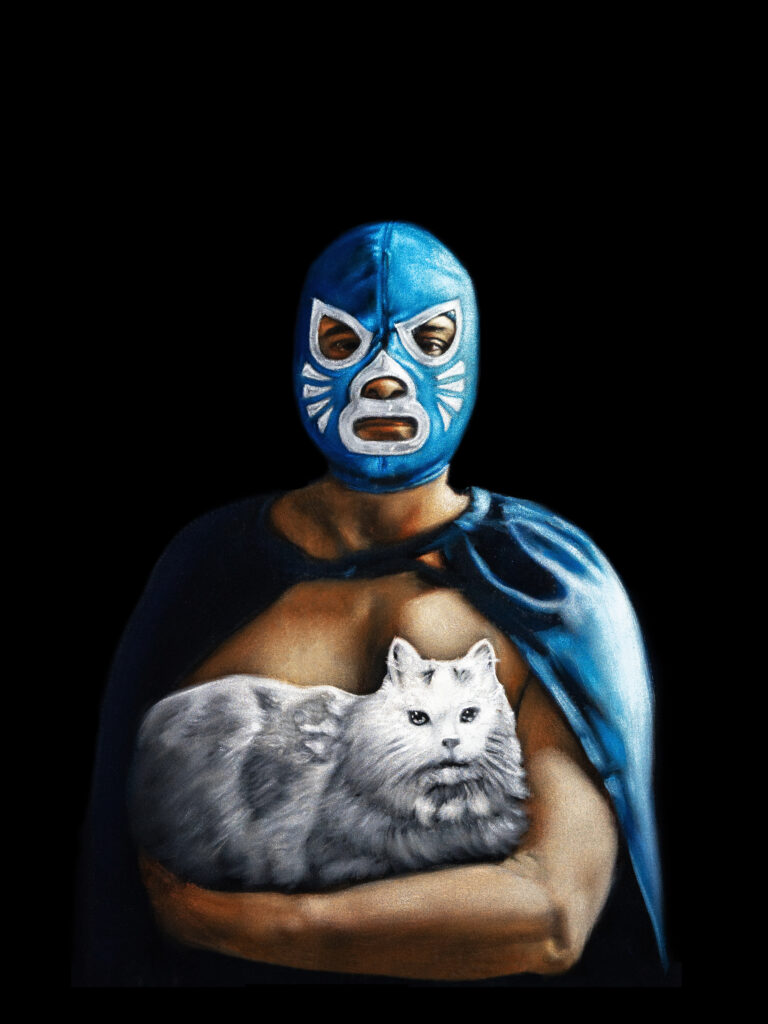
Don Gato’s dive from the top rope into Charlottesville has been swift and not without fanfare. As bar owners like Hawkins and Dunbar embraced the tequila’s taste, they also took on the Don’s aesthetic. Traditional Mexican velvet paintings of the cat-loving wrestler began popping up around town—at Continental Divide, Maya, Livery Stable, and other bars and restaurants—in late 2024. More followed throughout 2025. Hawkins took the look further, putting Don Gato blanco on tap with the luchador himself sculpted into a hardwood handle.
For Hawkins, the tap handle was a fitting tribute to a badass brand and tasty tequila. For tequila drinkers around town, the velvets and other artwork were likely little more than a passing oddity. But there was a story behind the Don Gato mask.
Legend has it that the tequila-obsessed Don Gato ended his unparalleled wrestling career after the death of his long-time mentor. First order of business? Avenge his mentor’s death. Second, sell his car and start a pyramid scheme. Third, wager his somewhat ill-gotten gains on a Las Vegas roulette table, hit big, and buy an agave field in Mexico.
The legend, of course, is completely loco—and for good reason. It comes from the mind of Virginia native and oddball comic Danny McBride.
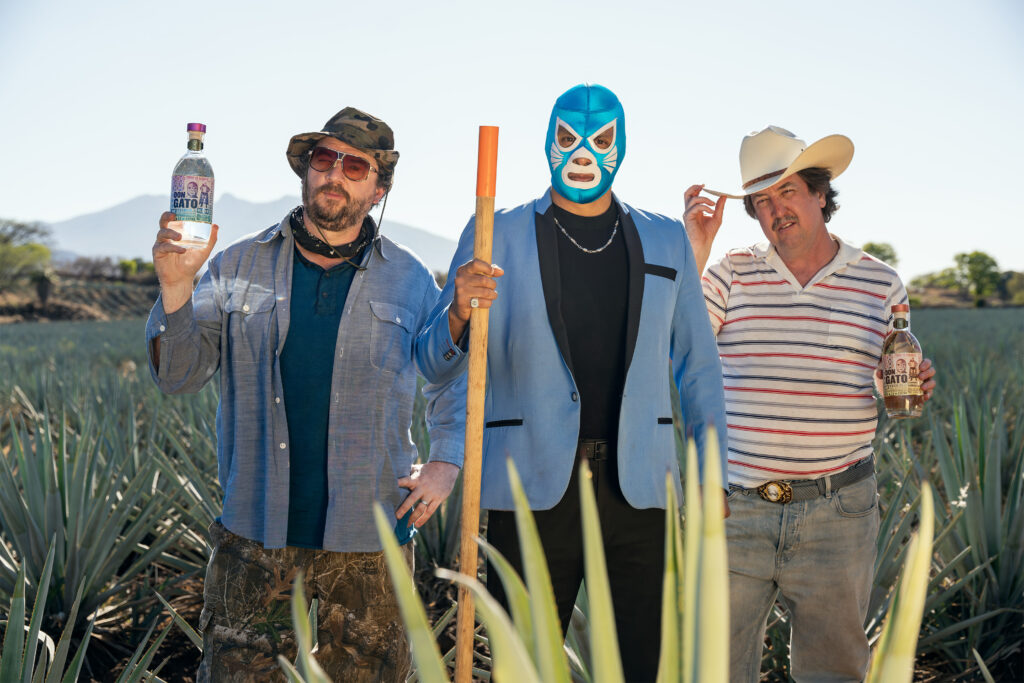
Don Gato’s arrival in Charlottesville has been swift and flashy, evidenced by traditional Mexican velvet paintings of the cat-loving wrestler that popped up around town—at Continental Divide, Maya, Livery Stable, and other bars and restaurants—in late 2024. The legend of tequila-obsessed Don Gato comes from the mind of actor, comedian, and Virginia native Danny McBride (above, left).
McBride, whose comedy centers around characters like egotistic Kenny Powers from “Eastbound and Down” and indulgent Jesse Gemstone from “The Righteous Gemstones,” was raised in Northern Virginia. After high school, he attended the University of North Carolina School of the Arts and met several of the creatives who’d become his longtime collaborators.
Before the Pineapple Express co-star began making movies in 2003, he spent a year working as a bartender at the funky-but-now-defunct restaurant and music venue Orbit’s in Fredericksburg. Dunbar was cutting his teeth in hospitality at the same time.
“The cocktail game was nothing like it is today—a lot of highballs and gin and tonics,” Dunbar says. “When I first met Danny, I remember him saying he wanted to write movies. At that point, we were in our 20s in Fredericksburg, so I was thinking, ‘good luck with that.’ But I do always remember him being a funny guy, with a sense of humor that involved everyone.”
While making it big in L.A. in the 2000s and early 2010s, McBride fell in love with and married Gia Ruiz, a Mexican-American film and television art director. In 2017, the couple moved to South Carolina along with a group of families comprising McBride’s production company. It was there that the “Vice Principals” creator teamed up with Walldorf.
McBride had been approached several times about doing a celebrity-backed tequila, but the market felt over-attenuated, and besides, doing the Clooney pitchman thing didn’t really fit his personality. Working with Walldorf, whose brother had been at the University of North Carolina School of the Arts at the same time as McBride, represented a different opportunity. What if McBride could create a character as a stand-in for the tired Hollywood pitchman?
“I always felt like it was a little cheesy when celebrities were trying to sell you on alcohol,” McBride says. “I wanted to be able to do what I do in my shows and the movies I’ve made—be creative and find a way to capture the audience.”
Worse than being cheesy, some celebrity spirits brands have faced backlash for inauthenticity and cultural appropriation. Keyboard warriors widely panned Jenner’s 818 Tequila after its release in early 2021—not only for capitalizing on a Mexican touchstone, but also for a photo showing her drinking the liquor over ice.
McBride understands the criticism. And despite going all-in on the Don Gato character in a way that few others could, he’s tried to remain respectful of the place where his tequila is made—not to mention the country of his wife’s heritage.
“We’re trying to bring tequila to a broader audience by having fun and paying homage to luchadores, which is a part of Mexican culture that I’ve always been fascinated with,” he says. “I grew up being a fan of wrestling in general, but then getting turned on to Mexican wrestling, I just love the characters, the culture, the fun.”
As McBride has fleshed out the feline-friendly luchador’s legend, the Don Gato team has spread the word through video production, social media, velvets, and even live appearances—inside the wrestling ring and out.
As Don Gato’s biggest fan and—some say—closest confidante, what does McBride think is next for the man, the myth, the legend? “Now that his juice is in America, he’s coming this way to kick some ass for the people.”