Despite the high concentration of data centers in the Commonwealth, Charlottesville has few actual or proposed sites—no matter how you define “data center.”
Virginia has a lot of data centers, with 371 operating and more than 800 proposed as of August 2026, per Cleanview estimates. None are in Charlottesville or Albemarle. Other sources, using different criteria for what constitutes a data center, list a handful of local sites (including datacentermap.com, which notes four within city limits).
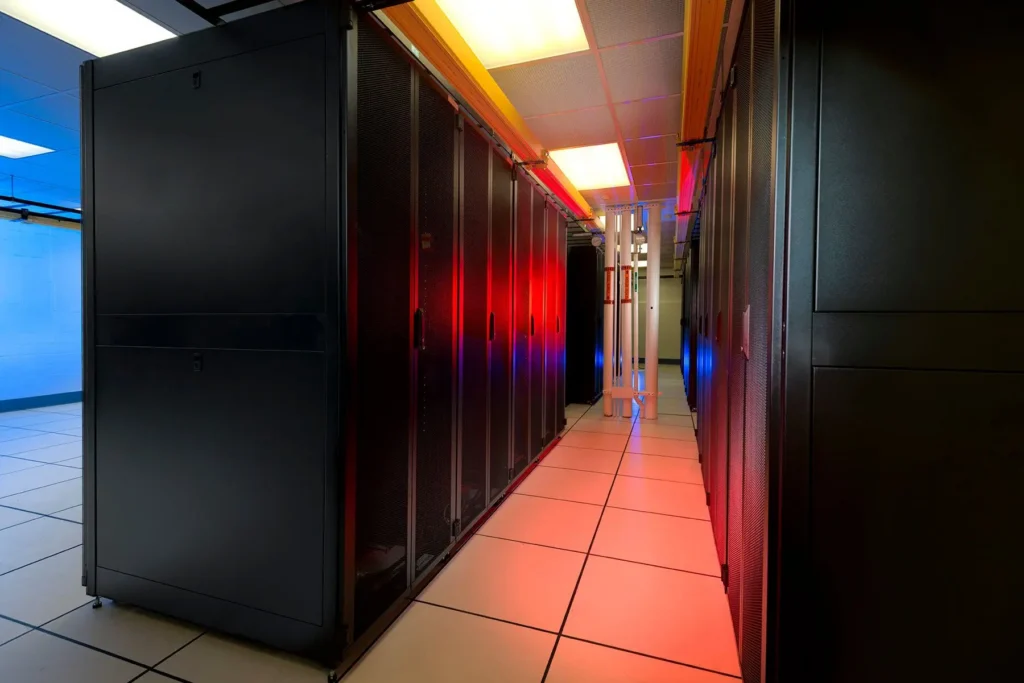
The term “data center” has become shorthand for massive sites, sometimes city-sized, providing the energy-hungry computing power that enables AI. But the phrase has been around since at least the ’90s, and traditionally refers to a site of any size housing servers and other computing equipment.
Current sites in Charlottesville, like the University of Virginia’s data center on Old Ivy Road, are more in line with the traditional definition of “data center.” Larger sites can be found in the surrounding counties, namely Louisa, which has major campuses currently under construction for EdgeCore and Amazon Web Services.
For scale, there are 1,000 watts in a kilowatt, 1 million watts in a megawatt, and 1 billion watts per gigawatt. The average American household consumes 10,500 kilowatt-hours of electricity annually, per the U.S. Energy Information Administration. The planned EdgeCore campus in Louisa has a capacity of approximately 1.1 gigawatts, or 1,100,000 kilowatts.
“The sort of epicenter for data center development, not just in Virginia, but really across the entire planet, has been in Northern Virginia,” says Morgan Butler, a senior attorney with the Southern Environmental Law Center.
Northern Virginia has an expansive fiber optic network, proximity to Washington, D.C., and a smattering of relatively affordable power and suburban land, all of which attract data center developers. The Charlottesville area lacks all those features. Still, it’s not the only reason Butler thinks data center developers may be looking elsewhere.
“The county has taken a very responsible approach to data center development by requiring that any data centers above 40,000 square feet go through a special exception process, meaning … there has to be a public process,” he says. “I think a lot of data centers are looking to go where they can get the cheapest land and get approval as quickly as possible, and really sidestep community concerns as much as they can. And Albemarle County has set up a process that doesn’t allow the public to be sidestepped like that.”
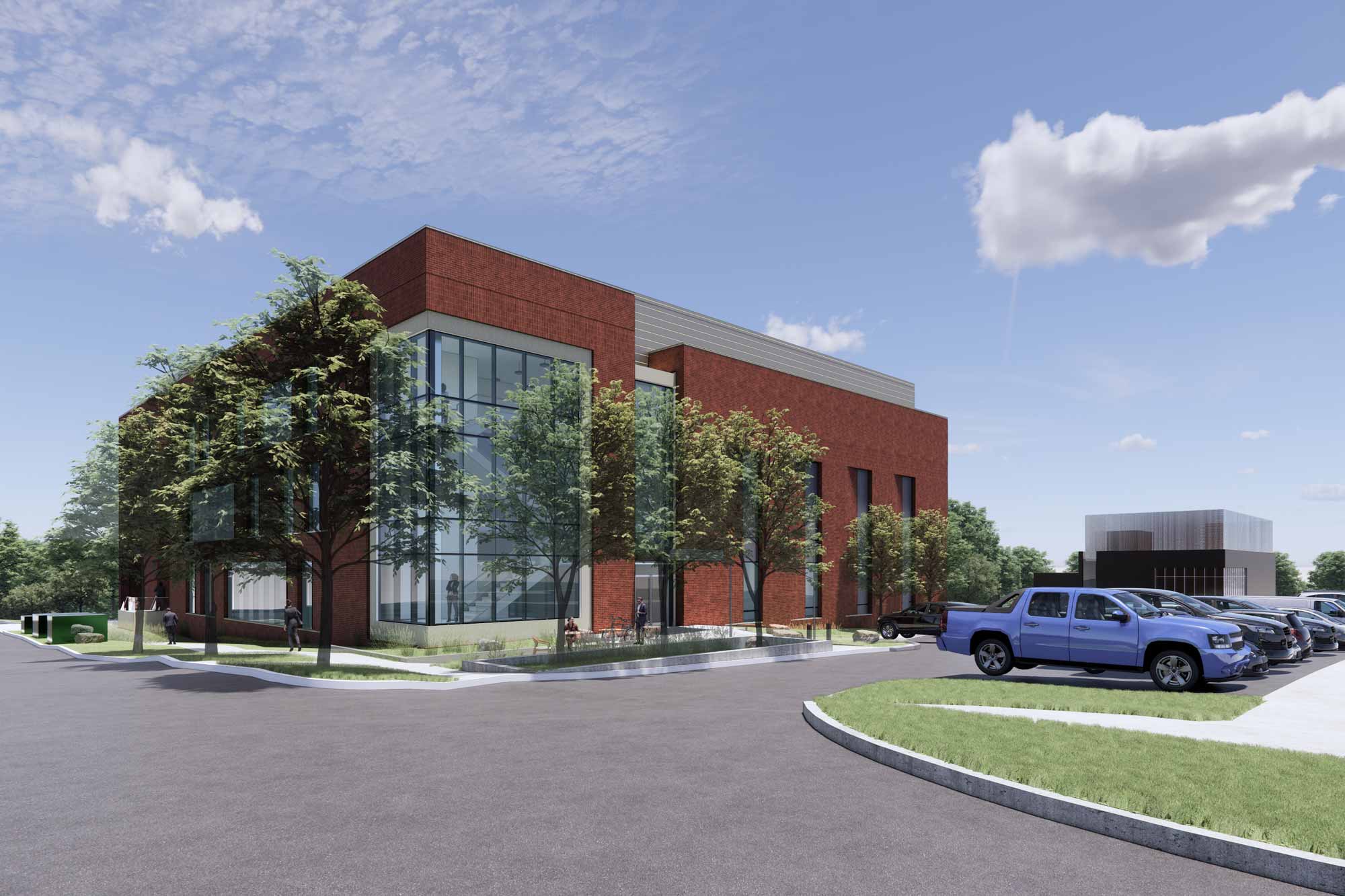
Neither Cleanview nor datacentermap.com list any current or proposed sites in Albemarle County. The latest data center proposed in Charlottesville is UVA’s Fontaine Data Center, which has a planned initial capacity of 4 megawatts and the ability to scale up to 16 megawatts. The project will open for bids in Q4 of 2026, with current cost projections coming in at $102 million.
“The Fontaine Computing and Innovation Center will provide the infrastructure that the university needs to keep up with advancing computational hardware and aging existing hardware,” says Bethanie Glover, university spokesperson. “Where we primarily used to see research computing usage from material science, computational chemistry, aerospace, and other classical engineering fields, there has been an increasing adoption of computation across all areas of study. … This increasing demand is already beginning to strain our existing capacity, and the new center will both let us catch back up, as well as give us room to grow as this trend continues.”
According to Glover, research supported by the expanded computational power includes everything from medical research into the spread of disease to the generation of “‘Digital Twins’ to predict the real-world outcomes of interventions for everything from buildings to humans.”
While UVA is taking a more sustainable and innovative approach to power at the Fontaine site, that’s not the case for all data centers. Moreover, the impacts of hyperscale centers, like the EdgeCore campus in Louisa, can extend beyond the physical environment into the community itself.
Recent moves by Gov. Abigail Spanberger to prevent power companies from passing on the costs of data center construction to consumers are promising, but Butler is still waiting to see how enforcement plays out. For now, the SELC is encouraging communities to consider the factors within their control when it comes to data center proposals: responsible zoning ordinances, requiring transparency, and prohibiting non-disclosure agreements with data center companies where possible.
“Data centers that get built should have to adhere to a set of strong environmental standards in terms of using clean energy, being energy efficient, limiting their water consumption, limiting their noise, and other important safeguards,” he says. “Ensur[ing] that you know any data centers that do get built are minimizing their negative impact on both the environment and the people who live nearby.”