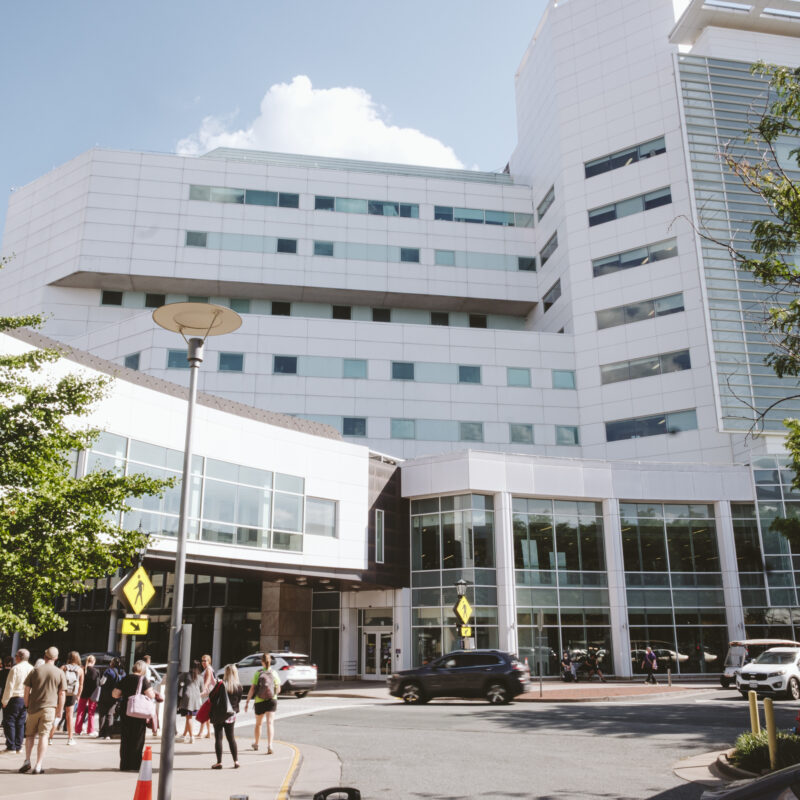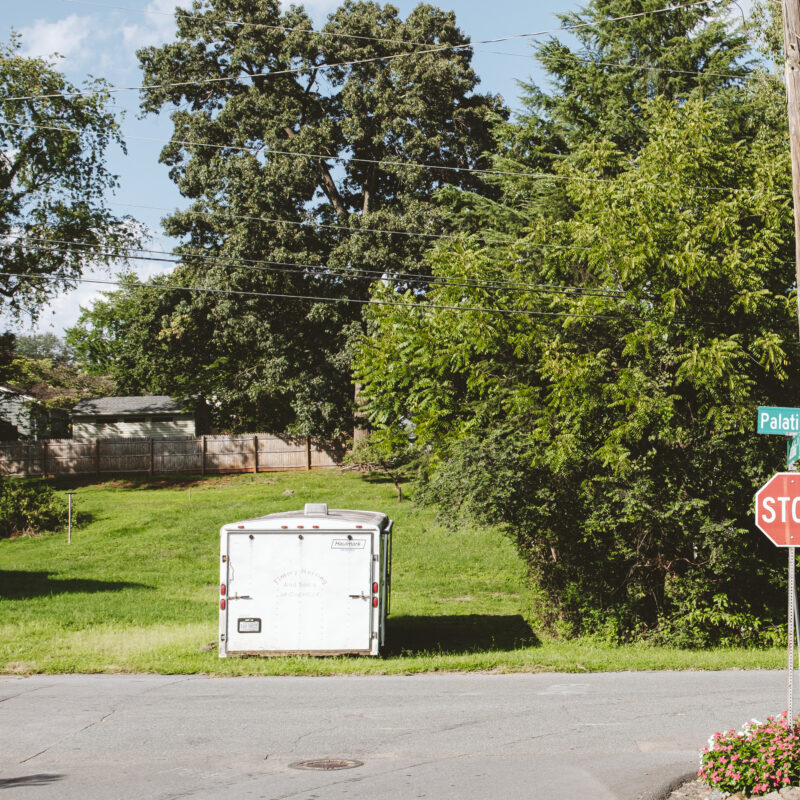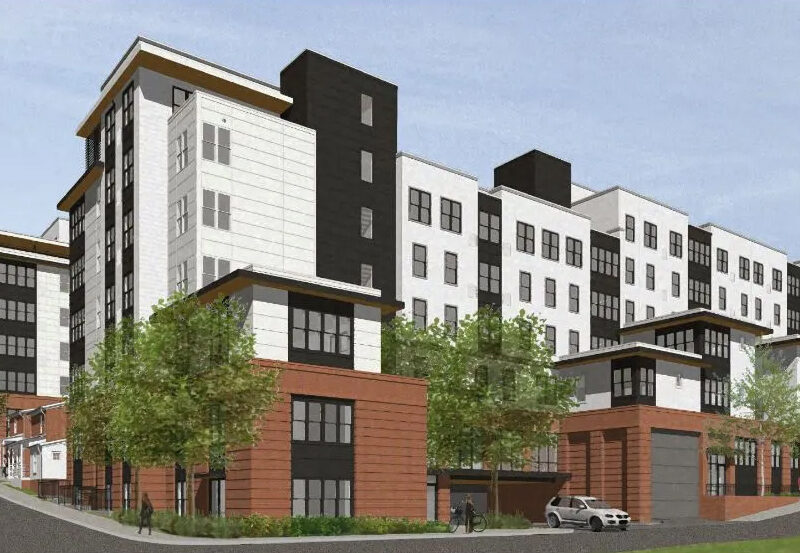
In July 2016, the Virginia Department of Transportation completed an $81 million project to remove the at-grade crossing of U.S. 29 and Rio Road in favor of a new interchange. For many years, Albemarle County has planned to take advantage of the new conditions to create a more urban location.
A small area plan adopted in December 2018 begat adoption of a new zoning tool in September 2021 that was intended to encourage redevelopment of 411 acres around the intersection by allowing additional building space if a project met technical requirements.
“Form-based codes are a type of zoning district that focuses on the size and shapes of buildings and their relationships to streets and sidewalks, as opposed to land use, like traditional zoning districts,” said Senior Planner Mariah Gleason at a Board of Supervisors public hearing on November 18.
This year, staff in Albemarle’s Community Development Department have brought forward changes to the Rio/29 Form-Based Code in part because only two projects have taken advantage of the overlay district. Others, such as the new Home Depot, used the existing zoning written to encourage shopping centers.
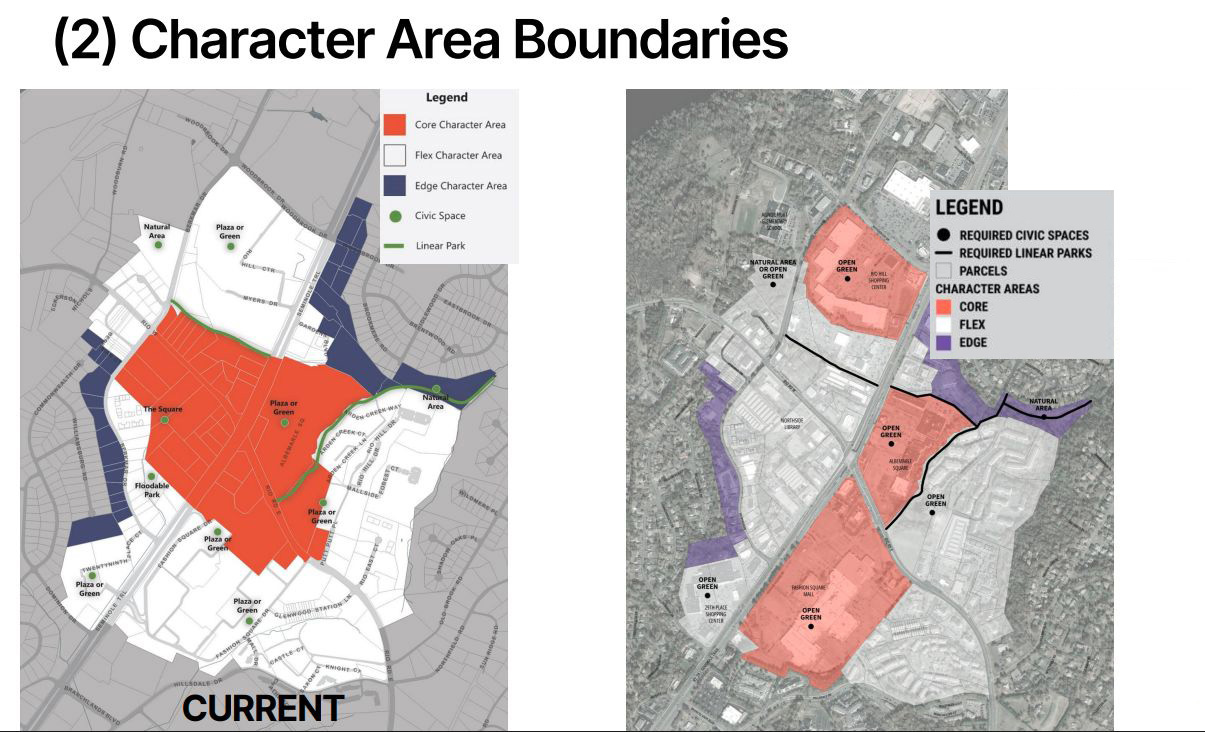
The changes include a new map that alters the “core” areas intended to be higher in density. Future buildings in these areas can be as high as 105 feet tall.
“The first is to shift the core area designation to align with the existing shopping centers, those being Rio Hill Shopping Center to the north, Albemarle Square, and Fashion Square Mall,” Gleason said. “These are areas where a density of commercial activity is already present and ownership isn’t as fractured.”
This could also lead to public-private partnerships with property owners, such as the one that Albemarle County entered into with Home Depot in August 2024 to redevelop a portion of Fashion Square Mall.
The original vision was for Rio Road and U.S. 29 to be a focal point of county growth. Planning Director Michael Barnes said that has not really worked out.
“We heard both from folks in the development community, architecture community, and other places that that was gonna be a tough place to try and create a sense of place or to create that core that we were looking for,” Barnes said.
The plan will still also include two “edge” zones, where heights would be capped at 45 feet to allow a buffer zone between the core and single-family neighborhoods that are just outside the district. The rest of the form-based code area is “flex,” which allows up to 75 feet.
Rio District Supervisor Ned Gallaway said he appreciated efforts to make the rules more flexible as the county waits for development.
“I’ve never got too bent out of shape about how the core has been tweaked and the boundaries have been tweaked, because it’s all flexible until it starts to build,” Gallaway said. “And it’ll become more important when it’s 80 percent redeveloped, not now.”
The Rio Road/U.S. 29 intersection is the second of three areas in the county slated to receive attention from staff as part of an Activity Center Plan. The first is the area around Airport Road and U.S. 29.