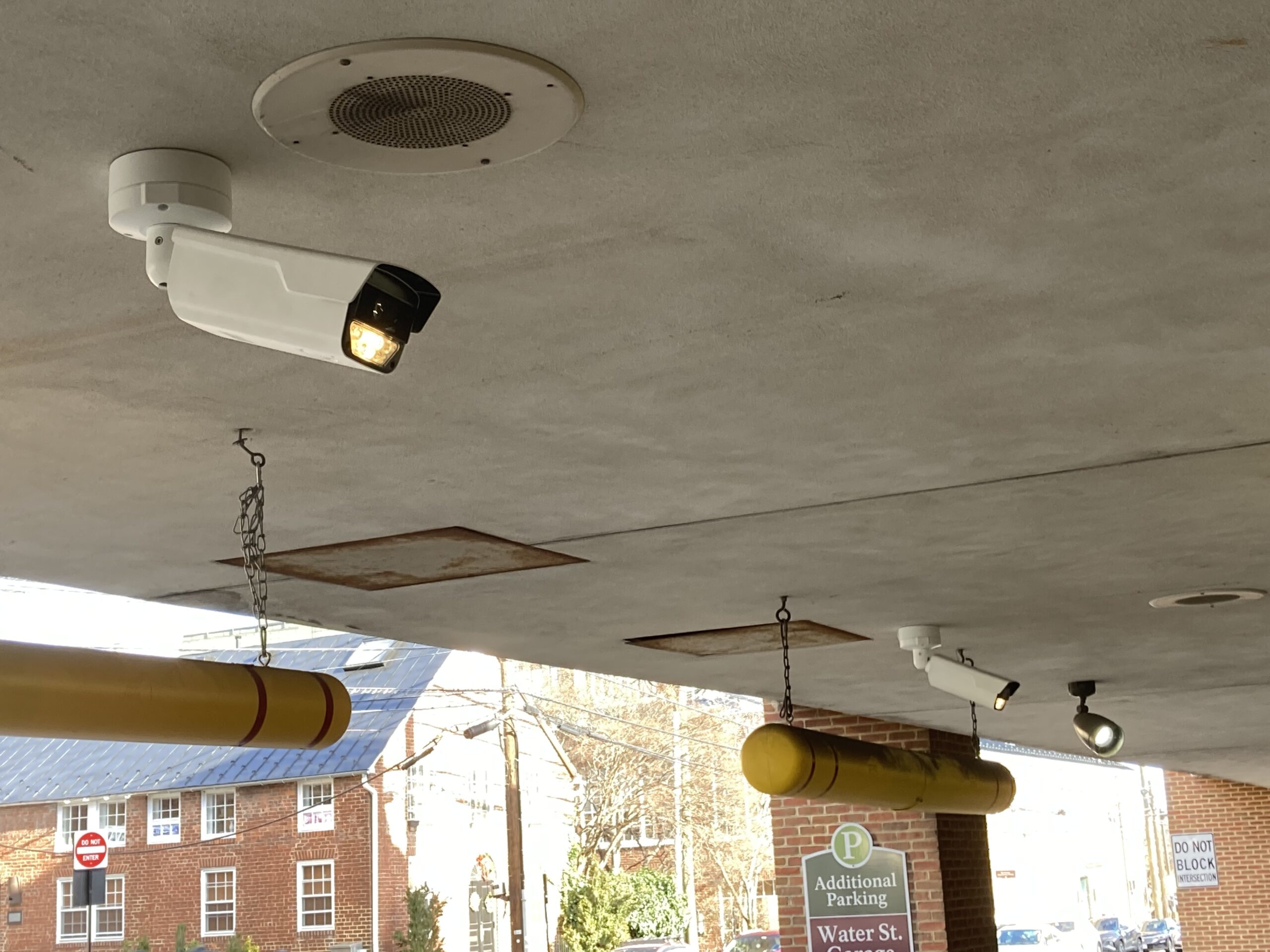
The city’s new license plate readers do not collect any biometric data, says Economic Development Director Chris Engel.
The company that now operates both municipal downtown parking garages only collects data in order to make it easier for vehicles to get in and out, Charlottesville’s economic development director told City Council on January 5.
“The system involves a camera, optical character recognition, and/or license plate recognition to start and end a parking session,” said Chris Engel. “In the previous system, you had to stop, put down your window, grab a ticket, and the ticket started your session.”
A national company called Metropolis has the contract to operate both garages after acquiring the vendor the city had been using. Last November, Metropolis announced the receipt of $1.6 billion in venture capital to advance its work in what it calls “the recognition economy,” where more and more transactions are automated.
The city began using the new system in mid-December. Engel said the company does not collect any biometric information and uses no facial recognition. He said any data collected is used only to facilitate a parking session.
“It’s literally only like 6 inches around the rear license plate,” Engel said. “It’s not even the front. There’s no side views. There’s nothing like that. Some companies are doing biometrics, but we are not. Metropolis is probably experimenting with it, but it’s not part of their contract here and it’s not in place here.”
Engel said Metropolis has to comply with all federal, state, and local laws. He said the company does not sell any of the data it collects, and that people can opt to have their data deleted. He said that class-action lawsuits against the company apply to situations where Metropolis provides enforcement functions.
City Councilor Michael Payne said he did not like the Metropolis’ Computer Vision system in the same way he did not like the now-retired Flock system of license plate readers intended to assist law enforcement track suspects.
“I think it’s a system that just makes people’s lives marginally worse, sacrifices their data, and doesn’t provide them a benefit,” Payne said. “It is just advanced private equity profit. And the business model is very new and explicit of establishing a nationwide monopoly in parking management, using AI to mass surveil customers and then monetizing it.”
Payne pointed to the company’s data policy, which indicates that biometric information can be collected, as well as other data the company says it has the right to sell. Engel acknowledged Metropolis’ policy was hard to decipher.
“I haven’t been through the whole thing word for word, but I’ve asked the specific questions that we’ve heard of, which you’re reflecting in your concern, and they’ve shared the link again where you go to opt out,” Engel said. Customers who wish to forbid Metropolis from ever selling their data can do so at metropolis.io/do-not-sell-opt-out-request.
Engel said about 8,000 people have signed up since the new system went operational. He added that two kiosks are on order to satisfy concerns from many who want to be able to opt out of the system for payment.
“You still have to enter your license plate, but you don’t have to register with a system, so to speak, and do it on a QR code,” Engel said.
City Councilor Lloyd Snook said he had concerns about the collection of data.
“If we assume that the only purpose for which data will ever be used is to try to figure out how to charge somebody for parking, I think that’s hopelessly naive,” Snook said.
Metropolis’ contract will not expire until 2029.
The city’s new license plate readers do not collect any biometric data, says Economic Development Director Chris Engel.