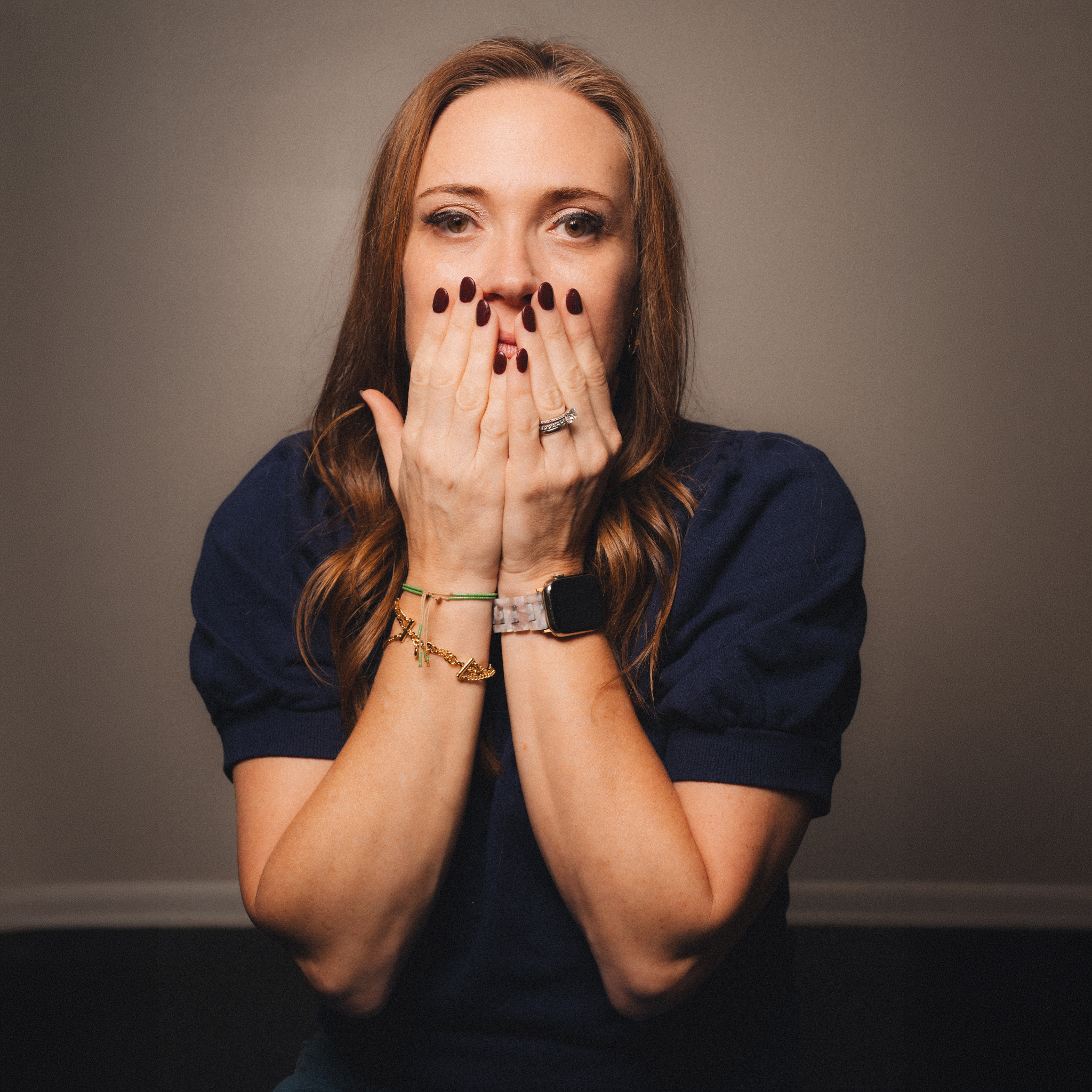
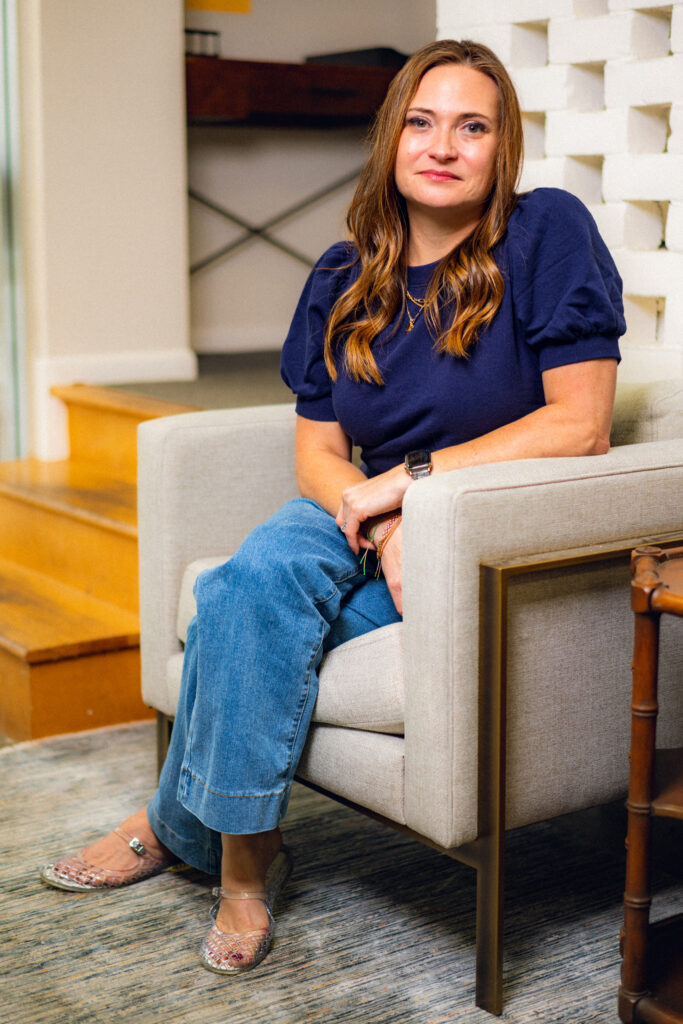
By the time she made her final address as the at-large member of the Albemarle County School Board, Allison Spillman’s self-appointed enemies had been celebrating for more than a week.
“GOOD RIDDANCE,” one posted on Facebook August 5, the day Spillman announced her resignation. “[Spillman] supported every woke initiative that came her way—and even used her M2F Trans [daughter] in ads for her School Board campaign.”
A local podcaster placed a prop bet on whether Spillman would cry during her final address.
Spillman didn’t. Visibly emotional, she said from the dais on August 13, “I did not come onto this board to make people comfortable. I came here to do what I believe was right for students and for the school division. Sometimes that meant standing with my colleagues, and sometimes it meant standing alone. But I have remained the person I told people I was from the very beginning, and I am proud of that.”
In November 2023, Spillman won a costly, contentious race for her seat against conservative candidate Meg Bryce, daughter of the late Supreme Court Justice Antonin Scalia. Both candidates ran on improving student achievement. But Bryce, who at the time of the campaign had withdrawn her children from public school, was linked to religious conservative groups, most notably attending a training session for school board candidates run by the right-wing Noah Webster Educational Foundation, an affiliate of the far-right group Moms for Liberty.
In contrast, Spillman ran as a full-throated supporter of LGBTQ+ students, with other planks of her platform emphasizing school gun violence prevention and students’ mental health. She received 62 percent of the more than 40,000 votes cast, having raised an unprecedented $241,000 against Bryce’s $157,000, with the bulk of both sides’ sums coming from donations larger than $100. (Full disclosure: Years before joining C-VILLE full-time, this reporter donated small-dollar amounts to Spillman’s campaign and volunteered as a canvasser.)
“The race was nasty, and people said things that weren’t true,” Spillman says. “[There were] people who would walk the line of, not quite threatening, but just walking the line of, ‘I know where she lives, we ride at dawn.’”
Those pressures would only worsen throughout Spillman’s term. After her criticism of a conservative student club drew national attention from right-wing activists, Spillman says she endured a deluge of hatred and death threats.
“I would go back and forth, and I kept saying, ‘I can do this, I can do this,’ and then my health started to take a toll,” Spillman says. “I was going to doctors, and they’re like … ‘It’s not cancer. It’s not a heart attack. You’re just completely stressed.’”
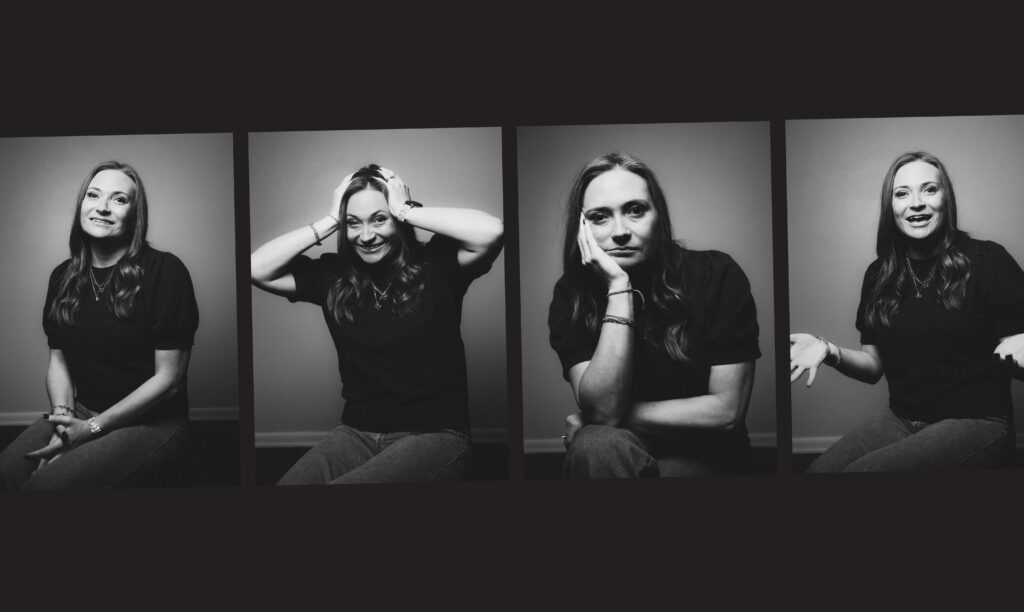
Coordinated attacks
Last fall, Western Albemarle High School’s conservative Club America, affiliated with the late Charlie Kirk’s right-wing Turning Point USA organization, invited The Family Foundation of Virginia’s president, Victoria Cobb, to deliver an on-campus speech attacking the existence of transgender people, entitled “Two Genders, One Truth.” Though WAHS’s principal at the time initially refused to allow the speech, she relented when Cobb’s organization threatened legal action against the school district.
Spillman has a trans daughter who attends Western. In a post on her personal Facebook page following WAHS’s decision to permit the speech, Spillman wrote, “If the KKK wanted a speaker during lunch, would we allow that as well?” (Before his September 2025 murder, Kirk publicly espoused “great replacement theory,” a white supremacist conspiracy arguing that immigration is a plot to dilute and replace white people.)
Spillman says the post “was screenshot by a teacher that I was friends with on Facebook that I thought was a safe person, and sent to Ryan Fournier, who is the [co-founder] of Students for Trump.” In May and June of this year, Fournier faced multiple arrests on charges including cocaine possession and domestic violence. In the latter incident, Fournier allegedly punched his girlfriend repeatedly in the face while drunk, climbed on top of her, and told her, “I’ll kill everyone here.”
In a September 30 Facebook post about Spillman’s remarks, Fournier wrote, “This is beyond OUTRAGEOUS. … To equate [young conservatives] with one of the most evil groups in American history is disgusting and shows how unhinged the Left has become.” He posted a link to Spillman’s comments: “Let her know how you feel.”
“Within 10 minutes, it was like a thousand messages,” Spillman says. “My Apple Watch was buzzing constantly. I started hyperventilating. My husband literally took it off my wrist and threw it across the room because it wouldn’t stop.”
“They called my work,” she says. “They called [Spillman’s husband] Chris’ work. They bombed our social medias, personal, work. Tried to get [us] fired. I mean, it was an all-out attack. And I had the police watching my house. I had security watching my kids because people were saying where my kids went to school.”
Select emails obtained via FOIA show Spillman receiving some words of support, alongside vehement but generally civil criticism. But other messages cross the line into hatred and abuse.
“You are a pathetic malignant narcissist who possibly gave birth to a future school shooter,” reads one excerpt from a September 30 torrent of mockery and insults. The writer signs off, “Great job mom.”
“You Marxist piece of shit,” one person wrote October 3, adding vulgar, racist comments aimed at Spillman’s daughter. “GO FUCK YOURSELF AND ALL OF TRANTIFA.”
“You Alison are a poor excuse for a human and a disgusting person,” an October 4 email reads. “I can only hope you are perused [sic] and harassed by people living close to you that are decent people, as you are not. You deserve a miserable life and I wish that for you.”
“I tell my children all the time that if you hurt someone, whether you intended to or not, you should always apologize,” Spillman said at the October 9 school board meeting. “So to the TPUSA students and your families, I am sincerely sorry. And for anyone else that I hurt, I am sincerely sorry.”
While she says she has “no regrets” for keeping her campaign promise of standing up for vulnerable students, “I do feel bad that it was taken out of context … and that people thought I was attacking other kids, because that is the last thing that I would want to do. … I don’t necessarily agree with the things that [Turning Point’s Club America] say, but I think that they had every right to be a club in the school. I was opposed to these outside speakers, these adults inserting themselves in the school day with ulterior motives.”
“I really think that … several board members wanted me out on an island, and hoped that I would drown on my way back,” Spillman says of the board’s response to her comments. “And I didn’t, and I think that that also made them angry.”
The June 20 resignation of public schools superintendent Matthew Haas both drove and delayed Spillman’s own decision to step down.
“When the Hollymead stuff came out, and we were told the night before the public was told, I was like, ‘That’s it. We need a change in leadership,’” Spillman says. “And I knew that meant that I couldn’t step down when I wanted to, which was at the end of last school year, because I needed to help with that transition. It wasn’t fair to the members of the board, and it wasn’t fair to our acting superintendent [Dr. Chandra Hayes] to throw that in on top of it.”
Spillman pushed back hard against conspiracy theories surrounding Haas’ exit and the alleged crimes of Nicholas Clark, a fifth grade teacher at Woodbrook Elementary arrested in March on charges of possessing child pornography, and Michael Swiney, a former counselor at Woodbrook and Hollymead elementaries, arrested in June and charged with sexually assaulting multiple children.
“There was no cover up,” Spillman says. “This intent to malign the board and say that they’re terrible people and that they should all resign and that they’re covering for a sex offender … none of that is true. … These people are agonizing over decisions and heartbroken and trying to do what’s best for the division as a whole.”
In the weeks before her resignation, Spillman watched online hatred over Swiney’s case begin to ramp up. “All it was going to take was one tweet to go viral … and we’d be back to what happened in October again, and I couldn’t risk it again.”
“I stopped sleeping,” Spillman says. “I had severe digestive issues. My blood pressure was up all the time every time I went to the doctor.” She described anxiety so intense that the dose of medication she’d taken to successfully manage it for 15 years no longer sufficed. “Any one of those should be too much, and it was all of that.”
“I have this sense of—I don’t want to say guilt, but I don’t know,” Spillman says. “Maybe it is guilt that I left, because I feel like I should have been able to do more. I should have lasted longer. … I felt everything so deeply, and I took everything so seriously. If I couldn’t solve a problem, I felt like I was failing.”
“People were counting on me,” she says, her voice beginning to tremble. “But I also am proud of the fact that I was willing to step down when I knew it was too much, and that it was at the expense of my health and my kids and … my mental health. And I hope that people took that message and said, there’s power in that, too.”
“It doesn’t mean I’m done,” she says. “It doesn’t mean I’m quiet. It just means that that avenue wasn’t working anymore.”
Structural struggles
Spillman says the attacks she weathered online and in public compounded her frustration in pushing against what she described as a board too often wedded to the status quo. “I felt this immense responsibility, not just for the people who voted for me, but the people who didn’t,” she says. “I often did not feel like that responsibility was shared among some of the other board members, and I think that’s really important.”
In her fiercely competitive election, Spillman says, “I had to go out and make my stance on things and form policy views and budget ideas well before I got on the board. And the majority of my fellow board members ran uncontested and have been on there for a really long time.”
“When I joined the board, I was told by the older members of the school board that we can disagree behind closed doors, but it’s better for everybody if we show a united front when we come out to vote on things,” Spillman says. “I said, the public deserves to see disagreement and to see who is voting for what, and they didn’t like that.”
Given Virginia law’s limits on school boards’ powers, “we’re not allowed to insert ourselves in many situations,” Spillman says. “But there are a lot of situations where we can insert ourselves, and we can push back. … We need better structure from the board of what our roles and responsibilities are … so that we can actually evaluate the superintendent and actually make decisions on the budget.”
Currently, county staff handle most of the work regarding the school district’s budget. Spillman says keeping the board at a remove from that process limits its agency. “The budget book is intentionally 500 pages long. What we vote on is such a small amount,” she says. “It was very picked and chosen what information was given to us, and that needs to change if we’re going to be voting on a $300 million budget.”
“It’s not a bad thing to openly question staff,” she says. “I want the public to see what the answers are and where their money is going … I just think that there was a difference in philosophy on how to approach the work.”
Spillman also believes that the board was “way too lax” in supervising the superintendent. “We would all kind of submit comments and then the chair would put together what they thought represented everything. I don’t even remember seeing the other [comments] unless I asked for it.”
“We’re not asking to step on toes … but we should be allowed to observe whenever we want,” she adds, “because that’s our job, to evaluate the superintendent. And I’m not blaming the other school board members necessarily. I think that this was just how it’s always been done.”
In June 2025, the board voted unanimously to extend Haas’ contract. Spillman, away on vacation at the time, says she would have been the lone “no” vote.
“I think [Haas] is a good person … and I think he did a lot of amazing things,” Spillman says. “But I think that progress should have been made sooner on achievement gaps. We had the Bellwether report. We have these issues that get brought up every single year, and we keep saying, ‘Well, we just haven’t seen the results yet.’ And I think that there was too much of kicking the can down the road.”
Spillman believes that board members too often take an “it is what it is” approach to the district’s challenges. “I think that’s the wrong attitude. We need people that aren’t going to just accept the way things are.”
She speaks respectfully of her fellow board members’ challenges and accomplishments, from members Judy Le and Ellen Osborne joining just before COVID hit (“talk about getting thrown to the wolves”) to Kate Acuff’s championing of the board’s policies on antiracism and trans students.
“But I think that the way things have worked in the past are no longer working,” Spillman says, “and we have to either recognize that and be willing to make change, or we need to have new people on the board.”
Spillman says she and board Chair Rebecca Berlin both believe the school district should look to similar Virginia school divisions for ideas on improvement. “Because we don’t need to reinvent the wheel,” she says. “Who else is doing it better? How can we improve?”
“The real problem is that this is basically a volunteer position,” Spillman says. She describes working 20 to 40 hours a week on board business, on top of a full-time job as executive director for an advocacy group for disabled, adopted, and foster children. Hour for hour, she says board members’ compensation works out to less than minimum wage.
“You’re asking those ordinary citizens to step up to the plate to bear this burden,” she says. “But they have to maintain full-time jobs, because this doesn’t pay a full-time salary. But if they’re not answering every single email and at every single meeting … then the public argues we’re not doing our job. How can we?”
Future focused
“We don’t all agree,” Spillman says of the board, “and I don’t agree with a lot of the ways that several of the board members work. But … I think that, given the extraordinary circumstances, everyone is working really, really hard, and intentionally, to do the right thing.”
Current board member Jim Dillenbeck independently confirms Spillman’s description of feeling isolated on a board largely resistant to change. “I understand why she decided to step down,” he says, “but I was sorry to see her go.”
“In my view, Allison Spillman was a conscientious school board member and, although we did sometimes differ in approach to issues, fundamentally we agreed on most of the [board] policies and decisions,” Acuff says. “I am sorry that she saw the need to leave her position before her term was up, but know that the burden of negative social media and even threats to her and her family were unsupportable. No member of the [board] or any public official should have to withstand this.”
Spillman’s term runs through 2027. At press time, 13 people remained in the running for an appointment to her vacant seat. Whoever the board picks to succeed her, Spillman says, “I would hope that they’re willing to take up the fight, that they’re willing to [enter] a hostile environment and still stand their ground and say … these students, these teachers—they matter, and I’m willing to stand with them and for them.”
Looking back, “I’m really, really proud of the work I did,” she says. She takes particular pride in passing a resolution on secure gun storage the February after she joined the board—at the time, the second such document for any district in the state. Virginia has since passed a law mandating those rules for every school district.
“But I do feel like if I had continued, the cost may have become too high,” she says. “It’s already hard enough just going out in public, because people have such strong opinions. The majority of the time, people are kind … but there’s a lot of really mean people out there, too, and they don’t see you as a mom or a person. They see just your position, and rage and vitriol, it leaks in.”
“You can disagree with me without hating me,” Spillman says. “You can disagree with my policies and my decision making, and try to get somebody else to run for this position because you don’t like what I did. But attacking my family, or attacking me as a person, or threatening violence against me, is too high a cost.”