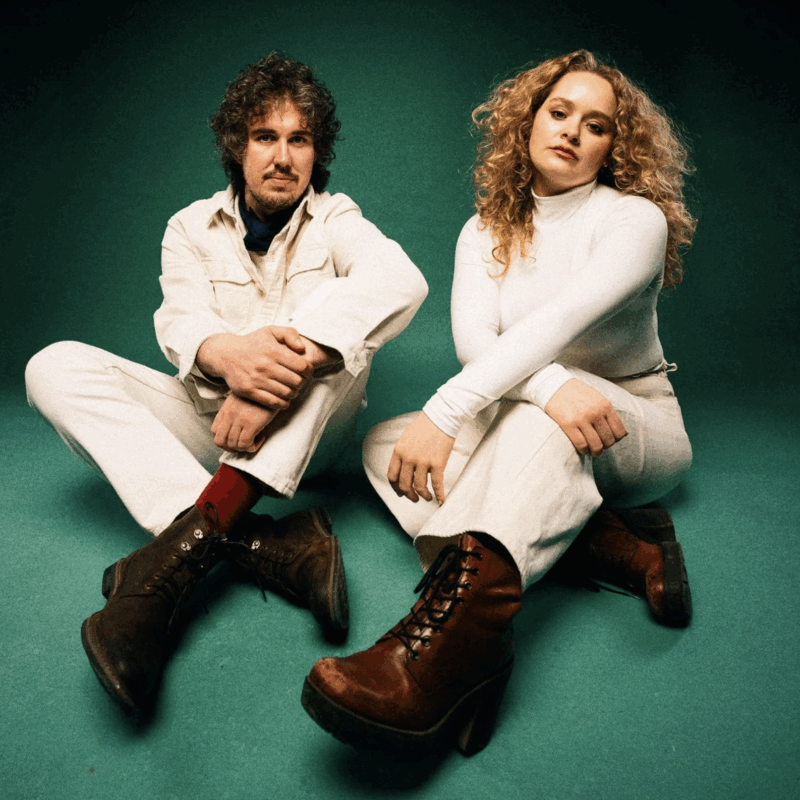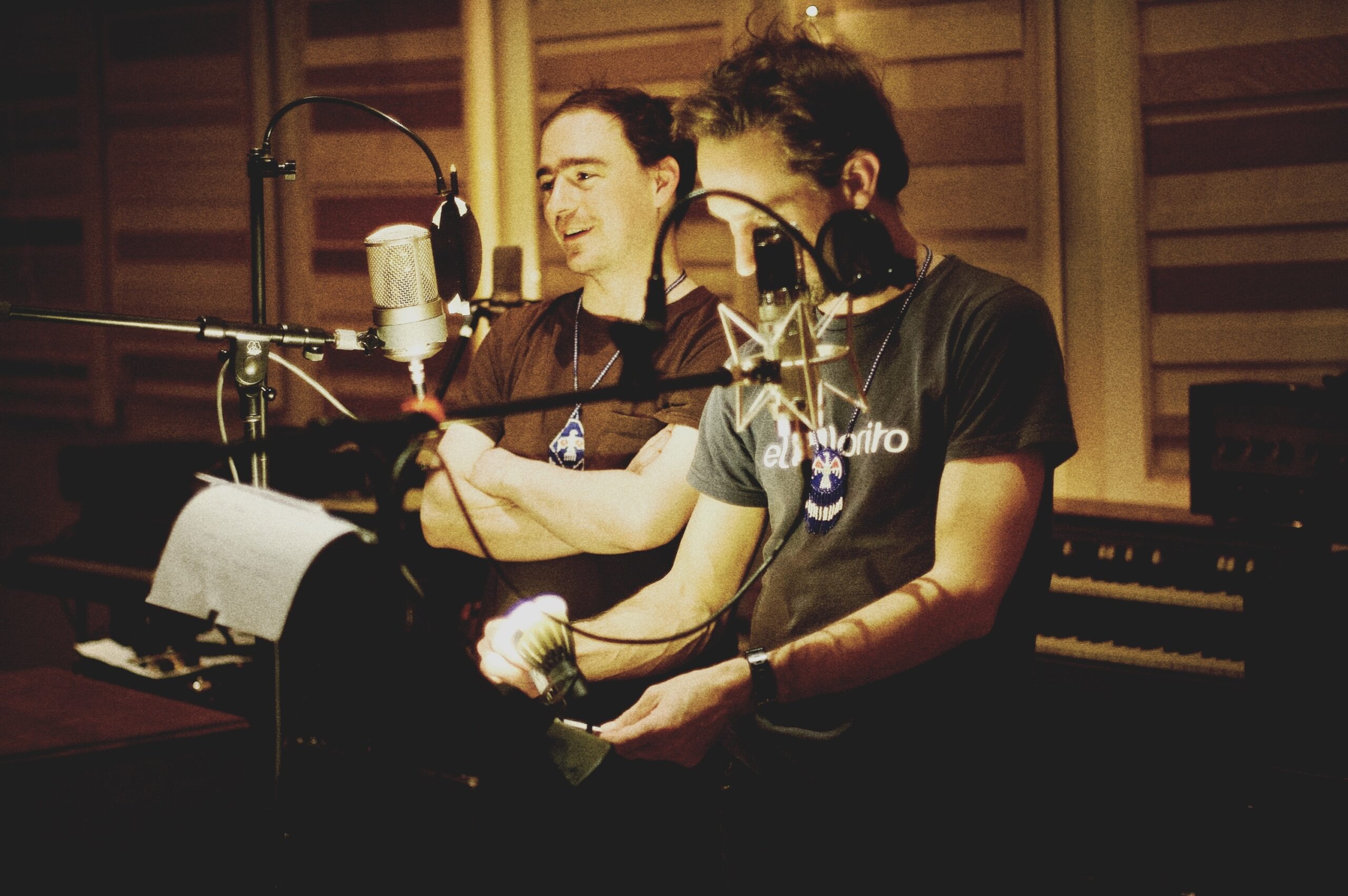
Magnolia & Johnson Electric Co. perform in tribute to late singer-songwriter Jason Molina (left) at the Southern on Thursday. Photo: Matt Pence.
The late singer-songwriter Jason Molina loved playing Charlottesville, says his friend Jason Groth.
Groth spent his formative years in Indiana and did a stint in North Carolina before moving to town. Along the way, he played guitar in a number of groups, including The Coke Dares and Magnolia Electric Co.—the latter being Molina’s main concern during the final portion of his life.
Molina previously led a band called Songs: Ohia, which in 2003 released Magnolia Electric Co, prompting the bandleader to reconstitute his group with new members—and that new name. By that time in the early millennium, he’d kicked around the ’90s metal scene in Cleveland and recorded scores of albums and singles with a revolving cast of players.
Where Songs: Ohia encompassed Molina’s vast influences—folk and blues, maybe some gospel and elements of experimental rock—Groth and Magnolia constituted a refined bar act. Together they were capable of foregrounding country vibes while supporting Molina’s rock inclinations. The new group would help redefine the singer-songwriter’s music and his career.
“[Molina was] so self-possessed in a positive way, so talented, could do anything, command any stage, which was the majority of the shows,” Groth recalls. “Then there was, every now and again, just a clunker, because he drank a half a bottle of whiskey in a bathroom alone before the show.”
Molina lived for about a decade after establishing Magnolia, though a chunk of that time wasn’t spent recording or touring. During that final stretch, he and vocalist Will Johnson forged a kinship, resulting in a single collaborative album, Molina and Johnson, a recording that didn’t involve the Magnolia cohort.
Groth and members of the group have reconvened a few times since Molina’s 2013 death, and with Johnson at the helm, the Magnolia & Johnson Electric Co. will play a few live dates this month—the first is on December 11 at the Southern.
The run of shows coincides with the release of a two-song single—and a bonus digital track—where Johnson and the group reimagine work from more than 10 years back.
It opens with an assured and faithful version of Molina’s “The Big Beast,” and includes reworkings of a pair of tunes from Molina and Johnson—suitably adapted to a full-band country-rock setting, replete with lap steel.
With Johnson, who Groth says is the “best transmitter” of Molina’s legacy, on the mic, there’s a unique connection to the past.
“It felt like we were a band and we were playing these songs that our friend wrote, and Will sounded like both a vessel and an interpreter who understood the meaning of it,” says Groth about playing with Johnson for the first time in 2020.
The Texas-bred songwriter and guitarist is likely best known for his work in the group Centro-matic, but recently issued a solo album, Diamond City. He also sports a decades-deep catalog that includes a stint as a drummer in a ’90s major-label rock act.
The one-off 2009 recording with Molina was a resonant moment in the guitarist’s life, connecting him to Groth and a world of Midwest musicians. Performing with them today conjures a well of emotions.
“It did evoke some old feelings. It’s impossible for it not to,” says Johnson about woodshedding with the Magnolia crew. “I’m standing in a room with this band, you know? We’re sharing stories and sometimes we’re laughing. Other times, I’m on the verge of tears because we miss [Molina]. Inevitably, it’s going to be kind of a stew of all of it.”
Molina’s final tours came in 2008, when Groth says he and his bandmates watched the songwriter’s health decline precipitously.
“At the end of that tour, we were helping him—a 35-year-old man—we had to help him in and out of the bus because he could barely walk,” Groth says.
Magnolia’s Josephine and the Johnson collaboration were among Molina’s final releases, as he continued struggling with addiction. In an effort to help, Groth remembers getting in touch with Molina’s college friends, as well as his estranged wife. But Molina didn’t engage; he died in Indianapolis at age 39 in 2013.
Despite that slow decline, the Ohio-born musician’s influence persists more than a decade after his death: North Carolina’s MJ Lenderman recorded a cover of “Boys,” a Songs: Ohia tune initially released in 1996 and later included on a singles compilation. And a little closer to home, Richmond punk band Memory Hole concluded its self-titled 2024 album with Molina’s “Pass.”
Still, no audience is going to be privy to another performance from the late songwriter. So, the kind of revival Groth is bringing to Charlottesville is the only way to transmit his friend’s work and spirit to new listeners.
He says it took him years to get comfortable with the idea of playing Molina’s songs without him: “I’m grateful that Jason was the center of this universe of really good people and talented people who left us these gifts that we can keep opening.”