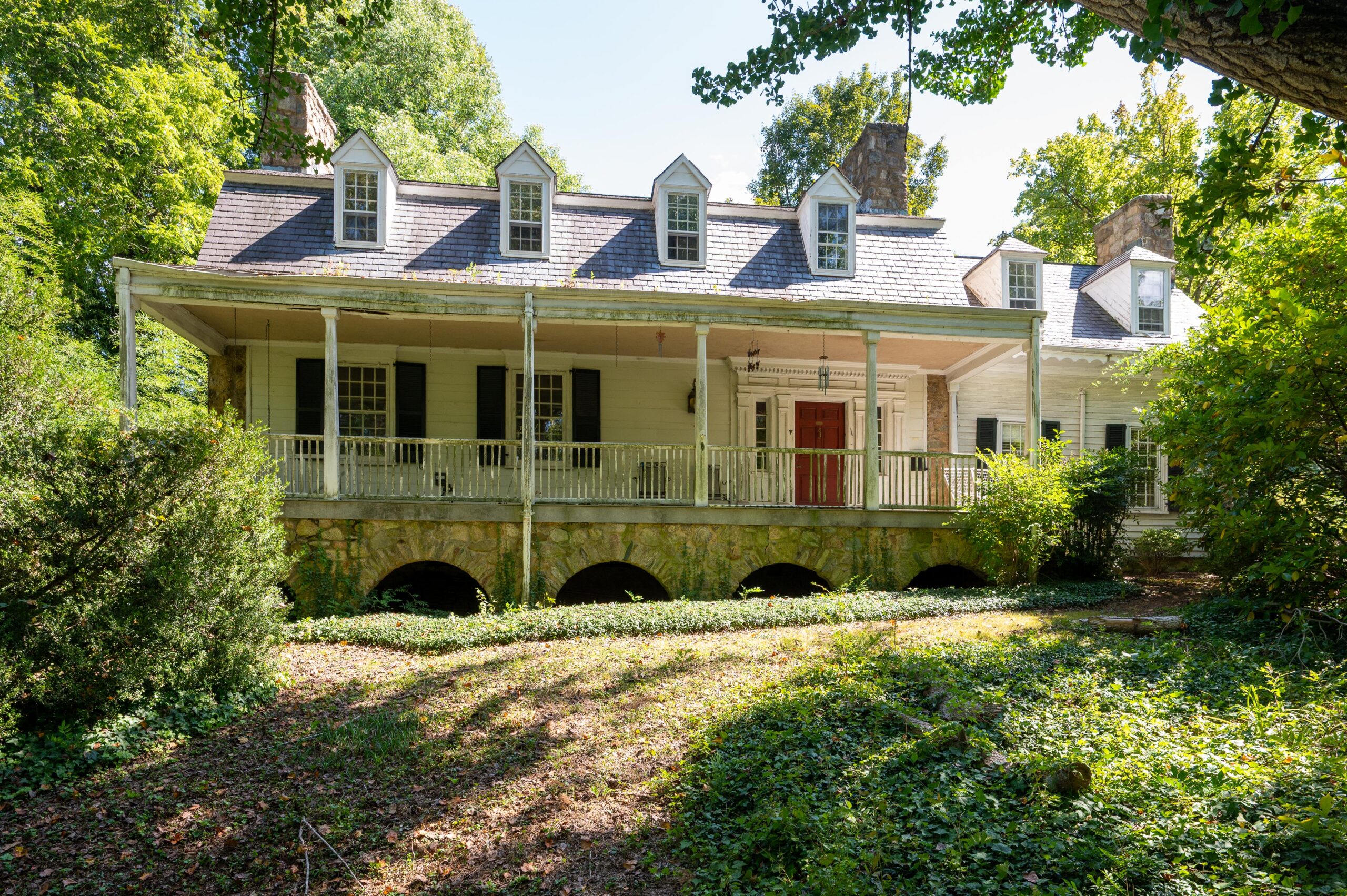
A 1930s house in the Rugby-Venable neighborhood has recently been granted Virginia historic status—but to its owner, it’s worth preserving as part of his own family’s history.
The wood-frame and stone house, built in the Dutch Colonial Revival style, was designed by noted local architect Milton L. Grigg. A Virginia native, Grigg attended UVA but left to work on the restoration of Colonial Williamsburg. In the 1930s, he set up an office in Charlottesville, where he worked for more than four decades. Among his projects were historic sites including Monticello and Michie Tavern, public buildings like Emmanuel Church in Greenwood, and several residences in the UVA area.
This residence, known as the James Minor House, was designed by Grigg for a prominent local attorney associated with drafting the 1902 Virginia Constitution. The house had several owners over the decades, until it was purchased in the late 1970s by George Theodoridis, a professor at UVA, and his wife, Lilly. Theodoridis had a dramatic background: He fled the communist regime of his native Romania for the family homeland in Greece at age 14, coming to the U.S. on a Fulbright fellowship, earning a doctorate at MIT. He and Lilly raised their family in the Minor House; their son Alexander is now teaching political science at the University of Massachusetts.
After George and Lilly passed away a few years ago, Alex didn’t want to lose the family home. “It was a house my mother absolutely loved. It was a passion of hers—she was always adding these whimsical touches—and I wanted it to stay in the family,” he says. In 2022, Alex contacted Alloy Workshop about restoring the house.
The first step was getting the house its historic designation “because of the importance of Grigg as an architect [in this area],” notes Alex. That process took two years, and inclusion on the National Register of Historic places was finalized a few months later.
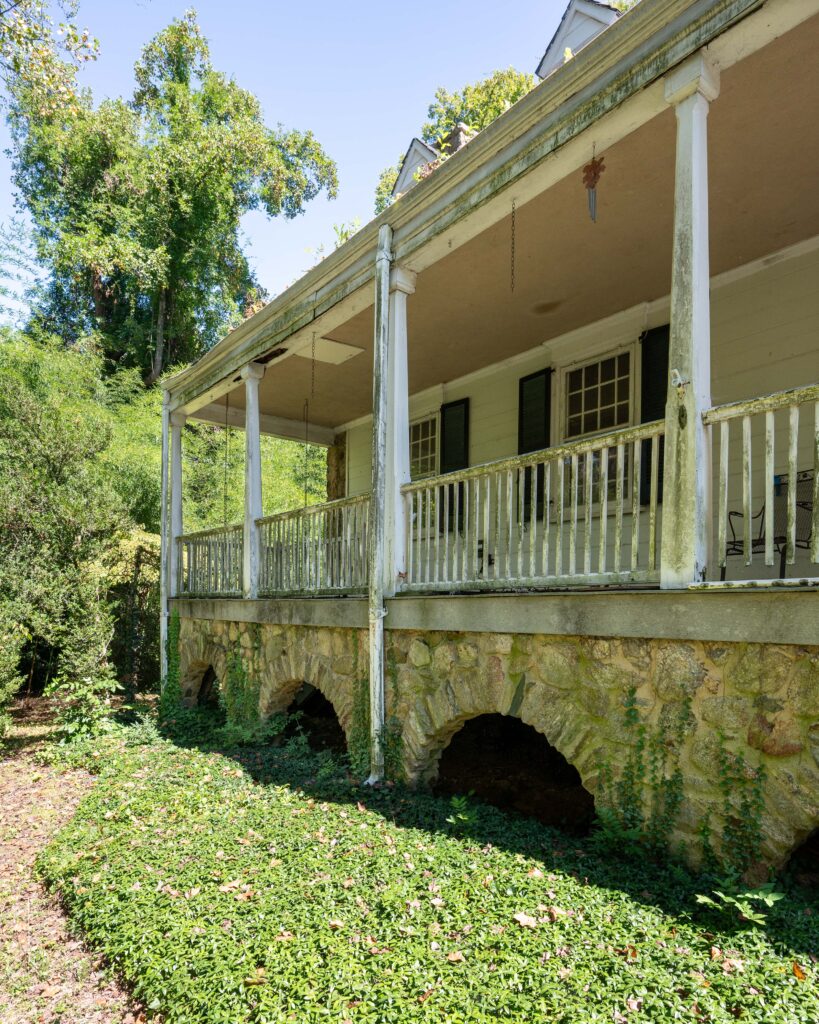
Architect Michael Plehn and interior designer Jen Hamilton went to work on evaluating the state of the house and grounds, and developing a design plan consistent with its restoration. Most of the structural problems, says Plehn, were the result of delayed maintenance over the last few years: replacing the roof and rebuilding the one operable chimney, rebuilding the wooden porch along the house’s west elevation, and replacing the exterior trim. Addressing those needs and bringing everything up to code was the first phase of the project. The next phase will be a full interior renovation—all steps requiring city and federal approval, given the house’s historic status. “Anything new has to look new,” Hamilton explains. “The trim in the rooms has to stay the same, or match exactly.”
While few changes will be made to the layout, the wall between the small dark kitchen and the dining room will be removed, but its beams will be retained to indicate that a wall used to be there. And Alloy is seeking approval for skylights in the master bedroom, now that the plantings around the house have grown so tall.
An interesting note: Alex points out this home was one of the first projects that Grigg worked on when he set up his firm in Charlottesville, and also one of his last. After Grigg retired, he did some design drawings for the sunroom wing that Alex’s father added when he bought the house.
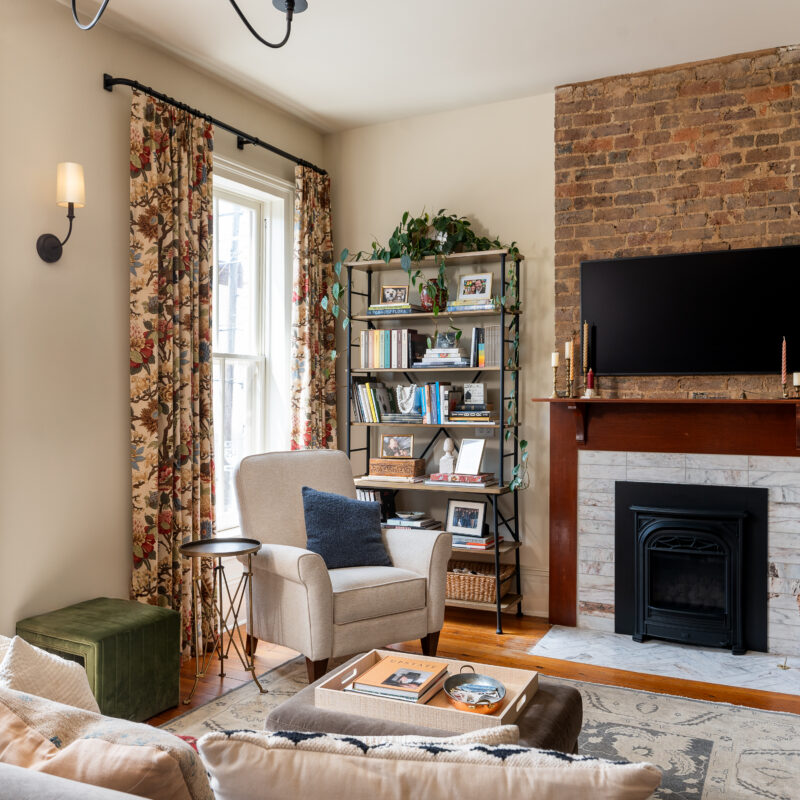
It’s easy to see the old home’s charms: lots of built-in bookshelves, window seats, winding stairs, dormered bedrooms upstairs for the children. For Alex, the house is also full of childhood memories. “The central entry and its staircase—I remember running down those stairs. And my father’s study with his books lining the walls … and that little bar cabinet tucked into a corner of the dining room.”
There’s a marvelous space on the second floor the family called “the owl room.” “My mom loved owls,” Alex recalls. “They’re a symbol of wisdom, you know, so she started a collection in that room, of statues and paintings.” He isn’t planning to move back to live here yet (“maybe in retirement,” he says), but he is keeping the home he and his family loved alive.