When the Albemarle Board of Supervisors met with the Charlottesville City Council on October 6, Albemarle County Executive Jeffrey Richardson was still glowing over what he said was a successful trip to the city by a North Carolina delegation the week before.
“Hosting this visit pushed our respective organizations and our community—almost like cramming for a comprehensive final exam—to prepare for shared learning opportunities with the Greater Chapel Hill-Carrboro Chamber,” said Richardson.
Public transit in the Chapel Hill area is operated under one system, with the University of North Carolina paying about a third of the budget each year. In contrast, UVA Transit is a stand-alone agency designed to move people around Grounds. UVA participates in regional transit meetings but does not make a major financial contribution to the city’s system.
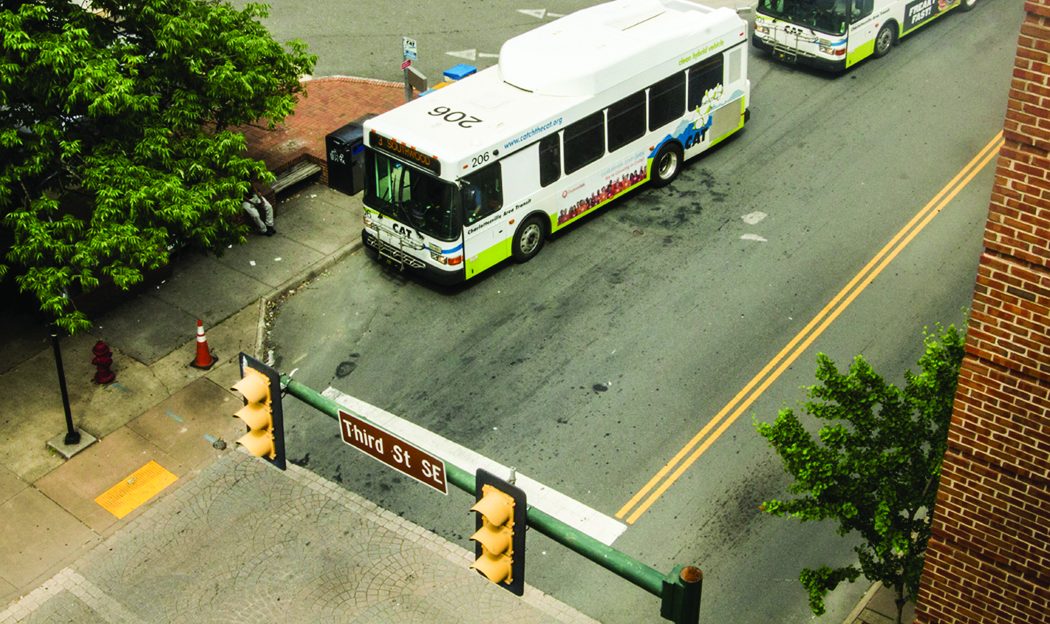
The October 6 meeting provided an opportunity for elected officials to hear the latest about efforts to improve the area’s public transportation system, which is made up of multiple agencies including the city-owned Charlottesville Area Transit.
“CAT continues to push toward reclaiming its pre-COVID service levels on which to build an even broader ridership in our area,” said City Manager Sam Sanders. “MicroCAT is still exceeding all expectations, and the county remains committed to serving the transportation needs with fixed route and on-demand service.”
CAT is in the first of a four-year plan to hire around 40 drivers to fully staff the latest Transit Strategic Plan. Enhancements are being made periodically, such as increasing service on the Route 7 to every 15 minutes during peak periods beginning on October 26. Service to Mill Creek could begin as early as February if bus stops are built in time.
But CAT Director Garland Williams acknowledged a deficiency in the system.
“We do not have any service right now on Sundays,” Williams said. “That was one of the things that we had to modify during the pandemic, and we have not been able to extend service back on Sundays because we just do not have the number of drivers required to do so.
Williams said Sunday service may return if the city hires another 10 drivers in the second year of the plan. As of October 6, CAT had 69 drivers and had made offers to another seven.
Williams said he is hopeful CAT can partner with UVA to include some of its ridership data to justify $500,000 more per year in federal funding under the Small Transit Intensive Cities Program.
“If we are allowed to partner, or the university itself voluntarily reports, it will help us to exceed the categories in the passenger miles traveled,” Williams said.
UVA does not take federal funding for its transit service, which means it is not required to report ridership. Williams said the National Transit Database will soon begin publishing data anyway from public institutions that offer to volunteer the information.
“That will be an important marker for allowing universities to see how they could help the region get more money,” Williams said.
Another subject discussed at the joint meeting was economic development. Billions of dollars are being invested in the community in the field of biotechnology, including the $380 million UVA is spending to build the Paul and Diane Manning Institute of Biotechnology, which will open in the second quarter of 2028. British pharmaceutical firm AstraZeneca will set up manufacturing at the county’s Rivanna Futures site near the Charlottesville Albemarle Airport.
Williams said AstraZeneca has reached out to CAT to provide transit to an area that is currently well outside the service area. He said it would take at least two years to do so because of a need to install bus stops and find out what other services would need to be reduced or eliminated to accommodate the request.