Scott Stadium has an official capacity of 61,500.
That’s why it was noticeable to both University of Virginia football Coach Tony Elliott and his players that home crowds averaged fewer than 39,000 fans in 2024.
“We need them,” Elliott said last October of the fans missing from those 22,000 empty seats. “We need folks to be in the stands, create an environment for the guys, and also make it tough on opponents.”
Just over one year later, Elliott got his wish.
More than 58,000 fans piled into Scott Stadium for UVA’s regular season finale against Virginia Tech on November 29, marking the program’s highest single-game attendance since 2011.
UVA responded to the hype by claiming a 27-7 victory that secured the program’s second-ever trip to the ACC Championship game.
“I think it gives us confirmation,” Elliott said about the game’s attendance. “It gives us motivation. It gives us encouragement, a little bit of validation that we’re definitely headed in the right direction to make this a competitive rivalry and make Virginia a program of relevance.”
Virginia finished the regular season with a 10-2 record.
That’s not only the Cavaliers’ best record through Elliott’s four seasons in Charlottesville. The mark also tied the 1989 Cavaliers for the most wins in program history.
The Hoos ultimately fell just short of a trip to the College Football Playoff after suffering an overtime loss to Duke in the December 6 ACC title game.
Despite that heartbreak, the team, which was ranked No. 19 nationally at season’s end, is headed to the Gator Bowl to play the University of Missouri on December 27. And Elliott is hoping fans will return in droves to Scott Stadium in 2026.
Here are five reasons to get excited for the future of UVA football following the program’s best season in almost four decades.
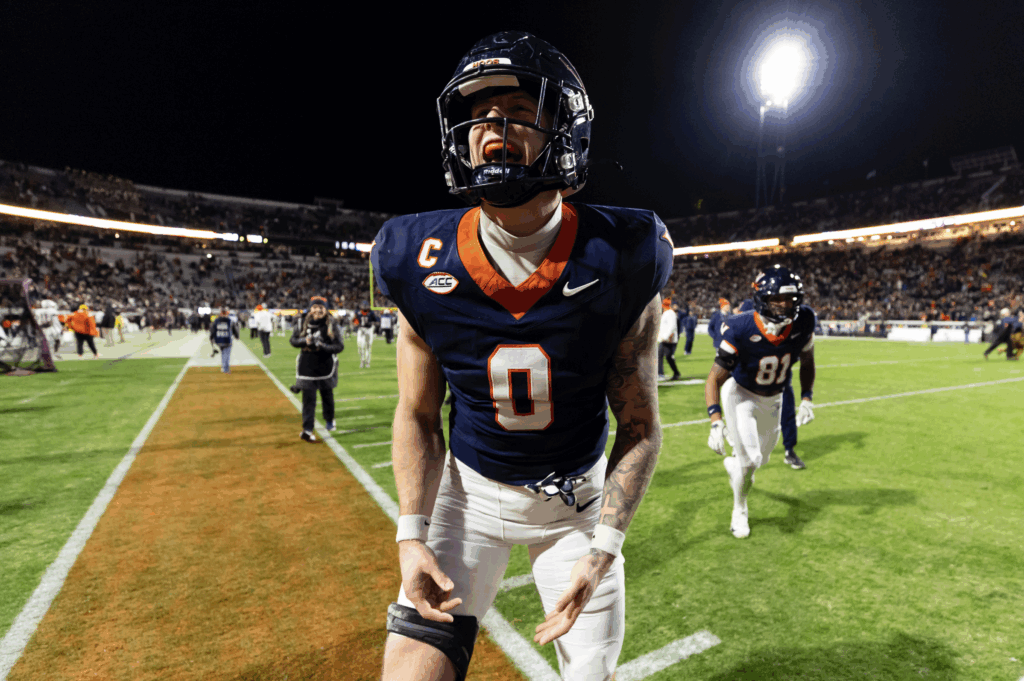
1. Clutch plays
Back on September 6, when the Cavaliers were in Raleigh, North Carolina, for the second game of the season, Virginia was just 12 yards away from a touchdown that would have sealed a comeback win over North Carolina State.
That chance ended with an interception thrown by UVA quarterback Chandler Morris.
The loss dropped Virginia’s record to 1-1. More concerning, it seemed to show the continuation of a troubling pattern: The Cavs, in three prior seasons under Elliott, had struggled to score when inside the 20-yard line.
Elliott said after the game, however, he felt the Cavaliers “grew up a little bit as a football team” during the loss.
“We’re gonna own it. We’re gonna get better,” Elliott said.
The Cavaliers lived up to that promise. The team went on to win its next seven games.
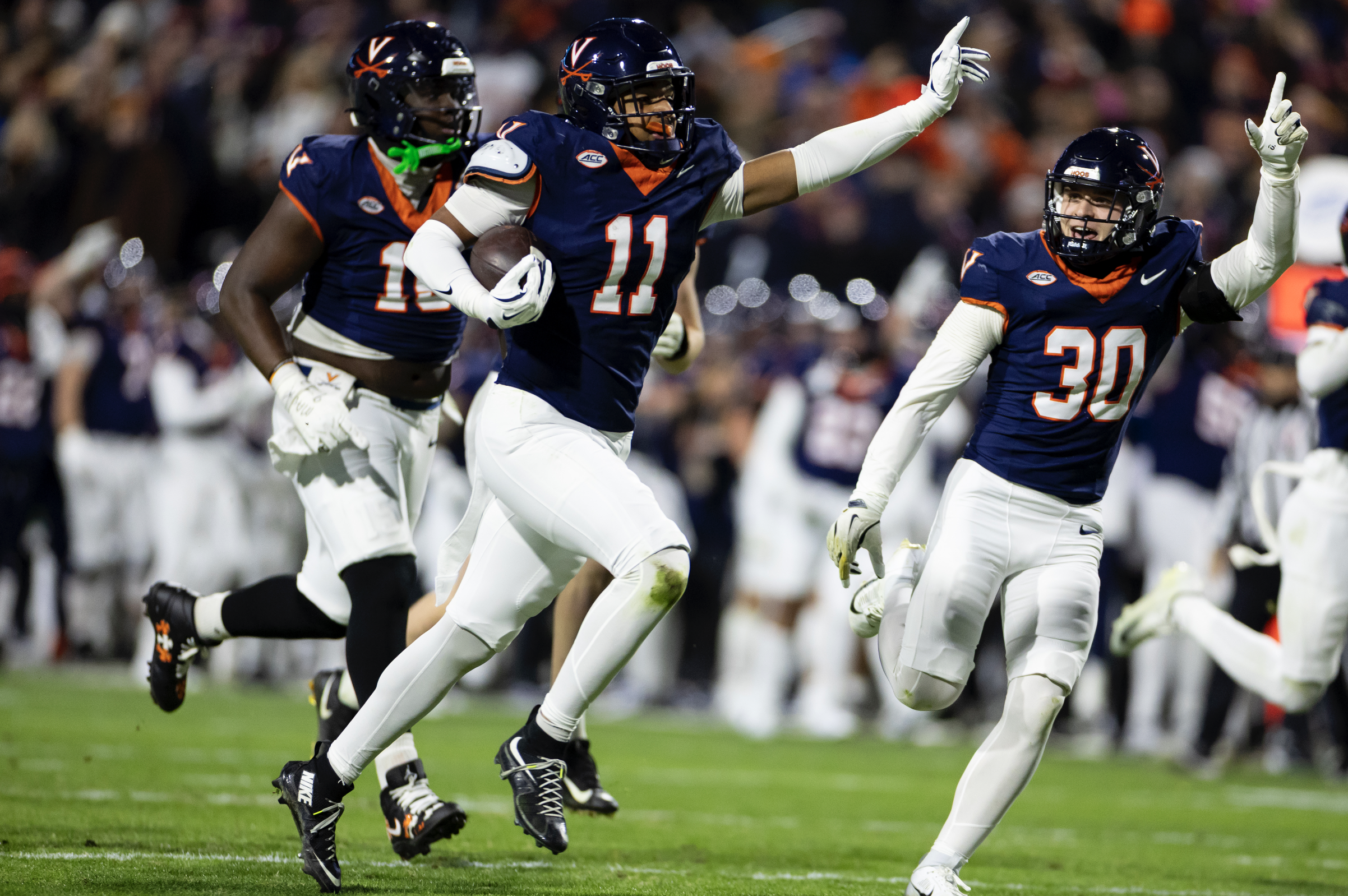
The highlight of that stretch came on September 26, when UVA took on Florida State, which was ranked No. 8 in the nation at the time.
Cornerback Ja’Son Prevard sparked a field rush at Scott Stadium when he intercepted a pass intended for an FSU receiver during the second overtime, clinching the Cavs’ first home victory over a top-10 opponent since 2005.
Virginia then claimed OT wins over Louisville and the University of North Carolina in the following weeks to become the first team in program history to win in overtime three times in a single season.
In other words, UVA is stepping up in the clutch. The 2025 team saw its success rates jump from last season in both third-down conversions (34 percent to 49 percent) and red-zone touchdowns (45 percent to 56 percent).
That is thanks, at least in part, to creativity shown by both the Hoos’ offense and defense.
This season’s win against Virginia Tech was secured by a touchdown in a trick play UVA tight end Sage Ennis said the Cavs had been working on for “weeks.”
“We put a lot of time into our goal-line packages,” Offensive Coordinator Des Kitchings said after the game. “You know, historically, you may get maybe 15 or 20 of those plays, roughly, give or take, throughout the course of the season. So, you spend a lot more time practicing than you actually get to do it in the game.
“But you have to, because when it arises, it’s so critical.”
It may be fitting, then, that UVA’s playoff hopes ended on a trick play in overtime of the ACC title game that resulted in a game-ending interception by Duke.
Given the Cavs’ overall improvement in coming up when it mattered, however, there’s plenty of reason to hope this program could go even farther in 2026.
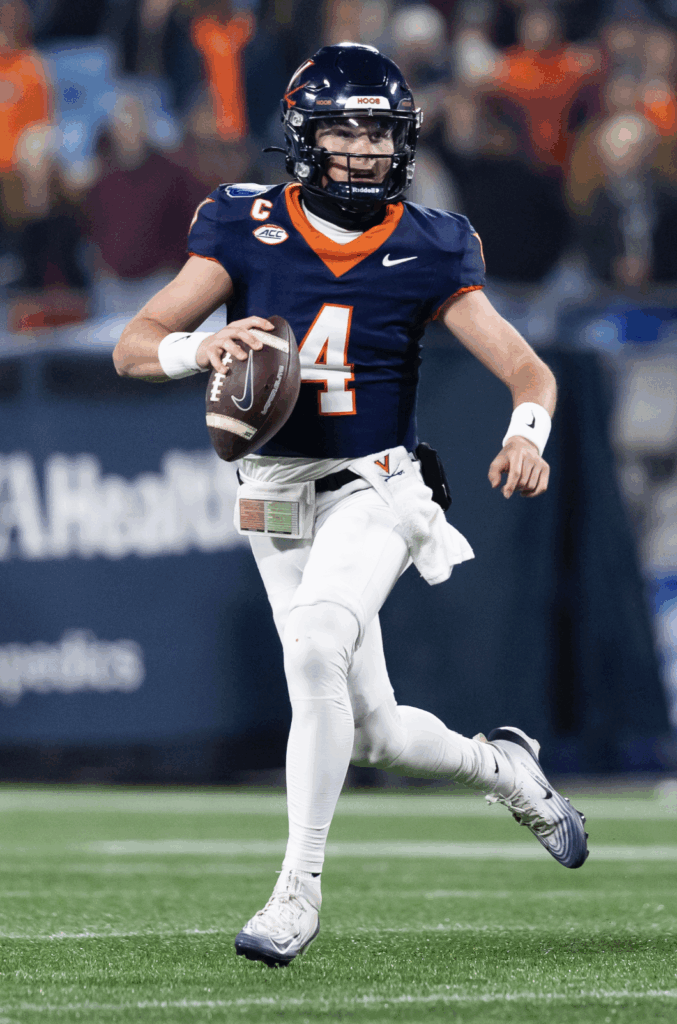
2. Newcomers
Not everything went smoothly during the regular season.
Morris took a hit to the head in the second quarter of the Wake Forest game and didn’t return.
UVA and Morris ultimately dodged the worst possible outcome. The quarterback recovered in time to lead his team to a win over Duke the following weekend.
Morris finished the season with 2,834 total yards and 19 touchdowns, proving himself to be the most pivotal recruit of a busy last offseason for Elliott and General Manager Tyler Jones.
The quarterback was part of the largest transfer class in program history. That group also featured two of Morris’ top targets in Purdue transfer Jahmal Edrine and James Madison University transfer Cam Ross.
The offense was further transformed by J’Mari Taylor, a North Carolina Central transfer who finished his first FBS season racking up an ACC-high 997 rushing yards.
On the other side of the ball, Louisville transfer Devin Neal finished the regular season with a team-high 70 tackles. Ohio State transfer Mitchell Melton meanwhile put up a team-high 10 tackles for loss.
UVA hopes to use the lessons learned from building that class to bring in another strong transfer group when the portal re-opens in January.
The team is also improving its high school recruiting, especially regarding top in-state prospects.
During an early signing period in December, the Cavs added six prospects from Virginia and another from the DMV (D.C., Maryland, and Virginia region). Elliott said UVA also made the “final cut” with other top players from the state.
“You can work as hard as you want, building those relationships with the folks at the school, but until you can put the product on the field … We’ve got a little bit more to sell than just a vision,” Elliott said after the early signings. “It’s really coming to life.”
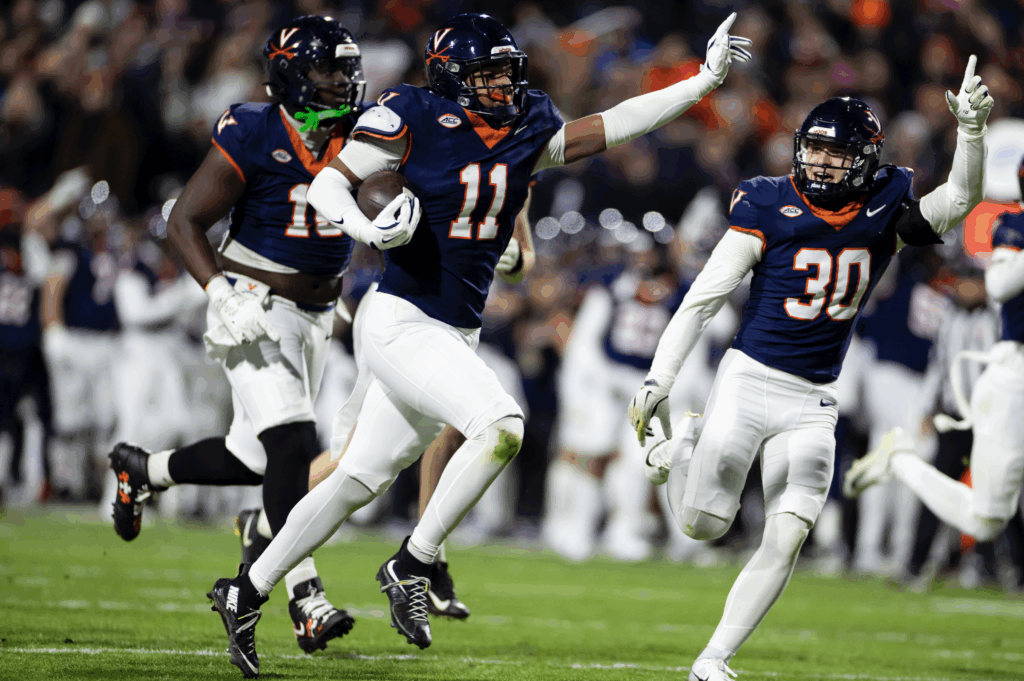
3. Returning players
Elliott and co. will also need to work on convincing players on the 2025 roster to return for another season in Charlottesville.
That includes junior linebacker Kam Robinson, who could return for his senior year after his junior season ended early with a torn ACL, as well as Maddox Marcellus, who excelled when stepping up in Robinson’s absence.
Fans could also see some of the 2025 team’s true freshmen get more playing time next season, as longtime Cavs like safety Antonio Clary, linebacker James Jackson, and defensive tackle Jahmeer Carter run out of college eligibility.
Elliott named defensive backs Corey Costner, Montino Williams, and Josiah Persinger; wide receivers Josiah Abdullah, Dillon Newton-Short, and Isaiah Robinson; offensive lineman Jon Adair; quarterbacks Grayson Reid, Cole Geer, and Bjorn Jurgensen; tailback Xay Davis; and defensive tackle Sichan John as freshmen who are “next in line” to step up next season.
The biggest question regarding UVA’s class of returning players hinges on whether Morris is able to return for a second season in Charlottesville.
Elliott confirmed in December the Cavs’ starting quarterback is exploring whether he could be granted another season of college eligibility by the NCAA.
Bringing Morris back would give Elliott a head start on building a team that could take UVA back to the conference title game next year.
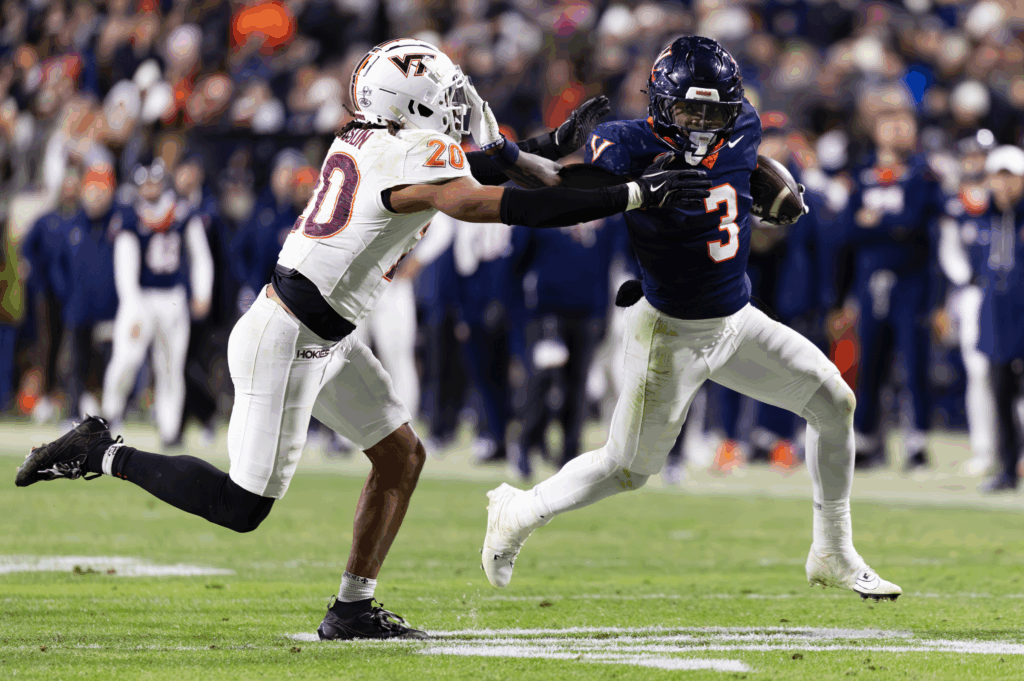
4. Funding
Victories alone are sometimes not enough to ensure top athletes stay with the same program.
Building winning teams also requires funding, both through providing players with name, image, and likeness deals as well as revenue-sharing with the university.
Athletics Director Carla Williams announced in June that UVA would spend the entire revenue-sharing sum allowed under NCAA rules—for the 2025-2026 academic year that came out to $20.5 million—with student-athletes. Of that cap, schools typically direct about 75 percent toward football.
UVA football opened a new $80 million facility last August. The program then received four multi-million-dollar donations in a span of 10 months between December 2024 and October 2025.
Virginia football has also been affiliated since 2023 with the NIL marketing agency CavFutures. Having the opportunity to earn brand deals in Charlottesville could help the team retain and recruit players.
So will having a coach who’s able to explain those opportunities. J’Mari Taylor said in December he chose to come to UVA after Elliott “opened my eyes about how the NIL process works.”
“He was really the only coach that sat me down, actually talked to me about that,” Taylor said. “That stuck out to me, because all the other coaches that I talked to didn’t really talk about stuff like that.”
5. Culture
Brand deals and fancy football facilities aren’t the only reasons Elliott and Jones hope to attract top players for 2026.
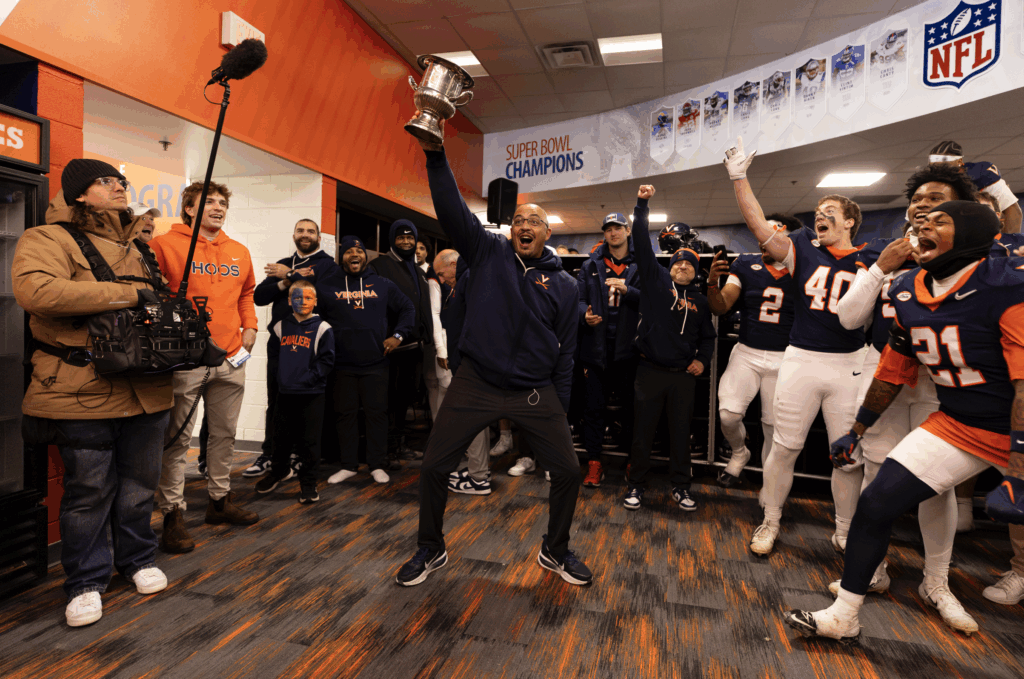
The Cavaliers want to enter this offseason as a desirable transfer destination, thanks to their team culture.
Elliott has been marketing his leadership style as H.E.A.R.T., an acronym that stands for humility, effort, accountability, respect, and toughness, since he joined the program in 2021 after 11 seasons as an assistant coach at Clemson.
He was able to make that click quickly with the 2025 team, despite massive turnover that saw over 50 new players, including more than 30 transfers, join the program.
“You start talking about bringing 54 new guys, how is that going to work … I didn’t know how close of a team they were going to be, and how quickly they could come together,” Elliott said in November.
Some of his players agreed. Ennis, a sixth-year senior, said in December the chemistry the 2025 Cavs had was “unlike any other team that I’ve been on.”
Elliott now knows what kind of players help build the locker room culture he’s looking for. He’ll look to use those lessons when making transfer portal and recruitment decisions this winter.
The next UVA football team will kick off the 2026 season with what Williams described as an “incredible opportunity” by traveling to Rio de Janeiro, Brazil, for an international game against NC State.
Getting the call for a nationally televised matchup is a sign that the NCAA is taking UVA seriously. Elliott hopes fans will too.
“I believe that they can see the potential of what the future can be, and I believe we all desire to be one of the top programs in college football, but we’ve all got to be invested and committed,” Elliott said about UVA fans after the ACC title game. “And they showed their part. We’re going to go back to work to continue to prove that we’re worthy of them showing up.
“And we’ll be back.”