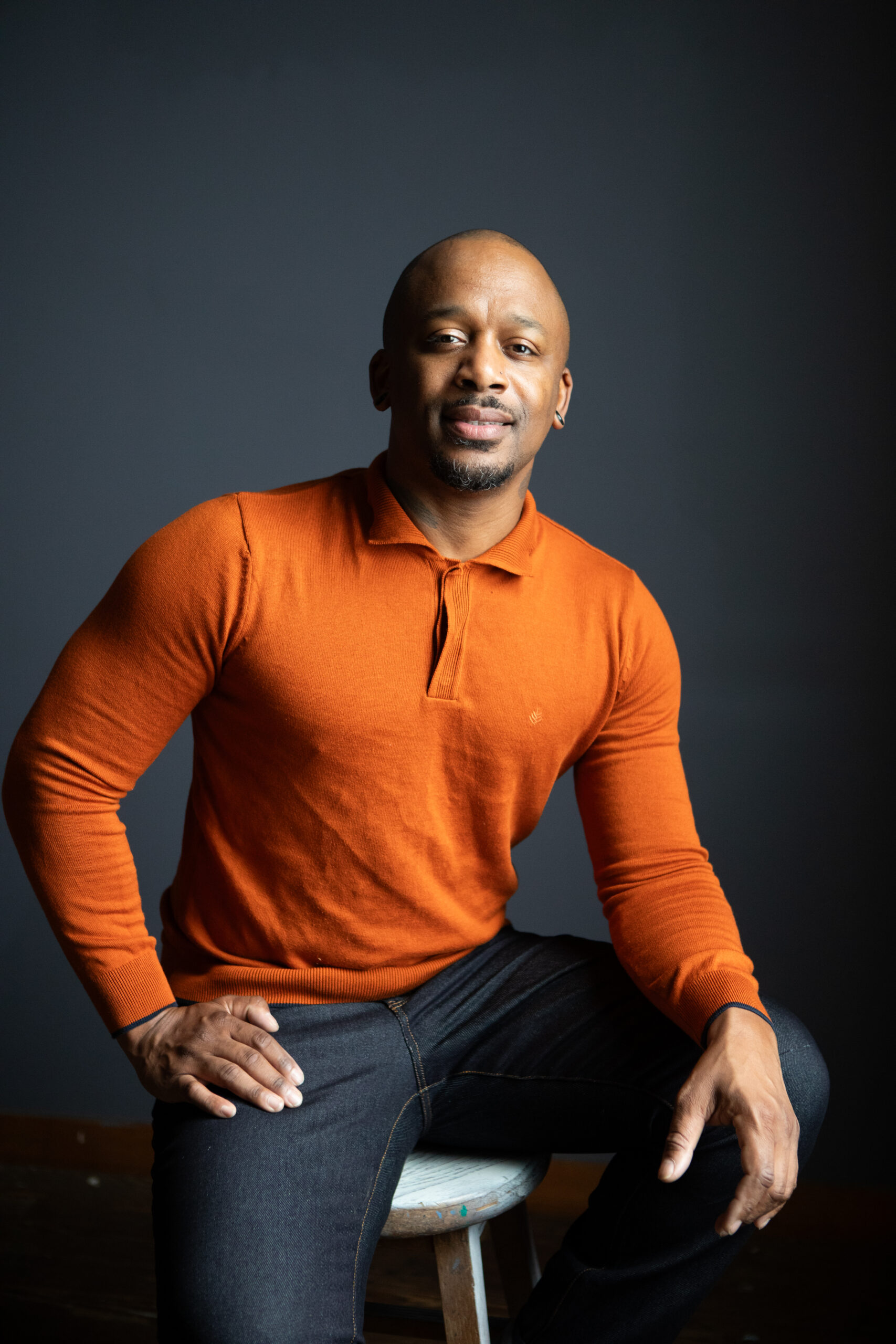
Darnell Lamont Walker will
host a free book launch event
for Never Can Say Goodbye
on February 10 at the Jefferson School African American Heritage Center.
Charlottesville native Darnell Lamont Walker is a death doula whose debut book, Never Can Say Goodbye: The Life of a Death Doula and the Art of a Peaceful End, publishes on February 10. Equal parts memoir and death primer, the book shares stories from Walker’s work and offers guidance and perspective on topics from writing your own obituary and talking to kids about dying, to exploring what grief and rituals of loss may entail. Walker recently discussed some of the inspirations for his work.
C-VILLE: Your grandmother showed you the way into this work, as you describe in the book. How do you hope it helps prepare others to take up this calling?
Darnell Lamont Walker: I hope people see that they already have everything they need to do this work. When they see me listening, witnessing, advocating, sitting quietly, asking hard questions, or just staying when it would be easier to leave, I want them to recognize those capacities in themselves. This isn’t mystical work. It’s deeply human work. My grandmother didn’t have a title, but she knew how to be present, how to love someone through fear and uncertainty, how to grieve in real time.
I hope my work helps people understand that becoming a death doula isn’t about having the perfect words or knowing exactly what to do. It’s about learning to tolerate discomfort, to slow down, to listen without trying to fix or rush the moment. … If my work prepares others for anything, I hope it prepares them to trust themselves, to show up imperfectly, and to believe that their presence, just as they are, can matter at the end of a life.
From your work supporting Black men learning to grieve to your own experiences as a Black death doula, how do you hope your book speaks to Black readers?
I hope Black readers feel seen and less alone. It’s true. So many of us are carrying grief that didn’t start with us. Grief shaped by survival, by silence, by having to keep moving even when we were breaking. In many Black spaces, death is everywhere but talking about it isn’t. We show up, we cook, we sing, we say “be strong,” and then we go home carrying what never got named. … This book is my way of telling folks they’re not strange for feeling what they feel, and they’re not weak for needing help holding it.
I’ve seen how often we’re taught to grieve alone. How often we’re taught to internalize loss rather than process it. I want this book to offer language where there has been silence, permission where there has been shame, and community where there has been isolation. More than anything, I hope it reminds Black readers that grieving is not something we’re meant to do by ourselves. Our ancestors survived because they relied on one another, and that truth still applies. Building community before death, during loss, and long after the funeral is not optional for us. It’s necessary. If this book helps someone feel less isolated in their grief and more connected to themselves and to others, then it’s doing the work I hoped it would do.
You share stories of becoming a death doula, but you’re also a storyteller and Emmy- nominated children’s television writer. Where has there been overlap in those experiences?
For me, they’ve always been intertwined. Being a death doula and being a storyteller both ask the same core thing: Pay attention. … Notice what’s being said and what’s being avoided. When I’m with someone at the end of their life, I’m listening for meaning, for patterns, for what they want remembered or repaired. … Children’s writing has taught me how to speak honestly without being overwhelming, how to sit with big ideas like fear, love, and loss in ways that are gentle and clear. Death work has taught me how much people need stories to make sense of what’s happening, to feel less afraid, to know their life mattered. Both have shaped my becoming by teaching me reverence for imagination, for memory, for the fact that we’re all just trying to understand what it means to be here for a little while.
How does it feel to be bringing this book home to Charlottesville?
It feels surreal, honestly, and deeply grounding at the same time. As a kid, I used to walk through New Dominion Bookshop and read whatever I could, knowing I couldn’t afford most of the books. I went to the Virginia Festival of the Book every chance I got… imagining what it might feel like to one day be on the other side of those conversations. I didn’t have language then for the work I’d eventually do, but I had a sense that stories mattered, that books could be portals.
Bringing this work and this book back to Charlottesville feels like a full-circle moment. This is where people fed me, hugged me, gave me pillows and washcloths when I needed them. Where I was held in ways that made it possible for me to leave and come back changed. To be able to show those people that their care mattered, that their support helped make this life and this work possible, means everything to me. … Bringing this book back here feels like an offering of gratitude, a way of telling my people they were part of this long before there was a book, and they still are.