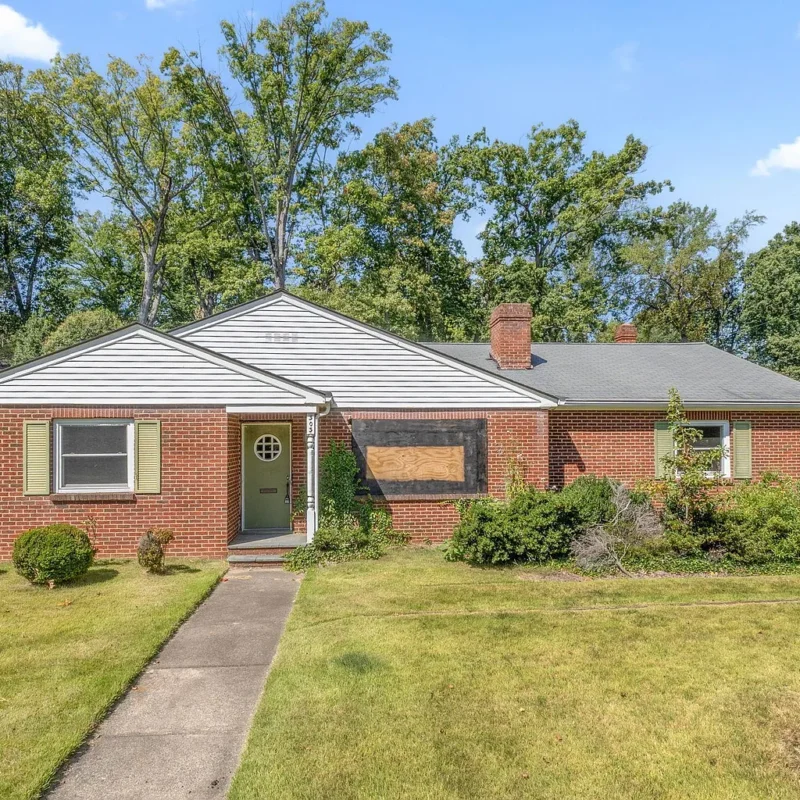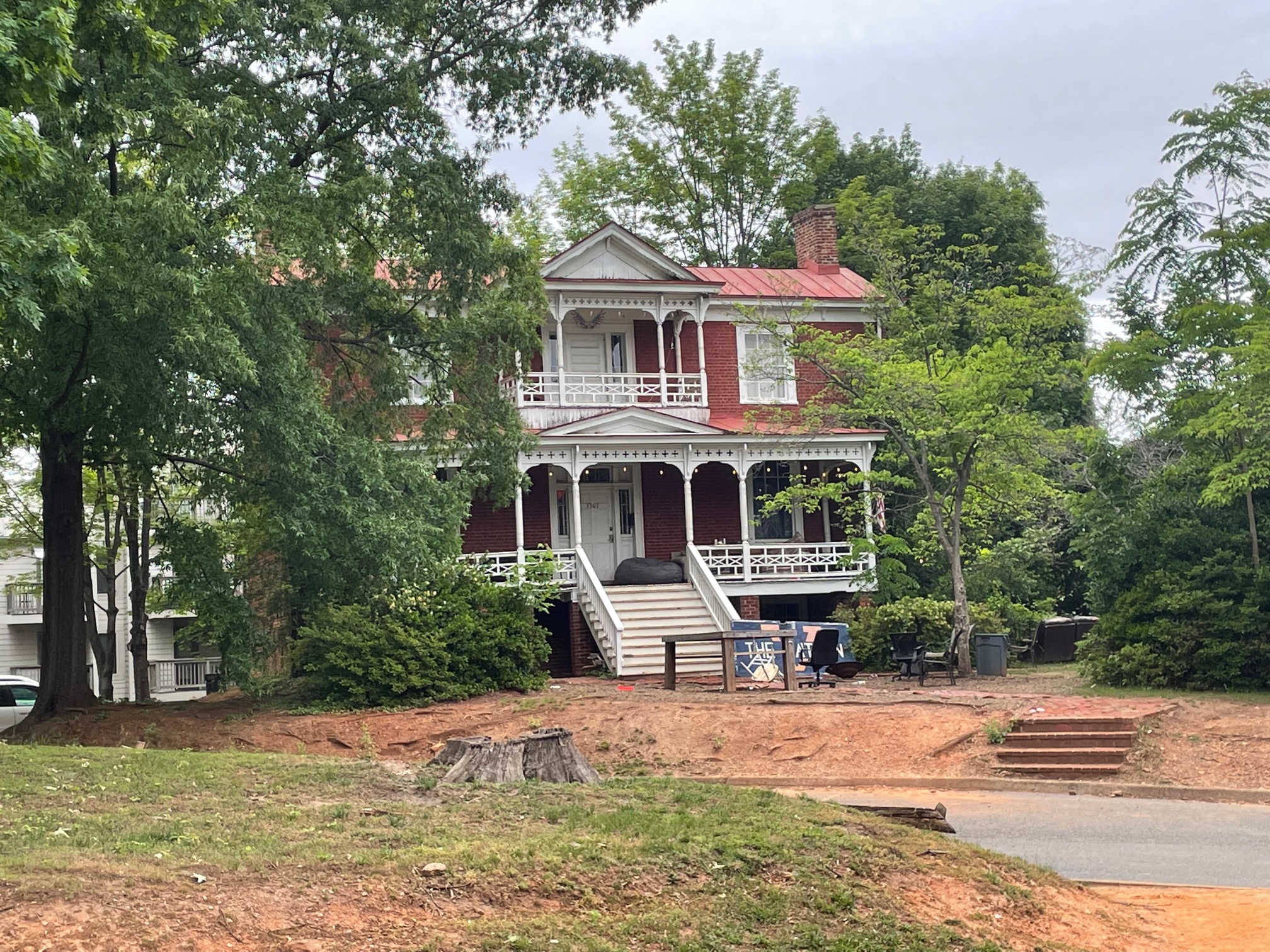
Former UVA librarian William Wertenbaker’s home, which was built in 1842 and is on the National Register of Historic Places, will not be demolished. Supplied photo.
An attorney for the owner of 1301 Wertland St. told Charlottesville City Council on September 2 that tearing down the structure for new apartments would outweigh any historic preservation goals.
“We believe the prevailing factors are the policies prioritized in the 2021 Comprehensive Plan and implemented through the [new zoning ordinance] to increase housing opportunities and thereby promote more affordable options for good housing,” said Steve Blaine of the firm Woods Rogers.
The city’s Board of Architectural Review denied a demolition request at its May meeting. Neither Blaine nor anyone else represented Seven Development at that time, so the public heard for the first time this month that the developer felt the city would benefit from having between 200 and 300 units of housing for University of Virginia students.
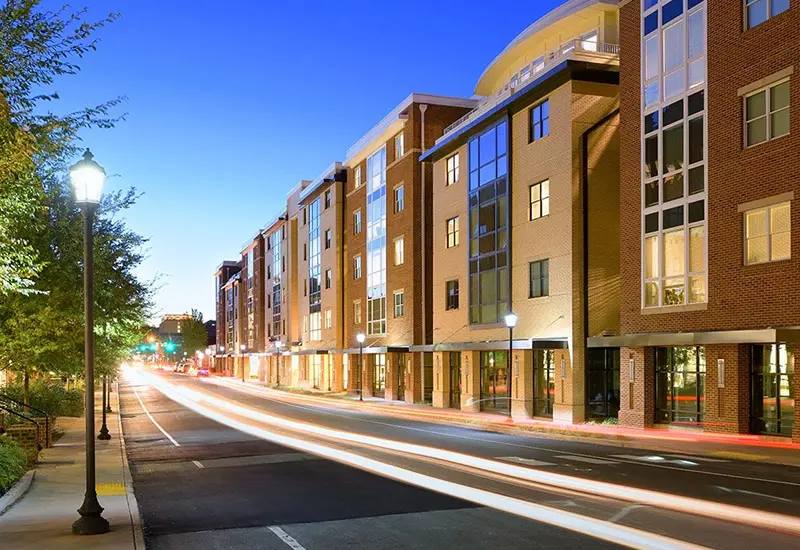
In 2023, the BAR had approved a certificate of appropriateness for another 34-unit structure that would coexist on the same 0.4-acre property. The new zoning code offers more possibilities under the Residential Mixed Use 5 zoning.
The house itself was built around 1842 and was the home of William Wertenbaker, the second person to serve as the University of Virginia’s librarian. The property is listed on the National Register of Historic Places and is an anchor of the city’s Wertland Street Historic Street.
“Aside from some repairs and encroachment of neighboring development, the house generally retains its appearance of the original house in the late 18th-century modifications,” said Jeff Werner, the city’s historic preservation planner.
Werner said the city welcomes creative development and there is much precedent for historic structures to be reused.
“In a situation like this, we would look for something that preserves the historic resources while accommodating increased density, which was indicated by the project that was included or approved in 2023,” Werner said.
Blaine pointed to research that shows Wertenbaker owned slaves and that there was no real need to preserve the house to keep his name alive.
“The documents relating to the historic landmark nomination and the local landmark designation leave out these facts,” Blaine said.
City Councilor Michael Payne said he would not overturn the BAR’s decision in part because there was no attempt to bring forth a design that incorporated the historic structure. Outgoing Councilor Brian Pinkston also said he would vote no.
City Councilor Natalie Oschrin accepted Blaine’s argument because she said more housing units outweigh historic preservation.
“I have been to the houses on Wertland Street,” Oschrin said. “They’re not glamorous, historic buildings. The floors are sticky, the windows are broken. It’s not a destination you go to on a walking tour of historical buildings.”
Oschrin made a motion to overturn the BAR, but she did so before BAR Chair James Zehmer had the opportunity to make a rebuttal. He said the 2023 approval for more housing was a compromise. He said it was worth preserving Wertenbaker’s place in history.
“At a time in this country when education’s under attack, when libraries are under attack, it’s a good thing to support the preservation of the home of a very important librarian to this community,” Zehmer said.
That was enough for Mayor Juandiego Wade to uphold the appeal.
“We have a proposal that has been approved that shows that we can keep the residents and also have some units there,” Wade said.
A vote to deny the appeal was approved 4 to 1 with Oschrin voting no.