Staff photo
When Charlottesville City Council adopted a new set of zoning rules in December 2023, the idea was to make it easier for developers to construct housing units.
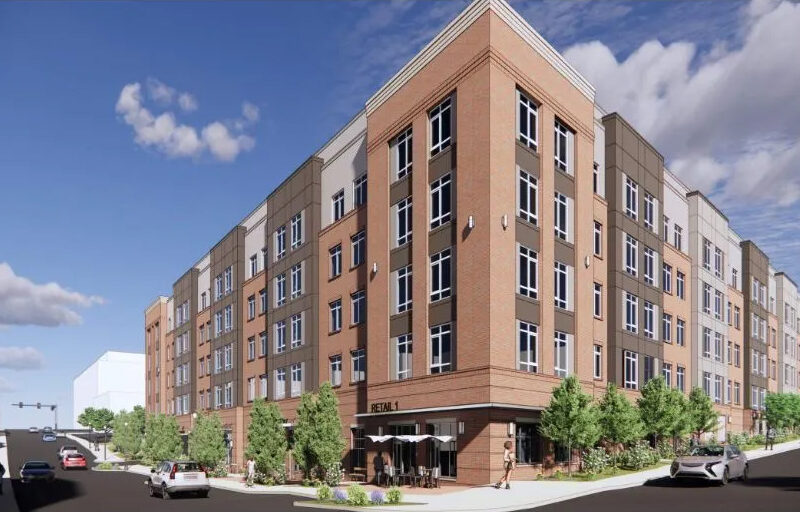
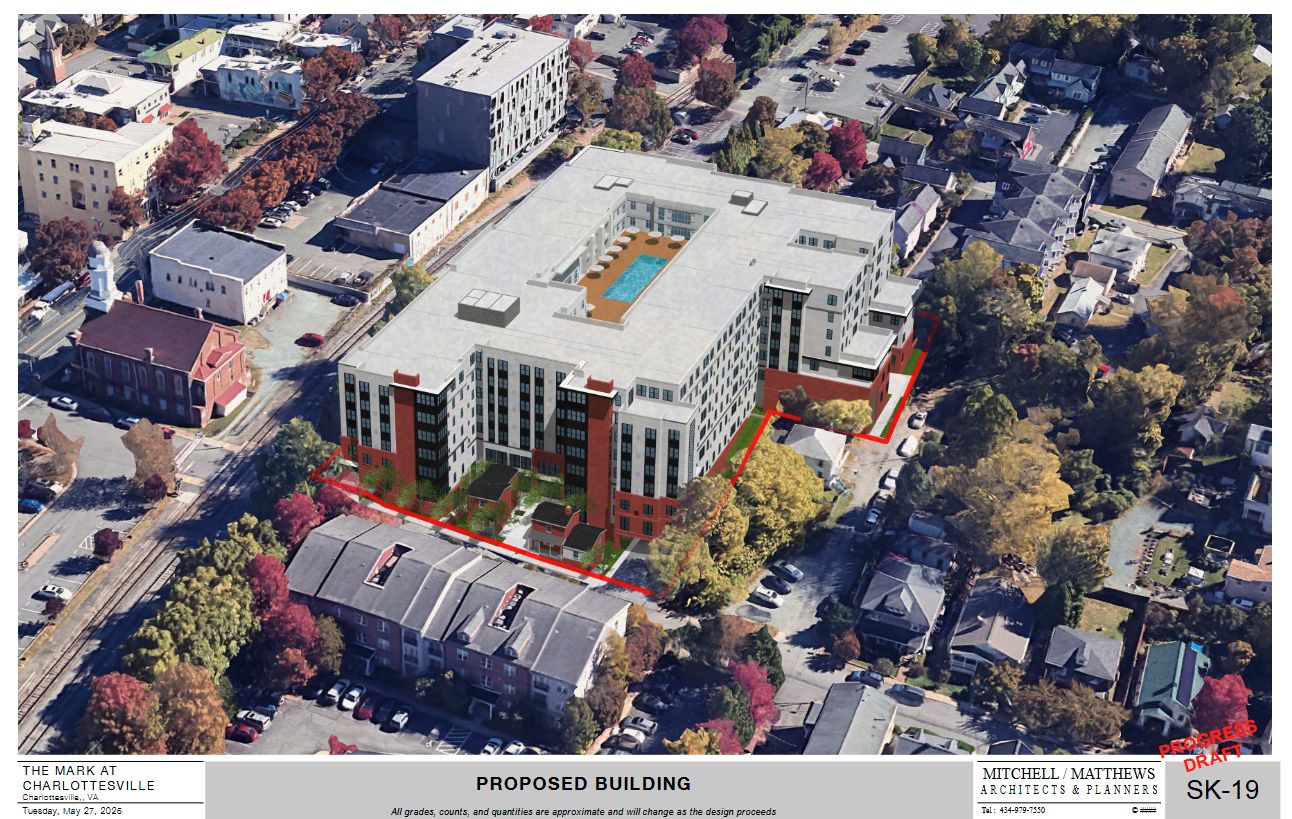
That is proving not to be the case for LCD Acquisitions, a company that has filed plans for a seven-story building in Fifeville called The Mark that is allowed under the Residential Mixed Use 5 zoning. The new rules eliminated public hearings before the Planning Commission and City Council to approve additional height and development.
The Charlottesville Low-Income Housing Coalition has been making its voice heard anyway, with its members telling City Council they see the prospect of student housing in Fifeville as a form of displacement.
“For months now, community members, organizations, advocates, and residents like myself have shown up,” said Terry Tyree at the April 6 City Council meeting. “And still we are asking: ‘Why are our voices not enough to slow this down and bring this back to a formal process that truly includes community input?’”
Tyree said the coalition wants Council to apply an overlay zoning district called Core Neighborhood that would only allow a three-story building by-right. Two additional stories could be built but only if 20 percent of the units are rented to households making under 50 percent of the area median income. This overlay is already in place on portions of Preston and Cherry avenues.
“The Core Neighborhood Corridor Overlay was not applied broadly enough to meet its stated goal and this oversight should be corrected,” said Emily Smith, an attorney with Legal Aid Justice Center. “When zoning changes are enacted to support the public good, the law is very protective to the locality.”
So far, City Council has not directed staff to prioritize this action, but Council did meet in closed session on April 6 to get advice on “legal aspects of changes to the city’s zoning code.”
In October, Council settled a first lawsuit against the code and agreed to conduct a study of the impacts of additional density on the city’s transportation network.
Meanwhile, the plans themselves are working their way through the process with many opportunities for further challenges.
On March 19, the Charlottesville Board of Zoning Appeals on a 2-2 vote upheld a determination from the zoning administrator that the project is within a half-mile radius of an eastern edge of the University of Virginia. That would allow The Mark to qualify as “student housing,” which does not require affordable units to be included. The developers would have to pay into the Charlottesville Affordable Housing Fund, but at a lower rate than units outside of the radius.
The Board of Zoning Appeals is set to take the matter up again on Thursday, April 16, but the agenda for the meeting doesn’t indicate what will be publicly discussed. The appellant lives across the street and could appeal the case to Charlottesville Circuit Court.
However, there were only four BZA members present in March and another vote will be held to see how the fifth member votes. The appellant, Paul Reeder, lives across the street and could appeal the case to Charlottesville Circuit Court if the determination remains upheld.
In December, the Board of Architectural Review denied a certificate of appropriateness to allow The Mark to incorporate two historically protected structures on Seventh Street. LCD Acquisitions appealed the case to City Council, but so far a hearing has not been scheduled.
The appeal filed on December 31, 2025, by attorney Steven Blaine argued that the BAR’s vote was an attempt to subvert the zoning.
“The Project substantially advances the City’s affordable housing goals contained in the Comprehensive Plan by providing significant funds to the City’s affordable housing fund as required by the Development Code,” Blaine wrote. “The required payment is currently estimated to be approximately $4,550,000.”
The Charlottesville Low-Income Housing Coalition worries that if The Mark, a seven-story student apartment complex, is built in Fifeville, it’ll be a form of displacement.