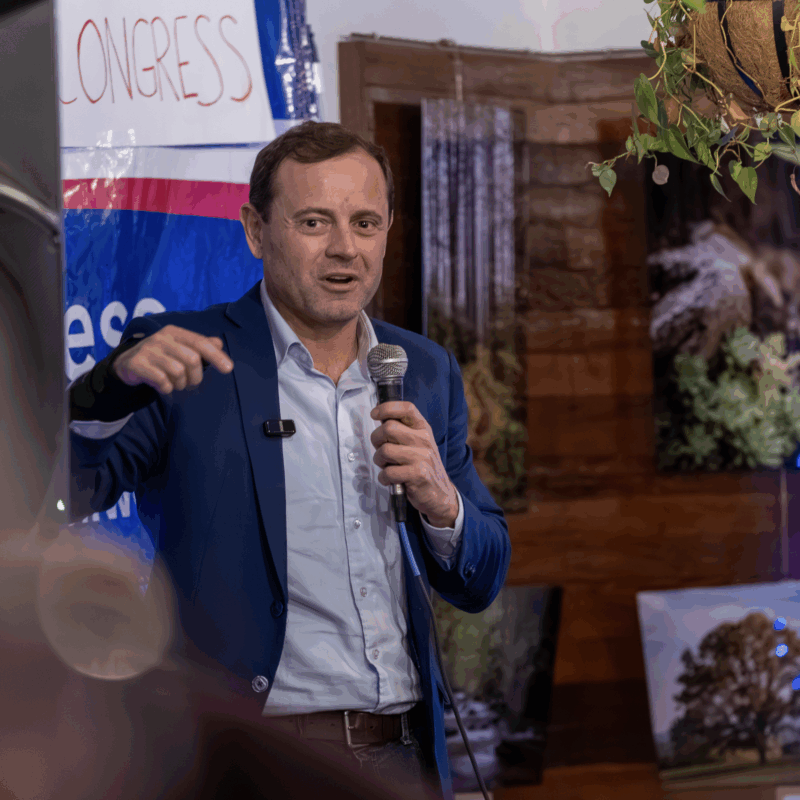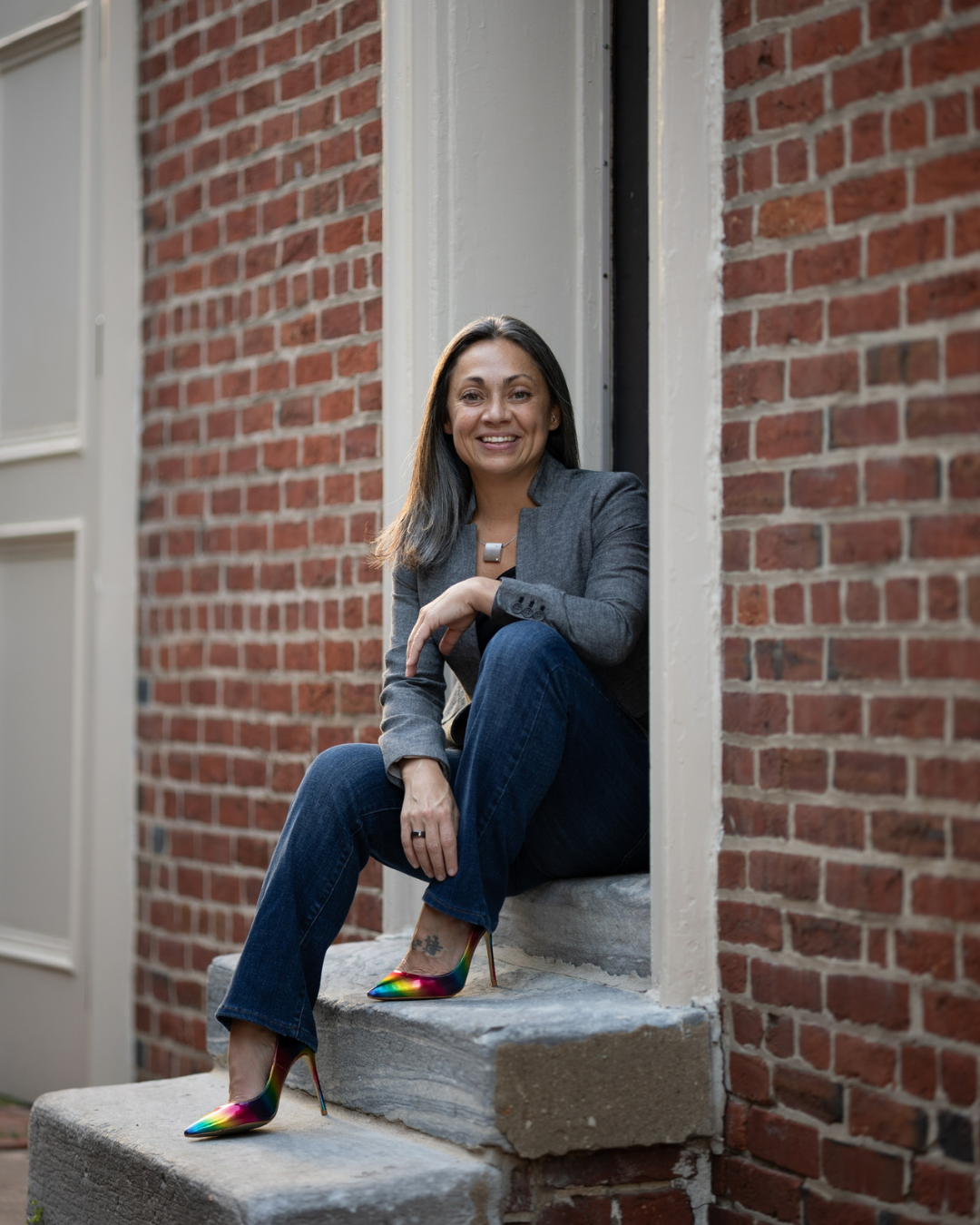
Angela Giampolo, a Philadelphia-based attorney known on social media as “Your Gay Lawyer,” kicked off her 17-city LGBTQ+ legal access tour in Charlottesville on March 2.
Caravan of Hope, a month-long multi-state tour providing pro bono LGBTQ+ legal services to communities in the southern and midwestern United States, made its first stop of 2026 in Charlottesville on March 2.
The initiative, led by Philadelphia-based lawyer Angela Giampolo, is “focused on protecting identity, family security, and long-term stability.”
From blue major metro centers like Chicago, Illinois, to deep red areas like Amarillo, Texas, Giampolo is partnering with local co-counsels to bring services like name changes, gender marker updates, and basic estate planning to underserved communities.
“I like to choose a smaller metro area,” she says. “From a safety perspective, I’d rather go to an area where there’s queer communities and safety, and have folks that are in more rural, maybe dangerous, areas drive to the safe area to avail themselves [of] the resources.”
Between lost wages and logistics, Giampolo says the collective cost of Caravan of Hope is easily “in the six figures.” But donors, like the client who provided the winterized RV needed for the 17-city trip, help make the 2026 endeavor possible.
PFLAG Greater Charlottesville donated to and promoted the caravan’s service day at IX Art Park.
“The process of changing legal documents to reflect the name and gender you know yourself to be takes time, legwork (including transportation), money, and a strategy to know what order to handle things in,” says Maria Stein, president of PFLAG Greater Charlottesville. “A name change might just take a week in the court system once you turn your paperwork in, but you need the correct paperwork in order to apply for the name change. In terms of money, it costs $10 to change gender on a birth certificate. Each certified copy costs $12, and you want to get a few of those certified copies. Add to that the time and cost of getting to Richmond, and it all adds up.”
Rather than navigate it alone, or pay hundreds of dollars in hourly fees for an attorney, the caravan offers pro bono help with the often-confusing legal process. In Charlottesville, Giampolo says the caravan helped with 15 name changes, and aided nine more people in creating wills and powers of attorney.
With marriage equality being challenged in the courts, Giampolo says older, tried and true methods of establishing legal ties like wills, trusts, and powers of attorney are key. “For decades, as unsexy as it sounds, estate planning has been our number one impenetrable, inseverable line of defense.”
In addition to more typical LGBTQ+ legal service inquiries, answering questions about the proposed SAVE America Act—a proposed national voter ID law that would require additional documentation for voter registration—is now also a major element of the caravan’s work.
If adopted in its current form, the SAVE America Act would require states to collect citizenship information for all voters, and demand that voters show photo ID displaying their citizenship status to vote. Virginia REAL ID does not display citizenship status, and would need to be accompanied by a document showing citizenship. Documents showing proof of citizenship could include birth certificates, passports, or naturalization certificates. A person whose name on photo identification does not match their citizenship document would need to bring additional documents explaining the difference.
“If your name currently, in any way, differs from the name on your birth certificate, it can take up to 12 weeks to get a new birth certificate. Most people have issues voting in one day, let alone having to prepare 12 weeks in advance of said day,” says Giampolo. “It is a massive voting suppression technique.”
Beyond the LGBTQ+ community, the largest group potentially disenfranchised by the SAVE America Act would be straight married women.
“For LGBTQ folks in particular, one of the added layers of issues is for trans, gender diverse, and nonbinary folks; it requires them to out themselves at the voting booth,” Giampolo says. “Straight women … the marriage certificate is the bridge between why the name on the birth certificate differs from the name on their ID.”
“Regardless of how you’re impacted or why you’re impacted by the SAVE Act, it will take months in order to get documentation if you don’t have documentation, and so you need to get on it now,” she adds.
Stopping in places like Charlottesville allows Giampolo to not only reach people in surrounding areas with fewer access points, but to use her social media following as “Your Gay Lawyer” to connect LGBTQ+ residents with existing local resources they may not be aware of.
“This is a reminder to me that we need to be doing more visible work in this space,” says Kristin Clarens, pro bono coordinator for the Charlottesville Albemarle Bar Association.
While pro bono legal services for the local LGBTQ+ community have been continuously available, more visible efforts like public name change clinics have been on pause amid safety concerns in the current political climate.
“We’ve built kind of an organic network here. … It was a real eye-opener that somebody like [Angela] would look at our state and see us as a place that was likely to have an unmet need,” says Clarens.
C-VILLE reached out to the Rivanna Area Queer Center, the Queer Liberation Front, and individuals who have dealt with the legal name change and gender marker update process for this story. None of
C-VILLE’s contacts reported difficulty accessing LGBTQ+ legal services in Charlottesville at press time.
“[Local Bar leadership] have already talked about … reviving those clinics, now that we have [a] more protective state administration,” Clarens says. “Also, making sure that we’re doing proactive outreach to our partners that support people in this community, to make sure that we’re not missing any opportunities to provide support.”