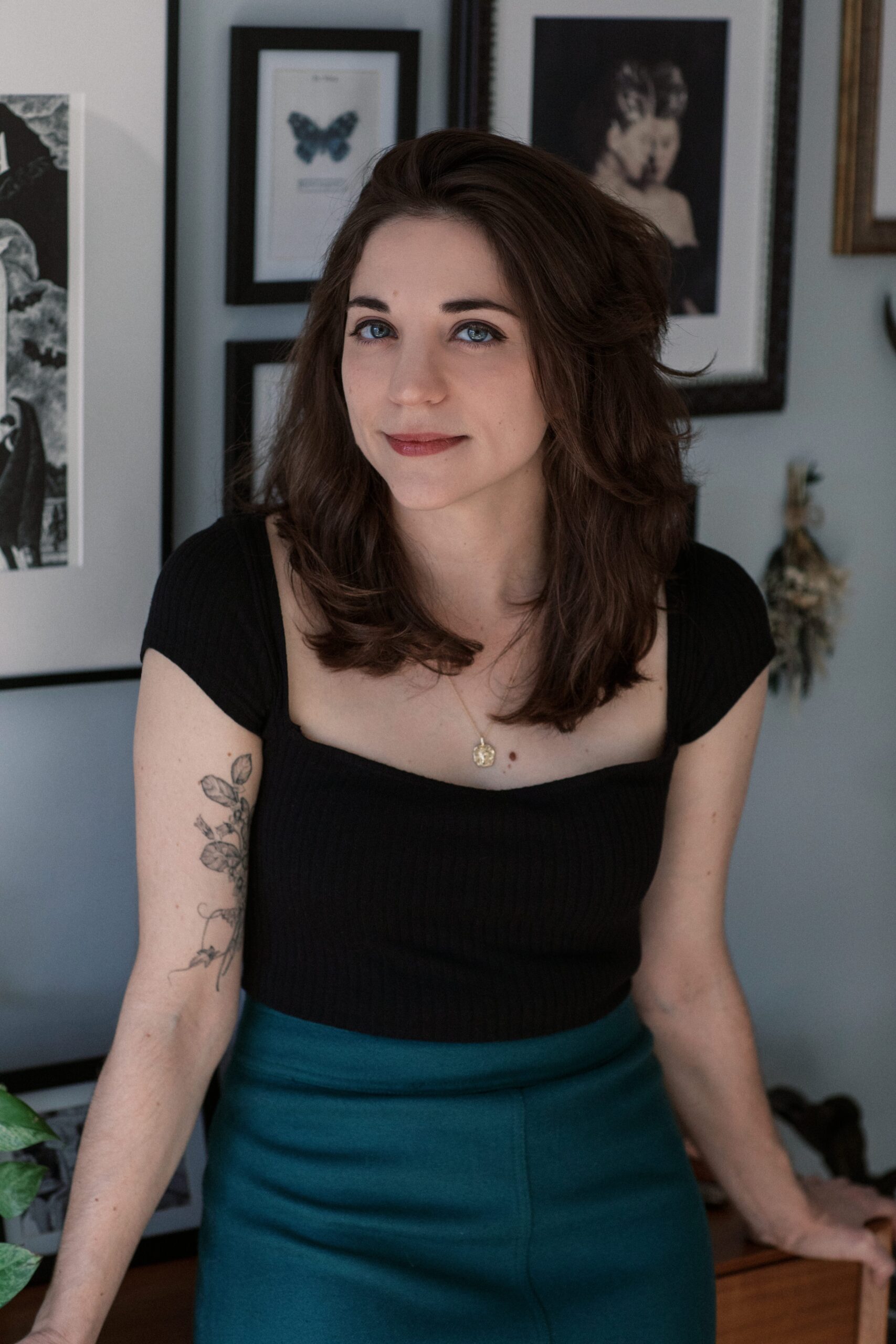
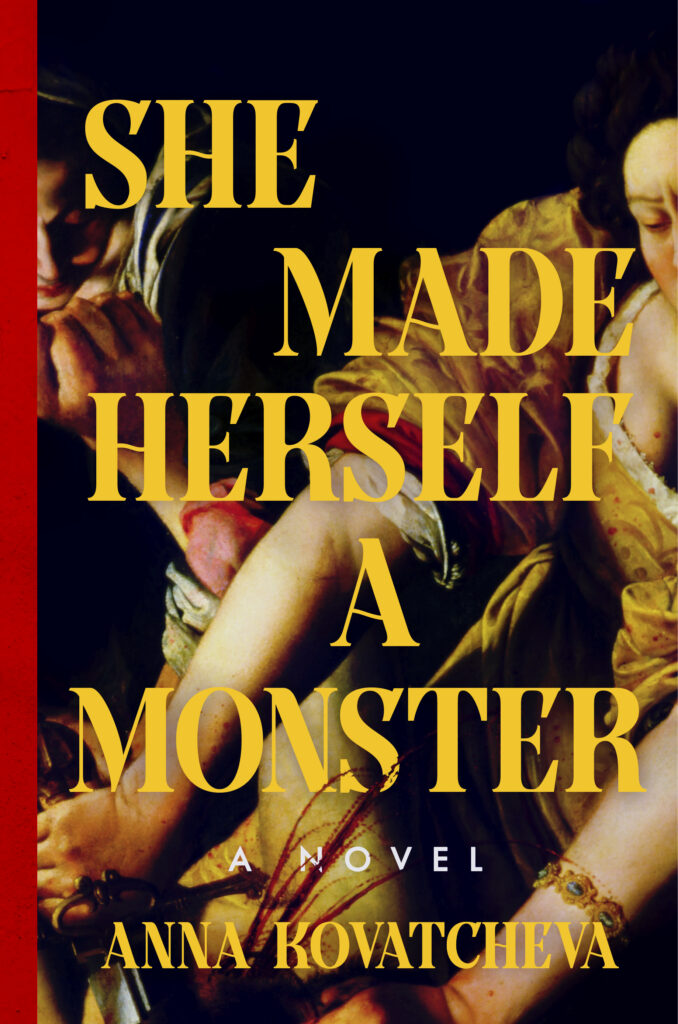
Anna Kovatcheva will read from She Made Herself a Monster on February 13 at New Dominion Bookshop.
Anna Kovatcheva’s debut novel, She Made Herself a Monster, is a dark incantation of a story that explores themes of transgression and transmutation through traditional folklore tropes. Set in 19th-century Bulgaria, the novel revolves around Yana, a self-proclaimed vampire slayer, and Anka, an orphan whose fate is tied to that of her adoptive father figure, the Captain, a powerful and abusive man who aims to marry her against her wishes.
The book opens on Yana performing a ritual to reinvigorate a village that has been ravaged by a plague. Kovatcheva begins, “There is a brick, and there is a mouth. In a dim root cellar smelling of dirt and brined cabbage, people cluster anxiously close.” The scene quickly pulls readers in with gruesome yet captivating details: “His fingers are blue and swollen, his nails pressed into the putty of his skin like yellow shells. When Yana pulls his dry lips apart, his teeth grind together as though his body knows what is coming. A human mouth is much smaller than a brick. Most only open four inches wide.”
Kovatcheva writes of that first, anonymous village, “Without a spark of hope, none of them will survive the snow.” And so Yana ignites the spark by performing a vampire slaying, setting a visceral and sour tone, tense with action. A far cry from Buffy, Yana’s skills are in the art of performance and deception. Her craft is one of scheming and captivation—thoughtful and slow, which she learned from her mother. “‘People will think things about you,’ her mother told her. “‘When they do, they give you power. You can use their thoughts against them.’”
When Yana arrives at a village, she susses out villagers’ dreams and nightmares so as to be able to vanquish the monsters that live in their hearts and minds. As Kovatcheva writes, “Every village is haunted in its own way. All of them want her to banish something without form.” Steeped in the art of the con, Yana’s practice begets results. “Even a fake seer is of use, as long as she is convincing,” writes Kovatcheva.
While Yana travels from village to village performing rituals to rid them of perceived curses, vampires, and demons, the orphan Anka is trapped in the village of Koprivci, awaiting her destiny of marriage. Anka is also a scapegoat for villagers who believe she is at fault for myriad afflictions. “In the neighboring towns, people tell Yana that the village Koprivci is cursed, if you believe in such things,” Kovatcheva writes. Through a chance encounter, Yana and Anka meet and craft a plan monstrous enough to save both the village and Anka herself. To do so will take witchcraft (or at least what passes for it in a town that wants to believe).
Born in Sofia, Bulgaria, and raised in Central Virginia, Kovatcheva attended the University of Virginia, and She Made Herself a Monster was inspired in part by her coursework in UVA’s Slavic studies department. The novel was completed during a residency at the Virginia Center for the Creative Arts, where she is a two-time fellow.
Describing the origins of a vampire as well as its power over people, Kovatcheva writes, “Dying is noise and movement, but what follows is silence. … A shadow chooses the body. The body is its womb, its vessel while the demon grows. … The demon knits itself a shape. … The vessel becomes the model: as God made him in His image, so the vampire makes itself in the image of a man. The slayers, sabotnici, share these stories. They teach them to ordinary people, pass them from mouth to mouth, because you must be able to see a monster before you can fight it.”
In the end, She Made Herself a Monster is a book about survival, about seeing the monsters in our midst and fighting them even when the odds against you are great. It’s an exploration of the lengths to which one may go to protect themselves and the people they love; to escape violence, trauma, and abuse; and to build a new collective reality. It is also about the stranglehold of loneliness, loss, and desperation, and portals to other lives.
Informed by folklore and fairy tales, the novel examines the stories we tell to make sense of our world and the identities we hold within that world. Exploring storytelling as a communal practice, Kovatcheva’s novel is a compelling and timely look at the ways stories can be harnessed to create a shared reality—a mutual belief in what is good and what is evil—and the ways they can either bolster or undermine those who hold power. Monsters serve a function, in life and in death. As Yana tells a villager, “Humans have always needed people like me—as long as we’ve needed monsters.”