ACRJ renovations will replace 7-by-5-foot cells with new spaces nearly triple the size.
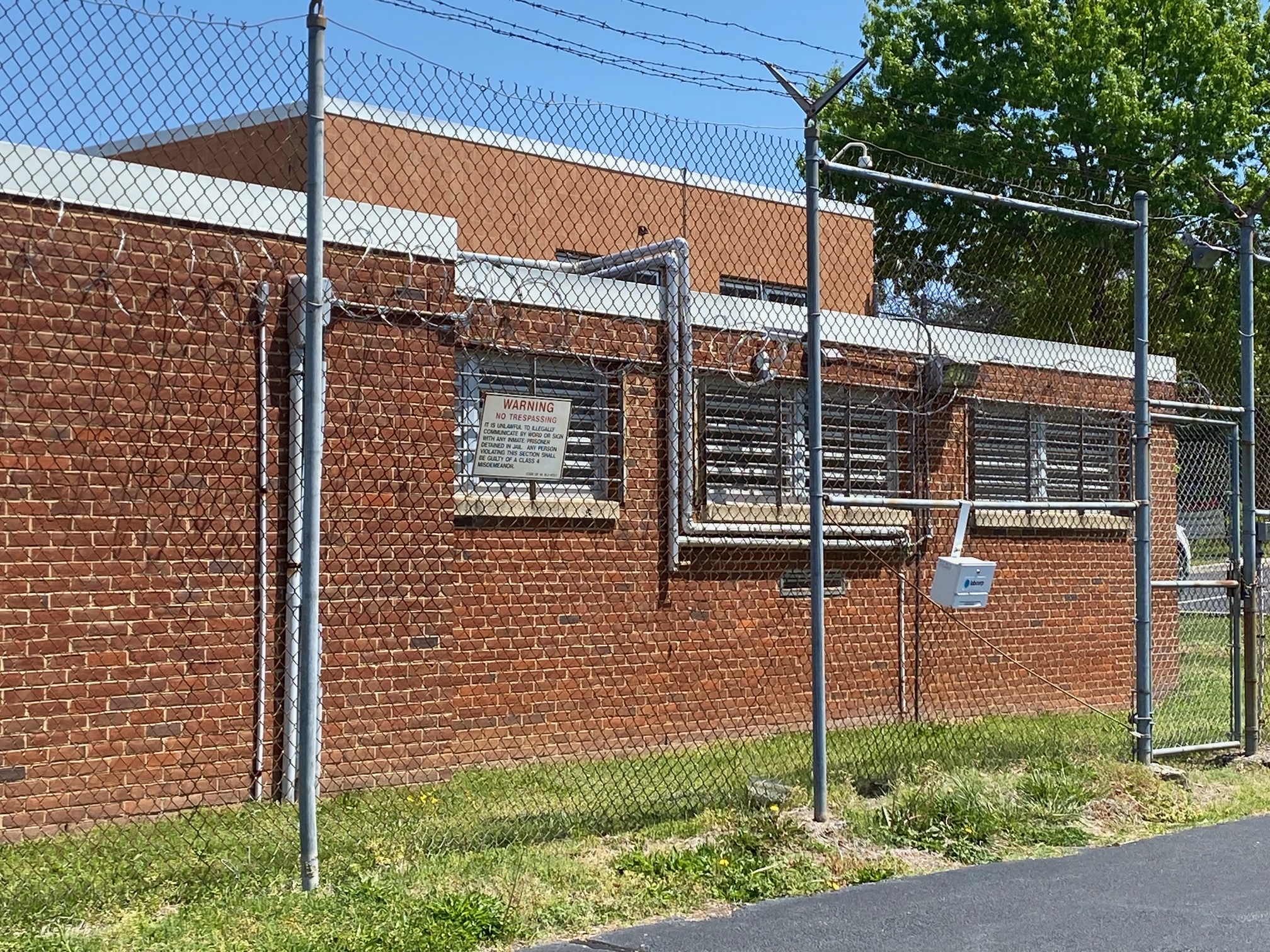
Renovation at the Albemarle-Charlottesville Regional Jail is underway, following the demolition of the 1974 portion of the facility earlier this month. After years of debate, the $49 million project was narrowly approved by City Council last June. While critics and supporters of the project largely agreed that the facilities needed an update, the price tag and priorities of the reduced-scope renovation remain divisive.
Opened in 1974, ACRJ serves the City of Charlottesville and Albemarle and Nelson counties. The facility has a rated-capacity of 329 beds, and largely holds people awaiting trial or sentencing, or serving shorter sentences.
Renovation of the ACRJ was originally planned to be more extensive, covering both the replacement of the east wing and a more involved update of the west wing. The project was scaled back after bids came in several million dollars above expectations because of rising construction costs and tariffs. The ACRJ Authority Board opted to go with the lowest bidder, English Construction in Lynchburg, and then pare down the scope of work to fit within the allocated $49 million.
Under the final plan, renovations will include the complete replacement of the east wing with a two-story structure and add a dedicated public entrance, 12 individual visitation rooms, three outdoor recreation areas, a video court space, two mental health offices, and more spaces for mental health and classroom activities. Staff will also get 14 more office spaces, and HVAC and mechanical systems in the west wing will be improved.
Demolition of the east wing has already been completed, with contractors now preparing for plumbing, electrical, and foundation work, according to ACRJ Superintendent Martin Kumer. English Construction did not respond to C-VILLE’s request for comment by press time.
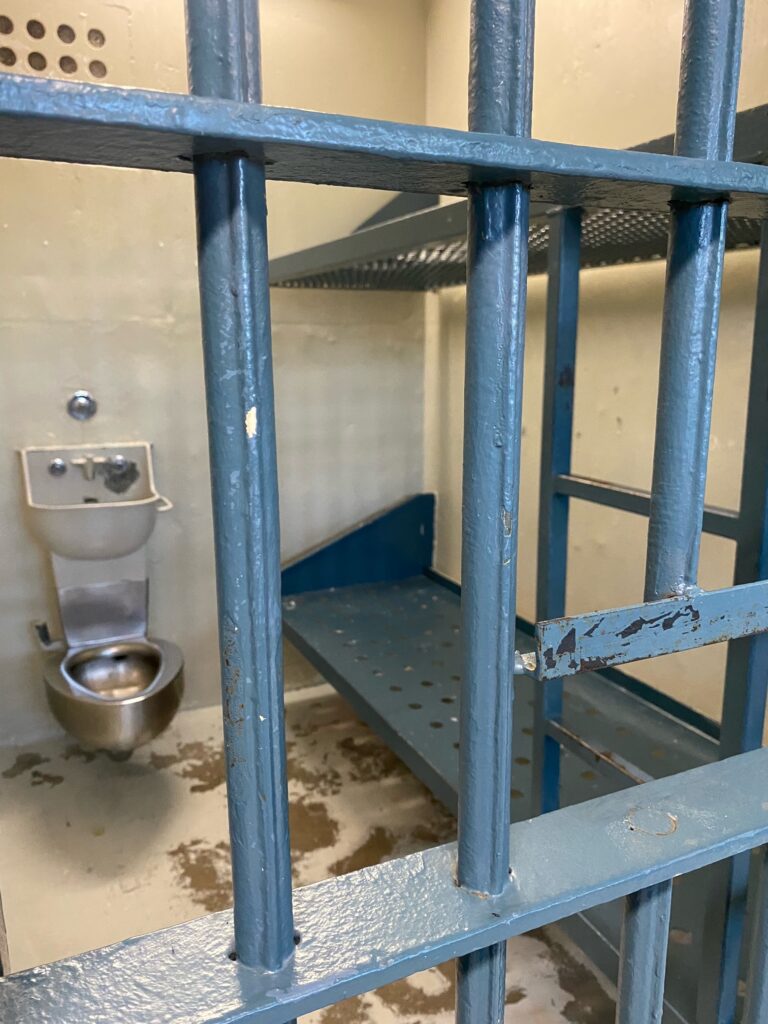
“The scope of work that was finally approved and formally approved will have a much larger visitation space for inmates and families, higher quality visitation as well,” says Kumer. “The lack of outdoor recreation space, the antiquated HVAC systems on the 1975 portion of the jail, and the cell sizes of the housing areas on that side of the jail were the biggest things that needed attention.”
In February 2024, ACRJ surveyed two focus groups of people incarcerated there. The jail received a total of 47 surveys, 14 from focus groups and 33 from tablets. Among the potential renovation items listed on the survey, participants slightly prioritized outdoor recreation space and reliable plumbing. The revised scope of the renovation includes both.
Visitation was another top priority for respondents. The renovation will include more private spaces, but it is unclear how it will address the other aspect of people’s complaints: frequency of visitation. ACRJ currently allows one 30-minute in-person visit per month with up to three visitors. Kumer says the new dedicated spaces will allow for more frequent visits, but did not specify further.
Despite generally agreeing that ACRJ facilities need improving, the scope and nature of the investment remain a concern for officials and activists alike.
Charlottesville City Council narrowly approved the renovations in a 3-2 vote in June 2025, with councilors Natalie Oschrin and Michael Payne voting against the project. Contractors did not provide a revised scope of work until July 1, 2025.
“When you look at particularly the older wing of the jail, there were renovations, no matter what, that had to happen there and should happen there,” says Payne. “My biggest concern is just the overall cost of the project and the amount of debt service payments that’s going to obligate the City of Charlottesville for a number of decades, and that that cost is just kind of baked in of the city paying a little over $1 million a year.”
The cost of the renovations is divided among the city and counties, with $12.1 million in 2025 grant anticipation notes and $36.9 million in 2025 bonds. Accounting for the initial loans taken out, interest, and debt services, the projected costs over 28 years are $28.7 million for Charlottesville, $32.1 million for Albemarle County, and $11.9 million for Nelson County.
Costs were split among the localities using the FY26 inmate day calculations from the ACRJ Authority Board.
“It’s going to butt up against other budget priorities in [the] city, around schools, transportation—anything, you name it,” says Payne.
Payne and The People’s Coalition, which organized in opposition to the ACRJ renovation, both emphasize that the facilities are outdated—but some of the multimillion-dollar investment should have been directed toward preventative measures, particularly for those with mental health disorders.
“People building these jails usually focus on the ‘three Cs’ as their arguments to support jail expansion, which is to increase in capacity, a better contemporary jail, and more compassionate jail,” says Rosia Parker, People’s Coalition organizer. “We should be wary of carceral humanism, which portrays jailers as social service providers. You can’t get better in a cell, especially when it’s designed to punish and control one’s mindset and body. … The criminal system is not equipped to provide effective mental health care for anyone.”
Even with the inclusion of dedicated mental health spaces in the renovation plans, Parker is skeptical.
“We fought so much for mental health, we know that they’re going to put them there so they can … say, ‘Oh, we did what the people asked. We have these beds, or special purpose beds designed for mental health,’” says Parker. “But is it actually designed for mental health, or is it designed for isolation? … Invest in the village instead of into the jail system, because you can’t heal in a jail cell.”
The ACRJ renovations are ongoing, and are on schedule for completion in November 2027.